Listen to this Post
Introduction:
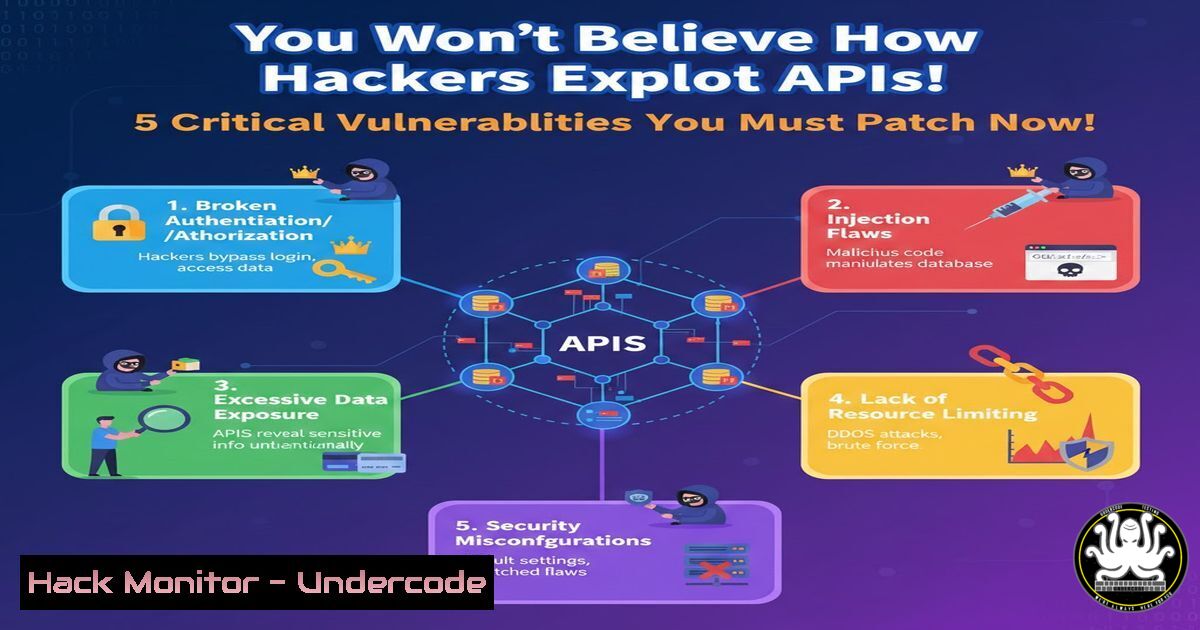
In the era of microservices and cloud-native applications, APIs have become the backbone of digital communication, but they also present a lucrative attack surface for cybercriminals. This article delves into the most common API security vulnerabilities, extracted from real-world exploits and resources like the OWASP API Security Top 10, and provides actionable steps to secure your endpoints against escalating threats.
Learning Objectives:
- Understand the top API security vulnerabilities and their implications for data breaches and system compromise.
- Learn step-by-step methods to identify and exploit these vulnerabilities for legitimate penetration testing and security assessments.
- Implement robust mitigation strategies, including tool configurations, code fixes, and cloud hardening techniques, to protect your APIs from attacks.
You Should Know:
1. Broken Object Level Authorization (BOLA)
Step‑by‑step guide explaining what this does and how to use it.
Broken Object Level Authorization (BOLA) is a top API vulnerability where endpoints fail to verify if a user is authorized to access a specific data object, allowing attackers to manipulate IDs and access unauthorized records. To exploit, use an intercepting proxy like Burp Suite (https://portswigger.net/burp) to capture API requests. For example, if an endpoint is GET /api/v1/users/123, change the ID to `124` and replay the request. On Linux, test with curl:
curl -H "Authorization: Bearer <token>" https://api.example.com/users/123
curl -H "Authorization: Bearer <token>" https://api.example.com/users/124
If both return data, BOLA exists. Mitigate by implementing granular authorization checks in your business logic, using role-based access control (RBAC), and validating user permissions for each object ID in every request.
2. Excessive Data Exposure
Step‑by‑step guide explaining what this does and how to use it.
APIs often over-share data by returning full database objects, exposing sensitive fields like passwords or personal details. Attackers sniff responses to harvest this data. Use OWASP ZAP (https://www.zaproxy.org/) to intercept API responses. Filter JSON payloads for fields like credit_card, ssn, or email. In Windows PowerShell, simulate a request:
$response = Invoke-WebRequest -Uri "https://api.example.com/profile" -Headers @{"Authorization"="Bearer <token>"}
$response.Content | ConvertFrom-Json | Select-Object -Property
If unnecessary fields appear, the API is vulnerable. Mitigate by applying response shaping: use DTOs (Data Transfer Objects) to whitelist allowed fields, and never rely on client-side filtering. For training, consider Coursera’s “APIs Security” course (https://www.coursera.org/learn/api-security).
3. Lack of Rate Limiting
Step‑by‑step guide explaining what this does and how to use it.
Without rate limiting, APIs are susceptible to brute-force attacks, DDoS, and resource exhaustion. Test using `ab` (Apache Bench) on Linux:
ab -n 1000 -c 50 https://api.example.com/login
Monitor if the API slows down or allows unlimited requests. For brute-forcing passwords, tools like `hydra` can be used ethically in labs:
hydra -l admin -P wordlist.txt api.example.com http-post-form "/login:username=^USER^&password=^PASS^:F=invalid"
Mitigate by implementing rate limiting at the gateway level. In NGINX, add to configuration:
limit_req_zone $binary_remote_addr zone=api:10m rate=10r/s;
location /api/ {
limit_req zone=api burst=20;
}
Cloud services like AWS API Gateway or Azure API Management offer built-in rate limiting.
4. Injection Flaws
Step‑by‑step guide explaining what this does and how to use it.
Injection flaws, such as SQL or NoSQL injection, occur when untrusted data is executed as commands. Use automated scanners like SQLmap (http://sqlmap.org/) to test endpoints:
sqlmap -u "https://api.example.com/data?id=1" --headers="Authorization: Bearer <token>" --dbs
For manual testing, inject payloads into parameters: e.g., GET /api/search?query=' OR 1=1--. For NoSQL APIs, send JSON payloads like `{“$where”: “sleep(5000)”}` to cause delays. Mitigate by using parameterized queries (e.g., prepared statements in SQL), input validation with allowlists, and escaping special characters. In Node.js, use `mongoose` for MongoDB to avoid injection.
5. Misconfigured Security Headers
Step‑by‑step guide explaining what this does and how to use it.
Misconfigured headers can lead to cross-site scripting (XSS), data leaks, or man-in-the-middle attacks. Check headers with curl:
curl -I https://api.example.com
Ensure Content-Security-Policy, Strict-Transport-Security, and `X-Content-Type-Options` are present. For CORS, restrict origins: in an Express.js API, configure:
const cors = require('cors');
app.use(cors({ origin: 'https://trusted.com' }));
Use the `helmet` middleware to set headers automatically: app.use(helmet()). For cloud hardening, in AWS S3 or CloudFront, define security headers via response policies. Training on headers is available in Udemy’s “API Security Masterclass” (https://www.udemy.com/course/api-security-masterclass/).
6. Insufficient Logging and Monitoring
Step‑by‑step guide explaining what this does and how to use it.
Without logs, attacks go undetected. Implement centralized logging with the ELK Stack (https://www.elastic.co/what-is/elk-stack). On Linux, forward API logs using journalctl:
journalctl -u your-api-service -f | logstash -f logstash.conf
Set up alerts for anomalies like multiple 401 errors from an IP. Use AI tools like Darktrace (https://www.darktrace.com) for behavioral analysis. In Python, create a simple monitor with Scikit-learn to flag unusual request patterns, training on features like request frequency and endpoint access.
7. AI-Powered API Security
Step‑by‑step guide explaining what this does and how to use it.
AI can both exploit and defend APIs: attackers use ML to find vulnerabilities, while defenders use anomaly detection. To build a basic AI detector, collect API logs and use Python:
from sklearn.ensemble import IsolationForest
import pandas as pd
data = pd.read_csv('api_logs.csv')
model = IsolationForest(contamination=0.01)
model.fit(data[['requests_per_min', 'error_rate']])
predictions = model.predict(new_data)
Flag predictions of -1 as anomalies. Integrate with SIEM tools for real-time alerts. For training, explore Coursera’s “AI for Cybersecurity” (https://www.coursera.org/learn/ai-for-cybersecurity). Additionally, secure AI APIs themselves by validating input to prevent model poisoning or evasion attacks.
What Undercode Say:
- Key Takeaway 1: API security is a multilayer challenge requiring vigilance beyond authentication—encompassing authorization, data leakage, and infrastructure hardening to prevent catastrophic breaches.
- Key Takeaway 2: Proactive, automated testing combined with AI-driven monitoring is non-negotiable in modern IT landscapes, as attackers increasingly weaponize AI to orchestrate sophisticated exploits.
Analysis: The escalation of API attacks underscores a critical gap in many organizations’ DevSecOps pipelines. While tools like Burp Suite and SQLmap offer testing capabilities, human expertise in configuring them remains paramount. The integration of AI into security protocols presents a double-edged sword; it enhances defense but also lowers the barrier for adversaries. Training courses from platforms like Udemy and Coursera are essential to upskill teams, yet hands-on practice with real-world scenarios is irreplaceable. Ultimately, API security must evolve from an afterthought to a core design principle, enforced through continuous compliance checks and threat modeling.
Prediction:
In the next 3-5 years, API breaches will dominate cyber incidents as IoT and AI services proliferate, with attackers leveraging machine learning to automate exploitation of business logic flaws. This will spur regulatory actions, similar to GDPR, specifically targeting API security, forcing companies to adopt standardized frameworks. Conversely, AI-powered security tools will become more accessible, enabling real-time threat hunting and predictive patching. However, the skill shortage in cybersecurity will intensify, driving demand for specialized API security training and certified professionals. Organizations that invest in holistic API governance—combining robust coding practices, cloud-native protections, and AI-augmented monitoring—will mitigate risks and gain competitive trust.
▶️ Related Video (80% Match):
🎯Let’s Practice For Free:
IT/Security Reporter URL:
Reported By: Leonardo Freixas – Hackers Feeds
Extra Hub: Undercode MoN
Basic Verification: Pass ✅


