Listen to this Post
Introduction:
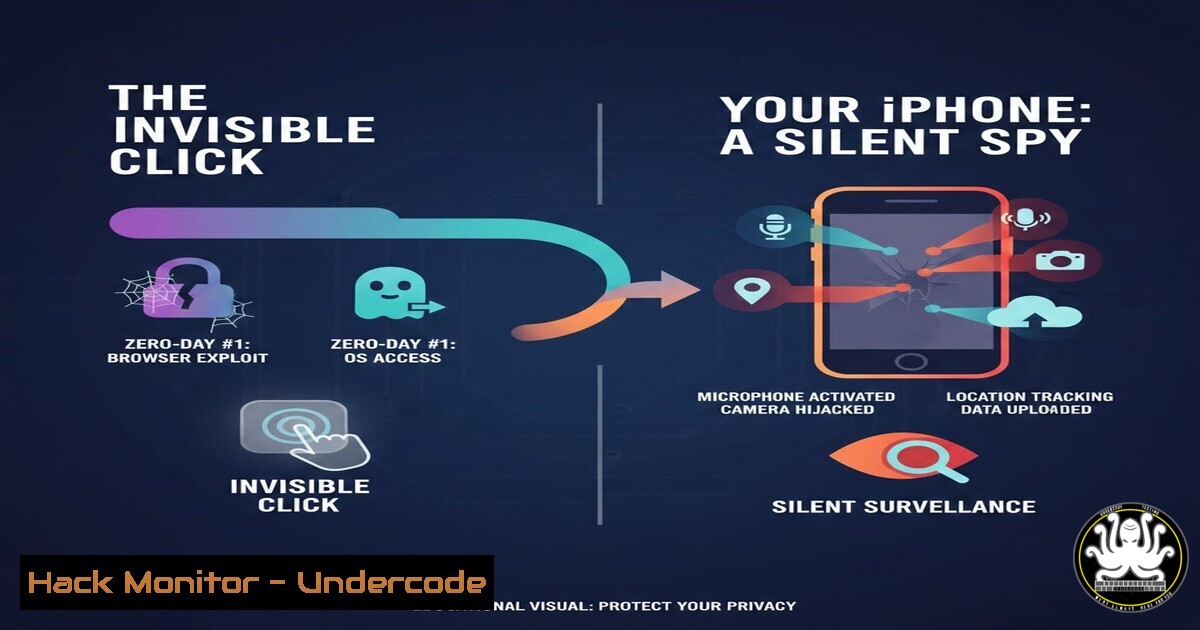
In December 2025, Apple issued emergency patches for two critical zero-day vulnerabilities in its WebKit browser engine that were actively exploited in “extremely sophisticated” attacks. These flaws, CVE-2025-43529 and CVE-2025-14174, turned the simple act of visiting a website into a silent, zero-click espionage tool, primarily targeting specific high-value individuals. This incident underscores a pivotal shift in cybersecurity: mobile devices are no longer secondary targets but primary, high-precision attack vectors for state-aligned and mercenary spyware operations.
Learning Objectives:
- Understand the technical mechanisms and severe impact of the CVE-2025-43529 (use-after-free) and CVE-2025-14174 (memory corruption) vulnerabilities.
- Execute immediate patching and advanced configuration hardening for Apple devices across organizational and personal environments.
- Implement proactive detection strategies to identify potential exploitation attempts and post-compromise activity within a network.
You Should Know:
1. Dissecting the WebKit Zero-Days: CVE-2025-43529 & CVE-2025-14174
The exploited vulnerabilities represent classic yet devastating memory safety flaws in the WebKit engine, which underpins Safari and all browsers on iOS and iPadOS.
CVE-2025-43529 is a use-after-free vulnerability. This occurs when the program continues to use a pointer (a memory address reference) after the memory it points to has been freed or deallocated. An attacker can craft malicious web content to manipulate this “dangling pointer,” ultimately leading to arbitrary code execution on the target device.
CVE-2025-14174 is a memory corruption flaw, addressed through improved input validation. It shares a CVE ID with a vulnerability Google patched in its Chrome browser, originating in the ANGLE graphics layer, highlighting a cross-platform component risk.
Apple’s specific language—”extremely sophisticated attack against specific targeted individuals”—is a deliberate signal often associated with commercial spyware like Predator or Pegasus, not broad cybercrime. The collaboration between Apple Security Engineering and Architecture (SEAR) and Google’s Threat Analysis Group (TAG) on the discovery further points to a high-threat context.
2. Immediate Patching: A Non-Negotiable Step-by-Step Survival Guide
Patching is the only complete mitigation. Apple has released updates across its entire ecosystem.
Step-by-Step Patching Guide:
- Identify Affected Devices: The vulnerabilities impact iPhone 11 and later, multiple iPad models (Pro, Air, and mini from specified generations), Apple Watch Series 6+, Apple TV HD/4K, and Apple Vision Pro.
2. Verify Current OS Version:
On iPhone/iPad: Go to Settings > General > About > Software Version.
On Mac: Click the Apple menu > About This Mac.
3. Apply the Correct Update Immediately:
For devices supporting iOS/iPadOS 26, macOS Tahoe, etc.: Update to version 26.2.
For older supported devices: Update to iOS/iPadOS 18.7.3.
Update Path: Navigate to `Settings > General > Software Update` on iOS/iPadOS, or `System Settings > General > Software Update` on macOS. For Macs, also update Safari independently if necessary.
4. Enterprise Enforcement: Use Mobile Device Management (MDM) solutions to enforce and verify patch compliance across all managed devices. Delay is a direct risk exposure.
- From Vulnerability to Exploit: Understanding the Silent Attack Chain
Understanding the exploitation pathway is key to grasping the threat’s stealth and severity.
Step-by-Step Exploitation Chain:
- Initial Access: The target receives a link via SMS, email, or a messaging app. This is a spear-phishing lure.
- Zero-Click Exploitation: Simply loading the webpage in any browser on iOS (Chrome, Edge, etc., all use WebKit) triggers the malicious code. No download or additional click is required.
- Code Execution & Sandbox Escape: The chained memory corruption flaws allow the attacker to execute code within the WebKit sandbox. Historically, such exploits are then chained with a separate kernel vulnerability (e.g., CVE-2023-41991) to break out of the sandbox and gain full control of the device.
- Payload Delivery & Persistence: Finally, sophisticated spyware like Predator is installed, enabling complete surveillance of calls, messages, location, and data.
-
Enterprise Detection: Hunting for Compromise in Your Network
While the exploit is stealthy, defenders can hunt for related activity.
Step-by-Step Detection Guide:
- Monitor for Anomalous Network Flows: Use perimeter and DNS logging to detect connections to newly registered or known malicious domains.
Example SIEM Query (Splunk-like):
index=network_dns (query="malicious-domain.com" OR query=".xyz") | stats count by src_ip, query
2. Analyze Endpoint Logs for Precursors: Look for unexplained Safari or WebKit process crashes, which can indicate attempted exploitation.
On macOS, check crash logs:
grep -r "WebKit" /Library/Logs/DiagnosticReports/ 2>/dev/null
3. Deploy Behavioral EDR Detections: Configure Endpoint Detection and Response (EDR) tools to alert on processes spawning from `WebKitWebContent` with unusual network connections or attempting to access sensitive data stores.
4. Leverage Threat Intelligence: Utilize platforms like SOC Prime, which curate detection rules (Sigma, YARA) mapped to CVEs like these for rapid deployment across security tools.
5. Hardening Your Defenses: Beyond Basic Patching
Patching closes the door, but hardening builds a stronger wall.
Step-by-Step Hardening Guide:
- Enable Lockdown Mode: For extreme-high-risk users (executives, journalists, activists), enable Lockdown Mode on iOS/iPadOS and macOS (
Settings > Privacy & Security > Lockdown Mode). This severely reduces the attack surface by disabling complex web technologies. - Configure Managed Browser Policies: Use MDM to deploy strict policies for Safari and manage which websites can be visited. Restrict the use of unmanaged web views in other applications.
- Implement Network Segmentation: Ensure mobile devices are on a segmented network zone with limited lateral movement to critical internal assets. Enforce strict outbound firewall rules and web filtering.
- Adopt a Zero-Trust Posture: Treat mobile devices as untrusted endpoints. Require device compliance (patched, encrypted) for access to corporate email, VPNs, and sensitive applications.
6. Governance and Strategy: Shifting the Corporate Mindset
This incident forces a strategic reevaluation at the board level.
Technical teams must communicate that patch latency is a measurable financial risk, not an IT inconvenience. Frameworks like CISA’s Known Exploited Vulnerabilities (KEV) catalog, which lists these CVEs with a mandatory remediation date for federal agencies, provide a model for corporate policy. Security strategies must evolve from perimeter-based models to those focused on protecting identity, data, and trust at the device level.
What Undercode Say:
- Mobile is the New Primary Frontier: The era of mobile devices as peripheral accessories is over. Advanced Persistent Threats (APTs) and mercenary spyware firms now view iOS and Android as Tier-1 initial access vectors due to their always-on nature, rich data, and often weaker organizational oversight compared to traditional workstations.
- The Patching Imperative is a Business Mandate: The operational “best practice” of patching has graduated to a non-negotiable business continuity requirement. With CISA mandating action on these specific flaws, boards must understand that delayed patching directly translates to quantifiable risk exposure and potential liability.
Prediction:
The successful exploitation of these WebKit zero-days will accelerate two major trends. First, investment in offensive research targeting mobile browser engines and shared cross-platform components (like ANGLE) will intensify, leading to more frequent and sophisticated mobile zero-day chains. Second, defensive paradigms will forcibly shift. Organizations will increasingly mandate stricter mobile device management, network-level traffic inspection for mobile traffic, and the adoption of enterprise-grade security solutions on phones and tablets, mirroring the protections standard on laptops. The smartphone will finally be recognized and secured as the primary computer it has become.
▶️ Related Video (80% Match):
🎯Let’s Practice For Free:
IT/Security Reporter URL:
Reported By: S%C3%BCmeyye Bet%C3%BCl – Hackers Feeds
Extra Hub: Undercode MoN
Basic Verification: Pass ✅


