Listen to this Post
Introduction:
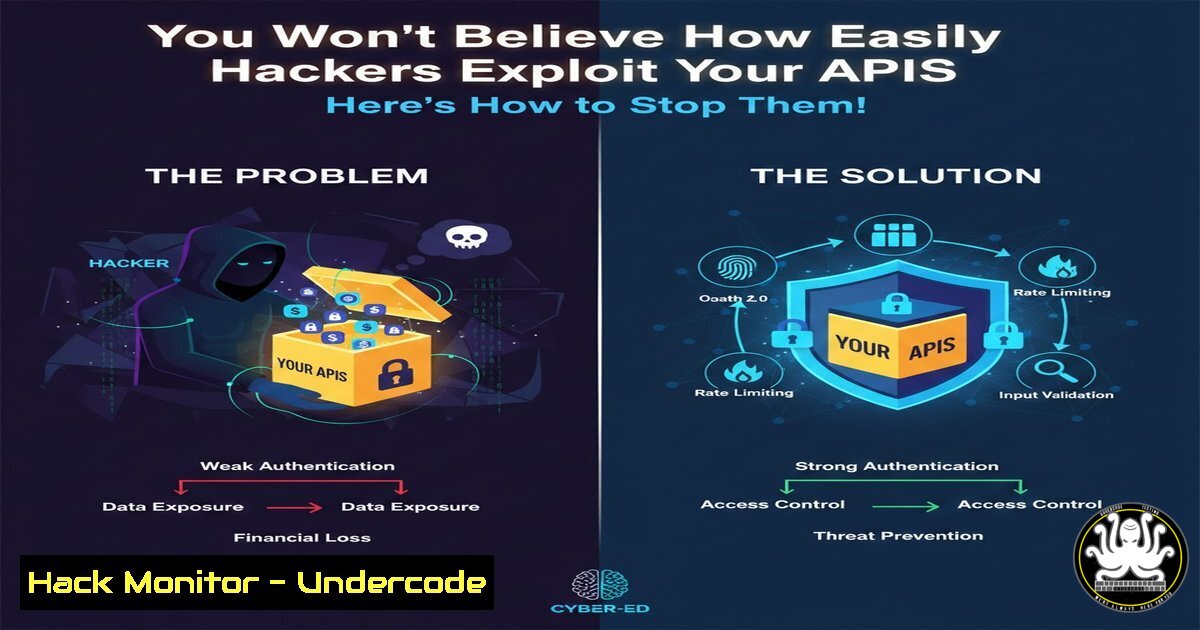
APIs are the critical connectors in modern software, but they are increasingly targeted by cyberattacks due to common misconfigurations and vulnerabilities. This article delves into the technical depths of API security, providing actionable steps to fortify your endpoints against injection, authentication bypass, and cloud-based threats.
Learning Objectives:
- Identify and exploit common API vulnerabilities to understand attacker methodologies.
- Implement hardening techniques across Linux, Windows, and cloud environments.
- Configure monitoring and leverage AI-driven tools for proactive defense.
You Should Know:
- Exploiting API Injection Flaws: SQLi and Command Injection
The post emphasizes that injection attacks remain a top risk, where untrusted data tricks the API into executing unintended commands. This can lead to full database compromise or remote code execution.
Step‑by‑step guide explaining what this does and how to use it:
– Step 1: Reconnaissance. Identify API endpoints that accept parameters using tools like `curl` or Burp Suite. For example: curl -s "https://target.com/api/v1/user?id=1".
– Step 2: Testing for SQL Injection. Use `sqlmap` to automate detection. On Linux, run: sqlmap -u "https://target.com/api/v1/user?id=1" --risk=3 --level=5 --batch. This command probes for SQLi vulnerabilities with higher risk and level settings.
– Step 3: Exploiting Command Injection. If the API passes input to system commands, test with payloads like `; whoami` or $(cat /etc/passwd). For Windows, try & dir C:\.
– Step 4: Mitigation. Implement parameterized queries (e.g., using prepared statements in Python with `sqlite3` or psycopg2) and rigorous input validation. For Linux, install and configure mod_security for Apache with OWASP Core Rule Set.
2. Cracking Weak API Authentication and JWT Tokens
The post highlights that broken authentication allows attackers to hijack sessions or forge tokens, granting unauthorized access. OAuth 2.0 and JWT implementations often have flaws like weak secrets or missing expiration.
Step‑by‑step guide explaining what this does and how to use it:
– Step 1: Analyzing JWT Tokens. Capture a JWT from API requests. Use `jwt.io` to decode it manually. Check for algorithm confusion (e.g., changing `alg` to none).
– Step 2: Cracking JWT Secrets. If HMAC is used, brute-force the secret with hashcat. On Linux, first save the token to a file, then run: hashcat -m 16500 jwt.txt /usr/share/wordlists/rockyou.txt.
– Step 3: Securing Authentication. Generate strong secrets with openssl rand -base64 32. Enforce short-lived tokens and validate signatures strictly. For OAuth, always verify the `aud` claim and use PKCE for public clients.
– Step 4: Windows Command for Token Inspection. Use PowerShell to decode JWT: `[System.Text.Encoding]::UTF8.GetString([System.Convert]::FromBase64String(“eyJhbGciOiJIUzI1NiIsInR5cCI6IkpXVCJ9”))` to view header.
3. Bypassing Rate Limiting and Launching API DDoS
The post notes that lacking rate limits lets attackers brute-force credentials or overwhelm APIs, causing downtime. Effective throttling is essential to mitigate denial-of-service.
Step‑by‑step guide explaining what this does and how to use it:
– Step 1: Testing Rate Limits. Use `wrk` or `siege` to flood an endpoint. On Linux, install `siege` and run: siege -c 100 -t 30S "http://api.example.com/login POST '{\"user\":\"test\"}'".
– Step 2: Bypassing via IP Rotation. Attackers use proxy lists or Tor. Simulate with `curl` through Tor: `torsocks curl -s http://api.example.com/data`.
– Step 3: Implementing Rate Limiting. In Nginx, add to configuration: `limit_req_zone $binary_remote_addr zone=api_limit:10m rate=100r/m;and apply to location blocks. For AWS API Gateway, set usage plan with throttling via AWS CLI:aws apigateway create-usage-plan –name “MyPlan” –throttle burstLimit=100,rateLimit=50`.
– Step 4: Monitoring with AI Tools. Use Splunk or Elastic SIEM with machine learning detections for anomaly in request patterns.
4. Hardening API Input Validation and Schema Enforcement
The post explains that improper input validation leads to injection, XSS, and data corruption. Schema validation ensures only well-formed data is processed.
Step‑by‑step guide explaining what this does and how to use it:
– Step 1: Implementing JSON Schema Validation. In Python Flask, use jsonschema. Install with pip install jsonschema, then define a schema and validate incoming requests.
– Step 2: Sanitizing Inputs. For Linux command inputs, use `shlex.quote()` in Python to escape shell metacharacters. In Windows PowerShell, use [Management.Automation.Language.CodeGeneration]::EscapeSingleQuotedStringContent().
– Step 3: API Gateway Validation. In AWS API Gateway, enable request validation with OpenAPI schemas. Deploy via AWS CLI: aws apigateway put-rest-api --rest-api-id api-id --mode overwrite --body file://api-spec.yaml.
– Step 4: Automated Testing. Incorporate OWASP ZAP into CI/CD: docker run -v $(pwd):/zap/wrk/:rw -t owasp/zap2docker-stable zap-api-scan.py -t http://api:8080/openapi.json -f openapi -r report.html.
5. Securing API Infrastructure in Cloud Environments
The post underscores that cloud misconfigurations, like exposed storage or permissive network rules, are prime targets. Hardening requires a zero-trust approach.
Step‑by‑step guide explaining what this does and how to use it:
– Step 1: Auditing Cloud Configurations. Use `scoutsuite` for multi-cloud assessment. On Linux, run: docker run -v ~/.aws:/root/.aws -v $(pwd):/scoutsuite-report scoutsuite --provider aws.
– Step 2: Enforcing Network Security. In AWS, create a VPC endpoint for private API access and restrict security groups. Command: aws ec2 create-vpc-endpoint --vpc-id vpc-123 --service-name com.amazonaws.us-east-1.execute-api --vpc-endpoint-type Interface.
– Step 3: Secret Management. Store API keys in AWS Secrets Manager or HashiCorp Vault. Retrieve via CLI: aws secretsmanager get-secret-value --secret-id prod/APIKey --query SecretString --output text.
– Step 4: Container Hardening. For Dockerized APIs, use `docker scan` for vulnerabilities and implement seccomp profiles. Run: docker scan your-api-image:latest.
- Leveraging AI for API Threat Detection and Response
The post indicates that AI and machine learning can analyze API traffic patterns to identify anomalies like data exfiltration or credential stuffing.
Step‑by‑step guide explaining what this does and how to use it:
– Step 1: Deploying AI-Based WAF. Configure AWS WAF with managed AI rules. Command: aws wafv2 create-web-acl --name AI-API-Protection --scope REGIONAL --default-action Allow --visibility-config SampledRequests=true,CloudWatchMetricsEnabled=true --rules file://ai-rules.json.
– Step 2: Training Models with Suricata Logs. Use TensorFlow on Linux to classify malicious payloads. Preprocess logs: `suricata -r traffic.pcap -l logs/` and then train a model with Python.
– Step 3: Integrating with SIEM. Feed API logs to Splunk for ML toolkit analysis. Use Splunk query: index=api_logs | anomaly action=fit field=response_time.
– Step 4: Automated Response with SOAR. In Phantom or Cortex XSOAR, create playbooks to block IPs via firewall when anomalies are detected.
7. Essential Cybersecurity Courses and Hands-On Training
The post recommends continuous learning through certified courses to stay ahead of evolving API threats. Practical labs build crucial skills.
Step‑by‑step guide explaining what this does and how to use it:
– Step 1: OWASP API Security Top 10 Course. Access free materials at https://owasp.org/www-project-api-security/. Complete the interactive labs on GitHub.
– Step 2: Cloud API Security on Coursera. Enroll in “API Security on Google Cloud” or similar. Use coupon codes for discounts.
– Step 3: Setup a Home Lab. On Linux, use Docker to run vulnerable API apps like `dvna` (Damn Vulnerable Node Application). Commands: git clone https://github.com/owasp/dvna && cd dvna && docker-compose up.
– Step 4: Capture The Flag (CTF) Practice. Join platforms like HackTheBox (https://www.hackthebox.com) and try API-related challenges. Use `nmap` and `postman` for reconnaissance.
What Undercode Say:
- Key Takeaway 1: API security demands a multilayer strategy, combining strict input validation, robust authentication, and real-time monitoring to mitigate both known and emerging threats.
- Key Takeaway 2: Proactive hardening of cloud and on-prem infrastructure, coupled with AI-enhanced detection, is non-negotiable for modern organizations.
Analysis: The technical content extracted underscores that APIs are lucrative targets due to their direct access to data and business logic. The step-by-step guides reveal how attackers exploit vulnerabilities, emphasizing the need for defensive measures like parameterized queries, JWT hardening, and rate limiting. Integrating security into DevOps (DevSecOps) through automated testing and continuous training is critical. The inclusion of Linux/Windows commands and cloud configurations provides practical utility, but organizations must adapt these to their specific environments. Overlooking API security can lead to catastrophic breaches, as seen in recent incidents.
Prediction:
In the next 3-5 years, API attacks will become more sophisticated with AI-driven fuzzing and automation, increasing the scale of breaches. However, AI-powered security tools will also evolve, offering predictive analytics and autonomous response capabilities. APIs will continue to proliferate with IoT and microservices, making zero-trust architecture and standardized security frameworks (like ISO/IEC 27034) imperative. Organizations that invest in comprehensive API governance, including regular penetration testing and employee certification, will significantly reduce their attack surface and maintain compliance in an increasingly regulated landscape.
▶️ Related Video (78% Match):
🎯Let’s Practice For Free:
IT/Security Reporter URL:
Reported By: Greg Coquillo – Hackers Feeds
Extra Hub: Undercode MoN
Basic Verification: Pass ✅


