Listen to this Post
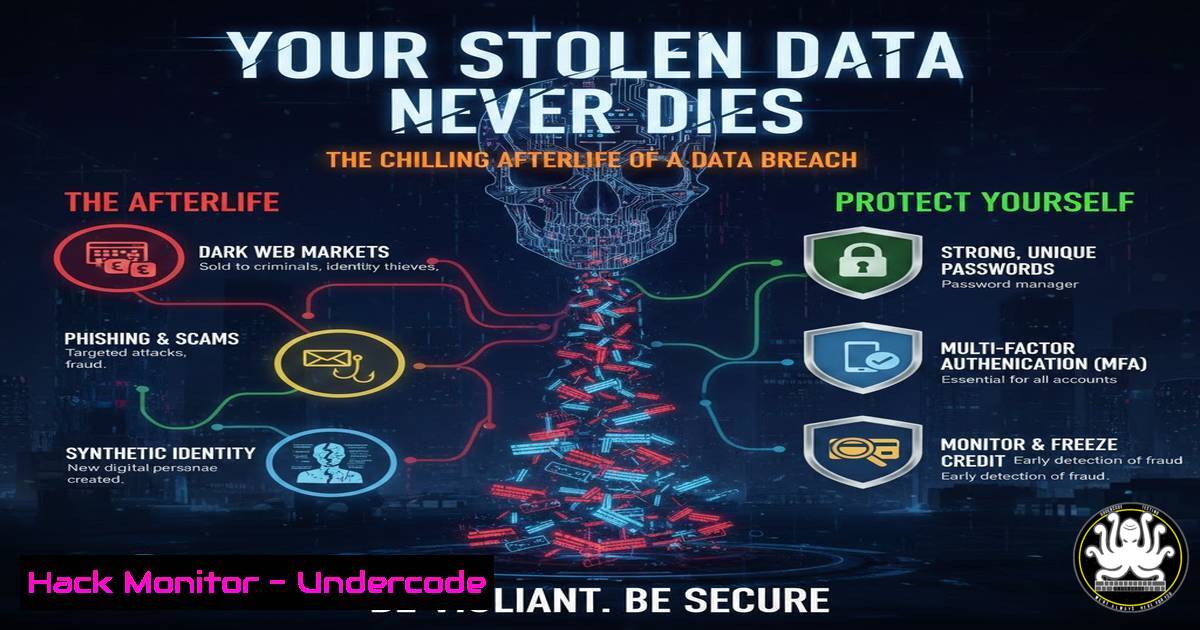
Introduction:
When a major data breach hits the headlines, the immediate focus is on the initial hack and the millions of records exposed. However, the real danger lies in the years that follow, as stolen data sets are weaponized, resold, and reused in countless cyberattacks. This article explores the persistent lifecycle of breached data and provides actionable technical guidance to mitigate its long-term risks.
Learning Objectives:
- Understand the criminal ecosystem that monetizes and weaponizes stolen data long after the initial breach.
- Learn practical techniques to discover if your credentials have been compromised and are circulating on the dark web.
- Implement defensive strategies, including credential hardening, monitoring, and incident response planning, to break the cycle of reuse.
You Should Know:
- The Dark Web Data Economy: Where Your Information Lives On
Breached data is rarely used just once. It enters a sophisticated underground economy. Initial attackers often sell bulk data (emails, passwords, personal identifiable information) on dark web forums or via Telegram channels. This data is then purchased by other criminals who specialize in different attack vectors, such as credential stuffing, targeted phishing (spear-phishing), or identity fraud. A single breach can fuel attacks for a decade.
Step-by-step guide:
- Concept: Data is categorized, priced, and sold. “Fresh” breaches command higher prices. Databases are often “cracked” (passwords decrypted from hashes) before sale.
- Tool Familiarity: While direct access requires Tor and trusted connections, security professionals use threat intelligence feeds (e.g., Recorded Future, Intel 471) and dark web monitoring services to track these markets.
- Command (Linux) for Anonymized Research (Educational): To safely access threat intelligence reports (not live dark webs), you might use `curl` to pull data from clearnet threat intel APIs (with proper API keys).
Example: Query a threat intel platform's API for a specific domain mention (replace API_KEY and endpoint)
curl -H "Authorization: Bearer YOUR_API_KEY" https://api.threatintelplatform.com/v1/indicators/domain/evilmarketplace.onion
-
Credential Stuffing: The Primary Weapon of Recycled Data
This is the most common reuse of breached credentials. Attackers use automated tools to test millions of username/password pairs from past breaches against login pages of other services (e.g., banking, social media, corporate VPNs). They exploit the human tendency to reuse passwords.
Step-by-step guide:
- Defensive Recon: Use `haveibeenpwned.com` API or integrated password managers to check your credentials against known breaches.
- Mitigation – Implement Rate Limiting: As a defender, ensure your web applications have strong rate-limiting and detect bot traffic.
Example (Conceptual Nginx Rate Limiting):
http {
limit_req_zone $binary_remote_addr zone=login:10m rate=5r/m;

server {
location /login {
limit_req zone=login burst=10 nodelay;
proxy_pass http://my_backend;
}
}
}
3. Mandate Multi-Factor Authentication (MFA): MFA is the single most effective barrier against credential stuffing. Enforce it for all user-facing services.
3. From Credentials to Full-Scale Compromise: Lateral Movement
Once an attacker gains a foothold with stolen credentials, the real intrusion begins. They use this access to move laterally within a network, escalate privileges, and exfiltrate more sensitive data.
Step-by-step guide (Defensive Perspective):
- Monitor for Lateral Movement: Use endpoint detection and response (EDR) tools to spot unusual logins and process execution chains.
2. Windows Command to Audit Logons (Defensive):
 Query the security event log for successful logons (Event ID 4624)
Get-WinEvent -FilterHashtable @{LogName='Security'; ID=4624} -MaxEvents 20 | Format-List -Property TimeCreated, Message
3. Implement Zero Trust Principles: Assume breach. Verify every request, enforce least-privilege access, and segment your network to contain lateral movement.
4. Personalized Phishing & Social Engineering at Scale
With detailed personal info from breaches (names, job titles, past transactions), attackers craft hyper-personalized phishing emails (spear-phishing) or vishing (voice phishing) calls that are incredibly convincing.
Step-by-step guide (Awareness & Defense):
- Conduct Regular Phishing Simulations: Use platforms to train users to spot sophisticated phishing attempts.
- Deploy Email Security Gateways: Configure tools to flag emails with spoofed sender addresses (
DMARC,SPF,DKIM). - Verify Request Integrity: Establish a verification protocol for sensitive requests (e.g., wire transfers) using a separate, pre-established channel.
5. Proactive Defense: Hunting for Your Breached Data
You cannot assume your data is safe. Proactive hunting is essential.
Step-by-step guide:
1. Monitor for Credential Exposure:
Use Have I Been Pwned’s API: Integrate it into your user registration/update flow.
Command-line check with `curl` (for a single email):
curl -s -H "hibp-api-key: YOUR_KEY" https://haveibeenpwned.com/api/v3/breachedaccount/[email protected] | jq .
2. Deploy a Password Breach Alert System: Use tools like `SpyCloud` or `Have I Been Pwned: Domain Search` to get automated alerts if your corporate email domain appears in new breaches.
3. Enforce Password Policy via Technical Means: Use APIs to reject known-compromised passwords during user password creation.
Example (Using the HIBP Pwned Passwords API):
 Check a password SHA-1 hash prefix (first 5 chars) against the database
FULL_HASH=$(echo -n "YourPassword123" | sha1sum | awk '{print toupper($1)}')
PREFIX=$(echo $FULL_HASH | cut -c1-5)
SUFFIX=$(echo $FULL_HASH | cut -c6-)

curl -s "https://api.pwnedpasswords.com/range/$PREFIX" | grep -i $SUFFIX
 If a result is returned, the password is known to be compromised.
What Undercode Say:
- Key Takeaway 1: A data breach is not a single event but the beginning of a persistent, multi-year threat. The stolen data becomes a permanent liability that fuels an endless cycle of attacks against individuals and organizations.
- Key Takeaway 2: Technical defenses must evolve from just preventing the initial breach to assuming credentials will leak. The security paradigm must shift to mitigating the reuse of stolen data through MFA, credential monitoring, and Zero Trust architectures.
The analysis reveals a critical flaw in traditional incident response: treating a breach as a contained event to be “resolved.” The modern approach requires continuous vigilance. The half-life of stolen data is extraordinarily long. Defenders must operationalize breach awareness, integrating external threat intelligence about credential exposure directly into their identity and access management (IAM) systems. The goal is to render the stolen data obsolete before attackers can weaponize it, breaking the cyber-criminal supply chain at its most vulnerable point.
Prediction:
The future of post-breach data exploitation will be dominated by Artificial Intelligence. AI will enable criminals to correlate disparate data sets from multiple breaches to build terrifyingly accurate digital profiles, automate hyper-personalized social engineering at an unimaginable scale, and generate synthetic media (deepfakes) for fraud. Defensively, AI-powered security platforms will become essential to predict attack pathways using exposed data, automatically enforce dynamic access controls, and identify subtle behavioral anomalies that indicate an attacker is using old credentials to pave the way for a new intrusion. The arms race will move from stealing data to intelligently weaponizing it.
▶️ Related Video (74% Match):
🎯Let’s Practice For Free:
IT/Security Reporter URL:
Reported By: Vincent L – Hackers Feeds
Extra Hub: Undercode MoN
Basic Verification: Pass ✅


