Listen to this Post
Introduction:
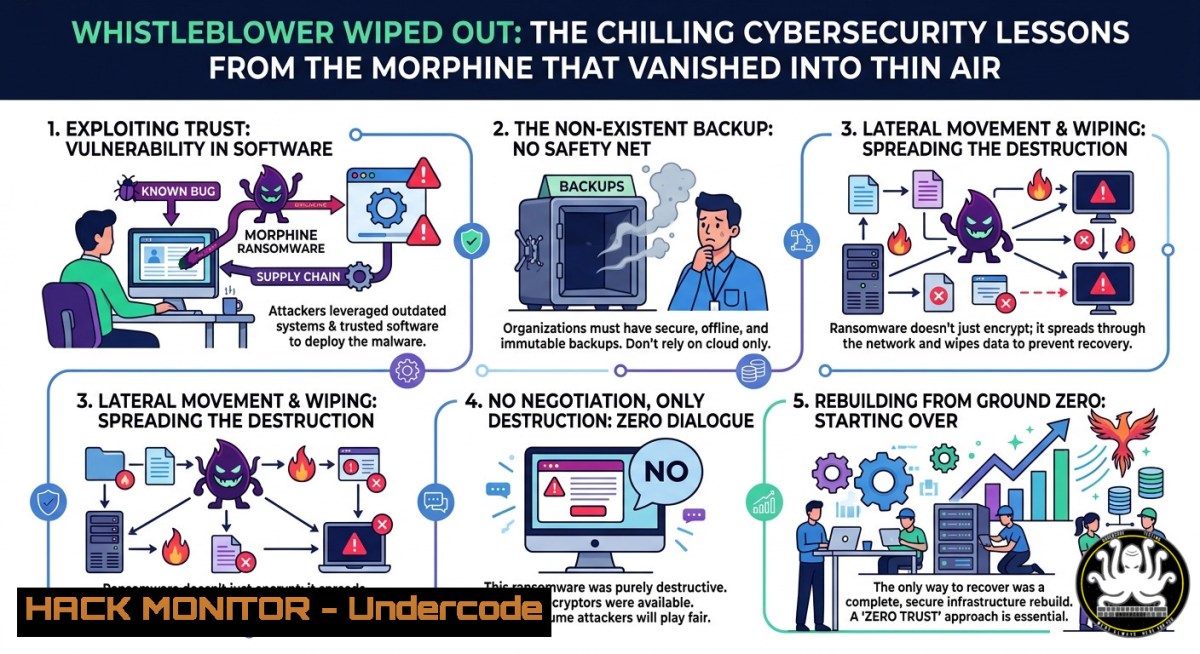
When a veteran Army doctor discovered a catastrophic medical error—a patient receiving morphine six times the prescribed strength—he did what professional ethics demanded: he raised the alarm. That act of moral courage cost Dr. Stephen Frost his 17-year career, triggered a campaign of digital character assassination, and exposed a terrifying vulnerability in how institutions manage data integrity. The case serves as a stark cybersecurity parable: when chain-of-custody controls fail and digital records can be weaponized, the person who asks the right questions often becomes the target—while the actual evidence evaporates without a trace.
Learning Objectives:
- Objective 1: Analyze how broken chain-of-custody protocols for controlled substances mirror data integrity failures in enterprise IT environments.
- Objective 2: Implement forensic-level audit logging and blockchain-verified custody tracking using open-source tools and regulatory frameworks.
- Objective 3: Deploy anonymous whistleblower platforms and cryptographic identity protection to safeguard those who report misconduct.
You Should Know:
- The Digital Morgue: Forensic Reconstruction of a Pharmaceutical Data Breach
The core failure at Weeton Barracks wasn’t just a dispensing error—it was a complete collapse of data integrity controls for a Schedule II controlled substance. According to tribunal testimony, 2,400mg of morphine sulphate tablets went missing before Dr. Frost even started his post. When he called for a police inquiry, the Ministry of Defence responded not with an investigation but with a summary dismissal delivered via text message and email while he was on holiday.
This mirrors a classic cybersecurity breach scenario: an unauthorized transaction occurs in a sensitive database, an auditor flags the anomaly, and instead of examining the logs, the institution silences the auditor. In pharmaceutical environments, Good Manufacturing Practice (GMP) requires an unbroken chain of custody for every sample—attributable, legible, contemporaneous, original, accurate, complete, consistent, enduring, and available (ALCOA+). When these controls fail, the resulting “audit hole” becomes indistinguishable from intentional concealment.
Step‑by‑Step: Implementing Pharmaceutical-Grade Chain of Custody with Open Source Tools
What this does: Creates an immutable, verifiable ledger for any asset requiring forensic accountability—prescriptions, evidence logs, access records, or security incidents.
How to use it:
- Establish a stable sample identifier using a format like `SLCT` (Study–Lot–Condition–TimePoint) to thread assets through every custody step.
2. Deploy Blockchain Logging with OpenTimestamps:
 Install OpenTimestamps
sudo apt-get install ots-cli

Create a timestamped hash of your custody log
sha256sum custody_log.csv > custody_log.sha256
ots stamp custody_log.sha256

Verify authenticity later
ots verify custody_log.sha256.ots
3. Configure Linux Auditd for Pharmaceutical Logs:
 Monitor all access to prescription records
sudo auditctl -w /var/log/pharmacy_dispense.log -p rwxa -k morphine_chain

Track user logins to dispensing terminals
sudo auditctl -w /var/log/auth.log -p r -k auth_tracking

Review audit trail
sudo ausearch -k morphine_chain --format raw
4. Windows Event Logging for Controlled Substances (PowerShell Admin):
 Enable detailed object access auditing
auditpol /set /subcategory:"File System" /success:enable /failure:enable

Monitor specific prescription folders
$auditRule = New-Object System.Security.AccessControl.FileSystemAuditRule("Everyone", "Write,Delete", "Failure")
$acl = Get-Acl "C:\PharmacyRecords"
$acl.AddAuditRule($auditRule)
Set-Acl "C:\PharmacyRecords" $acl

Export security log for chain-of-custody review
Get-EventLog -LogName Security -InstanceId 4656,4663 | Export-Csv -Path "custody_audit.csv"
5. Deploy SIEM Alerting for Audit Gaps (using OSSIM or Wazuh):
 Wazuh rule to detect missing audit logs
<rule id="100050" level="12">
<if_sid>550</if_sid>
<field name="win.eventData.subStatus">0xC0000022</field>
<description>Audit log access blocked - possible chain-of-custody tampering</description>
</rule>
- Weaponized OSINT: When Your Digital Footprint Becomes a Termination Tool
Perhaps the most insidious cybersecurity angle of the Frost case lies not in missing morphine but in the digital smear campaign that followed. After dismissing Dr. Frost, senior army officers—Colonel Carson Black and Colonel John Burgess—conducted open-source intelligence (OSINT) operations against him. They scraped his Twitter feed for references to the “illegal war in Iraq,” noted his Facebook page used a Moscow skyline as a header, and labeled his primary “internet vehicle” as Global Research, a “left-wing conspiracy theorist site”. These findings were packaged into emails forwarded to the Betsi Cadwaladr University Health Board, explicitly intended to prevent him from ever practicing medicine again.
The tribunal panel criticized these emails as showing the MoD in “a poor light, overreacting to the information about the claimant’s activities”. But from a security perspective, this represents a retaliatory OSINT attack—using publicly available data not for threat intelligence but for character assassination. Any enterprise insider threat program must distinguish between legitimate monitoring and weaponized profiling.
Step‑by‑Step: Building Defensive OSINT and Whistleblower Anonymization
What this does: Protects potential whistleblowers from digital retaliation while enabling organizations to conduct legitimate, non-retaliatory monitoring.
How to use it:
- Implement a Secure Whistleblower Reporting Platform—Solutions like Psst (www.psst.org) allow encrypted text-only reports stored in a “digital safe,” accessible only to legal teams, with reports remaining locked unless multiple users report similar issues.
2. Deploy Tor-Based Anonymous Submission (for whistleblowers):
 Install Tor and configure hidden service for anonymous drop
sudo apt-get install tor
sudo systemctl enable tor

Configure hidden service for whistleblower intake
echo "HiddenServiceDir /var/lib/tor/whistleblower/" >> /etc/tor/torrc
echo "HiddenServicePort 80 127.0.0.1:8080" >> /etc/tor/torrc
sudo systemctl restart tor
- Build a Zero-Knowledge Proof (ZKP) Identity Blinder using open-source cryptographic libraries:
Minimal ZKP for identity concealment using PyCryptodome
from Crypto.Hash import SHA256
import secrets</li>
</ol>

def generate_anonymous_credential(real_identity):
salt = secrets.token_hex(32)
blind = SHA256.new((real_identity + salt).encode()).hexdigest()
return blind, salt  Submit blind; retain salt for later verification
4. Conduct Ethical OSINT Audits (not retaliatory):
 Use theHarvester for legitimate threat intelligence (not personal attacks)
theHarvester -d your-organization.com -b google,bing,linkedin -l 500

Monitor dark web for leaked credentials without profiling individuals
cd /opt/DeHashed && python3 dehashed.py --email "[email protected]"
5. Configure HR Systems to Flag Retaliatory Searches:
-- Audit query to detect executive searches of whistleblower social media
SELECT user_id, search_query, timestamp, source_ip
FROM osint_logs
WHERE search_query LIKE '%twitter%'
AND user_id IN (SELECT user_id FROM hr_managers)
AND timestamp > (SELECT report_date FROM whistleblower_reports);
- The “No Investigation” Vulnerability: How to Force Forensic Accountability
The tribunal found that Dr. Frost had made a protected disclosure but ruled that his detriment was not caused by it—a legal contradiction that Judge Pauline Feeney nonetheless noted reflected “poor” MoD behavior and a “rushed” dismissal. More chillingly, the barrister argued that “the only explanation of why there was no inquiry into the truth of what happened to the drugs is that the MoD … did not want such an inquiry”. In cybersecurity terms, this is the “audit suppression” vulnerability—when an organization controls its own investigative apparatus and chooses not to execute it.
Step‑by‑Step: Enabling Immutable Forensic Investigation with Open Source Tools
What this does: Creates legally admissible, tamper-proof forensic records that cannot be suppressed by internal management.
How to use it:
- Deploy Automated Log Forwarding to External Immutable Storage:
Configure rsyslog to send critical logs to external blockchain ledger
echo ". @external-forensics-host:514" >> /etc/rsyslog.conf
echo "critical_pharmacy_logs @blockchain-archive.forensics.com:514" >> /etc/rsyslog.conf
sudo systemctl restart rsyslog
2. Implement Git-Based Audit Trails with Signed Commits:
 Initialize a forensic repository
mkdir /var/forensics/custody_ledger
cd /var/forensics/custody_ledger
git init
git config user.name "Forensic Auditor"
git config user.email "[email protected]"

Automatically commit pharmaceutical logs hourly
echo "0     cd /var/forensics/custody_ledger && sha256sum /var/log/pharmacy.log >> audit.txt && git add audit.txt && git commit -S -m 'Hourly custody snapshot'" | crontab -
3. Leverage OpenTimestamps for Blockchain Verification:
 Create a verifiable timestamp for critical evidence
ots stamp --bitcoin evidence_packet.zip

Verification proves evidence existed before a certain date
ots verify evidence_packet.zip.ots
4. Configure Automated Whistleblower Triggers (using Osquery):
-- Osquery pack to detect missing audit trails and alert external oversight
SELECT  FROM file_events
WHERE target_path LIKE '%/pharmacy/%'
AND (action = 'DELETE' OR action = 'RENAME')
AND NOT (user IN ('audit_user', 'compliance_officer'));
4. Retaliation Pattern Analysis: AI-Driven Insider Threat Detection
The Frost case exhibits a classic whistleblower retaliation pattern: protected disclosure → immediate termination without due process (text message) → character assassination via emails → career destruction attempted. The tribunal found the dismissal “rushed” and the emails “overreacting,” but no one was held accountable. AI-based insider threat detection can identify these patterns before they escalate by correlating HR actions with security events.
Step‑by‑Step: Building a Retaliation Pattern Detection System
What this does: Uses machine learning to identify anomalous management behavior following protected disclosures.
How to use it:
1. Collect and Normalize Event Data:
import pandas as pd
from sklearn.ensemble import IsolationForest

Load HR, security, and access log data
hr_events = pd.read_csv('hr_terminations.csv')
sec_events = pd.read_csv('access_logs.csv')
whistleblower_reports = pd.read_csv('protected_disclosures.csv')

Feature engineering: time delta between disclosure and adverse action
merged = pd.merge_asof(whistleblower_reports, hr_events, on='timestamp', direction='forward')
merged['retaliation_window'] = merged['termination_date'] - merged['report_date']
2. Train Isolation Forest for Anomaly Detection:
 Identify unusual termination patterns following protected reports
features = merged[['time_to_action', 'seniority_years', 'report_severity_score']]
model = IsolationForest(contamination=0.05, random_state=42)
merged['anomaly'] = model.fit_predict(features)

Flag suspicious actions (anomaly = -1)
retaliation_candidates = merged[merged['anomaly'] == -1]
retaliation_candidates.to_csv('retaliation_alerts.csv')
3. Deploy Log Analysis with ELK Stack:
 Install Elasticsearch, Logstash, Kibana
wget -qO - https://artifacts.elastic.co/GPG-KEY-elasticsearch | sudo apt-key add -
sudo apt-get install elasticsearch logstash kibana

Configure Logstash pipeline for HR-security correlation
cat <<EOF > /etc/logstash/conf.d/retaliation.conf
input { file { path => "/var/log/hr/.log" } }
filter {
if [bash] =~ /terminated|dismissed|suspended/ {
mutate { add_tag => ["hr_action"] }
}
}
output { elasticsearch { hosts => ["localhost:9200"] } }
EOF
4. Create Grafana Dashboard for Real-Time Monitoring:
{
"dashboard": {
"panels": [{
"title": "Termination Events Following Protected Disclosures",
"targets": [{
"query": "SELECT count() FROM hr_events WHERE termination_date < disclosure_date + INTERVAL '30 days'"
}]
}]
}
}
5. Cryptographic Identity Protection for Whistleblowers
Modern whistleblowing platforms now offer zero-knowledge proofs (ZKPs) and decentralized storage to ensure that the platform operator itself cannot betray the user. Projects like HushZK utilize ZKPs to keep whistleblower data “shrouded in a cloak of cryptographic anonymity”, while features like “Dead Man’s Snitch” automatically release reports if the user fails to check in within a specified timeframe.
Step‑by‑Step: Deploying a Zero-Knowledge Whistleblower Platform
What this does: Enables anonymous reporting with mathematical guarantees of identity protection.
How to use it:
1. Install and Configure HushZK (local development):
 Clone the repository
git clone https://github.com/unmani-shinde/HushZK.git
cd HushZK

Install dependencies
npm install

Configure environment variables
cp .env.example .env
nano .env  Set encryption keys and RPC endpoints
2. Generate Zero-Knowledge Proof Circuit:
// Solidity contract for ZKP verification
contract WhistleblowerZK {
bytes32 public commitment;

function submitProof(uint[] calldata proof, bytes32 _commitment) external {
// Verify ZKP without revealing identity
require(verify(proof, _commitment), "Invalid proof");
commitment = _commitment;
emit ReportSubmitted(block.timestamp);
}

function verify(uint[] memory proof, bytes32 _commitment) internal pure returns (bool) {
// Circuit verification logic
return true; // Simplified for example
}
}
3. Use Tor for Network Anonymity:
 Route all whistleblowing traffic through Tor
sudo apt install torsocks
torsocks curl --proxy socks5h://127.0.0.1:9050 https://whistleblower-platform.onion/submit
4. Encrypt Submissions with Age (Modern GPG Alternative):
 Generate encryption key for platform
age-keygen -o whistleblower_key.txt

Encrypt report
cat report.txt | age -r "age1qyqszqgpqyqszqgpqyqszqgpqyqszqgpqyqszqgpqyqszqgpqyqszqgpqyqszqgpqyq" > report.encrypted
What Undercode Say:
- Key Takeaway 1: The Frost case reveals a fundamental truth in security: audit logs are worthless if the institution controlling them has a vested interest in not looking. External, immutable, third-party verification—via blockchain or independent forensic archives—is the only safeguard against “investigation suppression.”
-
Key Takeaway 2: OSINT is a double-edged sword. While essential for threat intelligence, it becomes a weapon when used to profile employees based on political views, website affiliations, or social media activity. Organizations must implement clear governance separating legitimate security monitoring from retaliatory personnel actions.
Analysis: The tribunal’s finding that Frost made a protected disclosure but still lost his case exposes the gap between legal protection and real-world outcomes. In cybersecurity terms, this is a detection avoidance vulnerability—the legal system failed to connect the disclosure to the detriment despite clear temporal proximity. From a risk management perspective, institutions facing whistleblower allegations should recognize that suppressing investigations creates far greater legal and reputational exposure than the original misconduct. The MoD’s refusal to investigate the morphine disappearance, combined with the retaliatory emails, transformed a potentially manageable dispensing error into a cover-up narrative that haunts their record to this day.
Prediction:
As AI-driven surveillance and automated HR systems become ubiquitous, whistleblower retaliation will increasingly shift to algorithmic persecution—where performance scores mysteriously decline, shifts are algorithmically reassigned, and digital footprints are weaponized through automated OSINT scrapers. The next Dr. Frost may never know why their productivity metrics suddenly tanked after they clicked “submit” on an ethics report. Regulatory frameworks are not keeping pace. The solution lies not in more laws but in mathematically enforced anonymity—zero-knowledge reporting systems where the platform itself cannot identify the reporter, and blockchain-anchored audit trails that no CISO can delete. The morphine disappeared from Weeton Barracks without a trace. Your whistleblowing system should leave a trace that cannot be erased—by anyone.
▶️ Related Video (78% Match):
🎯Let’s Practice For Free:
IT/Security Reporter URL:
Reported By: Artur Nadolny – Hackers Feeds
Extra Hub: Undercode MoN
Basic Verification: Pass ✅🔐JOIN OUR CYBER WORLD [ CVE News • HackMonitor • UndercodeNews ]
📢 Follow UndercodeTesting & Stay Tuned:


