Listen to this Post
Introduction:
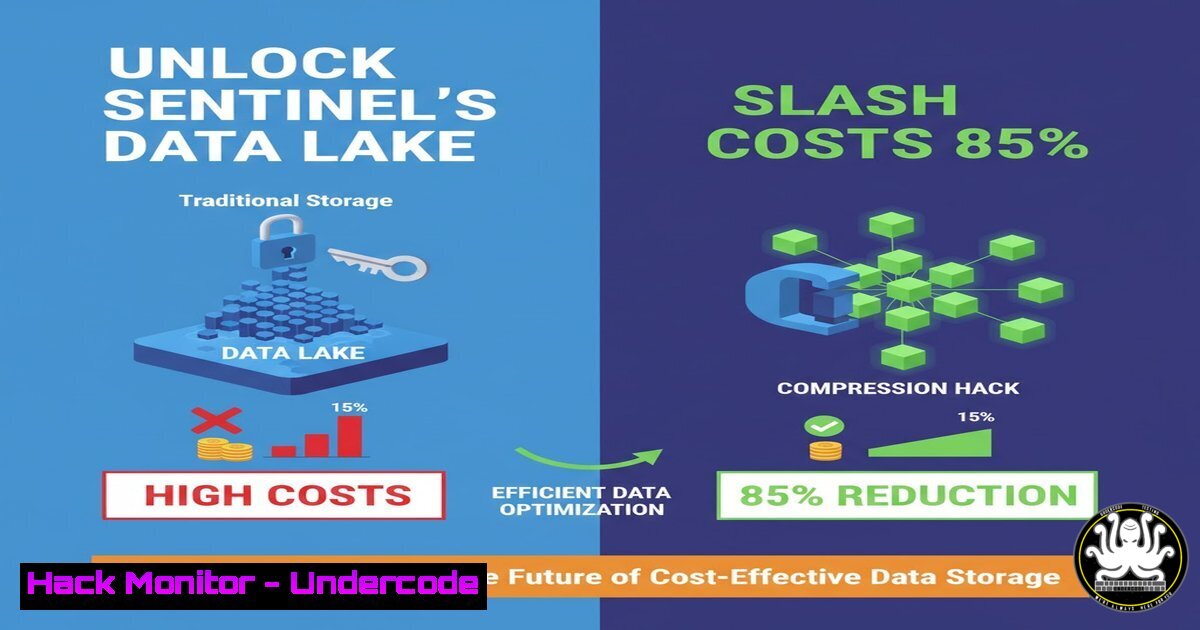
Microsoft Sentinel’s transition to a data lake architecture marks a pivotal shift in modern SIEM economics, offering security teams unprecedented cost savings through 6:1 compression while maintaining full KQL capabilities. This evolution eliminates the traditional trade-off between data retention costs and investigative depth, fundamentally changing how organizations approach long-term security analytics and compliance.
Learning Objectives:
- Master Sentinel data lake pricing models and compression mechanics
- Implement cost-optimized data retention strategies with full KQL access
- Configure automated data lake onboarding and archive tier migration
You Should Know:
1. Sentinel Data Lake Economics and Compression Mechanics
The 6:1 compression ratio transforms security budgeting by reducing storage costs to approximately one-sixth of traditional retention. This compression applies universally across both new data lake ingestion and existing archive tiers, creating immediate ROI without sacrificing investigative capabilities.
// Verify data lake compression savings
SecurityEvent
| where TimeGenerated >= ago(30d)
| summarize IngestedGB = sum(_BilledSize)/1000
| extend CompressedGB = IngestedGB/6
| extend TraditionalCost = IngressedGB  0.50
| extend DataLakeCost = CompressedGB  0.50
| project CostSavings = TraditionalCost - DataLakeCost, SavingsPercentage = (1 - DataLakeCost/TraditionalCost)100
This KQL query calculates exact cost savings by comparing traditional ingestion costs against data lake compressed pricing. Run this against your current Sentinel workspace to quantify potential savings based on actual data volumes, enabling precise budget forecasting and justification.
2. Automated Data Lake Onboarding with ARM Templates
Deploying Sentinel data lake requires infrastructure-as-code approaches for consistent, auditable implementations. Use Azure Resource Manager templates to automate workspace configuration.
{
"type": "Microsoft.OperationalInsights/workspaces",
"apiVersion": "2020-08-01",
"name": "[parameters('workspaceName')]",
"location": "[parameters('location')]",
"properties": {
"features": {
"enableLogAccessUsingOnlyResourcePermissions": true,
"legacy": 0,
"searchVersion": 1
},
"sku": {
"name": "CapacityReservation",
"maxCapacityReservationLevel": 500
},
"workspaceCapping": {
"dailyQuotaGb": -1
}
},
"resources": [
{
"type": "Microsoft.OperationalInsights/workspaces/dataExports",
"apiVersion": "2020-08-01",
"name": "[concat(parameters('workspaceName'), '/', 'SentinelDataLakeExport')]",
"dependsOn": [
"[resourceId('Microsoft.OperationalInsights/workspaces', parameters('workspaceName'))]"
],
"properties": {
"destination": {
"resourceId": "[parameters('dataLakeResourceId')]"
},
"tableNames": [
"SecurityEvent",
"Syslog",
"OfficeActivity"
]
}
}
]
}
This ARM template configures both the Sentinel workspace and automated data export to the data lake. Modify the tableNames array to include your critical security tables, ensuring comprehensive coverage while maintaining cost efficiency through selective ingestion.
3. Legacy Archive Migration and Cost Reclamation
Existing Sentinel customers with legacy archive tiers must migrate to the data lake architecture to unlock compression benefits. This process automatically converts historical data while preserving accessibility.
 Migrate legacy archive to data lake
Connect-AzAccount
$WorkspaceName = "YourSentinelWorkspace"
$ResourceGroup = "YourResourceGroup"

Initiate archive migration
Invoke-AzResourceAction -ResourceGroupName $ResourceGroup `
-ResourceType "Microsoft.OperationalInsights/workspaces" `
-ResourceName $WorkspaceName `
-Action "migrate" `
-ApiVersion "2021-06-01" `
-Force

Verify migration status
Get-AzOperationalInsightsWorkspace -ResourceGroupName $ResourceGroup -Name $WorkspaceName |
Select-Object ProvisioningState, RetentionInDays, PublicNetworkAccessForIngestion, PublicNetworkAccessForQuery
This PowerShell script initiates the automated migration from legacy archive storage to the data lake architecture. Monitor the provisioning state for completion, typically requiring 24-48 hours for full migration of large datasets while maintaining query accessibility throughout the process.
4. KQL Optimization for Compressed Data Queries
While data lake compression doesn’t impact query syntax, optimizing KQL for compressed data structures can significantly improve performance and reduce computational costs.
// Optimized query for compressed data lake
let startTime = ago(7d);
let endTime = now();
union withsource=TableName
| where TimeGenerated between (startTime .. endTime)
| where EventID == 4624 // Successful logons
| where AccountType == "User"
| summarize LogonCount = count() by bin(TimeGenerated, 1h), Computer, Account
| where LogonCount > 10 // Threshold for anomalous logons
| project TimeGenerated, Computer, Account, LogonCount, TableName
| join kind=inner (
SecurityEvent
| where TimeGenerated between (startTime .. endTime)
| where EventID == 4624
| summarize SourceIP = any(IpAddress) by Account
) on Account
This optimized KQL demonstrates efficient query construction that leverages data lake compression while maintaining investigative depth. The key optimization involves filtering early, using appropriate time ranges, and structuring joins to minimize data scanning across compressed partitions.
- Cost Monitoring and Alerting for Data Lake Operations
Proactive cost management requires continuous monitoring of ingestion patterns and automated alerting for anomalous consumption that could impact budgeting.
// Data lake cost monitoring alert
Usage
| where TimeGenerated >= startofday(ago(1d))
| where DataType in ("SecurityEvent", "Syslog", "OfficeActivity", "AzureActivity")
| summarize IngestedGB = sum(Quantity)/1000 by DataType, Solution, bin(TimeGenerated, 1h)
| extend CompressedGB = IngestedGB/6
| extend EstimatedCost = CompressedGB  0.50 // Adjust for your region pricing
| summarize DailyCost = sum(EstimatedCost) by bin(TimeGenerated, 1d)
| where DailyCost > 100 // Set your daily budget threshold
Configure this query as a scheduled analytics rule in Sentinel to trigger alerts when daily costs exceed defined thresholds. This enables proactive budget management and rapid response to unexpected ingestion spikes from misconfigured data sources or security incidents.
6. Regional Pricing Optimization Strategy
Sentinel data lake pricing varies by region and currency, creating opportunities for significant savings through strategic workspace placement without compromising compliance requirements.
!/bin/bash
 Compare regional pricing for cost optimization
REGIONS=("eastus" "westeurope" "southeastasia" "brazilsouth")

for region in "${REGIONS[@]}"; do
az rest --method get \
--url "https://prices.azure.com/api/retail/prices?\
\$filter=serviceName eq 'Microsoft Operational Insights' \
and location eq '$region' \
and productName eq 'Data Lake Storage'" \
--query "Items[].{Region:location, Currency:currencyCode, Price:retailPrice}" \
--output table
done
This Azure CLI script queries the retail prices API to compare data lake storage costs across regions. Incorporate this analysis during workspace planning phases to optimize costs while maintaining data residency compliance through strategic region selection.
- Retention Policy Configuration for Compliance and Cost Balance
Data lake architecture enables granular retention policies that balance regulatory requirements with storage economics through tiered compression strategies.
// Analyze data retention requirements by table
union withsource=TableName
| where TimeGenerated >= ago(365d)
| summarize TotalEvents = count(), TotalSizeGB = sum(_BilledSize)/1000000000 by TableName
| extend RetentionRequirement = case(
TableName startswith "SecurityEvent", 365,
TableName startswith "OfficeActivity", 180,
TableName startswith "AzureActivity", 90,
30) // Default retention
| extend CompressedSizeGB = TotalSizeGB/6
| project TableName, TotalEvents, TotalSizeGB, CompressedSizeGB, RetentionRequirement
This analysis informs retention policy decisions by quantifying storage impact across different data types. Use these insights to configure workspace retention policies that meet compliance mandates while maximizing compression benefits for less critical data types.
What Undercode Say:
- The 6:1 compression fundamentally changes SIEM TCO calculations, making enterprise-grade security analytics accessible to mid-market organizations
- Automated archive migration eliminates the traditional “cold storage” penalty, enabling continuous investigation across historical data without restoration overhead
The Sentinel data lake architecture represents more than just cost optimization—it’s a strategic enabler for proactive security operations. By eliminating the economic barriers to comprehensive data retention, organizations can now maintain full investigative capability across their entire security timeline. This transforms incident response from reactive analysis to historical pattern recognition, enabling security teams to detect sophisticated attacks that manifest over extended periods. The compression technology effectively democratizes advanced security analytics, potentially raising the baseline capability for organizations of all sizes.
Prediction:
The 6:1 compression breakthrough will trigger industry-wide repricing of SIEM and security analytics solutions, forcing competitors to match Microsoft’s economics or risk irrelevance. Within 24 months, we predict compression ratios will become a primary competitive differentiator in security vendor selection, driving accelerated adoption of data lake architectures across the cybersecurity landscape. This economic shift will enable smaller organizations to leverage security analytics previously only accessible to enterprises with seven-figure security budgets, potentially raising detection capabilities industry-wide while forcing attackers to evolve their tradecraft to avoid longer-term pattern detection.
🎯Let’s Practice For Free:
IT/Security Reporter URL:
Reported By: Markolauren Sentinel – Hackers Feeds
Extra Hub: Undercode MoN
Basic Verification: Pass ✅


