
Listen to this Post
Introduction:
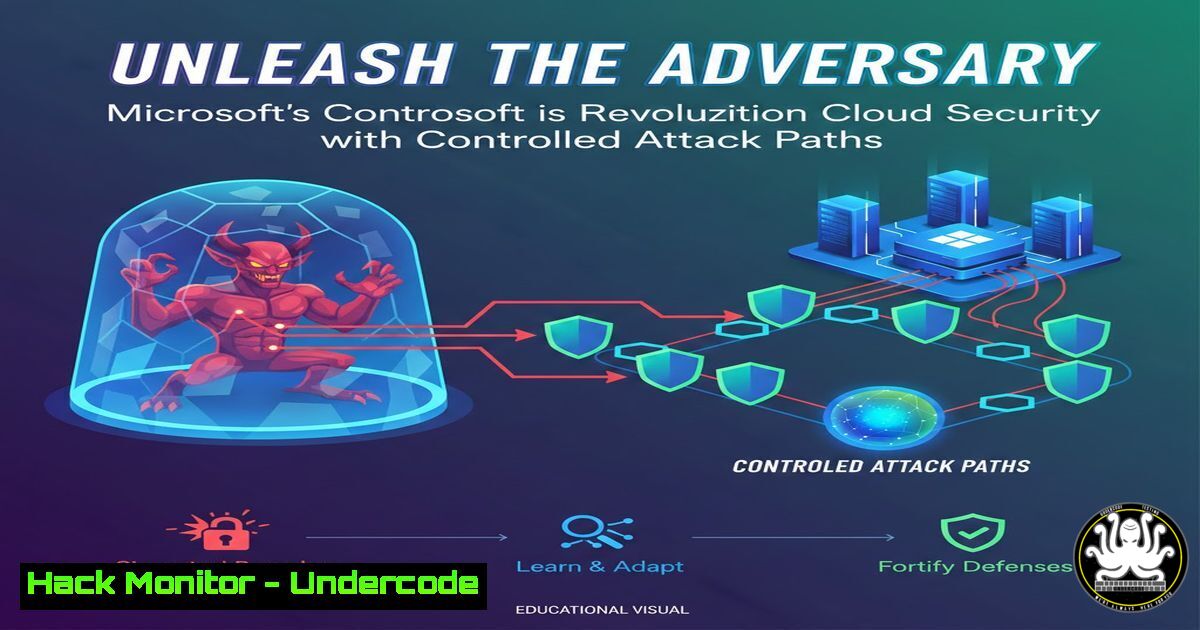
The modern cloud landscape, particularly within Microsoft’s Entra ID and Azure ecosystems, is a complex web of permissions, identities, and resources. To defend these environments effectively, security teams must think like an attacker. Mauricio Velazco’s groundbreaking BSidesNYC 2025 talk demonstrates a paradigm shift: proactively building configurable cloud attack paths and running end-to-end simulations to expose and remediate critical security flaws before they can be exploited maliciously.
Learning Objectives:
- Understand the methodology behind building and deploying customizable cloud attack paths in Entra ID and Azure.
- Learn how to execute and analyze end-to-end attack simulations to identify privilege escalation and lateral movement vectors.
- Develop a practical framework for translating simulation findings into actionable security hardening policies.
You Should Know:
1. The Philosophy of Adversary Simulation
The core concept moves beyond traditional vulnerability scanning. Instead of looking for individual misconfigurations in isolation, this approach constructs entire attack chains that mirror real-world Advanced Persistent Threat (APT) campaigns. By deploying these “configurable attack paths,” blue teams can witness first-hand how a single weak link—such as a service principal with excessive permissions or a misconfigured Conditional Access policy—can be leveraged to compromise critical assets. This method provides a holistic view of security posture, revealing the interconnected nature of identity, access, and data plane security.
2. Deploying a Custom Cloud Attack Path
Deploying an attack path involves scripting a sequence of actions that an attacker would take. This often uses infrastructure-as-code (IaC) tools like ARM templates or Terraform to create a realistic, but contained, environment for testing. Below is a conceptual step-by-step guide using Azure CLI and PowerShell.
Step-by-Step Guide:
Step 1: Define the Attack Narrative. Outline the kill chain. Example: Compromise a low-privileged user -> Enumerate accessible resources -> Identify a misconfigured Logic App -> Escalate to a higher-privileged Managed Identity -> Exfiltrate data from a Storage Account.
Step 2: Script the Environment. Use Azure CLI to deploy the necessary resources with intentional weaknesses.
 Create a resource group
az group create --name AttackSimulation-RG --location eastus

Deploy a storage account with a privileged system-assigned managed identity
az storage account create --name simstorageaccount123 --resource-group AttackSimulation-RG --location eastus --assign-identity

Create a Logic App that has the storage account's managed identity assigned with excessive permissions (e.g., Storage Blob Data Owner)
 This would typically be done via an ARM template, but the principle is to create the vulnerable configuration.
Step 3: Configure Entra ID (Azure AD) Roles. This is where the attack path is created. You might assign a user a seemingly innocuous role that can trigger the Logic App.
 Using Microsoft Graph PowerShell
Connect-MgGraph -Scopes "Application.ReadWrite.All", "AppRoleAssignment.ReadWrite.All", "Directory.ReadWrite.All"

Assign a user the 'Logic App Operator' role (example)
New-MgRoleManagementDirectoryRoleAssignment -DirectoryScopeId '/' -PrincipalId $User.Id -RoleDefinitionId (Get-MgDirectoryRole -Filter "DisplayName eq 'Logic App Operator'").Id
The deployed environment now contains a latent attack path ready for simulation.
3. Executing the End-to-End Attack Simulation
With the attack path deployed, the simulation begins. This involves executing the attack steps without using actual malicious software, relying instead on authorized security tools and scripts.
Step-by-Step Guide:
Step 1: Initial Access. Simulate credential phishing by using the compromised low-privileged user’s tokens.
Step 2: Discovery. Use Microsoft’s own `MicroBurst` toolkit or the `Az` PowerShell module to enumerate resources.
 Authenticate as the simulated attacker
Connect-AzAccount

List accessible storage accounts
Get-AzStorageAccount

List Logic Apps
Get-AzLogicApp
Step 3: Privilege Escalation. Trigger the vulnerable Logic App. The Logic App, running with the powerful managed identity, performs an action on your behalf.
Step 4: Lateral Movement & Exfiltration. Using the new permissions granted by the Logic App’s identity, access the target storage account.
 Now with the escalated permissions, list blobs in the target storage account
$ctx = New-AzStorageContext -StorageAccountName 'simstorageaccount123' -UseConnectedAccount
Get-AzStorageBlob -Container "secret-data" -Context $ctx
This simulation provides a clear, auditable trail of the attack.
4. Instrumentation and Logging for Analysis
A simulation is useless without detailed telemetry. Azure Diagnostic Settings and Microsoft Sentinel are critical for capturing the entire attack chain.
Step-by-Step Guide:
Step 1: Enable Diagnostic Logs. Ensure all relevant logs (Entra ID Sign-in Logs, Azure Activity Logs, Logic App Workflow Runtime logs) are streamed to a Log Analytics Workspace.
Step 2: Craft Detection Queries. In Microsoft Sentinel, write KQL (Kusto Query Language) queries to detect each stage of your simulated attack.
// Example KQL to detect a specific Logic App execution pattern following a user sign-in
SigninLogs
| where ResultType == "0"
| project TimeGenerated, UserPrincipalName, AppDisplayName, IPAddress
| join (AzureDiagnostics
| where ResourceProvider == "MICROSOFT.LOGIC"
| where OperationName == "Microsoft.Logic/workflows/workflowRunCompleted"
) on $left.TimeGenerated < $right.TimeGenerated and $left.TimeGenerated > $right.TimeGenerated - 5min
Step 3: Build Workbooks and Hunting Queries. Package these queries into Sentinel Workbooks for ongoing monitoring and proactive hunting.
- From Simulation to Hardening: Mitigating the Attack Path
The ultimate goal is to strengthen defenses. Analyze the simulation results to identify the root cause of the breach and implement mitigation.
Step-by-Step Guide:
Step 1: Identify the Broken Link. In our example, it was the Logic App’s managed identity having excessive, standing permissions on the storage account.
Step 2: Apply the Principle of Least Privilege. Replace the standing `Storage Blob Data Owner` role assignment with a Just-In-Time (JIT) access system or downgrade the permissions to a custom role with only the necessary actions.
Step 3: Implement Conditional Access. Enforce stricter conditions for accessing the Azure portal or management APIs, such as requiring a compliant device or a specific location.
Step 4: Monitor Managed Identities. Regularly review and audit the permissions assigned to managed identities and service principals using tools like Entra ID Permissions Management.
What Undercode Say:
- Proactive adversary simulation is no longer a luxury but a necessity for mature cloud security programs. It bridges the gap between theoretical risk and practical, exploitable vulnerability.
- The true value lies not in the attack itself, but in the iterative process of testing, detecting, and hardening. This creates a feedback loop that continuously elevates an organization’s security posture against evolving threats.
Analysis: Velazco’s approach signifies a move from a compliance-focused, checkbox security model to an intelligence-driven, resilience-focused one. By embedding these simulation capabilities, organizations can shift left, finding critical architectural flaws during development or design phases rather than in a post-breach forensic report. This methodology turns the defender’s static view of the cloud into a dynamic battleground where they can actively test and validate their defensive controls, ensuring that security investments are effectively mitigating real-world attack techniques.
Prediction:
The practice of automated, continuous adversary simulation will become integrated directly into CI/CD pipelines and cloud security posture management (CSPM) platforms. We will see the emergence of “Attack Path as Code,” where security teams version-control and collaboratively develop simulation scenarios, much like developers manage application code. This will lead to a new generation of AI-powered defensive systems that can not only recommend hardening measures but can also automatically generate and run counter-simulation tests to verify the efficacy of those fixes, creating self-healing cloud environments.
🎯Let’s Practice For Free:
IT/Security Reporter URL:
Reported By: Mauricio Velazco – Hackers Feeds
Extra Hub: Undercode MoN
Basic Verification: Pass ✅


