
Listen to this Post
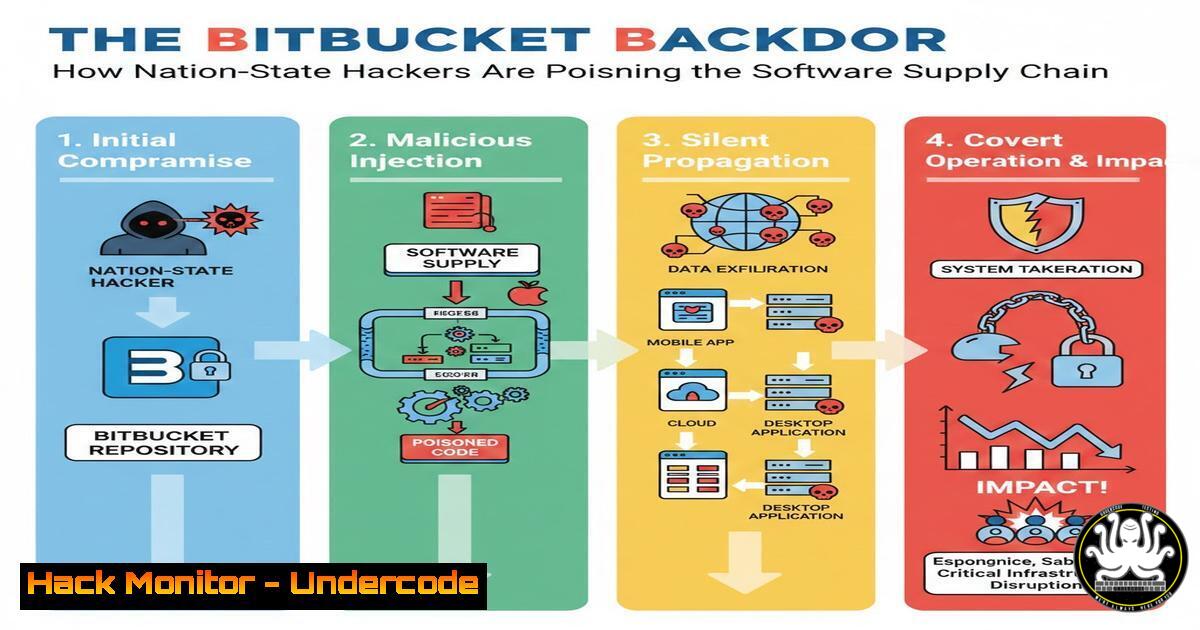
Introduction:
The software supply chain is under a new wave of sophisticated attacks, with nation-state actors shifting their tactics. Security researchers have identified a marked pivot from GitHub to Bitbucket as the primary platform for hosting malicious repositories that deliver advanced malware like Beavertail and Invisible-Ferret. This strategic change by DPRK-linked hacking groups, known as Contagious Interview, poses a significant threat to developers and enterprises globally, exploiting trust in familiar source control management systems to infiltrate development environments.
Learning Objectives:
- Understand the mechanics of how Bitbucket repositories are weaponized in software supply chain attacks.
- Learn to identify and analyze suspicious packages and repositories that may contain Beavertail or Invisible-Ferret malware.
- Implement defensive strategies and tools to harden your development pipeline against such compromises.
You Should Know:
1. The Anatomy of a Weaponized Bitbucket Repository
The Contagious Interview group meticulously crafts malicious Bitbucket repositories to appear as legitimate open-source software or useful tools. These repos contain poisoned dependencies or directly malicious executables within their source code. When a developer clones the repository or incorporates it as a dependency, the malware is deployed.
Step‑by‑step guide explaining what this does and how to use it.
Step 1: Initial Reconnaissance. The attackers identify popular open-source libraries and tools that developers are likely to search for and depend on.
Step 2: Repository Creation. They create a Bitbucket repository with a name very similar to the legitimate project (a technique known as typosquatting) or one that offers a seemingly valuable, unique utility.
Step 3: Payload Obfuscation. The malicious payload, often the Beavertail backdoor or Invisible-Ferret information stealer, is embedded within the code. It is typically heavily obfuscated to evade static analysis.
Step 4: Social Engineering Lure. The `README.md` file is professionally crafted with convincing documentation and fake testimonials to build trust.
Step 5: Triggering the Payload. The malware activates upon installation or execution of the package, often through a post-install script defined in a `package.json` (for Node.js) or a setup script in Python.
2. Detecting Malicious Packages in Your Environment
Proactive detection is critical to preventing a breach. You need to scan your systems for indicators of compromise (IoCs) related to these attacks.
Step‑by‑step guide explaining what this does and how to use it.
Step 1: Scan with YARA Rules. YARA is a powerful tool for identifying and classifying malware. Create or use rules to scan your source code and dependencies.
Linux Command to scan a directory:
`yara -r rules.yar /path/to/your/project/dependencies`
Step 2: Audit Dependencies. Regularly audit your project’s dependencies for known vulnerabilities and suspicious packages.
Node.js (npm) command:
`npm audit`
Python (pip) command:
`pip-audit`
Step 3: Use Anti-Virus and EDR Tools. Ensure all developer workstations and build servers are protected by advanced Endpoint Detection and Response (EDR) solutions that can detect the behavioral patterns of Beavertail and Invisible-Ferret.
3. Analyzing a Suspicious Bitbucket Repository
Before cloning or using a repository from an unknown source, perform a preliminary analysis to assess its legitimacy.
Step‑by‑step guide explaining what this does and how to use it.
Step 1: Check Repository Metadata. Look at the account creation date, number of followers, and other repository activity. New accounts with a single repository are a major red flag.
Step 2: Scrutinize the Code. Even without deep execution, you can look for obvious signs of malice.
Linux commands to search for encoded or obfuscated code:
`grep -r “eval(” /path/to/cloned/repo`
`grep -r “base64_decode” /path/to/cloned/repo`
`find /path/to/cloned/repo -name “.py” -exec grep -l “exec(” {} \;`
Step 3: Analyze the Commit History. A repository with only one or two commits, or a history that seems artificially constructed, is suspicious. Legitimate projects typically have a rich, organic commit history.
4. Hardening Your Bitbucket and CI/CD Pipeline Security
Prevention is more effective than reaction. Implement these security controls to protect your development lifecycle.
Step‑by‑step guide explaining what this does and how to use it.
Step 1: Enforce Mandatory Code Review. Configure your Bitbucket repository settings to require at least one approval for all pull requests before they can be merged into the main branch.
Step 2: Implement Software Composition Analysis (SCA) Tools. Integrate tools like Snyk, Sonatype Nexus, or GitHub Advanced Security (which also works with Bitbucket) into your CI/CD pipeline. These tools automatically scan for vulnerable or malicious dependencies.
Example step in a GitHub Actions workflow (concept applies to Bitbucket Pipelines):
`- name: Scan for vulnerabilities
uses: snyk/actions/node@master
env:
SNYK_TOKEN: ${{ secrets.SNYK_TOKEN }}`
Step 3: Use Branch Permissions. Restrict who can push to critical branches like `main` or develop. This limits the potential for an internal or compromised account from introducing malicious code.
- Incident Response: What to Do If You Find a Compromised Package
If you discover a malicious package in your environment, a swift and structured response is essential.
Step‑by‑step guide explaining what this does and how to use it.
Step 1: Immediate Isolation. Immediately disconnect the affected system from the network to prevent further data exfiltration or lateral movement.
Step 2: Identify the Scope. Determine all projects and systems that have installed or executed the malicious package. Check your build logs and dependency trees.
Step 3: Collect and Report Evidence. Do not delete the package immediately. Preserve it for analysis. Submit the malicious package to a security platform like Open Source Malware (as mentioned in the original post), VirusTotal, and your internal security team.
Step 4: Rotate Credentials. Assume all credentials on the compromised system have been harvested. Rotate API keys, passwords, and tokens immediately.
What Undercode Say:
- The shift from GitHub to Bitbucket is a deliberate evasion tactic, exploiting the perception that Bitbucket is a more “enterprise” and thus safer platform, which may lead to less stringent scrutiny from developers and security tools.
- The public collaboration through platforms like Open Source Malware is a critical defense mechanism, turning individual discoveries into collective intelligence that benefits the entire ecosystem.
Analysis:
The Contagious Interview campaign’s pivot to Bitbucket is a stark reminder that attackers are agile and will continuously probe for the path of least resistance. This is not a simple shift in platform preference but a strategic evolution in software supply chain warfare. By targeting Bitbucket, they are likely aiming for a developer community that may be perceived as focusing on private, internal enterprise projects, where security scrutiny of public repositories might be lower. The mention of Beavertail and Invisible-Ferret, which are known for their stealth and persistence, indicates the objective is long-term espionage and data theft, not just disruption. The call to action for submitting findings to Open Source Malware highlights the power of community-driven defense in an asymmetric battle where security researchers are outnumbered by a vast sea of open-source code.
Prediction:
In the next 12-18 months, we will see this attack vector mature and diversify. Expect to see automation in the creation of these malicious repositories, making the attacks more scalable. Attackers will also likely begin exploiting other, less-monitored platforms like GitLab, private Git instances, and even container registries. The integration of AI by attackers to generate more convincing fake documentation and code will further blur the lines between legitimate and malicious packages. Consequently, the reliance on automated security tooling (SCA, SAST, and AI-powered code analysis) will transition from a best practice to an absolute necessity for any organization that writes or uses software.
🎯Let’s Practice For Free:
IT/Security Reporter URL:
Reported By: Mccartypaul Dprk – Hackers Feeds
Extra Hub: Undercode MoN
Basic Verification: Pass ✅


