Listen to this Post
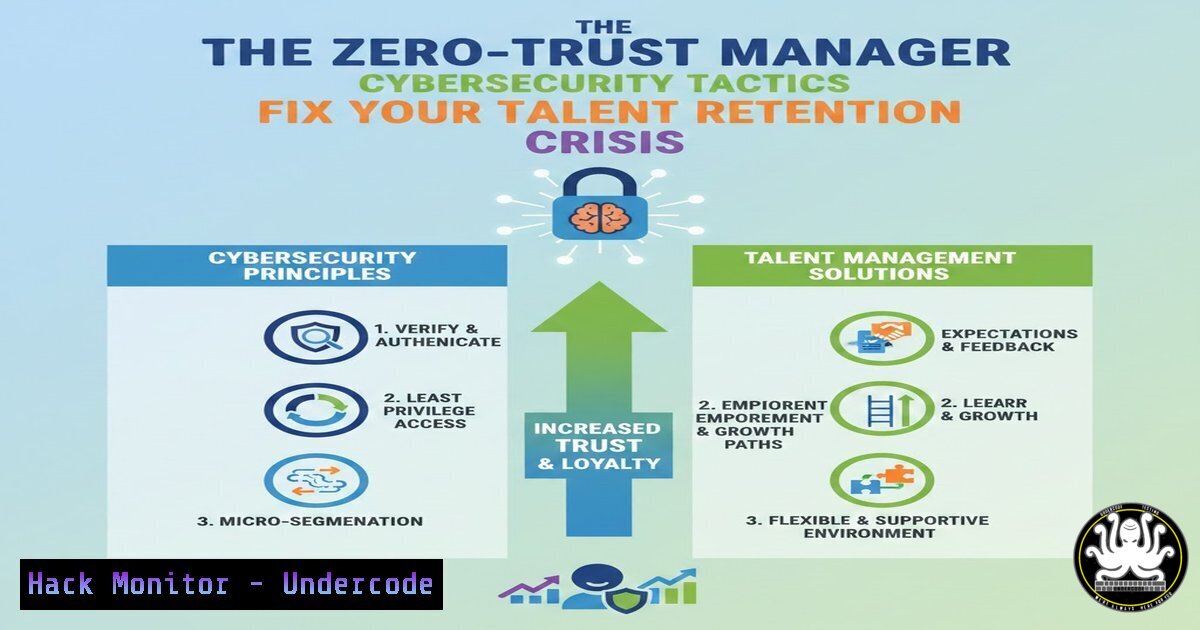
Introduction:
The adage “people don’t leave companies, they leave managers” has never rung truer, especially in the high-stakes world of cybersecurity and IT. Just as a single misconfigured server can lead to a catastrophic data breach, a single mismanaged team member can lead to the loss of critical institutional knowledge and talent. By applying core cybersecurity principles like Zero-Trust and proactive monitoring to management, technical leaders can build resilient, loyal, and high-performing teams.
Learning Objectives:
- Apply the Principle of Least Privilege (PoLP) to team empowerment and task delegation.
- Implement “continuous monitoring” for team morale and early warning signs of burnout.
- Harden your “human firewall” through proactive career development and clear communication protocols.
You Should Know:
- Enforce the Principle of Least Privilege in Delegation
The Principle of Least Privilege (PoLP) is a cybersecurity standard where users are granted only the access and permissions absolutely necessary to perform their job functions. In management, this translates to trusting your team with autonomy and ownership over their work, without micromanaging every step. Micromanagement is akin to a system-wide admin account—it creates a single point of failure and stifles innovation.
Step-by-step guide:
- Step 1: Task Decomposition. Break down a project into discrete modules or components, just as you would segment a network.
- Step 2: Assign Ownership. Clearly assign each module to a team member based on their skills and career aspirations. This is the equivalent of granting specific user rights.
- Step 3: Define Interfaces. Establish clear APIs for communication. For example: “You own the authentication module. Your deliverable is a REST API endpoint that accepts X and returns Y. Coordinate with Jane on the front-end team for the payload structure.”
- Step 4: Grant Access. Provide access only to the necessary repositories, databases, and staging environments. In a Linux context, this means using `chown` and `chmod` judiciously.
Command Example:
 Grant a developer ownership of their project directory
sudo chown -R devusername:devgroup /opt/projects/auth-microservice
 Ensure only the owner and group can read/write/execute
sudo chmod -R 770 /opt/projects/auth-microservice
2. Continuous Monitoring for Team Morale & Burnout
In cybersecurity, SIEM (Security Information and Event Management) systems aggregate and analyze logs in real-time to detect anomalies. A manager must be a human SIEM, constantly monitoring the “logs” of team interaction, productivity, and well-being to detect early signs of discontent or burnout before they lead to a “breach” (i.e., resignation).
Step-by-step guide:
- Step 1: Define Your Log Sources. These are your 1:1 meetings, sprint retrospectives, code commit patterns, and casual conversations.
- Step 2: Look for Anomalies. A consistently high-performing engineer suddenly committing less code? That’s a spike in failed login attempts. Increased terse communication in pull requests? That’s a DDoS attack on team morale.
- Step 3: Automate Check-ins. Use lightweight, automated sentiment analysis. This doesn’t require AI; a simple script to prompt for a weekly status can work.
Code Example (Python Pseudo-Code):
 A simple function to prompt for a weekly well-being check
def well_being_check(team_member):
questions = [
"On a scale of 1-5, how challenging was your week?",
"On a scale of 1-5, how supported did you feel?",
"What's one thing that could have gone better?"
]
responses = []
for q in questions:
print(q)
responses.append(input("> "))
 Log responses for trend analysis, ensuring anonymity and psychological safety.
log_to_secure_dashboard(team_member, responses)
– Step 4: Triage and Respond. Investigate anomalies directly and empathetically, just as you would a security alert.
3. Patch Management for Skills Gaps
Outdated software is vulnerable, and so are outdated skill sets. A proactive manager implements a continuous “patching” cycle for their team’s abilities, ensuring they remain engaged and competitive.
Step-by-step guide:
- Step 1: Vulnerability Scan (Skills Assessment). Regularly assess the team’s skills against industry trends (e.g., Cloud Security, AI/ML, Containerization).
- Step 2: Prioritize Patches (Training). Identify the most critical skills gaps and provide resources. This includes subscriptions to platforms like TryHackMe, Coursera, or Pluralsight.
- Step 3: Apply the Patch. Allocate dedicated time for training. For example, “We have identified a need for API security. For the next two weeks, 10% of your time is allocated to this OWASP API Security Top 10 course.”
- Step 4: Verify Installation. Validate learning through internal presentations, blog posts, or implementing a new tool based on their new knowledge.
4. Harden Your Communication Protocols
Unencrypted communication can be intercepted and manipulated. Similarly, unclear or inconsistent communication from a manager can be “exploited,” leading to misunderstandings, mistrust, and poor execution.
Step-by-step guide:
- Step 1: Use Strong Ciphers (Be Clear and Consistent). Avoid ambiguous language. Define acronyms. Repeat key messages in different forums (team meeting, email, Slack).
- Step 2: Implement Non-Repudiation. When decisions are made or feedback is given, ensure there is a record (e.g., a meeting minute or a summarized email) so that intent and agreement cannot be later denied. This builds accountability and trust.
- Step 3: Establish a PKI for Trust. Be the Certificate Authority for your team. Your consistent, fair, and transparent actions are the root of trust that all other “transactions” (conversations, delegations, feedback) rely upon.
5. Conduct Tabletop Exercises for Crisis Management
Just as IR (Incident Response) teams run through breach scenarios, high-performing teams should practice handling project crises, such as a critical bug in production or the sudden departure of a key team member.
Step-by-step guide:
- Step 1: Develop the Scenario. Create a realistic scenario: “A zero-day vulnerability in a core library we use was just disclosed. What do we do?”
- Step 2: Run the Exercise. Gather the team and walk through the response.
- Technical Triage: Who is responsible for `git blame` or
grep-ing the codebase?
Command Example:
 Search the entire codebase for a potentially vulnerable function call
grep -r "vulnerable_function_name" /path/to/codebase/
– Communication Chain: Who do we notify? How do we communicate status?
– Containment & Eradication: How do we patch, test, and deploy the fix?
– Step 3: Debrief. What went well? What broke down? This process builds muscle memory and reveals process flaws in a low-stakes environment.
What Undercode Say:
- Management is a Security Function. The single biggest vulnerability in any organization is often not technical, but human. A manager’s primary role is to be a control that mitigates this risk by fostering an environment of trust, growth, and clarity.
- Prevent “Data Exfiltration” by Investing in Retention. Losing a talented employee is the ultimate data exfiltration—they take experience, context, and capability with them. The cost of investing in proactive, technically-informed management is always less than the cost of constant turnover and re-hiring.
Analysis: The parallels between modern cybersecurity frameworks and effective management are too strong to ignore. The old command-and-control management style is the equivalent of relying on a perimeter firewall in a borderless, cloud-native world. It is obsolete. The future of technical leadership lies in adopting a Zero-Trust approach to team dynamics: never assuming trust, but continuously verifying it through autonomy, clear communication, and unwavering support. By viewing their role through this lens, managers can directly defend against the most critical threat to their project’s success—the loss of the people who make it possible.
Prediction:
The future of technical team management will be deeply integrated with data-driven people analytics. We will see the rise of “Manager Dashboards” that, with ethical safeguards and transparency, provide insights into team well-being, collaboration patterns, and skill health, much like a security operations dashboard. Managers who embrace this technical, proactive, and empathetic approach will become the most critical line of defense in the war for talent, building teams that are not only productive but also resilient to the poaching and burnout that plague the industry.
🎯Let’s Practice For Free:
IT/Security Reporter URL:
Reported By: Charlie Platt – Hackers Feeds
Extra Hub: Undercode MoN
Basic Verification: Pass ✅


