
Listen to this Post
Introduction:
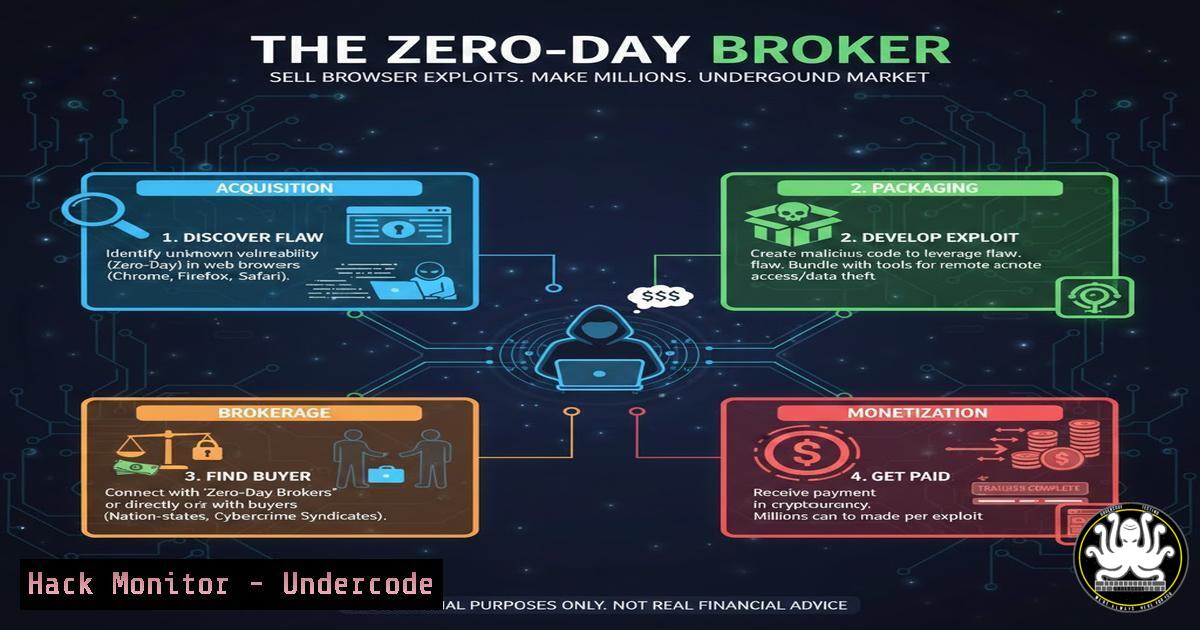
The shadowy world of zero-day exploits represents the apex of cyber offensive capabilities, where vulnerabilities unknown to software vendors are traded as high-value commodities. This article delves into the clandestine process of brokering browser-based zero-days, detailing the technical lifecycle from fuzzing and exploit development to navigating the complex legal and ethical minefield of the exploit marketplace. We will explore the tools, techniques, and platforms that define this opaque sector of cybersecurity.
Learning Objectives:
- Understand the technical workflow for discovering and validating browser vulnerabilities.
- Learn the methods used to weaponize a vulnerability into a reliable exploit chain.
- Identify the key actors, marketplaces, and monetization models in the exploit trade.
You Should Know:
1. The Hunt: Fuzzing for Browser Vulnerabilities
The first step is identifying a novel vulnerability. Fuzzing remains the primary automated technique. Security researchers use sophisticated fuzzing frameworks to send malformed, unexpected, or random data to browser components like JavaScript engines (V8, SpiderMonkey) or rendering engines (Blink, WebKit).
Step‑by‑step guide explaining what this does and how to use it.
Tool Selection: Choose a coverage-guided fuzzer like libFuzzer or AFL++. For browser DOM fuzzing, tools like Domato are common.
Target Setup: Build the target browser (e.g., Chromium) with sanitizers (AddressSanitizer, UndefinedBehaviorSanitizer) for optimal bug detection.
Corpus Generation: Seed the fuzzer with valid initial input samples (e.g., simple HTML/JS files).
Execution & Monitoring: Run the fuzzer, often on high-performance hardware or in the cloud, for days or weeks. Monitor for crashes.
Triaging: Analyze crash logs to distinguish unique bugs from duplicates. A sample command to run a libFuzzer target:
`./chrome_fuzzer -max_len=10000 -rss_limit_mb=4096 ./corpus_dir ./seed_corpus_dir`
2. From Crash to Proof-of-Concept (PoC)
Not every crash is a security bug. This phase involves diagnosing the crash to confirm it’s an exploitable vulnerability (e.g., heap overflow, use-after-free).
Step‑by‑step guide explaining what this does and how to use it.
Reproduction: Isolate the exact test case causing the crash.
Root Cause Analysis: Use a debugger (GDB, WinDbg) and sanitizer outputs to map the flaw. Determine memory layout and the corruption’s nature.
Exploitability Assessment: Can the bug be triggered reliably? Can you control program flow (EIP/RIP) or memory? Tools like `!exploitable` in WinDbg can provide a preliminary assessment.
PoC Crafting: Write a minimal HTML/JS file that reliably triggers the vulnerability without causing collateral damage.
3. Weaponization: Building the Exploit Chain
A single vulnerability is rarely enough. This stage involves bypassing modern mitigations (ASLR, DEP, CFG, Sandbox) to achieve arbitrary code execution.
Step‑by‑step guide explaining what this does and how to use it.
Information Leak: Often, a second bug is needed to leak memory addresses to bypass ASLR. This could involve a separate vulnerability or a primitive from the primary bug.
Sandbox Escape: Browser exploits typically run in a highly restricted renderer process. A separate kernel or OS-level vulnerability may be required to escape the sandbox (e.g., a Windows Kernel CSRSS vulnerability).
ROP Chain Development: Build a Return-Oriented Programming chain to execute code despite DEP. This involves finding “gadgets” within the browser’s own modules.
Payload Delivery: Integrate a final payload (e.g., a meterpreter shellcode or a lightweight dropper) that executes post-compromise.
4. Validation and Packaging for Market
The exploit must be reliable across target versions and configurations. It is then packaged for the buyer.
Step‑by‑step guide explaining what this does and how to use it.
Testing Matrix: Test the exploit chain against multiple OS versions (Windows 10/11 22H2), browser versions, and patch levels.
Documentation: Create a detailed technical write-up explaining the vulnerability, the exploit flow, and any limitations.
Demo Creation: Record a video demonstration showing successful exploitation on a clean system, often ending with a command like `whoami /all` or launching `calc.exe` as proof.
Packaging: The final package includes the exploit code, documentation, demo, and sometimes a custom loader.
- Navigating the Marketplace: Where and How to Sell
The actual sale is conducted through trusted intermediaries or on exclusive platforms to avoid law enforcement and scammers.
Step‑by‑step guide explaining what this does and how to use it.
Actor Identification: Buyers include government agencies (via defense contractors), private offensive security firms, and occasionally criminal groups.
Platform Use: Transactions may occur on invitation-only forums, through encrypted channels (Signal, PGP), or via established brokers like Zerodium, Cognyte, or Divergent.
Negotiation & Pricing: Prices vary wildly ($50,000 to over $1M+) based on exploit quality, target (Chrome vs. Safari), required user interaction, and sandbox escape. A fully weaponized Chrome RCE with sandbox escape commands the highest prices.
Legal Shields: Contracts often include clauses about “research purposes” and export control compliance (like Wassenaar Arrangement), providing a veneer of legality.
6. The Defensive Countermeasures
Understanding the attack is key to defense. Organizations must implement layered security.
Step‑by‑step guide explaining what this does and how to use it.
Patch Management: Enforce rapid, automated browser updates. Use Group Policy on Windows (Computer Configuration -> Administrative Templates -> Google -> Google Update) or package managers on Linux to enforce versions.
Mitigation Exploitation: Deploy Endpoint Detection and Response (EDR) tools configured to detect abnormal process behavior (e.g., `chrome.exe` spawning cmd.exe).
Network Hardening: Use web proxies and DNS filtering to block access to known exploit kit domains. Regularly update blocklists.
Vulnerability Management: Employ threat intelligence feeds to stay aware of potential zero-day threats targeting your stack.
7. Ethical and Legal Minefields
Engaging in this market carries immense risk, even for researchers.
Step‑by‑step guide explaining what this does and how to use it.
Legal Pathways: The only universally legal path is coordinated disclosure through the vendor’s bug bounty program (e.g., Chrome Vulnerability Reward Program).
Jurisdictional Risk: Selling to unauthorized third parties may violate the Computer Fraud and Abuse Act (CFAA) in the US or similar laws globally, regardless of intent.
Due Diligence Failure: A researcher may be held liable if their exploit is used in a major attack, even if sold to a “legitimate” broker.
Operational Security (OpSec): Researchers in this space must employ extreme OpSec: air-gapped research machines, no-log VPNs, and secure communication, though these are not guarantees against prosecution.
What Undercode Say:
- The Market is the True Driver: The existence of well-funded, clandestine buyers has created a powerful economic incentive that often outweighs the rewards of ethical disclosure, fundamentally distorting responsible security research.
- A Defender’s Asymmetric Battle: Defenders must patch an endless stream of vulnerabilities across entire attack surfaces, while an attacker needs only one successful, high-quality exploit chain to compromise a target. This asymmetry is sustained by the zero-day market.
Analysis: The zero-day brokerage ecosystem is a permanent, high-stakes shadow industry that sits at the intersection of cutting-edge technical research, global espionage, and cybercrime. It accelerates the evolution of both attack and defense, forcing vendors to harden platforms continuously. However, it also creates a dangerous leakage of advanced capabilities into unaccountable hands. The technical process outlined is not a guide for execution but a map to understand the profound threat; awareness of these capabilities is the first step in building defenses against them. The market’s opacity makes regulation nearly impossible, leaving ethical guidelines and the conscience of individual researchers as fragile buffers.
Prediction:
The zero-day market will become more automated and fragmented. AI will accelerate vulnerability discovery and exploit generation, lowering the barrier to entry and flooding the market with more “commodity” exploits. Simultaneously, top-tier, reliable chains for hardened targets (like modern browsers with full sandboxing) will become even more specialized and expensive, creating a two-tier market. This will lead to an increase in widespread, less-reliable attacks alongside hyper-targeted campaigns using million-dollar exploit chains. Defensively, the industry will shift further towards AI-assisted patching, behavioral detection that doesn’t rely on known signatures, and hardware-based security mitigations to increase the cost and complexity of exploitation at every layer.
▶️ Related Video (78% Match):
🎯Let’s Practice For Free:
IT/Security Reporter URL:
Reported By: Akshachudasama23 Bugbounty – Hackers Feeds
Extra Hub: Undercode MoN
Basic Verification: Pass ✅


