Listen to this Post
Introduction:
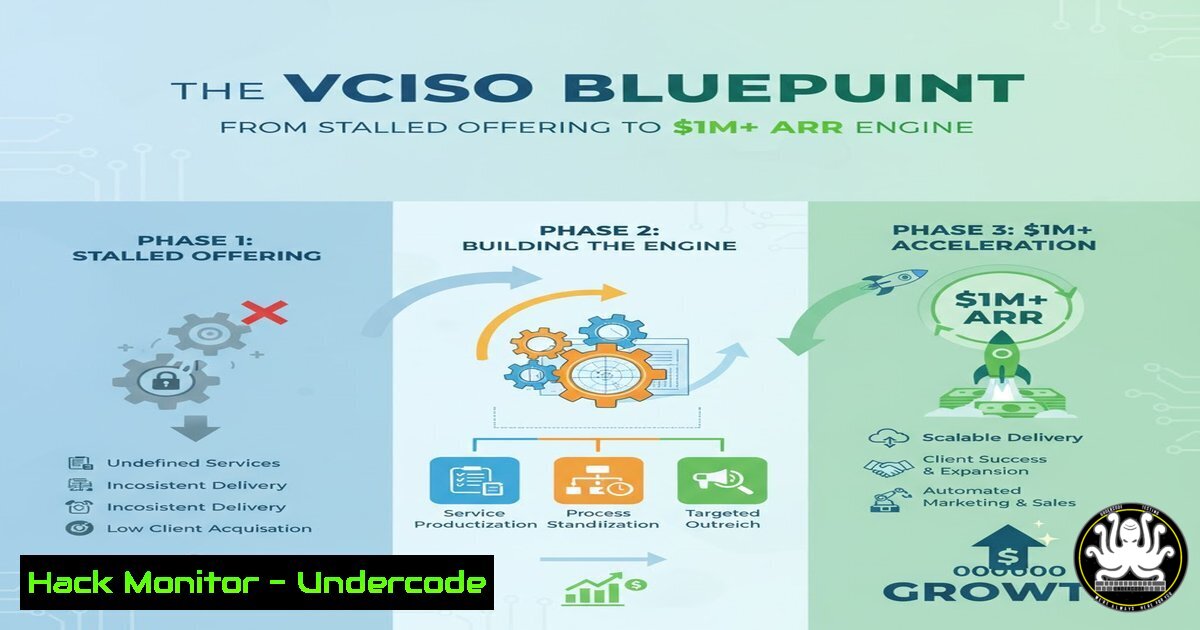
The virtual Chief Information Security Officer (vCISO) market is booming, yet many Managed Service Providers (MSPs) struggle to transform this demand into sustainable revenue. The core failure points are not technical but strategic, stemming from a misalignment between service delivery and client business outcomes, which cripples growth and margins.
Learning Objectives:
- Develop a client-centric vCISO strategy focused on delivering measurable business outcomes beyond mere compliance.
- Implement technical frameworks and controls that directly support and prove the value of your security program.
- Build agile feedback systems to continuously refine your service offering based on client data and evolving threats.
You Should Know:
1. Foundational vCISO Strategy: The PowerGRYD Framework
The initial phase of a successful vCISO engagement is defining a strategic roadmap. This isn’t about selling tools but aligning security initiatives with business objectives like risk reduction, competitive advantage, and regulatory adherence.
nmap -sS -sV -O --script vuln <client_network_range>: Conducts a comprehensive network reconnaissance and vulnerability scan to establish a baseline.
openssl x509 -in certificate.pem -text -noout: Inspects SSL/TLS certificates for proper configuration and validity.
nessuscli scan --policy "Basic Network Scan" --target <IP_Range> --csv-results baseline_scan.csv: Initiates a credentialed vulnerability scan and exports results for analysis.
aws iam generate-credential-report: Generates an AWS IAM credential report to assess cloud identity and access management hygiene.
Get-ADComputer -Filter -Properties OperatingSystem | Where-Object {$_.OperatingSystem -like "Server"} | Export-CSV servers.csv: PowerShell command to inventory all Windows Server assets for scope definition.
Step-by-step guide: Begin every new client engagement with a discovery phase. Use `nmap` and Nessus to perform non-intrusive scans of the client’s publicly accessible and internal IP ranges. This identifies known vulnerabilities and misconfigurations. Cross-reference these findings with asset inventories gathered via PowerShell (for Windows) or `aws iam` commands (for cloud). This technical data forms the objective foundation of your initial risk assessment and strategic roadmap, moving the conversation from vague “security” to specific, quantifiable risks.
2. Policy as Code: Automating Compliance Baselines
A key vCISO deliverable is establishing robust security policies. Modernize this by treating policy as code, using automated checks to enforce and validate compliance continuously.
git clone https://github.com/ComplianceAsCode/auditree /opt/auditree: Clocks the Auditree framework, an open-source tool for policy-as-code.
`inspec exec https://github.com/dev-sec/linux-baseline`: Runs the Dev-Sec Linux Baseline profile to check against a hardened configuration.
`docker bench-security: A script that checks for dozens of common best-practices around deploying Docker containers.Get-MpComputerStatus | fl AntivirusEnabled, AntispywareEnabled, RealTimeProtectionEnabled: PowerShell command to verify Windows Defender status.grep PASS_MAX_DAYS /etc/login.defs`: Checks the maximum password age policy on a Linux system.
Step-by-step guide: After drafting a security policy, use tools like InSpec to codify it. For example, create a custom InSpec profile that checks for your specific password policy (PASS_MAX_DAYS), disk encryption status, and approved software lists. Integrate these checks into a CI/CD pipeline or run them periodically with `auditree` to generate compliance reports. This transforms a static PDF policy into a living, enforced standard, providing continuous evidence of compliance to the client.
3. Cloud Security Posture Management (CSPM) Core Commands
Misconfigurations in cloud environments like AWS, Azure, and GCP are a primary attack vector. A vCISO must implement and oversee Cloud Security Posture Management.
aws securityhub get-findings --region us-east-1: Retrieves security findings from AWS Security Hub.
prowler aws -g cislevel1 -M json: Runs the Prowler AWS security auditing tool against the CIS Level 1 benchmark.
az security task list --output table: Lists security tasks (recommendations) in Azure Security Center.
gcloud services list --enabled --filter="NAME:~sql": Lists enabled Google Cloud services, filtering for SQL databases to check for public exposure.
terraform validate && terraform plan -out=tfplan: Validates and creates an execution plan for Terraform infrastructure-as-code, crucial for pre-deployment security reviews.
Step-by-step guide: Integrate CSPM into your vCISO service. Use Prowler (prowler aws) to run a comprehensive audit of the client’s AWS environment. Parse the JSON output to identify critical misconfigurations like publicly open S3 buckets or overly permissive IAM roles. Use the `aws securityhub` commands to automate the ingestion of these findings into a centralized dashboard. Present this dashboard to the client as part of your quarterly business review, showing trends and improvements in their cloud security posture over time.
4. Incident Response Readiness: Proactive Hunting
A vCISO must ensure the client is prepared for a security incident. This involves setting up logging, monitoring, and conducting proactive threat hunts.
Wireshark filter: http.request.method == "POST" and http.host contains "login": Captures HTTP POST requests to login pages for credential harvesting analysis.
sigma convert -t splunk -p /path/to/rule.yml: Converts a Sigma rule (generic detection) into a Splunk query.
Get-WinEvent -FilterHashtable @{LogName='Security'; ID=4625} -MaxEvents 10: PowerShell command to retrieve the last 10 failed login events from the Windows Security log.
journalctl _SYSTEMD_UNIT=ssh.service --since "1 hour ago" | grep "Failed password": Views recent failed SSH login attempts on a Linux system.
velociraptor --config server.config.yaml artifacts collect Windows.Forensics.PrefetchFiles --output prefetch_collection.zip: Uses Velociraptor to collect forensic artifact (Prefetch files) from Windows endpoints for analysis.
Step-by-step guide: Establish a basic hunting routine. On a client’s critical servers, use `journalctl` or `Get-WinEvent` to script a daily report of failed logins, looking for brute-force patterns. Deploy Sigma rules converted to the client’s SIEM (e.g., Splunk, Elasticsearch) to detect common attack techniques like lateral movement or suspicious process creation. Conduct a quarterly hunt using Velociraptor to gather deeper forensic artifacts, demonstrating proactive threat detection beyond automated alerts.
5. API Security Testing for Modern Applications
APIs are the backbone of modern applications and a prime target. vCISO services must extend beyond network security to include rigorous API testing.
kali> nikto -h https://api.client.com -C all: Performs a comprehensive web server scan, including API endpoints.
kali> sqlmap -u "https://api.client.com/v1/user?id=1" --batch --level=5: Automates testing for SQL injection vulnerabilities in API parameters.
`curl -H “Authorization: Bearer
`nmap -p 443 –script ssl-enum-ciphers api.client.com: Enumerates the SSL/TLS ciphers supported by an API endpoint to check for weak encryption../ffuf -w /usr/share/wordlists/api_words.txt -u https://client.com/FUZZ -recursion`: Uses the ffuf fuzzer to discover hidden API endpoints.
Step-by-step guide: Incorporate API security into the vulnerability management program. Use `nikto` for an initial reconnaissance of the API’s surface. Then, use `ffuf` to fuzz for unlisted endpoints. For the identified endpoints, run `sqlmap` to test for injection flaws. Crucially, manually test authorization with `curl` by swapping JWT tokens to see if horizontal or vertical privilege escalation is possible. Document these tests and their results as part of the application’s security assessment deliverable.
6. Quantifying Risk and Building the Executive Dashboard
The vCISO’s ultimate value is communicating technical risk in business terms. This requires aggregating data into an executive-facing dashboard.
nessuscli fetch --csv: Pulls the latest scan results from Tenable Nessus in CSV format for aggregation.
aws cloudtrail lookup-events --lookup-attributes AttributeKey=EventName,AttributeValue=ConsoleLogin --region us-east-1: Queries AWS CloudTrail for console login events to track privileged access.
Get-MessageTrace -StartDate (Get-Date).AddDays(-7) -EndDate (Get-Date) -Status Delivered | Group-Object SenderAddress | Sort-Object Count -Descending | Select-Object -First 10: PowerShell for Exchange Online to trace top email senders, useful for phishing campaign analysis.
openscap xccdf eval --profile xccdf_org.ssgproject.content_profile_cis --results scan-results.xml --report report.html /usr/share/xml/scap/ssg/content/ssg-rhel7-ds.xml: Uses OpenSCAP to scan a RHEL system against the CIS benchmark and generate an HTML report.
logparse.exe -i:iis -o:csv -r:all "ex.log" > iis_parsed.csv: Uses the Log Parser tool to convert IIS logs to CSV for analysis in a dashboarding tool like Power BI.
Step-by-step guide: Build a monthly KPI dashboard. Automate the collection of data points: vulnerability counts by severity from Nessus (nessuscli fetch), compliance scores from OpenSCAP scans, cloud security findings from Prowler, and failed login rates from SIEM queries. Use a tool like Power BI or Grafana to visualize this data, showing trends over time. This dashboard becomes the centerpiece of your executive briefing, translating technical activities into a clear narrative of risk reduction and security program maturity.
What Undercode Say:
- The transition from a tactical MSP to a strategic vCISO provider hinges on aligning security language with specific client business outcomes, not technical features.
- The most successful vCISO frameworks are built on agile, data-driven feedback loops that use technical evidence (from CSPM, IR tools, API tests) to continuously prove and improve value.
The analysis reveals a market gap not in the availability of security tools, but in the strategic packaging and delivery of their outputs. MSPs are drowning in data from scanners and logs but failing to synthesize this into a compelling business-risk narrative for clients. The PowerGRYD system’s emphasis on “client outcomes” is the critical differentiator. It forces the provider to answer “why?” for every control implemented. This shifts the perception of the vCISO from a cost center to a strategic partner enabling business growth through managed risk. The technical commands and steps provided are not just operational tasks; they are the mechanisms for gathering the evidence required to tell that story effectively, justifying the premium price point of a true vCISO service.
Prediction:
The vCISO market will undergo a significant stratification within the next 18-24 months. MSPs failing to adopt an outcome-based, strategically-focused model will be relegated to competing on price for low-margin, compliance-checkbox services. Conversely, providers who master the integration of technical data with business communication, as outlined in this blueprint, will capture the high-value market segment, commanding 7-figure contracts and becoming indispensable partners in their clients’ digital transformation journeys. The integration of AI for predictive risk analytics and automated compliance reporting will further accelerate this divide.
🎯Let’s Practice For Free:
IT/Security Reporter URL:
Reported By: Secopswarrior I – Hackers Feeds
Extra Hub: Undercode MoN
Basic Verification: Pass ✅


