Listen to this Post
Introduction:
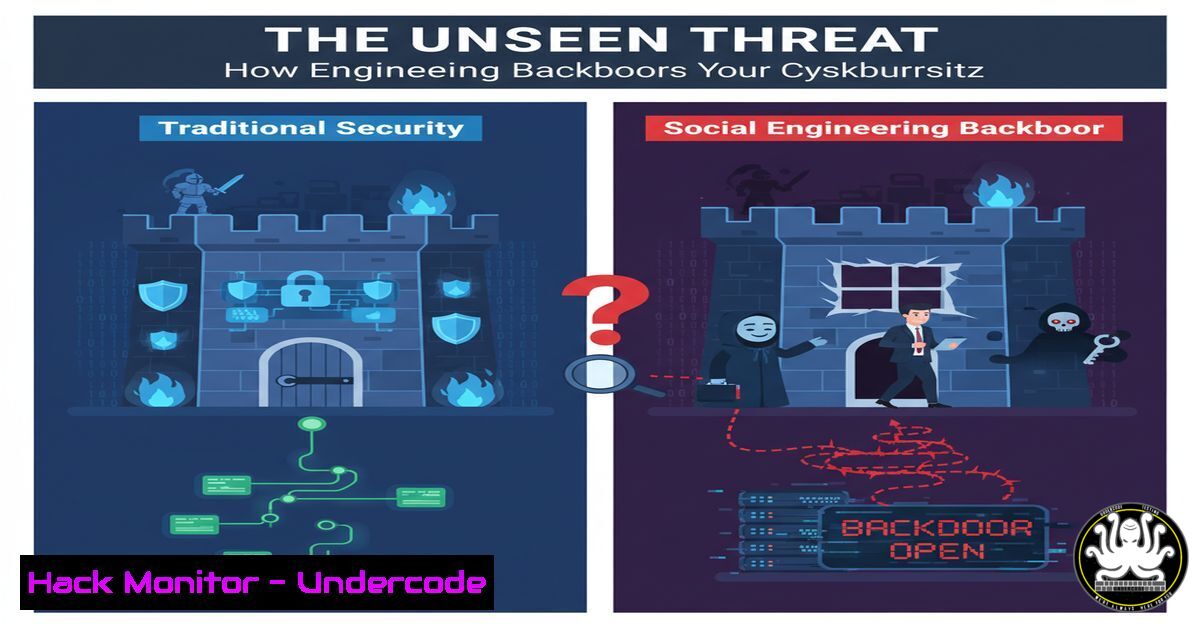
The recent partnership announcement between vCloud Group and Leaders Network, while focused on business growth, serves as a potent case study in social engineering. Cyber attackers frequently exploit such legitimate business news and relationships to craft highly targeted phishing campaigns, leveraging trusted names to bypass technical defenses and manipulate human psychology. This article deconstructs the technical countermeasures necessary to defend against these advanced, trust-based attacks.
Learning Objectives:
- Understand the technical mechanisms behind credential harvesting and malware deployment via social engineering.
- Implement advanced command-line and PowerShell defenses to detect and isolate threats.
- Harden cloud and network configurations against post-exploitation lateral movement.
You Should Know:
1. Analyzing a Suspicious Email Attachment
When a seemingly legitimate email from a known partner arrives, technical verification is crucial before interaction. The following commands help analyze a potentially malicious file without executing it.
Linux/MacOS (Using `file`, `strings`, and `exiftool`):
 Identify the file's true type, regardless of extension
file suspicious_document.pdf.exe

Extract human-readable strings to find URLs, IPs, or script snippets
strings -n 10 suspicious_document.pdf.exe | head -50

Check metadata for inconsistencies (install exiftool first)
exiftool suspicious_document.pdf.exe
Windows PowerShell (Using `Get-FileHash` and `Get-AuthenticodeSignature`):
 Calculate file hash to check against virus total
Get-FileHash -Path "C:\Users\Public\suspicious_document.pdf.exe" -Algorithm SHA256

Check the digital signature (if any) for validity
Get-AuthenticodeSignature -FilePath "C:\Users\Public\suspicious_document.pdf.exe"
This initial triage can reveal a file masquerading as a PDF is actually an executable (.exe), contain calls to a known malicious domain, or have a invalid digital signature, indicating a high probability of malware.
2. Detecting Network Reconnaissance with Command Line
After a potential compromise, attackers will perform internal reconnaissance. These commands help identify such activity.
Windows (Using `net` commands and PowerShell):
 List all active SMB sessions, which could indicate lateral movement attempts
net session

Query the security log for specific event IDs related to logon and account management
powershell "Get-EventLog -LogName Security -InstanceId 4624,4625,4672 -Newest 20"
Linux (Using `ss` and `lsof`):
 List all established TCP connections
ss -tuln

List all processes with network connections and the files they have open
lsof -i -P
Unexpected SMB sessions from unknown IPs or unusual network connections from a standard user process can be the first sign of an active attacker inside your network.
3. Hardening PowerShell to Block Malicious Scripts
PowerShell is a primary tool for attackers. Locking it down is critical.
Windows PowerShell (Execution Policy and Logging):
 Set the execution policy to restrict script execution (as Administrator)
Set-ExecutionPolicy -ExecutionPolicy RemoteSigned -Force

Enable Module Logging and Script Block Logging (Group Policy or Registry)
 Check current status
Get-ItemProperty -Path "HKLM:\SOFTWARE\Policies\Microsoft\Windows\PowerShell\ModuleLogging" -Name "EnableModuleLogging"
Enabling these logs provides detailed insight into what scripts and commands are running, allowing Security Information and Event Management (SIEM) systems to detect and alert on malicious patterns like the use of `Invoke-Expression` or downloading scripts from the web.
4. Cloud Instance Metadata Exploitation and Defense
Attackers who gain initial access often try to query the cloud instance metadata service to steal access keys.
AWS CLI Command to Check IMDSv1:
 This is an ATTACKER command. It queries the vulnerable Instance Metadata Service v1.
curl http://169.254.169.254/latest/meta-data/

To check for this activity, monitor your VPC Flow Logs for requests to 169.254.169.254.
Mitigation with AWS CLI:
 Enforce the use of the more secure IMDSv2 for all instances
aws ec2 modify-instance-metadata-options --instance-id i-1234567890abcdef0 --http-tokens required --http-endpoint enabled
By requiring IMDSv2, you make it significantly harder for attackers to steal credentials from a compromised web application, as the request requires a token.
5. API Security Testing with `curl`
Business partnerships often rely on APIs, which become prime targets. Test their security posture directly from the command line.
Linux/MacOS (Using `curl` for API Security Checks):
 Test for lack of rate limiting
curl -X POST https://api.yourcompany.com/v1/login -d '{"user":"test","pass":"test"}' -H "Content-Type: application/json"

Test for insecure HTTP methods (like PUT or DELETE)
curl -X PUT https://api.yourcompany.com/v1/users/1 -I

Check security headers are present
curl -I https://api.yourcompany.com/v1/health
The responses will reveal if the API lacks brute-force protection, exposes dangerous methods, or is missing critical headers like Strict-Transport-Security.
6. Container Escape Mitigation
In a modern cloud environment, ensuring container isolation is paramount.
Docker Commands for Hardening:
 Run a container without the dangerous --privileged flag and with reduced capabilities
docker run -it --cap-drop=ALL --cap-add=NET_BIND_SERVICE ubuntu:latest /bin/bash

Check for containers running with excessive privileges
docker ps --quiet | xargs docker inspect --format '{{ .Id }}: Privileged={{ .HostConfig.Privileged }}'
Dropping all capabilities and only adding back the specific ones required minimizes the attack surface. A privileged container can easily escape to the host system.
7. Active Directory Enumeration & Detection
A post on LinkedIn about a company’s structure gives attackers clues for targeting Active Directory. Detect their reconnaissance.
PowerShell (Defender Command to Check for AD Tools):
 Find common AD enumeration tools on the filesystem
Get-ChildItem -Path C:\ -Include powerview.ps1, mimikatz.exe, bloodhound.py -Recurse -ErrorAction SilentlyContinue
Windows Command Prompt (Detecting User Enumeration):
 Check the security log for Kerberos pre-authentication failures (Event ID 4771)
wevtutil qe Security /q:"[System[(EventID=4771)]]" /f:text
The presence of these tools or a spike in Kerberos failures indicates an attacker is mapping your AD structure to find high-value targets, exactly the kind of intelligence they would gather from a post like the one from vCloud.
What Undercode Say:
- Human Firewall is the Last Line of Defense. No amount of technical hardening can fully compensate for a user who is tricked into running a malicious file. Continuous, simulated phishing training is non-negotiable.
- Trust is the New Vulnerability. Attackers are no longer just exploiting software bugs; they are exploiting business relationships and the inherent trust within an organization. Security monitoring must evolve to include brand and executive mentions as a threat intelligence source.
The partnership announcement itself is not a threat, but it is a data point in the kill chain. It provides the “lure” for a highly convincing phishing campaign. Defenders must assume that all public-facing corporate communications will be weaponized. The technical controls listed here are essential, but they must be part of a broader strategy that includes robust employee training and proactive threat hunting based on the digital footprint your company leaves online every day.
Prediction:
The future of social engineering will be dominated by AI-driven hyper-personalization. We will see a rise in deepfake audio/video used in Business Email Compromise (BEC) attacks, where AI synthesizes a CEO’s voice to authorize fraudulent wire transfers. Furthermore, AI will automate the scraping of platforms like LinkedIn to generate thousands of uniquely tailored lures, making traditional signature-based email security obsolete. The defense will require an equal investment in AI-powered anomaly detection that can identify subtle deviations in communication patterns and user behavior in real-time.
🎯Let’s Practice For Free:
IT/Security Reporter URL:
Reported By: Trevormifsud New – Hackers Feeds
Extra Hub: Undercode MoN
Basic Verification: Pass ✅


