Listen to this Post
Introduction:
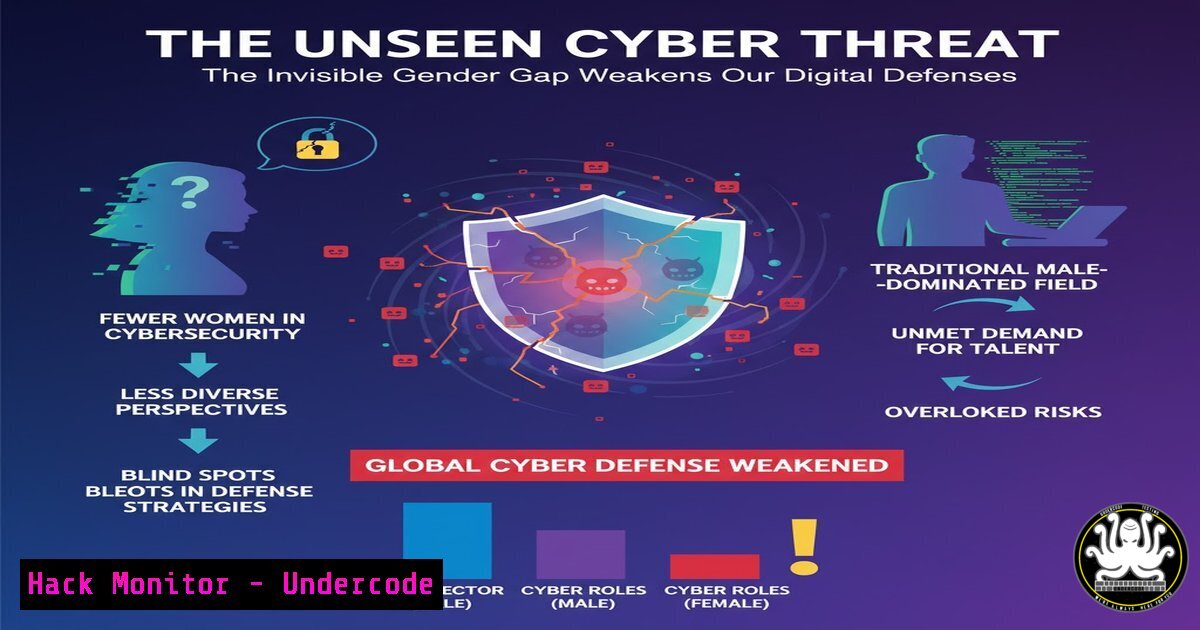
The persistent gender gap in cybersecurity is not merely a social equity issue; it is a critical vulnerability in our global security posture. A homogenous workforce, lacking diverse perspectives, creates blind spots that adversaries can and do exploit. This article explores the tangible security risks of this gap and provides actionable technical guidance to build more resilient, inclusive teams.
Learning Objectives:
- Understand the correlation between cognitive diversity and enhanced threat detection.
- Learn to implement technical controls and auditing commands to foster inclusive environments.
- Acquire skills to mentor and technically empower underrepresented groups in security.
You Should Know:
- Auditing User and Group Permissions for Access Equity
A foundational step in fostering an inclusive environment is ensuring equitable access to resources. Inconsistent or overly restrictive permissions can be a significant barrier. System administrators must regularly audit user and group memberships.
Verified Command List:
Linux:
 List all users on the system
getent passwd
 List all groups and their members
getent group
 Check a specific user's group memberships
id <username>
 Audit sudo privileges
grep -r -E "^%\w+" /etc/sudoers
Windows (PowerShell):
 Get all local users
Get-LocalUser
 Get all local groups and their members
Get-LocalGroup | ForEach-Object { $group = $<em>.Name; Get-LocalGroupMember -Group $group | ForEach-Object { [bash]@{Group=$group; Member=$</em>.Name} }}
 Check if a user is in the local administrators group
net localgroup administrators
Step-by-step guide:
Regular audits ensure that permissions are granted based on role requirements, not unconscious bias. Run the `getent group` command on a Linux system to list all groups and their members. Analyze this output to identify groups with disproportionately low membership from underrepresented genders. This data can inform discussions about project assignments and resource access, ensuring all team members have the tools they need to succeed.
2. Implementing Centralized Logging for Unbiased Incident Analysis
A diverse team analyzing comprehensive logs is key to unbiased threat detection. If logs are incomplete or only analyzed from a single perspective, subtle attacks can go unnoticed. Implementing a centralized logging solution is a technical imperative.
Verified Command List:
Linux (RSYSLOG):
 Check if rsyslog is running
systemctl status rsyslog
 Configure a client to send logs to a central server (on client)
echo ". @<central-log-server-ip>:514" >> /etc/rsyslog.conf
 Restart the rsyslog service
systemctl restart rsyslog
Windows (PowerShell for Event Log Forwarding):
 Create a subscription to forward events (Requires WinRM)
wecutil qc
 Get a list of available event logs
Get-WinEvent -ListLog
Step-by-step guide:
Centralized logging aggregates data from all systems, providing a single source of truth. Configure a Linux client by editing /etc/rsyslog.conf. Add the line `. @192.168.1.100:514` (replace with your server’s IP) to forward all logs. Restart the service with systemctl restart rsyslog. This ensures that security events from all team members’ activities and systems are captured and can be analyzed from multiple viewpoints, reducing the chance of missing an anomaly due to a cognitive blind spot.
3. Scripting Mentorship and Resource Provision
Lack of access to mentorship and learning resources can hinder career growth. Automation can help ensure equitable provision of these resources. A simple script can manage access to a shared knowledge base or training platform.
Verified Code Snippet (Python):
import csv
import smtplib
from email.mime.text import MIMEText

Simulate reading a list of new mentees from a CSV
def get_new_mentees(filename):
with open(filename, 'r') as file:
reader = csv.DictReader(file)
return [row for row in reader]

Automated email function to assign a mentor and send resources
def send_welcome_email(mentee_email, mentee_name):
sender = "[email protected]"
subject = "Welcome to Our Cybersecurity Mentorship Program"
body = f"""
Hi {mentee_name},

Welcome! We're committed to your growth.
Here are your starter resources:
- [Link to Internal Wiki]
- [Link to Security Training Platform]
- [Schedule a meeting with your assigned mentor]

Best,
The Security Team
"""
msg = MIMEText(body)
msg['Subject'] = subject
msg['From'] = sender
msg['To'] = mentee_email

Send the message (configure your SMTP server)
 s = smtplib.SMTP('localhost')
 s.send_message(msg)
 s.quit()
print(f"Welcome email sent to {mentee_email}")

Main execution flow
if <strong>name</strong> == "<strong>main</strong>":
mentees = get_new_mentees('new_mentees.csv')
for mentee in mentees:
send_welcome_email(mentee['email'], mentee['name'])
Step-by-step guide:
This Python script automates the initial outreach for a mentorship program. It reads from a CSV file containing the names and emails of new mentees. For each entry, it automatically generates and sends a personalized welcome email containing links to critical learning resources and information on connecting with a mentor. This ensures every new member, regardless of background or network, receives the same foundational support and information, mitigating the effects of “who you know” bias.
4. Hardening Cloud IAM Policies Against Privilege Creep
Overly permissive Identity and Access Management (IAM) policies are a primary attack vector. A diverse security team is more likely to question and refine these policies from different angles, preventing privilege creep.
Verified AWS CLI Commands:
 List all IAM users in the account
aws iam list-users
 List all IAM policies
aws iam list-policies --scope Local
 Simulate an IAM policy to check for permissions
aws iam simulate-custom-policy --policy-input-list file://policy.json --action-names "s3:GetObject" "ec2:RunInstances"
 Generate an IAM credential report (CSV)
aws iam generate-credential-report
Verified Azure PowerShell Commands:
 Get all Azure AD users
Get-AzureADUser
 Get role assignments for a specific user
Get-AzureADUserAppRoleAssignment -ObjectId <user-object-id>
Step-by-step guide:
Privilege creep occurs when users accumulate permissions over time that are no longer necessary. Use the AWS CLI command `aws iam generate-credential-report` to create a comprehensive CSV report of all users and their access keys, passwords, and MFA status. Regularly review this report and the output of `aws iam list-users` to identify inactive accounts or users with excessive permissions. Combine this with the policy simulator to test new, more restrictive policies before deployment, a process that benefits from diverse peer review.
5. Exploiting and Mitigating Business Email Compromise (BEC)
BEC attacks often rely on social engineering, which can be more effectively countered by teams with diverse life experiences and communication styles. Understanding the technical hooks of these attacks is crucial for defense.
Verified Command List (Email Header Analysis):
 Using a tool like 'mxtoolbox' from the CLI to check for DMARC, SPF, DKIM
nslookup -type=TXT google.com
 Specifically check SPF record
nslookup -type=TXT _spf.google.com
 Check DMARC record
nslookup -type=TXT _dmarc.google.com
Python Script for Basic Header Analysis:
import email
import sys

def analyze_headers(eml_file):
with open(eml_file, 'r') as f:
msg = email.message_from_file(f)
print("From:", msg.get('From'))
print("Return-Path:", msg.get('Return-Path'))
print("Received:", msg.get_all('Received'))
print("Authentication-Results:", msg.get('Authentication-Results'))

if <strong>name</strong> == "<strong>main</strong>":
analyze_headers(sys.argv[bash])
Step-by-step guide:
BEC attacks frequently spoof email addresses. You can analyze an email’s headers to detect spoofing. Use the `nslookup` commands to verify the sender’s SPF and DMARC records. An SPF record lists the IPs authorized to send email for a domain. If the email originated from an IP not in that list, it’s a strong indicator of spoofing. The Python script helps parse and display key headers from a suspicious `.eml` file, allowing you to trace the email’s path and check for failed authentication. A team with varied backgrounds may be more attuned to the subtle linguistic cues of a phishing email, complementing this technical analysis.
- Secure Coding Practices: Input Validation with OWASP ZAP
Input validation vulnerabilities (like SQLi and XSS) are a constant threat. Using automated tools to find these vulnerabilities, reviewed by a diverse team, leads to more robust mitigation.
Verified OWASP ZAP CLI Commands:
 Start a quick baseline scan against a target
zap-baseline.py -t https://www.example.com
 Run a full active scan
zap-full-scan.py -t https://www.example.com
 Generate an HTML report
zap-full-scan.py -t https://www.example.com -r report.html
Step-by-step guide:
OWASP ZAP (Zed Attack Proxy) is a free security tool for finding vulnerabilities in web applications. After installing ZAP, you can use its command-line interface to automate scans. The `zap-baseline.py` script performs a passive scan, which is fast and non-intrusive. For a deeper analysis, `zap-full-scan.py` executes an active scan, which attempts to exploit potential vulnerabilities. Run these scans as part of your CI/CD pipeline. The results should be reviewed by a diverse group of developers and security professionals to ensure a wide range of attack vectors are considered and remediated.
What Undercode Say:
- The gender gap is a quantifiable security risk, not just an HR metric. Homogeneity breeds predictable defenses that are easy for adversaries to circumvent.
- Technical solutions alone are insufficient; they must be designed, implemented, and audited by teams with cognitive diversity to be truly effective.
The data is clear: diverse teams demonstrate superior problem-solving and innovation. In the context of cybersecurity, this translates directly to better threat modeling, more creative red teaming, and more thorough incident response. A team that all thinks the same way will build defenses that reflect their shared blind spots. Adversaries exploit these predictable patterns. Investing in closing the gender gap is not corporate social responsibility; it is a strategic investment in risk mitigation. By actively recruiting, mentoring, and promoting women and other underrepresented groups, organizations are not just “doing the right thing”—they are fundamentally strengthening their security architecture from the inside out, making it more adaptive, resilient, and difficult to breach.
Prediction:
The failure to address the diversity gap will become a primary factor in major, systemic breaches within the next 3-5 years. As AI-powered attacks evolve, they will exploit the cognitive patterns of homogenous defense teams with terrifying efficiency. Organizations that have invested in diverse talent will possess the necessary cognitive range to anticipate and counter these novel attacks, turning a social imperative into their most significant competitive security advantage. The conversation will shift from “why diversity” to “how we survived—because of our diversity.”
🎯Let’s Practice For Free:
IT/Security Reporter URL:
Reported By: Lisalombardi Bewomenintech – Hackers Feeds
Extra Hub: Undercode MoN
Basic Verification: Pass ✅


