Listen to this Post
Introduction:
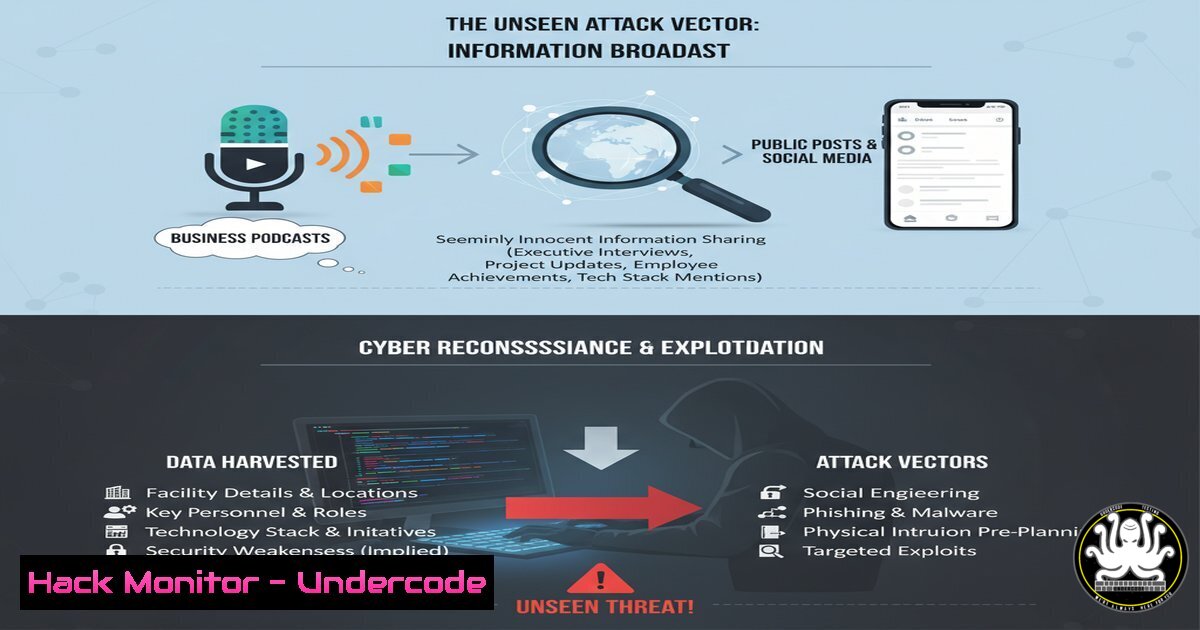
In today’s digital age, corporate announcements and leadership podcasts are not just marketing tools; they are rich intelligence sources for threat actors. The detailed operational data shared publicly can be weaponized for highly targeted social engineering and infrastructure attacks, turning a company’s success story into a blueprint for its own compromise.
Learning Objectives:
- Understand how OSINT (Open-Source Intelligence) is gathered from public business communications.
- Learn to identify and mitigate the technical risks associated with information oversharing.
- Implement defensive commands and configurations to harden systems against reconnaissance-derived attacks.
You Should Know:
1. Extracting Intelligence from Public Multimedia
When a company publicizes a podcast, the audio and video files, along with their descriptions, contain metadata that can reveal internal structures.
`exiftool https://lnkd.in/eNA2rKaw > podcast_metadata.txt`
This command uses ExifTool to read metadata from the linked YouTube video. It can potentially reveal file creation dates, software versions, and editing patterns. To use it, first install ExifTool on your system (sudo apt install libimage-exiftool-perl on Linux). Running the command will output all available metadata into a text file for analysis, which an attacker would scour for software vulnerabilities or system information.
2. Domain and Infrastructure Enumeration
Mentions of business names and partners allow attackers to map the target’s digital footprint.
`theharvester -d mysecondhome.com -b all`
TheHarvester is a reconnaissance tool that collects emails, subdomains, IPs, and URLs related to a domain. The `-d` flag specifies the target domain, and `-b` defines the data source (e.g., google, linkedin, all). Execute this from a Kali Linux terminal or similar environment. The output helps an attacker build a target list for phishing and identify peripheral systems for exploitation.
3. LinkedIn Network Mapping for Social Engineering
Attackers use LinkedIn to identify key personnel mentioned in posts, like “Ferzad Bharucha” or “Yiu Kin Cheung”.
`linkedin2username -n “Ferzad Bharucha” -c companies.txt`
This command, using the linkedin2username tool (part of the OSINT framework), generates a list of potential usernames for the given individual based on common corporate naming conventions. You need a configured installation of the tool and a valid LinkedIn session cookie. This list is then used in password spraying attacks against services like VPNs or email portals.
4. Hardening Web Servers Against Reconnaissance
Podcast links often point to company web assets. Ensure these servers do not leak information.
`sudo nano /etc/nginx/nginx.conf`
Add or modify: `server_tokens off;`
After identifying a web server (e.g., via curl -I https://mysecondhome.com`), an administrator must harden it. Editing the Nginx configuration file and setting `server_tokens` to `off` removes the server version from HTTP headers, making it harder for attackers to pinpoint known vulnerabilities. After saving the file, restart Nginx withsudo systemctl restart nginx`.
5. Blocking Malicious Reconnaissance Activity with Firewall Rules
Attackers will scan your public IPs. Implement rules to block repetitive scanning behavior.
`sudo iptables -I INPUT -p tcp –dport 80 -m state –state NEW -m recent –set`
`sudo iptables -I INPUT -p tcp –dport 80 -m state –state NEW -m recent –update –seconds 60 –hitcount 20 -j DROP`
These Linux iptables commands help mitigate port scanning. The first rule creates a list to track new connections on port 80. The second rule checks that list and if it sees more than 20 new connections from a single IP within 60 seconds, it drops the packets. This is a basic rate-limiting technique to slow down automated scanners.
6. Windows Security Logging for Authentication Attacks
With potential usernames gathered, attackers will target Windows Active Directory.
`Get-WinEvent -FilterHashtable @{LogName=’Security’; ID=4625; StartTime=(Get-Date).AddHours(-24)} | Format-Table`
This PowerShell command retrieves all failed logon events (Event ID 4625) from the last 24 hours. Run this in an elevated PowerShell session on a Windows Domain Controller. A high volume of failures for specific usernames indicates an ongoing password spraying or brute-force attack, allowing defenders to trigger alerts and block source IPs.
7. Implementing API Security to Protect Backend Services
Business transformations often involve new APIs. These must be secured against probing.
`nmap -p 443 –script http-methods –script-args http-methods.url-path=’/api/v1/’ target-ip`
An attacker uses this Nmap NSE script to discover which HTTP methods (GET, POST, PUT, DELETE) are allowed on an API endpoint. To defend, ensure your API gateway or web application firewall (WAF) is configured to reject unexpected methods and uses strict authentication. For a common REST API, you might only need to allow POST and GET, blocking PUT and DELETE for most users.
What Undercode Say:
- Public Content is a Permanent Risk. Any operational detail shared online becomes a permanent fixture in an attacker’s OSINT database, increasing the organization’s attack surface indefinitely.
- The Human Layer is the New Perimeter. Technical defenses are futile if an attacker can use public information to craft a believable phishing email that tricks a key executive into revealing their credentials.
The analysis reveals a critical paradox in modern business communication: the very content designed to build trust and attract clients simultaneously erodes digital security. The podcast detailing a “30% surge in sales” and “NDIS regulatory changes” is not neutral; it provides context for highly convincing spear-phishing campaigns. An attacker can now email an employee, posing as “Ferzad Bharucha’s advisory team,” referencing specific, non-public details from the podcast to build credibility before delivering a malicious payload. This shifts the defense strategy from purely technological to a hybrid model requiring continuous employee training on the operational security (OPSEC) implications of their public posts. Companies must institute a formal review process, not just for PR, but for the technical intelligence leaked in every public communication.
Prediction:
In the next 12-18 months, we will see a significant rise in Business Communication Compromise (BCC) attacks, where AI-powered tools will automatically scrape thousands of corporate podcasts, interviews, and LinkedIn posts to build hyper-accurate profiles for impersonation and infrastructure targeting. This will force the integration of AI-driven OPSEC auditors into marketing and PR workflows, creating a new niche in the cybersecurity market focused on pre-emptive information sanitization.
🎯Let’s Practice For Free:
IT/Security Reporter URL:
Reported By: Dr Heena – Hackers Feeds
Extra Hub: Undercode MoN
Basic Verification: Pass ✅


