Listen to this Post
Introduction:
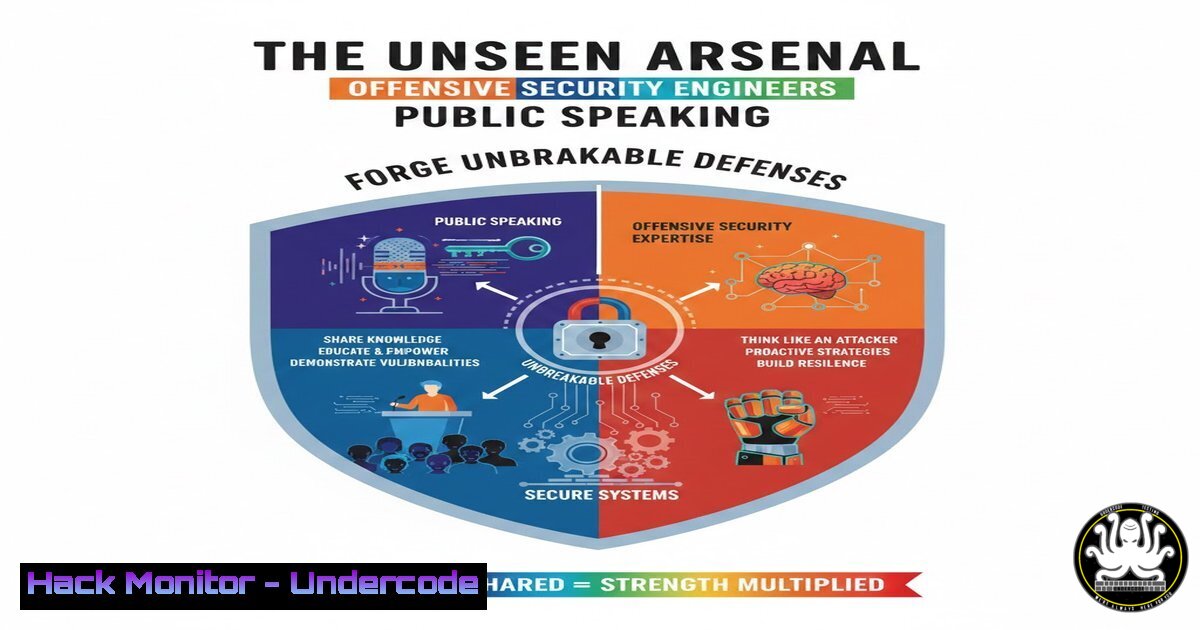
In the rapidly evolving cybersecurity landscape, technical expertise alone no longer suffices for comprehensive protection. Offensive security engineers like Elisa Alises Núñez demonstrate that public speaking and knowledge dissemination serve as critical components of modern defense strategies. This professional trajectory between 2023-2025 reveals how technical communication strengthens both individual capabilities and collective security postures across academic institutions, government organizations, and private sector entities.
Learning Objectives:
- Understand how public speaking enhances technical mastery and threat modeling capabilities
- Implement knowledge transfer as a security control mechanism within organizational frameworks
- Develop continuous improvement methodologies through community engagement and feedback loops
You Should Know:
1. The Technical Communication Advantage in Cybersecurity
Public speaking forces security professionals to structure complex technical concepts into digestible formats, reinforcing their own understanding while identifying knowledge gaps. This process mirrors threat modeling exercises where attackers must anticipate defensive measures and vice versa.
Step-by-step guide explaining what this does and how to use it:
– Identify core technical concepts from recent projects (API security, cloud hardening)
– Develop analogies that translate technical controls into business-impact narratives
– Practice explanations with non-technical stakeholders to refine communication
– Record and review presentations to identify areas for technical clarification
– Incorporate feedback into both future talks and security documentation
2. Building Cyber Ranges Through Academic Partnerships
Academic collaborations like those with Universidad Internacional de La Rioja create living laboratories for testing security controls. These environments allow for safe exploitation practice and mitigation development without production risks.
Step-by-step guide explaining what this does and how to use it:
– Establish isolated network segments for penetration testing
– Deploy vulnerable by design applications for student practice
– Implement monitoring to capture attack techniques:
 Linux command to monitor network traffic during exercises
tcpdump -i eth0 -w security_exercise.pcap host 10.0.0.0/24
– Document all findings in structured after-action reports
– Translate successful defensive measures to production environments
3. Competition Training as Continuous Security Assessment
Training national teams for competitions like ECSC develops methodologies for rapid vulnerability assessment and mitigation. This high-pressure environment mirrors real-world incident response scenarios.
Step-by-step guide explaining what this does and how to use it:
– Develop standardized assessment checklists covering OWASP Top 10
– Practice time-constrained vulnerability identification:
 Windows PowerShell command for rapid service enumeration
Get-Service | Where-Object {$_.Status -eq 'Running'} | Export-CSV running_services.csv
– Implement kill chain analysis for discovered vulnerabilities
– Create mitigation playbooks for common attack vectors
– Conduct retrospective analysis to improve detection capabilities
4. Knowledge Transfer as an Organizational Control
Systematic knowledge sharing through platforms like OpenWebinars creates institutional memory that survives personnel changes. This documentation serves as both training material and operational reference.
Step-by-step guide explaining what this does and how to use it:
– Record technical demonstrations with detailed explanations
– Create searchable knowledge bases with tagged content
– Develop standardized operating procedures for common tasks
– Implement peer review processes for technical content
– Measure knowledge retention through practical assessments
5. Women in Cybersecurity Initiatives as Force Multipliers
Programs like WOMCY and Women4Cyber Spain address critical talent shortages by expanding the recruitment pipeline. Diverse perspectives enhance threat modeling and vulnerability discovery.
Step-by-step guide explaining what this does and how to use it:
– Establish mentorship programs pairing experienced and new practitioners
– Create safe environments for technical skill development
– Develop inclusive recruitment and retention strategies
– Measure program effectiveness through career progression tracking
– Share successful models across organizations and regions
6. Cross-Platform Content Strategy for Maximum Impact
Different platforms (TEDx, podcasts, academic conferences) reach distinct audiences with tailored messaging. This multi-channel approach ensures comprehensive ecosystem awareness.
Step-by-step guide explaining what this does and how to use it:
– Audit existing content for adaptation opportunities
– Identify platform-specific technical level requirements
– Develop content modification frameworks:
 Script to extract key points from technical presentations
grep -i "critical|vulnerability|mitigation" presentation_transcript.txt > key_points.txt
– Implement feedback collection mechanisms per platform
– Analyze engagement metrics to refine technical depth
7. From Presentation to Implementation: The Operationalization Pipeline
The true value of security presentations emerges when concepts translate to operational improvements. This requires systematic capture and implementation of insights.
Step-by-step guide explaining what this does and how to use it:
– Designate implementation teams for conference insights
– Create standardized evaluation frameworks for new concepts
– Develop proof-of-concept implementations:
 Docker compose for testing security tools demonstrated in talks
version: '3'
services:
security_tool:
image: tool_demo:latest
ports:
- "8080:80"
– Measure implementation effectiveness through security metrics
– Document lessons learned for continuous improvement
What Undercode Say:
- Technical communication represents an untapped security control that simultaneously enhances individual expertise and organizational resilience
- The synergy between offensive security operations and public knowledge sharing creates feedback loops that accelerate defensive innovation
Analysis: Elisa’s trajectory demonstrates that modern cybersecurity excellence extends beyond technical execution to encompass ecosystem development. The pattern of continuous presentation and refinement between 2023-2025 reveals a sophisticated approach to professional growth where each speaking engagement serves as both knowledge dissemination and personal skill validation. This methodology transforms what might appear as peripheral activities into core security capabilities, creating networks of practice that enhance detection, prevention, and response capabilities across organizations. The inclusion of academic institutions, government agencies, and private sector entities indicates a strategic approach to building resilient security ecosystems rather than simply advancing individual expertise.
Prediction:
The integration of public communication with technical security operations will become formalized within security frameworks over the next 3-5 years. Organizations will increasingly value and measure the defensive returns from knowledge sharing activities, creating dedicated roles for security communication specialists. The demonstrated connection between presentation preparation and enhanced technical understanding will drive more structured programs combining communication training with security upskilling, ultimately raising industry-wide capabilities while addressing critical talent shortages through expanded recruitment and improved retention.
🎯Let’s Practice For Free:
IT/Security Reporter URL:
Reported By: Elisa Alises – Hackers Feeds
Extra Hub: Undercode MoN
Basic Verification: Pass ✅


