
Listen to this Post
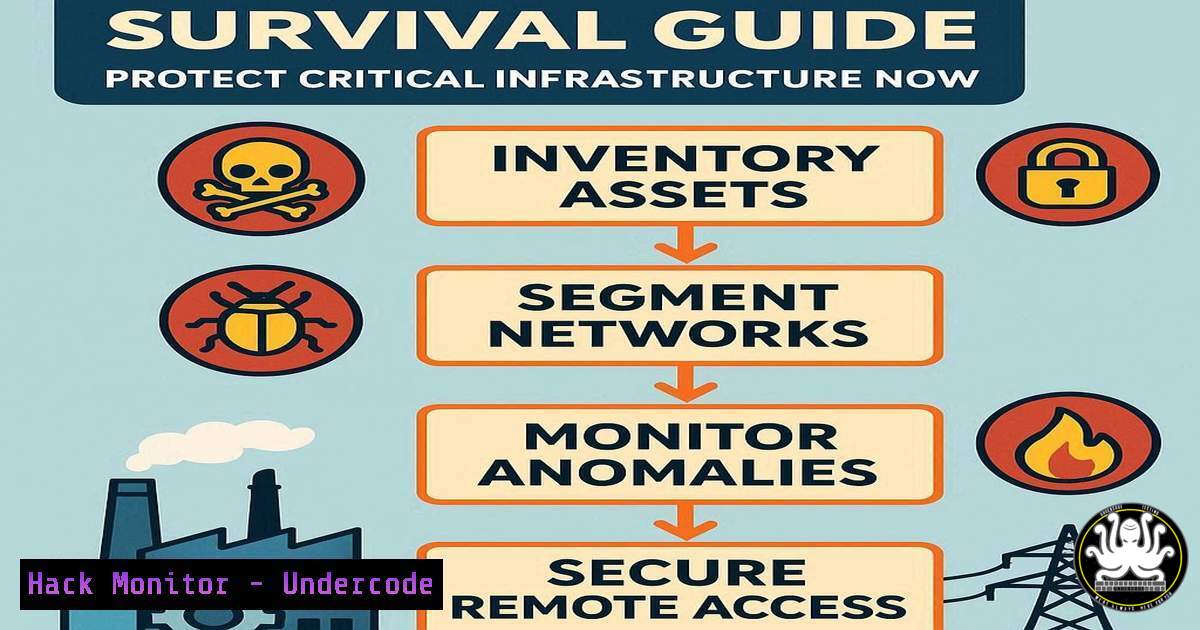
Introduction:
The security of Operational Technology (OT) and Industrial Control Systems (ICS) is no longer a niche concern but a frontline defense for national critical infrastructure. As these once-isolated systems become increasingly interconnected with IT networks, they present a vast and vulnerable attack surface for malicious actors. Mastering the specific tools and techniques for OT/ICS environments is essential for security professionals tasked with keeping the lights on, the water flowing, and production lines moving.
Learning Objectives:
- Understand the fundamental principles and unique challenges of securing OT/ICS environments.
- Acquire practical, command-line skills for asset discovery, network monitoring, and protocol analysis in industrial networks.
- Learn to identify critical vulnerabilities and apply hardening techniques to protect PLCs, SCADA systems, and other industrial assets.
You Should Know:
1. Discovering OT Assets with Nmap
OT environments often contain legacy systems that require non-intrusive discovery methods to avoid disrupting operational processes.
`nmap -sU -p 161,102,502 –script s7-info,modbus-discover -O -T4 10.10.10.0/24`
Step-by-step guide: This Nmap command performs a targeted scan of a typical industrial subnet.
-sU: Enables UDP scanning, crucial for discovering devices using industrial protocols.
-p 161,102,502: Scans for SNMP (161), Siemens S7comm (102), and Modbus (502) ports.
--script s7-info,modbus-discover: Uses Nmap Scripting Engine (NSE) scripts to enumerate and gather detailed information from Siemens S7 and Modbus PLCs.
-O: Attempts to identify the operating system of discovered hosts.
-T4: Sets the timing template to “aggressive” to speed up the scan, but use cautiously in sensitive environments.
This command helps build an accurate asset inventory, the foundational step in OT security.
2. Capturing and Analyzing Industrial Traffic with Tcpdump
Continuous network monitoring is vital for detecting anomalies and potential attacks in OT networks.
`tcpdump -i eth0 -w ot_capture.pcap port 502 or port 102 or port 44818`
Step-by-step guide: This command captures live network traffic for offline analysis.
-i eth0: Specifies the network interface to listen on (replace `eth0` with your interface name).
-w ot_capture.pcap: Writes the raw packet data to a file named ot_capture.pcap.
port 502 or port 102 or port 44818: A Berkeley Packet Filter (BPF) expression that captures only traffic on common industrial ports (Modbus, S7comm, EtherNet/IP).
Analyze the resulting `.pcap` file in Wireshark to inspect protocol commands, identify unauthorized access, and detect malicious payloads targeting PLCs.
3. Querying Siemens S7 PLCs with Python
Understanding how to programmatically interact with PLCs is key for both penetration testing and automated monitoring.
from snap7 import client
import struct

plc = client.Client()
plc.connect('192.168.1.100', 0, 1)  IP Address, Rack, Slot

Read 4 bytes from Data Block 1, starting at byte 0
data = plc.db_read(1, 0, 4)
 Unpack the data as a float (common for sensor values)
value = struct.unpack('f', data)
print(f"Read value: {value[bash]}")

plc.disconnect()
Step-by-step guide: This Python script uses the `python-snap7` library to read data from a Siemens S7-1200/1500 PLC.
Install the prerequisite: pip install python-snap7. You also need the `snap7` shared library from the Snap7 project.
plc.connect(): Establishes a connection to the PLC using its IP address, rack, and slot numbers.
plc.db_read(1, 0, 4): Reads 4 bytes from Data Block 1, starting at offset 0.
struct.unpack('f', data): Interprets the 4 bytes as a floating-point number, a common data type for process values like temperature or pressure.
This demonstrates how an attacker could read sensitive process data or how a defender could validate the integrity of operational data.
4. Hardening Windows-Based HMI/SCADA Systems
Many Human-Machine Interface (HMI) and SCADA servers run on Windows, requiring specific hardening measures.
`Get-Service | Where-Object {$_.Name -like “SQL”} | Set-Service -StartupType Disabled -PassThru | Stop-Service`
Step-by-step guide: This PowerShell command disables non-essential services, a core tenet of system hardening.
Run Windows PowerShell as Administrator.
`Get-Service`: Retrieves a list of all services.
Where-Object {$_.Name -like "SQL"}: Filters the list to services with “SQL” in their name (e.g., unused database engines).
Set-Service -StartupType Disabled: Configures the filtered services to not start automatically on boot.
Stop-Service: Stops the services if they are currently running.
This reduces the attack surface by shutting down potential entry points for malware and exploits. Always test in a non-production environment first.
5. Analyzing PLC Logic with CODESYS
Understanding the logic programmed into PLCs is crucial for identifying malicious code or logic bombs.
`ST (Structured Text) Code Snippet:`
IF enable_command THEN
motor_start := TRUE;
// Malicious condition: Start motor if pressure is critically high
IF pressure_sensor > CRITICAL_HIGH THEN
motor_override := TRUE;
END_IF
END_IF;
Step-by-step guide: This example, in Structured Text, highlights a potential logic bomb.
enable_command: A normal condition for starting a motor.
The nested `IF` statement introduces a hidden, dangerous condition: it will start the motor (via an override) if the pressure sensor reads a critically high value.
This would cause a catastrophic failure by forcing the motor to run under unsafe conditions.
Security audits must involve deep-dive code reviews of PLC logic in languages like Ladder Diagram (LD), Function Block Diagram (FBD), and Structured Text (ST) to find such anomalies.
6. Enforcing Network Segmentation with Windows Firewall
Strict network segmentation between the OT and IT zones is a primary defense mechanism.
`New-NetFirewallRule -DisplayName “Block_IT_to_Modbus” -Direction Inbound -Protocol TCP -LocalPort 502 -Action Block -RemoteAddress 192.168.2.0/24`
Step-by-step guide: This PowerShell command creates a Windows Firewall rule to enforce segmentation.
Run Windows PowerShell as Administrator.
-DisplayName "Block_IT_to_Modbus": Gives the rule a descriptive name.
`-Direction Inbound`: Blocks incoming connections.
-Protocol TCP -LocalPort 502: Applies the rule to TCP traffic on port 502 (Modbus).
-Action Block: The rule will block matching traffic.
-RemoteAddress 192.168.2.0/24: Blocks traffic originating from the IT network subnet (192.168.2.x).
This prevents unauthorized access attempts from the corporate network into the critical Modbus network.
- Detecting Anomalies with Zeek (Bro) in an OT Network
Specialized Intrusion Detection Systems (IDS) can be tuned to recognize malicious activity in industrial protocols.
` In /opt/zeek/share/zeek/site/local.zeek
@load policy/protocols/modbus
redef Modbus::log_commands = T;
redef Modbus::function_codes = { 0x01, 0x05, 0x0F, 0x10 }; Whitelist common function codes
event modbus_message(c: connection, headers: ModbusHeaders, is_orig: bool) {
if (headers$function_code ! in Modbus::function_codes) {
NOTICE([$note=Modbus::UnknownFunctionCode,
$conn=c,
$msg=fmt(“Unknown Modbus function code: 0x%02x”, headers$function_code)]);
}
}`
Step-by-step guide: This Zeek script creates a custom detection rule for the Modbus protocol.
Zeek is a powerful network analysis framework.
`@load policy/protocols/modbus`: Loads the Modbus protocol analyzer.
redef Modbus::function_codes = { ... }: Defines a whitelist of expected, benign Modbus function codes.
The `modbus_message` event is triggered for every Modbus packet. It checks if the function code is outside the whitelist.
If an unknown code is detected, it generates a NOTICE log, alerting analysts to a potential malicious command or malformed packet designed to crash a PLC.
What Undercode Say:
- The perimeter of critical infrastructure is now a digital battleground, and traditional IT security tools are often blind to the specialized protocols and legacy systems that control our physical world.
- Proactive defense in OT is not just about patching; it’s about deep visibility into network communications, understanding process logic, and enforcing uncompromising segmentation.
The shift towards IT/OT convergence has created a perfect storm of vulnerability. Adversaries, from state-sponsored actors to cybercriminal groups, are actively exploiting the fragility of these systems. The recent RSTCON conference highlights the industry’s push for “tradecraft” and “tactics,” moving beyond theoretical frameworks to actionable defense. The commands and techniques outlined here are the foundational tools of this new tradecraft. Relying solely on vendor security reports is a reactive strategy that leaves dangerous gaps; the modern defender must be able to actively discover, interrogate, and harden these systems themselves. The survival of our critical infrastructure depends on this hands-on, adversarial mindset.
Prediction:
The next 18-24 months will see a significant rise in targeted ransomware campaigns that deliberately manipulate OT processes to extort payments. We will move beyond encryption for disruption to attacks that subtly alter PLC logic to create unsafe industrial conditions, forcing operators to pay ransoms to prevent physical damage, environmental disasters, or loss of life. This evolution from disruptive to coercive ransomware will represent a fundamental escalation in the cyber threat to critical infrastructure, demanding a corresponding evolution in detection and response capabilities focused on control system integrity.
🎯Let’s Practice For Free:
IT/Security Reporter URL:
Reported By: Mikeholcomb Cutting – Hackers Feeds
Extra Hub: Undercode MoN
Basic Verification: Pass ✅


