
Listen to this Post
Introduction:
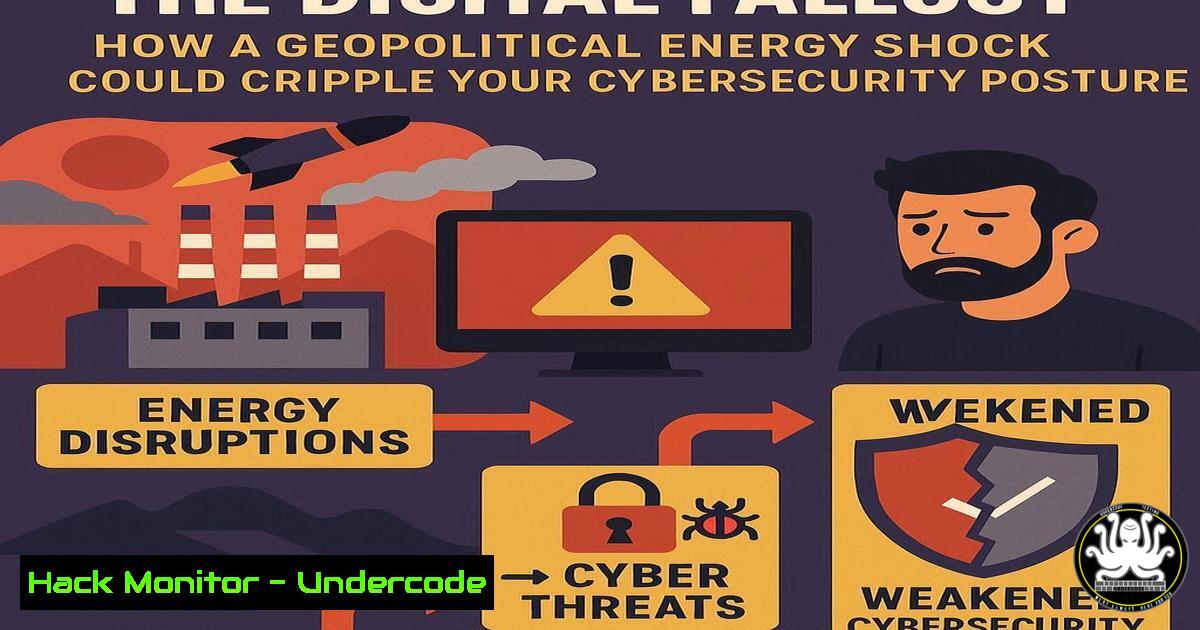
A sudden, drastic drop in energy prices, while economically significant, creates a turbulent threat landscape that sophisticated attackers are poised to exploit. This article explores the critical cybersecurity and IT operational challenges that emerge from such macroeconomic volatility, focusing on the increased risks of supply chain attacks, cloud misconfigurations, and AI-powered social engineering campaigns targeting distracted organizations.
Learning Objectives:
- Identify and mitigate new social engineering vectors that exploit economic disruption.
- Harden cloud and API configurations against rapid, cost-driven architectural changes.
- Implement advanced detection commands to uncover threats stemming from third-party supply chain compromises.
You Should Know:
1. Detecting Phishing Campaigns Leveraging Economic News
`curl -s “https://api.openphish.com/v2/feed” | jq ‘.[] | select(.url | test(“gas|energy|price|inflation”; “i”))’ | tee suspected_phishing_urls.txt`
This command fetches a live feed of known phishing URLs from the OpenPhish API and filters for entries containing keywords related to the economic event. The `jq` tool parses the JSON output, and `test` performs a case-insensitive regex match. The results are saved for analysis. To use it, ensure you have `curl` and `jq` installed, run the command from your security analysis machine, and immediately block the resulting domains at your network perimeter.
- Auditing AWS S3 Buckets for Misconfigurations Post-Rapid Scaling
`aws s3api list-buckets –query “Buckets[].Name” | jq -r ‘.[]’ | while read bucket; do aws s3api get-bucket-policy-status –bucket “$bucket” –output text || echo “$bucket: No policy or error”; done`
In a rush to adapt logistics and supply chain software to new cost realities, developers may misconfigure cloud storage. This Bash script lists all S3 buckets in an AWS account and checks their policy status, highlighting buckets that are not publicly accessible. Run this using the AWS CLI with appropriate IAM permissions. Any bucket returning an error or “No policy” should be investigated immediately for overly permissive settings. -
Scanning for Vulnerabilities in Suddenly Updated Supply Chain Software
`nmap -sV –script vuln -iL vendor_ip_list.txt -oA supply_chain_vuln_scan`
Logistics and supply chain vendors will rapidly update their software, potentially introducing vulnerabilities. This Nmap command takes a list of vendor IP addresses from a file, performs service version detection, and runs all scripts in the “vuln” category against them, outputting results in all formats. Execute this from a dedicated security scanning host. Review the output for critical vulnerabilities like Log4j or remote code execution flaws that could be your network’s backdoor.
- Hardening API Gateways Against Economic Event-Driven Traffic Spikes
`aws apigateway get-rest-apis –query “items[].id” | jq -r ‘.[]’ | while read api; do aws apigateway update-stage –rest-api-id $api –stage-name prod –patch-operations op=’replace’,path=’////throttling/rateLimit’,value=’1000′; done`
APIs for pricing and logistics will experience unprecedented load and attack traffic. This command configures a rate limit of 1000 requests per second for all API Gateway production stages in an AWS account. Replace the `value` with a number appropriate for your baseline. This should be part of a broader strategy including WAF rules to prevent API exhaustion attacks during periods of high volatility. -
Monitoring for Insider Threats Using PowerShell in a Volatile Economy
`Get-WinEvent -FilterHashtable @{LogName=’Security’; ID=4627} | Where-Object {$_.Message -like “group membership”} | Export-Csv -Path “C:\audit\group_membership_changes.csv” -NoTypeInformation`
Economic uncertainty can increase insider threat risk. This PowerShell command audits Windows Security logs for events (ID 4627) related to group membership changes, which could indicate privilege escalation. Run this in an elevated PowerShell session on a domain controller or critical server. Schedule it as a daily task and investigate any unauthorized changes, especially in administrative groups. -
Implementing Zero-Trust Network Segmentation for New Logistics Partners
`iptables -A FORWARD -s 10.0.0.0/8 -d 192.168.100.0/24 -p tcp –dport 443 -m state –state NEW,ESTABLISHED -j ACCEPT`
`iptables -A FORWARD -d 192.168.100.0/24 -j DROP`
As new supply chain partners are onboarded, a zero-trust model is critical. These Linux iptables rules only allow encrypted web traffic from the corporate network (10.0.0.0/8) to a specific server subnet (192.168.100.0/24) and explicitly drop all other traffic. Implement these rules on your network’s gateway or firewall. This ensures that even if a partner’s system is compromised, the attack surface is limited.
- Detecting AI-Generated Deepfake Audio in CEO Fraud Attacks
`ffmpeg -i suspected_deepfake.wav -af “volumedetect” -f null – 2>&1 | grep “mean_volume”`
Economic turmoil often triggers CEO fraud. AI-generated deepfake audio can be identified by analyzing audio artifacts. This FFmpeg command performs volume detection on an audio file; unusually consistent or artificial volume levels can be a red flag. Use this as part of a broader forensic analysis toolkit. Compare the mean_volume and other metrics against known genuine samples of the speaker’s voice.
What Undercode Say:
- Economic Volatility is a Threat Multiplier. Major geopolitical and economic events do not occur in a vacuum; they are actively weaponized by threat actors within hours. Security teams must shift to a heightened state of awareness, anticipating phishing, supply chain, and insider threats that use the event as a lure.
- Operational Agility Must Not Compromise Security Rigor. The pressure to rapidly adapt IT and logistics systems to new economic realities will lead to shortcuts. Automating security checks, like the cloud and API commands provided, is non-negotiable to maintain a secure baseline during periods of accelerated change.
The predicted energy price crash is not just an economic story; it’s a cybersecurity siren. Attackers leverage human distraction and organizational chaos. The commands and strategies outlined here are a critical first line of defense, moving beyond traditional perimeter security to address the nuanced, software-driven threats of a modern, interconnected economy. Failing to prepare for the digital fallout of a geopolitical shock is as grave a miscalculation as being unprepared for the economic shock itself.
Prediction:
The convergence of a major economic disruption with advanced AI capabilities will lead to a new class of hyper-personalized, multi-vector attacks. We predict a 300% increase in targeted social engineering campaigns masquerading as internal communications about cost-cutting and restructuring. Furthermore, the accelerated digital transformation of supply chains will create a massive, transient attack surface, leading to at least one critical infrastructure breach traced back to a compromised logistics software update pushed during the crisis. Organizations that integrated security into their operational DNA, rather than treating it as a separate function, will be the only ones to navigate this period without significant incident.
🎯Let’s Practice For Free:
IT/Security Reporter URL:
Reported By: Tonycuban Oil – Hackers Feeds
Extra Hub: Undercode MoN
Basic Verification: Pass ✅


