Listen to this Post
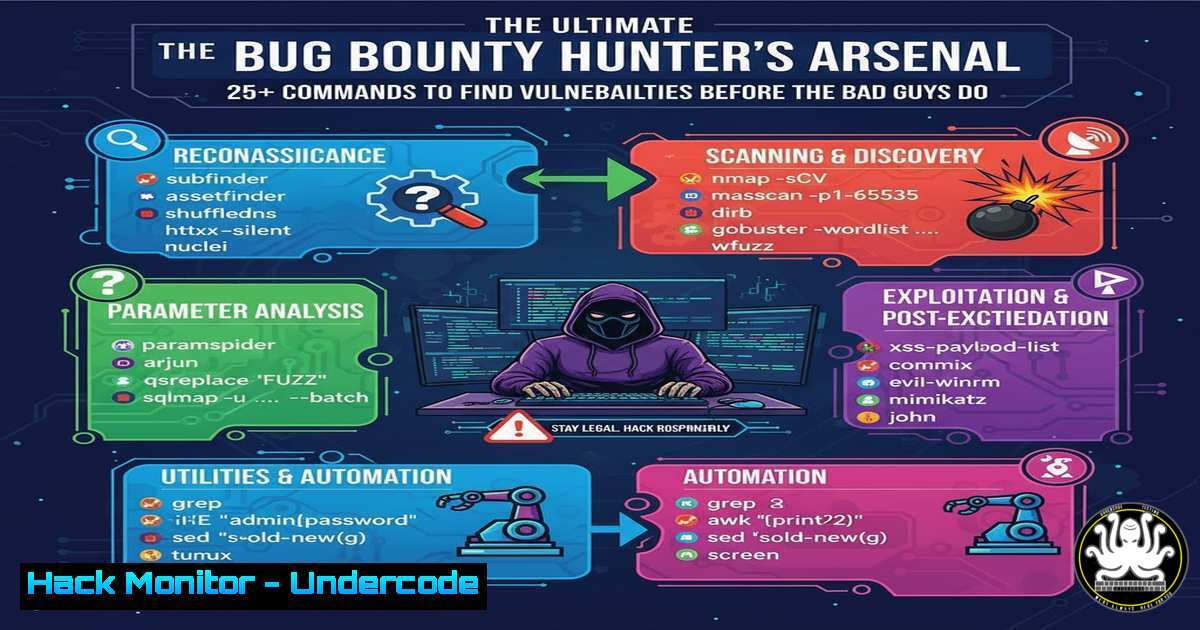
Introduction:
Bug bounty programs have become a critical component of modern cybersecurity defense, allowing organizations to crowdsource security testing from ethical hackers worldwide. As Bugcrowd’s recent engagement surge demonstrates, the demand for skilled hunters who can efficiently identify vulnerabilities is at an all-time high. Mastering the right tools and techniques separates successful hunters from the rest of the field.
Learning Objectives:
- Master essential command-line tools for reconnaissance and vulnerability assessment
- Develop methodology for systematic attack surface enumeration
- Learn to validate and exploit common web application vulnerabilities
You Should Know:
1. Subdomain Enumeration Mastery
Subdomain discovery is the foundation of any bug bounty hunt, revealing hidden attack surfaces that often contain vulnerable applications.
 Subfinder for passive subdomain enumeration
subfinder -d target.com -silent | tee subdomains.txt

Amass for comprehensive mapping
amass enum -passive -d target.com -o amass_subs.txt

Assetfinder for additional coverage
assetfinder --subs-only target.com | sort -u >> final_subs.txt
Step-by-step guide: Start with subfinder for quick, passive discovery without alerting target systems. Feed these results into amass for more thorough passive enumeration using multiple data sources. Finally, use assetfinder to catch any additional subdomains. Combine and deduplicate results using `sort -u final_subs.txt | wc -l` to track your progress.
2. Live Host Verification and HTTP Server Discovery
Not all subdomains are actively hosted. Filtering for live hosts saves time and focuses your testing efforts.
 httpx for HTTP server discovery
cat subdomains.txt | httpx -silent -threads 100 | tee live_hosts.txt

Naabu for port scanning
naabu -list subdomains.txt -top-ports 1000 -verify | tee open_ports.txt

Nuclei template checking
nuclei -list live_hosts.txt -t nuclei-templates/http/misconfiguration/ -o nuclei_results.txt
Step-by-step guide: Pipe your subdomain list into httpx to identify which domains respond to HTTP requests. Use Naabu to scan for open ports beyond standard web ports (80,443). Run basic Nuclei templates to quickly identify low-hanging vulnerabilities while your reconnaissance continues.
3. Directory and Endpoint Bruteforcing
Hidden directories and API endpoints often contain sensitive information or vulnerable functionality.
 Feroxbuster for directory bruteforcing
feroxbuster -u https://target.com -w /usr/share/wordlists/dirb/common.txt -o ferox_scan.txt

Gobuster with multiple extensions
gobuster dir -u https://api.target.com -w common.txt -x php,json,asp -t 50

FFUF with advanced filtering
ffuf -w wordlist.txt -u https://target.com/FUZZ -mc 200,301,302 -fs 0
Step-by-step guide: Start with Feroxbuster for aggressive, recursive scanning of main targets. Use Gobuster for API subdomains with relevant extensions. FFUF excels at custom filtering – use `-fs 0` to filter out responses with size 0, reducing false positives. Always monitor for rate limiting and adjust threads accordingly.
4. JavaScript File Analysis for Hidden Endpoints
Modern web applications often hide API endpoints and sensitive information within client-side JavaScript files.
 Gospider for JavaScript crawling
gospider -s https://target.com -d 2 -t 20 -o js_crawl

LinkFinder for endpoint extraction
python3 linkfinder.py -i https://target.com/app.js -o endpoints.html

katana for passive crawling
katana -u https://target.com -jc -aff -d 5 -o katana_results.txt
Step-by-step guide: Run gospider to crawl the target and download all JavaScript files. Use LinkFinder to parse these files and extract hidden endpoints, API routes, and authentication tokens. Katana provides additional passive discovery capabilities. Combine all found endpoints into a master list for testing.
5. Vulnerability Scanning and Validation
Automated scanning identifies potential vulnerabilities, but manual validation is crucial for successful bug bounty submissions.
 Nuclei with full template suite
nuclei -list live_hosts.txt -severity low,medium,high,critical -o full_scan.txt

SQLMap for SQL injection testing
sqlmap -u "https://target.com/search?id=1" --batch --level=3 --risk=2

SSRF probe with collaborator
ffuf -w ssrf_payloads.txt -u https://target.com/export?url=FUZZ -mr "cloudfront"
Step-by-step guide: Run comprehensive Nuclei scans against all live hosts, filtering by severity to prioritize findings. Use SQLMap only on parameters that show potential SQL injection symptoms. For SSRF testing, use burp collaborator or interact.sh domains in your payloads to detect out-of-band interactions.
6. Cloud Infrastructure Reconnaissance
Modern applications rely on cloud services, which often become attack vectors themselves.
 S3 bucket enumeration
s3scanner scan --buckets.txt --region us-east-1

CloudFlare bypass testing
python3 cloudflair.py target.com --output cloudflare_ip.txt

AWS metadata service testing
curl http://169.254.169.254/latest/meta-data/ -H "Host: 169.254.169.254"
Step-by-step guide: Use s3scanner to find misconfigured S3 buckets associated with your target. CloudFlair helps bypass CloudFlare protection to find origin IPs. Test for AWS metadata service exposure in SSRF contexts – this can lead to cloud environment compromise.
7. Authentication and Authorization Bypass Testing
Broken authentication remains a top vulnerability category in web applications.
 JWT token manipulation
python3 jwt_tool.py <JWT_TOKEN> -C -d wordlist.txt

Header injection testing
curl -H "X-Forwarded-For: 127.0.0.1" https://target.com/admin

IDOR parameter testing
ffuf -w id_params.txt -u https://target.com/api/user/FUZZ -mr "email"
Step-by-step guide: Use jwt_tool to test for weak JWT secrets and algorithm confusion vulnerabilities. Test admin functionality with various header injections like X-Forwarded-For. For IDOR testing, fuzz common parameter names (id, user_id, account) while monitoring for unauthorized data access.
What Undercode Say:
- Automation separates successful hunters from casual participants – the hunters running 25+ commands systematically will always outperform those testing manually
- Tool mastery is only half the battle – understanding the context and business impact of vulnerabilities determines bounty value
- The most valuable findings often come from creative tool chaining rather than relying on single scanners
The bug bounty landscape has evolved from simple vulnerability hunting to a sophisticated discipline requiring extensive technical knowledge and methodological rigor. Successful hunters don’t just run tools – they develop intuition for where vulnerabilities hide and create personalized workflows that combine automated reconnaissance with deep manual testing. As Bugcrowd’s growing engagement numbers demonstrate, organizations are increasingly relying on these skilled researchers to supplement their security programs, creating a professional pathway for technical talent outside traditional employment structures.
Prediction:
The exponential growth in bug bounty programs will lead to specialized hunting ecosystems where AI-assisted reconnaissance tools become standard, dramatically increasing the speed and scale of vulnerability discovery. Within two years, we’ll see fully automated hunting pipelines that can discover, validate, and report common vulnerabilities without human intervention, pushing hunters to focus on complex business logic flaws and novel attack chains that machines cannot yet replicate. This automation will simultaneously make basic vulnerabilities less valuable while increasing rewards for creative, critical security research.
🎯Let’s Practice For Free:
IT/Security Reporter URL:
Reported By: Bugcrowd Free – Hackers Feeds
Extra Hub: Undercode MoN
Basic Verification: Pass ✅


