Listen to this Post
Introduction
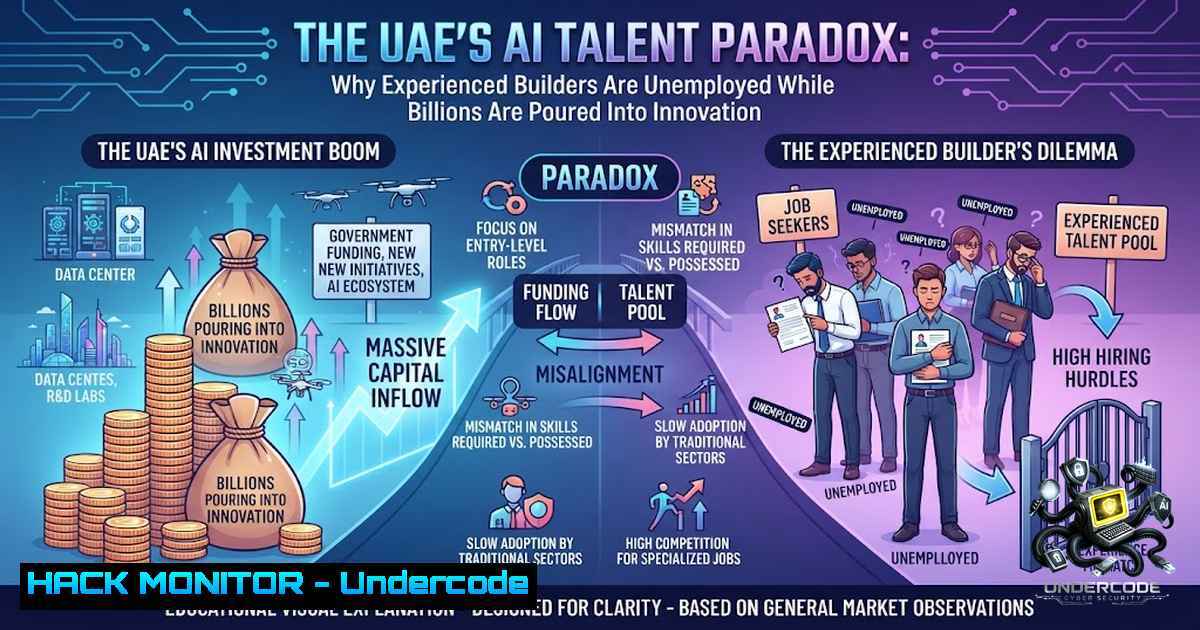
The United Arab Emirates has positioned itself as a global AI powerhouse, with ambitious national strategies and billions in investment flowing into artificial intelligence initiatives. Yet a troubling disconnect persists between organizational ambition and execution capability, leaving highly qualified AI professionals underutilized while companies struggle to move from grand announcements to working systems. This gap isn’t about technical capability—it’s about organizational readiness, role clarity, and the often-overlooked discipline of AI adoption and transformation.
Learning Objectives
- Understand the structural barriers preventing qualified AI talent from being effectively deployed in the GCC region
- Learn how to design AI roles that align with organizational maturity and implementation needs
- Identify the critical non-technical components of successful AI transformation, including governance, change management, and workflow redesign
- Develop practical strategies for connecting AI strategy to measurable business outcomes
You Should Know
1. Defining AI Competency Beyond Technical Credentials
The current talent landscape in the UAE reveals a fundamental mismatch between what organizations claim they need and what they actually require for successful AI implementation. Organizations announce aggressive AI strategies but create job descriptions that conflate multiple disciplines into impossible single roles.
A software engineer cannot simultaneously be a business strategist and an ML engineer. A transformation leader should not be expected to build technical infrastructure while leading change management. These are distinct competencies requiring specialized expertise.
The Core Competency Framework for AI Roles:
Technical Builders
- Machine Learning Engineers: Model development, deployment, MLOps
- Data Engineers: Data pipelines, ETL processes, data quality
- AI Infrastructure Specialists: Cloud platforms, GPU clusters, security
Strategic Translators
- AI Strategists: Business case development, opportunity identification
- AI Product Managers: Requirements gathering, roadmap development
- AI Governance Leads: Policy development, compliance, risk management
Adoption Experts
- Change Management Professionals: Training, communication, user adoption
- Workflow Designers: Process re-engineering, integration planning
- AI Educators: Upskilling, user support, documentation
Linux/Windows Command: Checking System Resources for AI Workloads
 Linux - Check GPU availability and usage
nvidia-smi

Linux - Check CPU cores and memory
lscpu
free -h

Windows - Check system resources via PowerShell
Get-WmiObject -Class Win32_ComputerSystem
Get-CimInstance -ClassName CIM_PhysicalMemory | Measure-Object -Property Capacity -Sum

Linux - Monitor resource usage in real-time
htop
2. Building an AI Adoption Roadmap
Moving from concept to actual business use requires a structured approach that addresses technology, people, and processes simultaneously. Organizations often focus exclusively on technology procurement while neglecting the human and operational dimensions.
Step-by-Step Guide to AI Adoption:
Step 1: Assess Organizational Readiness
Evaluate data quality, infrastructure, skill levels, and cultural readiness before investing in AI solutions. Conduct a maturity assessment covering:
– Data availability and quality
– Technical infrastructure
– Team capabilities
– Executive sponsorship
– Change readiness
Step 2: Define Clear Business Outcomes
AI should solve specific business problems, not exist for its own sake. Define measurable outcomes:
– Cost reduction targets
– Revenue enhancement goals
– Efficiency improvements
– Customer satisfaction metrics
Step 3: Identify High-Value Use Cases
Select projects with manageable scope and clear ROI potential. Start with:
– Process automation opportunities
– Decision support systems
– Customer experience improvements
– Operational optimization
Step 4: Design the Implementation Approach
Choose between build, buy, or partner strategies based on:
– Available internal expertise
– Time-to-market requirements
– Budget constraints
– Strategic importance
Step 5: Plan Change Management
Most AI failures stem from poor adoption, not technical problems. Develop:
– Training programs
– Communication plans
– User feedback mechanisms
– Performance monitoring
Step 6: Establish Governance Frameworks
Ensure responsible AI use through:
- Ethics guidelines
- Privacy protections
- Security protocols
- Accountability structures
Command Examples for AI Environment Setup:
 Linux - Install Python and create virtual environment
sudo apt update
sudo apt install python3-pip python3-venv
python3 -m venv ai_environment
source ai_environment/bin/activate

Windows - Using PowerShell
python -m venv ai_environment
.\ai_environment\Scripts\activate

Install common AI libraries
pip install tensorflow pytorch scikit-learn pandas numpy jupyter

Verify installations
python -c "import tensorflow as tf; print(tf.<strong>version</strong>)"
3. Redesigning AI Job Roles for Real Impact
The practice of packing five distinct jobs into one job description creates unrealistic expectations and sets candidates up for failure. Organizations must differentiate between roles that build AI technology and roles that make it useful.
Role Differentiation for AI Initiatives:
AI Engineer
- Focus: Technical implementation, model training, deployment
- Skills: Python, PyTorch/TensorFlow, MLOps, cloud platforms
- KPI: Model performance metrics, deployment success rates
AI Strategist
- Focus: Business opportunity identification, strategic alignment
- Skills: Business analysis, industry knowledge, communication
- KPI: Use case identification, ROI measurement
AI Adoption Lead
- Focus: User training, workflow integration, change management
- Skills: Training delivery, stakeholder management, process design
- KPI: Adoption rates, user satisfaction, productivity gains
AI Governance Manager
- Focus: Policy development, compliance, risk management
- Skills: Legal/compliance knowledge, policy writing, auditing
- KPI: Compliance scores, risk mitigation metrics
Data Operations Lead
- Focus: Data quality, pipelines, infrastructure maintenance
- Skills: Data engineering, database management, ETL
- KPI: Data availability, quality scores, pipeline uptime
Best Practice: Creating Role Clarity
1. Define responsibilities clearly for each role
2. Match qualifications to specific role requirements
3. Create career progression paths
4. Develop cross-functional collaboration frameworks
4. Practical Implementation for AI-Ready Infrastructure
Organizations need to establish technical foundations that enable successful AI implementation while maintaining security and governance.
Step-by-Step Infrastructure Setup:
1. Cloud Platform Configuration
 Example: Setting up AWS CLI for AI infrastructure
 Linux/Mac
curl "https://awscli.amazonaws.com/awscli-exe-linux-x86_64.zip" -o "awscliv2.zip"
unzip awscliv2.zip
sudo ./aws/install

Windows - PowerShell
msiexec.exe /i https://awscli.amazonaws.com/AWSCLIV2.msi

Configure AWS credentials
aws configure
2. GPU Environment Setup
 Linux - Install NVIDIA drivers and CUDA for deep learning
sudo apt install nvidia-driver-535
sudo apt install nvidia-cuda-toolkit

Verify GPU availability
nvidia-smi

Install container runtime for AI workloads
sudo apt install nvidia-container-toolkit
3. Data Pipeline Configuration
 Python example: Basic data pipeline setup
import pandas as pd
from sklearn.model_selection import train_test_split

def setup_data_pipeline(data_source):
 Load and validate data
data = pd.read_csv(data_source)
print(f"Data shape: {data.shape}")

Split for AI training
X = data.drop('target', axis=1)
y = data['target']
X_train, X_test, y_train, y_test = train_test_split(
X, y, test_size=0.2, random_state=42
)
return X_train, X_test, y_train, y_test
4. Model Deployment Security
 Create security group for AI model serving on AWS
aws ec2 create-security-group --group-1ame ai-model-serving \
--description "Security group for AI model endpoints"

Add HTTPS and application-specific ports
aws ec2 authorize-security-group-ingress \
--group-id sg-xxxxxxxxx \
--protocol tcp --port 443 --cidr 0.0.0.0/0
5. API Security and Governance Implementation
As organizations deploy AI systems, securing APIs and maintaining governance becomes critical.
Step-by-Step API Security Guide:
1. Authentication Setup
 Generate JWT for API authentication
 Python example
import jwt
import datetime

def create_jwt_token(user_id):
payload = {
'user_id': user_id,
'exp': datetime.datetime.utcnow() + datetime.timedelta(hours=1)
}
return jwt.encode(payload, 'your-secret-key', algorithm='HS256')
2. Rate Limiting Configuration
 Flask example with rate limiting
from flask_limiter import Limiter
from flask_limiter.util import get_remote_address

limiter = Limiter(
app,
key_func=get_remote_address,
default_limits=["100 per day", "10 per hour"]
)

@app.route("/ai-predict")
@limiter.limit("5 per minute")
def predict_endpoint():
 Model prediction logic
pass
3. Data Governance Implementation
 Windows - Set up data governance folders
mkdir C:\AI_Governance
mkdir C:\AI_Governance\Policies
mkdir C:\AI_Governance\Audit_Logs

Linux - Set up data governance directories
mkdir -p /opt/ai_governance/{policies,audit_logs,model_registry}

Set proper permissions
chmod 750 /opt/ai_governance
chown ai-admin:ai-team /opt/ai_governance
6. Cloud Hardening for AI Workloads
AI systems require specialized security considerations to protect sensitive data and model integrity.
Cloud Hardening Steps:
1. Storage Encryption
 AWS - Enable encryption for S3 buckets
aws s3api put-bucket-encryption --bucket ai-data-bucket \
--server-side-encryption-configuration '{
"Rules": [
{
"ApplyServerSideEncryptionByDefault": {
"SSEAlgorithm": "AES256"
}
}
]
}'
2. Network Security
 Linux - Configure firewall for AI services
sudo ufw allow 22/tcp  SSH
sudo ufw allow 443/tcp  HTTPS
sudo ufw allow 8000/tcp  API endpoints
sudo ufw enable

Windows - Configure Windows Firewall
New-1etFirewallRule -DisplayName "AI API Service" \
-Direction Inbound -LocalPort 8000 -Protocol TCP -Action Allow
3. Key Management
 AWS KMS setup for model encryption
aws kms create-key --description "AI Model Encryption Key"

Store key alias
aws kms create-alias --alias-1ame alias/ai-model-key \
--target-key-id <key-id>
7. Workforce Upskilling and Change Management
The success of AI initiatives depends heavily on workforce readiness and adoption culture.
Practical Training Approach:
1. Role-Based Training Programs
- Executives: AI strategy and governance
- Managers: AI use case identification and project management
- End Users: Practical AI application in daily work
- Technical Teams: Implementation and MLOps
2. Implementation Framework
 Training assessment tool
def assess_team_readiness():
skills_matrix = {
'data_literacy': 0,
'tool_proficiency': 0,
'domain_expertise': 0,
'change_readiness': 0
}
 Assessment logic
return skills_matrix
3. Change Management Process
1. Executive sponsorship and communication
2. Stakeholder identification and engagement
3. Training needs assessment
4. Pilot program selection
5. Feedback collection and iteration
6. Full-scale rollout
7. Continuous improvement
What Undercode Say
Key Takeaways:
- The UAE possesses substantial in-country AI talent that is being underutilized due to organizational role ambiguity and implementation gaps, not a lack of skilled professionals
-
Successful AI transformation requires distinguishing between building technology (technical expertise) and making it useful (operational, strategic, and human skills)
-
Organizations must create clear, focused roles rather than combining multiple disciplines into unrealistic job descriptions that set everyone up for failure
-
The path to AI adoption involves structured approaches covering technology infrastructure, governance, change management, and user training
Analysis:
The current state of AI talent deployment in the GCC reflects a broader global pattern where organizations prioritize technology investment over organizational readiness. This creates artificial talent shortages while capable professionals remain underutilized. The real challenge lies in bridging the gap between AI ambition and implementation capability through proper role definition, governance frameworks, and structured adoption processes.
Organizations need to develop more sophisticated understanding of AI implementation requirements. This includes recognizing that technical AI skills represent only one component of successful AI deployment. The human elements of change management, user adoption, workflow redesign, and operational integration often determine whether AI investments deliver value or simply become expensive technical experiments.
Prediction
The Talent Gap Reversal
+1: Organizations that adopt structured role frameworks and talent development programs will achieve competitive advantage by properly deploying existing talent rather than seeking external hires
+N: Companies failing to restructure their AI roles and adoption strategies will continue struggling with implementation, leading to wasted investment and missed market opportunities
Regional Leadership Opportunity
+1: The UAE’s position as an AI hub will strengthen as organizations learn to effectively utilize local talent and develop homegrown AI capabilities
+N: Without addressing organizational readiness gaps, regional AI leadership will remain dependent on imported talent and limited to surface-level initiatives rather than sustainable transformation
Evolution of AI Roles
+1: The emergence of specialized AI adoption and transformation roles will create new career opportunities and more efficient project execution
+N: Organizations that continue combining multiple roles will experience high turnover and project failure rates, damaging their AI reputation and competitiveness
Technology Focus Shift
+1: Focus will shift from AI technology acquisition to comprehensive implementation frameworks that address people, processes, and governance
+N: Companies prioritizing technology procurement over organizational readiness will see diminishing returns and growing frustration from stakeholders
▶️ Related Video (76% Match):
🎯Let’s Practice For Free:
🎓 Live Courses & Certifications:
Join Undercode Academy for Verified Certifications
🚀 Request a Custom Project:
Secure, high-velocity infrastructure and disruptive technological engineering. Contact our engineering team for high-tier development and proprietary systems:
[email protected]
💎 Smart Architecture | 🛡️ Secure by Design | ⭐ Trusted by Thousands
IT/Security Reporter URL:
Reported By: Sheilarandall Careers – Hackers Feeds
Extra Hub: Undercode MoN
Basic Verification: Pass ✅


