
Listen to this Post
Introduction:
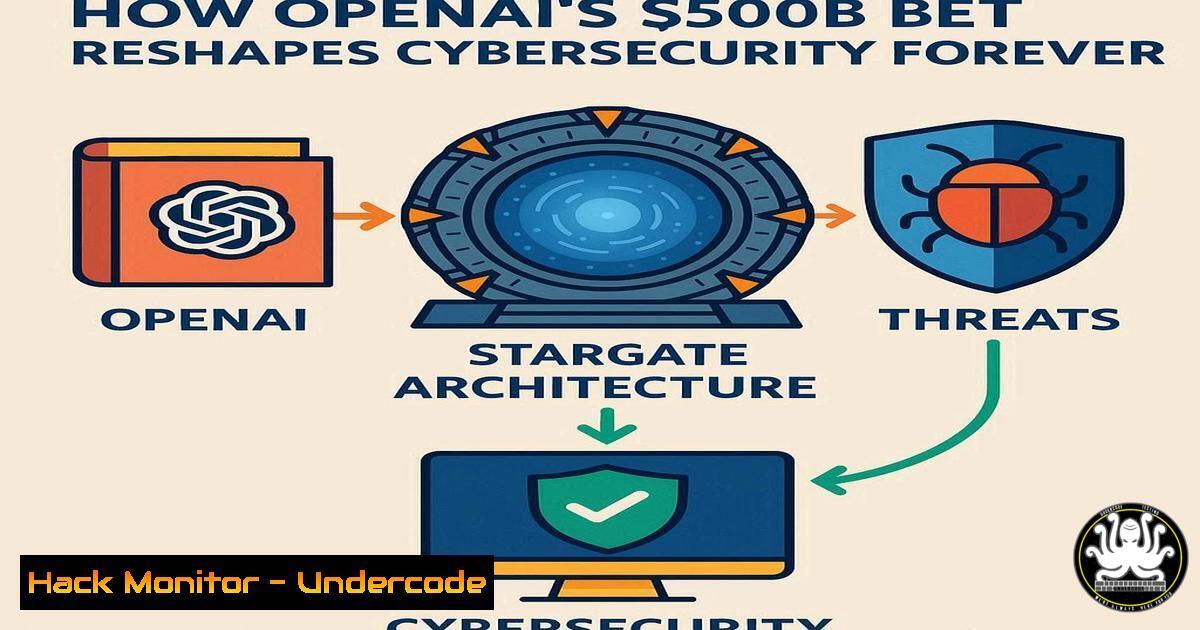
The unprecedented scale of OpenAI’s Stargate project, a $500 billion data center initiative, represents not just a technological leap but a seismic shift in the global attack surface. This concentration of computational power and data creates an unparalleled target for state-sponsored actors and cybercriminals, forcing a fundamental re-evaluation of defense-in-depth strategies for AI and cloud infrastructure.
Learning Objectives:
- Understand the new cybersecurity vulnerabilities inherent in gigawatt-scale AI data centers.
- Learn critical commands for securing Linux-based AI workloads and cloud configurations.
- Develop a proactive mitigation strategy for the novel threats posed by hyper-concentrated AI infrastructure.
You Should Know:
1. Securing the AI Workload Orchestrator
Kubernetes, the de-facto standard for orchestrating AI workloads, is a primary attack vector. Misconfigurations can expose entire training clusters.
`kubectl get pods –all-namespaces -o jsonpath=”{.items[].spec.containers[].image}” | tr -s ‘[[:space:]]’ ‘\n’ | sort | uniq -c`
This command lists all container images running in your cluster, helping you identify unauthorized or vulnerable images.
`kubectl auth can-i create pods –all-namespaces`
Check your current permissions to understand the principle of least privilege.
<
h2 style=”color: yellow;”>kubectl apply -f - <<EOF</h2>
<h2 style="color: yellow;">apiVersion: policy/v1</h2>
<h2 style="color: yellow;">kind: PodSecurityPolicy</h2>
<h2 style="color: yellow;">metadata:</h2>
<h2 style="color: yellow;">name: restricted</h2>
<h2 style="color: yellow;">spec:</h2>
<h2 style="color: yellow;">privileged: false</h2>
<h2 style="color: yellow;">allowPrivilegeEscalation: false</h2>
<h2 style="color: yellow;">requiredDropCapabilities:</h2>
- ALL
<h2 style="color: yellow;">volumes:</h2>
- 'configMap'
- 'emptyDir'
<h2 style="color: yellow;">hostNetwork: false</h2>
<h2 style="color: yellow;">hostIPC: false</h2>
<h2 style="color: yellow;">hostPID: false</h2>
<h2 style="color: yellow;">runAsUser:</h2>
<h2 style="color: yellow;">rule: 'MustRunAsNonRoot'</h2>
<h2 style="color: yellow;">seLinux:</h2>
<h2 style="color: yellow;">rule: 'RunAsAny'</h2>
<h2 style="color: yellow;">fsGroup:</h2>
<h2 style="color: yellow;">rule: 'RunAsAny'</h2>
<h2 style="color: yellow;">EOF
This Pod Security Policy enforces a restricted baseline, preventing privileged containers and host namespace sharing.
2. Hardening the AI Data Lake
The data ingested for training models is a crown jewel. Encryption and access control are non-negotiable.
` Find world-readable files in your data directories
find /mnt/ai_datalake -type f -perm /o+r -exec ls -la {} \;`
` Audit S3 bucket policies (AWS CLI)
aws s3api get-bucket-policy –bucket YOUR-AI-DATA-BUCKET –query Policy –output text | jq .`
` Enable default encryption on a new S3 bucket
aws s3api create-bucket –bucket YOUR-ENCRYPTED-AI-BUCKET –region us-east-1
aws s3api put-bucket-encryption –bucket YOUR-ENCRYPTED-AI-BUCKET –server-side-encryption-configuration ‘{“Rules”: [{“ApplyServerSideEncryptionByDefault”: {“SSEAlgorithm”: “AES256”}}]}’`
These commands help identify improperly permissioned files and enforce encryption on cloud storage.
3. Detecting Model Poisoning and Data Exfiltration
An attacker may not crash your system but poison your model or steal proprietary data.
Monitor for large outbound data transfers from your GPU nodes

<h2 style="color: yellow;">iftop -i eth0 -P -n -N
Set up an audit rule to watch a critical training dataset

<h2 style="color: yellow;">sudo auditctl -w /mnt/ai_datalake/proprietary_model_weights.pt -p warx -k ai_model_access
` Use eBPF to trace model inference calls
sudo bpftrace -e ‘tracepoint:syscalls:sys_enter_openat { printf(“%s %s\n”, comm, str(args->filename)); }’`
These low-level monitoring tools can detect anomalous access patterns and data movement that traditional security tools might miss.
4. Fortifying the Software Supply Chain for AI
AI projects rely on thousands of open-source dependencies (e.g., PyTorch, TensorFlow), each a potential backdoor.
Scan a Python environment for known vulnerabilities using Safety

<h2 style="color: yellow;">safety check --json --output report.json
Verify the integrity of a pulled Docker image

<h2 style="color: yellow;">docker trust inspect --pretty your-registry/ai-training:latest
Use Sigstore Cosign for keyless signing and verification

<h2 style="color: yellow;">cosign verify --key cosign.pub your-registry/ai-training:latest
Integrating these commands into your CI/CD pipeline is critical to prevent compromised packages from entering your build environment.
5. Implementing Zero-Trust for AI API Endpoints
Models served via APIs (e.g., OpenAI’s GPT endpoints) must be protected with more than just API keys.
` Use mTLS to authenticate clients with openssl
openssl genrsa -out client.key 4096
openssl req -new -key client.key -out client.csr -subj “/CN=AI-Model-Client”`
Example NGINX snippet enforcing JWT validation and rate limiting

<h2 style="color: yellow;">location /v1/completions {</h2>

<h2 style="color: yellow;">auth_jwt "AI API";</h2>

<h2 style="color: yellow;">auth_jwt_key_file /etc/nginx/jwt_secret;</h2>

<h2 style="color: yellow;">limit_req zone=model_inference burst=10 nodelay;</h2>

proxy_pass http://model_backend;

<h2 style="color: yellow;">}
This moves beyond simple key-based authentication to a zero-trust model where every request is verified and constrained.
6. Mitigating Hardware-Level Vulnerabilities
At the “level of electrons,” hardware threats like Spectre and Meltdown can leak model weights from memory.
Check for available microcode updates and kernel mitigations on Linux

<h2 style="color: yellow;">grep -r . /sys/devices/system/cpu/vulnerabilities/
` Check Spectre V2 mitigation status
cat /sys/devices/system/cpu/vulnerabilities/spectre_v2`
Output should show Retpoline, IBPB: conditional, IBRS_FW, STIBP: conditional, RSB filling. Ensure your kernel and CPU microcode are up-to-date to mitigate these side-channel attacks.
7. Proactive Threat Hunting in AI Logs
The scale of Stargate necessitates automated threat hunting using JQL (Jupyter Notebook Query Language) and other tools.
Sample JQL query to find failed login attempts from unusual locations

<h2 style="color: yellow;">source = 'cloudtrail'</h2>

| where eventName = 'ConsoleLogin' and errorMessage = 'Failed authentication'

<h2 style="color: yellow;">| stats count by sourceIPAddress, userIdentity.userName</h2>

<h2 style="color: yellow;">| where count > 5
Use YARA to scan for suspicious scripts in your training environment

<h2 style="color: yellow;">yara -r /opt/ai/notebooks suspicious_strings.yar
Creating and regularly running such queries helps identify advanced persistent threats before they achieve their objective.
What Undercode Say:
- The concentration of capital and compute in projects like Stargate creates a “too big to fail” dynamic that is inherently attractive to attackers, raising the stakes for cybersecurity from operational cost to existential threat.
- The traditional network perimeter is completely dissolved; security must be designed into every layer, from the CPU microcode to the API gateway, in a fully automated and declarative manner.
The Stargate initiative is not just building data centers; it is constructing the single most valuable digital target in human history. The cybersecurity industry’s response cannot be incremental. The sheer scale dictates that manual intervention during an incident is impossible. Security must be codified, immutable, and self-healing. The focus shifts from preventing breach—which is assumed to be eventual—to ensuring resilience, integrity, and confidentiality even under compromise. The algorithms protecting these facilities will need to be as advanced as the AI models they host, leveraging AI-driven security orchestration to respond to threats at machine speed. The era of “billion-dollar bug bounties” is dawning.
Prediction:
The cybersecurity industry will see a massive bifurcation. A new class of “Hyperscale Security” firms will emerge, specializing in the unique challenges of AI infrastructure, offering integrated hardware/software security solutions and AI-powered autonomous response systems. Conversely, nation-state APT groups will pivot significantly, developing bespoke malware designed specifically to compromise AI training pipelines, steal model weights, and inject poisoned data, making AI infrastructure the primary battlefield for cyber conflict within the next decade. The security of these facilities will directly impact national economic competitiveness and global technological supremacy.
🎯Let’s Practice For Free:
IT/Security Reporter URL:
Reported By: Samanthakatz Cultureofmoney – Hackers Feeds
Extra Hub: Undercode MoN
Basic Verification: Pass ✅


