
Listen to this Post
Introduction:
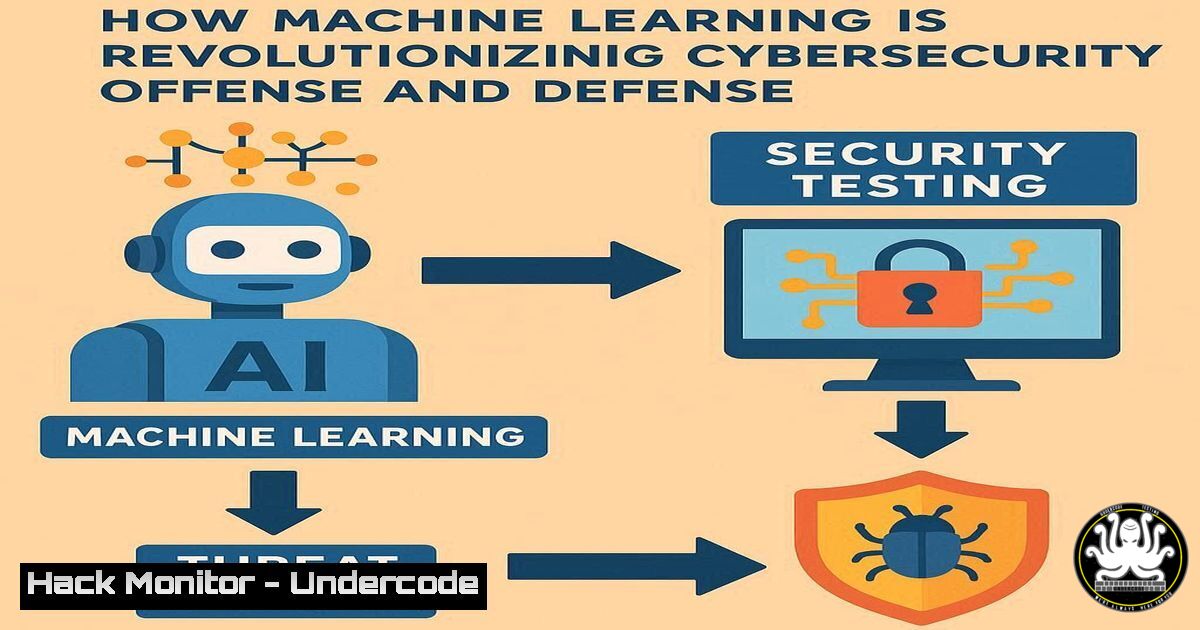
The integration of Artificial Intelligence (AI) into cybersecurity is fundamentally shifting the landscape of both attack and defense. AI-powered penetration testing tools can now automate vulnerability discovery, execute complex attack chains, and adapt to defenses in real-time, forcing a new era of AI-augmented security protocols. This article explores the core techniques, commands, and methodologies at the heart of this revolution.
Learning Objectives:
- Understand the key AI/ML techniques used in modern penetration testing and vulnerability assessment.
- Learn to utilize AI-powered security tools for tasks like password cracking, attack vector generation, and log analysis.
- Develop mitigation strategies to defend against AI-augmented cyber threats.
You Should Know:
1. AI-Driven Password Attacks with Codex
Hashcat is a powerful password-recovery tool, and when combined with AI-generated rule sets, its efficiency increases exponentially. AI can analyze existing password breaches to create sophisticated mangling rules that predict common human password creation patterns.
`hashcat -m 1000 -a 0 -r ai_generated.rule hashfile.txt /usr/share/wordlists/rockyou.txt`
Step-by-step guide:
– `-m 1000` specifies the hash type (NTLM in this case).
– `-a 0` sets the attack mode to straight dictionary attack.
– `-r ai_generated.rule` loads a rule file generated by an AI model that has been trained on password lists to apply intelligent transformations (e.g., capitalizing letters, appending digits, leetspeak substitutions).
– `hashfile.txt` is the file containing the captured hashes.
– The final argument is the path to the wordlist. This command demonstrates how AI can augment traditional brute-force methods by applying human-like logic to wordlist manipulation.
2. Automated Vulnerability Discovery with Machine Learning
Tools like `Bandit` for Python code analysis use static analysis to find security issues, but ML-enhanced versions can learn from new vulnerability patterns to discover previously unknown flaw types.
`bandit -r /path/to/your/python/code -f json -o results.json`
Step-by-step guide:
– `-r /path/to/your/python/code` recursively scans the target directory.
– `-f json` sets the output format to JSON for easy parsing by other tools.
– `-o results.json` writes the findings to a file. An AI system can be trained on these JSON outputs across thousands of projects to identify complex, multi-line vulnerabilities that simple pattern matching would miss, such as business logic flaws or insecure direct object references.
3. Intelligent Web Application Fuzzing
FFuF (Fuzz Faster u Fool) is a fast web fuzzer. When directed by an AI, it can adapt its fuzzing strategies based on application responses, prioritizing payloads that generate interesting errors or behavioral changes.
`ffuf -w /usr/share/wordlists/SecLists/Discovery/Web-Content/common.txt -u http://target/FUZZ -e .php,.bak,.txt -mc 200,301,302,403`
Step-by-step guide:
– `-w` specifies the wordlist for fuzzing.
– `-u http://target/FUZZ` is the target URL, with `FUZZ` indicating where the payloads are inserted.
– `-e .php,.bak,.txt` adds these extensions to each fuzzing attempt.
– `-mc 200,301,302,403` tells FFuF to only show responses with these HTTP status codes. An AI controller can analyze the size, timing, and content of responses to dynamically switch wordlists, adjust rates to avoid WAFs, and identify subtle injection points.
- Malicious Traffic Generation with Generative Adversarial Networks (GANs)
GANs can be trained to generate network traffic that mimics legitimate user behavior while carrying out malicious activities, effectively evading traditional Anomaly-Based Intrusion Detection Systems (IDS). Analyzing this traffic requires advanced command-line analysis.`tshark -r malicious.pcap -Y “http.request” -T fields -e frame.time -e ip.src -e ip.dst -e http.request.uri -e http.user_agent | head -n 50`
Step-by-step guide:
– `tshark` is the command-line version of Wireshark.
– `-r malicious.pcap` reads from a packet capture file.
– `-Y “http.request”` applies a display filter to show only HTTP requests.
– `-T fields` sets the output format to fields.
– `-e` options specify which fields to extract (timestamp, source IP, destination IP, URI, User-Agent).
– `| head -n 50` pipes the output to show only the first 50 lines. Security analysts can use this to baseline “normal” traffic and then use ML models to detect the subtle statistical anomalies present in AI-generated malicious traffic.
5. AI-Enhanced Phishing Detection with NLP
Natural Language Processing (NLP) models can scan emails for phishing indicators with greater accuracy than static keyword filters. Administrators can use tools to query and analyze email headers, which are then fed into an NLP model.
`cat email.eml | grep -E ‘(From:|Subject:|Received:|Return-Path:)’`
Step-by-step guide:
– `cat email.eml` outputs the contents of the email file.
– The output is piped `|` to grep, a text search tool.
– `-E` allows for extended regular expressions.
– The pattern `'(From:|Subject:|Received:|Return-Path:)’` tells grep to print lines containing these header fields. An NLP model would go further, analyzing the email body for urgency, sentiment, and linguistic tricks commonly used in phishing, comparing the “From” address domain with the content of the message to spot inconsistencies.
6. Cloud Security Posture Management (CSPM) via AI
Misconfigurations in cloud environments like AWS are a primary attack vector. AI-driven CSPM tools continuously analyze cloud configuration against a learned model of best practices and threat intelligence.
`aws iam get-account-authorization-details –output json > iam_permissions.json`
Step-by-step guide:
- This AWS CLI command fetches a detailed JSON report of all IAM roles, users, and their associated policies in an AWS account.
– `–output json` formats the output as JSON.
– `> iam_permissions.json` redirects the output to a file. An AI system can ingest this JSON file, along with configuration data for S3 buckets, Security Groups, and other services, to identify risky configurations such as overly permissive IAM policies, publicly accessible storage, or unused security groups that deviate from a secure baseline.
7. Behavioral Endpoint Detection with EDR APIs
Endpoint Detection and Response (EDR) systems collect vast amounts of data. AI models process this data to identify malicious processes based on behavior rather than static signatures. Querying an EDR via its API is a key skill.
`curl -X GET “https://your-edr.com/api/v1/sensors” -H “Authorization: Bearer YOUR_API_KEY” -H “Content-Type: application/json”`
Step-by-step guide:
– `curl` is a command-line tool for transferring data with URLs.
– `-X GET` specifies the HTTP method.
– The URL is the endpoint for the EDR’s sensor (endpoint) list API.
– `-H` flags add headers, including the crucial `Authorization` header with a bearer token for API authentication.
– The returned data, often in JSON, contains details on all monitored endpoints. AI algorithms analyze process trees, network connections, and file modifications across these endpoints to flag advanced threats like fileless malware or living-off-the-land techniques.
What Undercode Say:
- The Double-Edged Sword is Sharpening: AI is not a future concept; it is an operational reality in both red and blue teams. The same technology that can generate a million unique phishing emails in an hour can also be trained to detect them with superhuman accuracy.
- The Skill Shift is Real: The value of a cybersecurity professional will increasingly lie in their ability to curate data, train models, and interpret AI-driven findings, rather than in manually executing repetitive tasks. The commands and tools are merely the interface; the intelligence behind them is what matters.
The core analysis is that we are moving from a paradigm of “script kiddies” to “model kiddies,” where access to a sophisticated AI model can grant low-skilled attackers significant capabilities. Conversely, defenders are empowered to manage the overwhelming scale and complexity of modern IT environments. The immediate future will be an arms race of data and algorithms, where the quality and breadth of the training data become as critical as the logic of the code itself.
Prediction:
In the next 3-5 years, we will witness the first fully autonomous cyber conflicts, where AI systems on both sides will engage in exploit development, patching, and countermeasures with minimal human intervention. This will compress the cyber kill chain from days to minutes, forcing the widespread adoption of AI-driven defense systems and legally-mandated “Cyber Safety” standards for AI models, similar to safety features in physical products. The critical battlefield will shift from network perimeters to the integrity of the AI models and the data pipelines that feed them.
🎯Let’s Practice For Free:
IT/Security Reporter URL:
Reported By: Vettrivel2006 Android – Hackers Feeds
Extra Hub: Undercode MoN
Basic Verification: Pass ✅


