
Listen to this Post
Introduction:
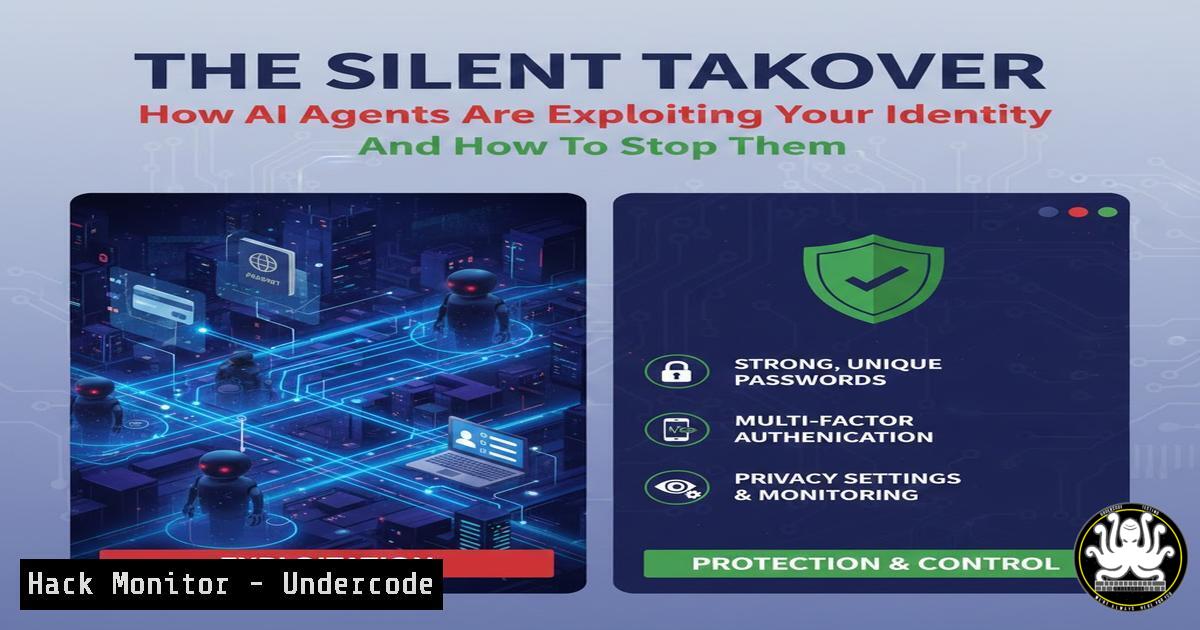
The foundational assumption of Identity and Access Management (IAM)—that every digital action originates from a human user—has been shattered by the rise of autonomous AI agents. These agents, operating at machine speed with human-level permissions, create a critical security blind spot known as the “Dual Identity Problem.” This article delves into the technical realities of this vulnerability and provides actionable frameworks and tools to architect a secure, accountable future for human-AI collaboration.
Learning Objectives:
- Understand the technical and architectural shortcomings of traditional IAM when applied to autonomous AI agents.
- Implement a proof-of-concept for Agent-Based Access Control (AGBAC) using open-source tools.
- Configure enterprise IAM systems (Entra ID, Okta) to support dual-subject authentication for AI agents.
- Establish logging and monitoring practices to distinguish human intent from agent autonomy.
- Develop a governance model for machine-speed permissions and transient identities.
You Should Know:
- The Architecture of the Blind Spot: How Traditional IAM Fails
The core failure is logical. Traditional IAM systems audit `user_id` andtimestamp. When an AI agent uses a service principal or a user’s delegated credentials, all actions are attributed to that credential owner. The agent’s autonomy, decision-making context, and specific runtime parameters are invisible.
Step-by-step guide explaining what this does and how to use it.
To visualize the problem, examine a typical cloud log. The agent’s action is indistinguishable from the user’s.
 Sample CloudTrail/Entra ID log entry - THE PROBLEM
{
"eventTime": "2024-05-15T10:23:45Z",
"userIdentity": {
"type": "AssumedRole",
"principalId": "AROAEXAMPLE:jane.doe", // Human's identity
"arn": "arn:aws:sts::123456789012:assumed-role/DevRole/jane.doe"
},
"eventSource": "s3.amazonaws.com",
"eventName": "DeleteObject",
"requestParameters": {
"bucketName": "company-financial-data",
"key": "Q4-report.pdf"
}
// NO AGENT IDENTIFIER
}
The mitigation requires architectural change: we must inject agent context into every authentication and authorization flow.
- Evolving Access Control: Introducing Agent-Based Access Control (AGBAC)
AGBAC is a proposed evolution of access control models, introducing dual-subject authorization. Authorization decisions require both the human principal and the agent identity to be validated and authorized for the action. This maintains the chain of custody.
Step-by-step guide explaining what this does and how to use it.
Explore the open-source AGBAC specification and its reference implementation, Dual Auth.
 Clone the AGBAC framework and reference implementation
git clone https://github.com/kahalewai/agbac
git clone https://github.com/kahalewai/dual-auth
cd dual-auth
 Review the core architecture: dual_auth_core.py
 This module handles the minting of compound tokens containing both identities.
cat src/dual_auth_core.py | head -50
The key concept is in the token minting logic, which binds two subjects:
 Pseudocode for Dual-Subject JWT Minting
payload = {
"sub": "user_jane_doe", // Primary Subject (Human)
"agent_sub": "agent_financial_analyzer_v1.2", // Secondary Subject (Agent)
"iss": "dual-auth-server",
"aud": "target-api",
"scope": "read:financial_data,write:analysis",
"exp": datetime.utcnow() + timedelta(seconds=300) // Short-lived token
}
This creates an immutable link in the audit trail.
3. Implementing Dual-Subject Auth with Enterprise IAM
Dual Auth is designed to interoperate with existing enterprise identity providers. Configuration guides are provided for major platforms.
Step-by-step guide explaining what this does and how to use it.
Configuring Dual Auth with Microsoft Entra ID:
- Register a Dual Auth Application in Entra ID: This app represents your AI agent orchestration layer.
- Define App Roles: Create roles like `Agent.Binding.User` and scopes like
Agent.Action.Execute. - Configure Dual Auth: Update the `dual-auth` configuration YAML to point to your Entra ID tenant.
config/entra_id_config.yaml identity_provider: name: "entra_id" tenant_id: "your-tenant-id" client_id: "dual-auth-app-client-id" client_secret: "${CLIENT_SECRET}" From Key Vault scopes: ["https://graph.microsoft.com/.default"] agent_role_claim: "roles" - Agent Registration: Before runtime, each agent instance must be registered, receiving a unique `agent_id` that is linked to its human owner’s directory object.
4. Runtime Orchestration: TLS, JWT, and Agent-Chaining Security
Agents operate in ephemeral containers or functions. Dual Auth supports secure communication for both inline and remote agents via mutual TLS (mTLS) and signed JWTs, enabling secure agent-to-agent calls.
Step-by-step guide explaining what this does and how to use it.
Securing an Agent Call with mTLS and a Dual-Subject JWT:
1. Generate Agent-Specific Certificates: Each agent pod/function gets a unique client certificate during provisioning.
 On your PKI/issuing server
openssl genrsa -out agent_key.pem 2048
openssl req -new -key agent_key.pem -out agent_csr.pem -subj "/CN=agent_financial_analyzer"
openssl x509 -req -in agent_csr.pem -CA ca.crt -CAkey ca.key -CAcreateserial -out agent_cert.pem -days 1  Short validity
2. Agent Makes an Authenticated Request: The agent call includes both the mTLS certificate and the bearer JWT.
import requests
cert = ('/path/to/agent_cert.pem', '/path/to/agent_key.pem')
headers = {'Authorization': 'Bearer ' + dual_subject_jwt}
response = requests.post('https://secure-api.company.com/analyze', cert=cert, headers=headers, json=data)
3. API Gateway Validation: The gateway validates the mTLS client cert maps to a registered agent_id, then validates the JWT signature and the binding between the `sub` and `agent_sub` claims.
5. Machine-Speed Logging and Forensic Attribution
With dual identities implemented, logs become actionable for forensic analysis.
Step-by-step guide explaining what this does and how to use it.
Configure your logging pipeline (e.g., Azure Monitor, AWS CloudWatch, Splunk) to parse and index the new token format.
 Example KQL query in Azure Log Analytics for investigating an incident
SecurityEvent
| where EventSource == "Dual-Auth-API"
| where TimeGenerated > ago(1h)
| where Action == "DeleteObject"
| extend Human_Identity = parse_json(Claims).sub
| extend Agent_Identity = parse_json(Claims).agent_sub
| extend Agent_Version = parse_json(Claims).agent_version
| project TimeGenerated, Human_Identity, Agent_Identity, Agent_Version, Target_Resource = ResourceId, Action
| order by TimeGenerated desc
This query clearly distinguishes between “Jane Doe” and “her financial analysis agent v1.2,” enabling precise containment and response.
What Undercode Say:
- Identity is No Longer a Proxy for Intent: The era where “who did it” was enough is over. The new security paradigm requires auditing the triad of Who (Human), What (Agent), and Why (Context/Intent).
- Security Shifts from Access Governance to Execution Governance: Static role assignments are too slow. Permissions must be dynamically scoped, short-lived, and evaluated in the context of the specific autonomous task, requiring a shift towards policy-driven, real-time execution engines.
The comments from the LinkedIn post reveal a critical industry inflection point. While Nick G. argues it’s a “marketing problem,” this underestimates the architectural paradigm shift required. Carl-Fredrik Brundin correctly identifies the move from “access governance to execution governance.” Shawn Kahalewai Reilly’s AGBAC and Dual Auth provide a concrete, open-source starting point for this transition. The solution isn’t just giving AI a separate identity; it’s about creating a cryptographic and logical chain of custody that links autonomous action back to human delegation without sacrificing the speed of automation.
Prediction:
Within two years, regulatory frameworks (like evolving NIST guidelines and EU AI Act technical standards) will mandate dual-subject attribution for autonomous AI actions in critical infrastructure and financial services. This will spur a new market segment within IAM: “Autonomous System Identity Management.” Legacy IAM vendors will scramble to acquire startups that have solved the agent-journaling problem, and the role of “Agent Identity Architect” will emerge as a critical cybersecurity specialization. The organizations that implement these patterns early will not only mitigate risk but will unlock more ambitious, secure automation, leaving those stuck in human-only IAM paradigms vulnerable to both technical breach and regulatory censure.
▶️ Related Video (78% Match):
🎯Let’s Practice For Free:
IT/Security Reporter URL:
Reported By: Josephwoleary I – Hackers Feeds
Extra Hub: Undercode MoN
Basic Verification: Pass ✅


