Listen to this Post
Introduction:
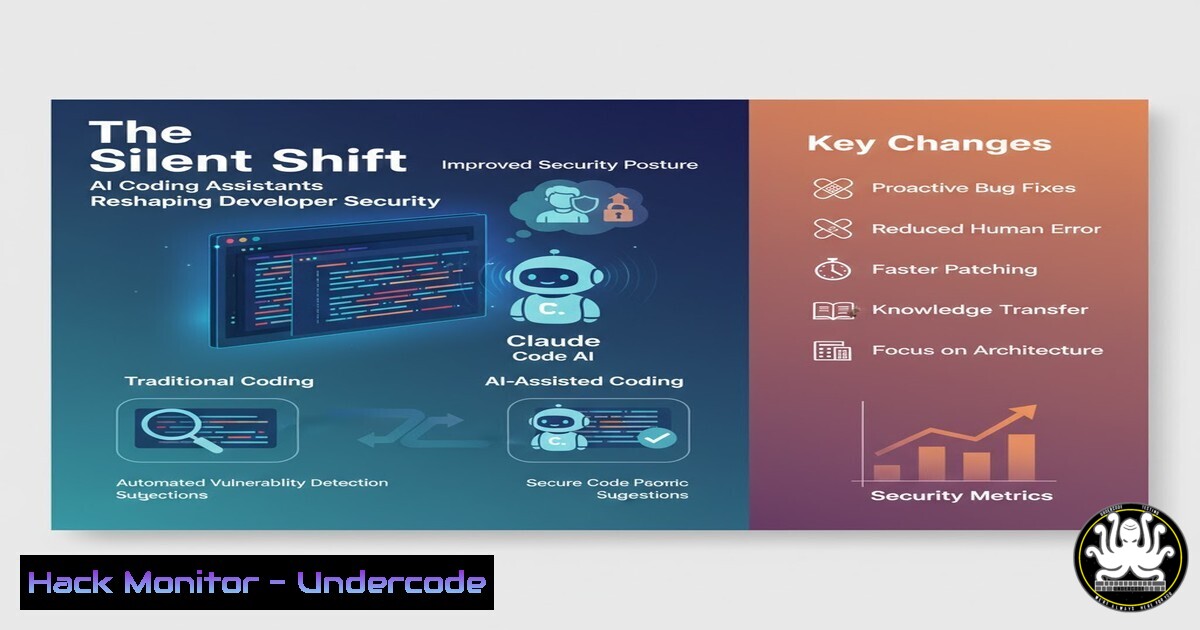
The migration of powerful AI coding assistants from integrated development environments (IDEs) to the web and mobile platforms represents a fundamental shift in software development workflows. This transition, exemplified by Anthropic’s Claude Code, introduces new security considerations that developers and security teams must understand to protect intellectual property and prevent the introduction of vulnerabilities through AI-generated code.
Learning Objectives:
- Understand the security implications of web-based AI coding assistants
- Learn to verify and harden AI-generated code against common vulnerabilities
- Implement security controls for AI-assisted development workflows
You Should Know:
1. Code Verification and Static Analysis
 Install and run semgrep for AI-generated code analysis
pip install semgrep
semgrep --config=auto /path/to/ai/generated/code/
 Run bandit for Python-specific security analysis
bandit -r /path/to/python/code/ -f json -o bandit_results.json
Step-by-step guide: AI-generated code often contains subtle security flaws that traditional linters might miss. Semgrep with its auto-configuration detects security patterns across multiple languages, while Bandit provides Python-specific analysis. First install the tools via pip, then run semgrep with automatic rules to catch common vulnerabilities. Follow with bandit for deeper Python analysis, exporting results to JSON for integration into CI/CD pipelines. Review all findings, particularly around input validation and authentication logic.
2. API Security Hardening for AI Integrations
import os
import anthropic
from flask import Flask, request
import re

app = Flask(<strong>name</strong>)
client = anthropic.Anthropic(
api_key=os.environ.get('ANTHROPIC_API_KEY')
)

def sanitize_prompt(user_input):
 Remove potential prompt injection attempts
patterns = [
r'ignore.previous',
r'forget.instructions',
r'system.prompt'
]
for pattern in patterns:
user_input = re.sub(pattern, '', user_input, flags=re.IGNORECASE)
return user_input[:1000]  Limit input length
Step-by-step guide: When integrating web-based AI assistants, prompt injection represents a critical threat. This Python snippet demonstrates basic sanitization against common injection patterns. The function scans for phrases that attempt to override system instructions and truncates excessive input. Implement this between user input and API calls to Claude Code, logging all sanitization actions for audit purposes. Combine with rate limiting and API key rotation for comprehensive protection.
3. Container Security for AI Development Environments
FROM python:3.11-slim

Create non-root user
RUN useradd -m -s /bin/bash devuser
USER devuser

Copy requirements and install
COPY --chown=devuser:devuser requirements.txt .
RUN pip install --user --no-cache-dir -r requirements.txt

Set security labels
LABEL security.scan="true" \
security.level="high"

Run as non-privileged user
USER 1000
Step-by-step guide: Web-based AI coding often involves containerized environments. This Dockerfile establishes security fundamentals: using slim base images reduces attack surface, creating non-root users prevents privilege escalation, and security labels enable runtime policy enforcement. Build with `docker build –security-opt=no-new-privileges:true` to prevent privilege gain. Regularly scan images for vulnerabilities using docker scan <image-name>.
4. Network Security for AI Tool Communications
 Monitor outbound connections from AI tools
sudo netstat -tunlp | grep -E '(443|80)'
 Set up HTTP proxy logging for AI tool traffic
sudo tcpdump -i any -A 'host api.anthropic.com'
 Configure firewall rules for AI service domains
sudo iptables -A OUTPUT -p tcp --dport 443 -d api.anthropic.com -j ACCEPT
sudo iptables -A OUTPUT -p tcp --dport 443 -j LOG --log-prefix "BLOCKED-OUTBOUND: "
Step-by-step guide: AI coding assistants communicate with cloud APIs, creating potential data exfiltration vectors. Use netstat to identify established connections to AI services. Implement tcpdump monitoring to log traffic patterns for anomaly detection. Configure iptables rules to explicitly allow only necessary AI service domains while logging and blocking other outbound HTTPS connections. This controls data flow and detects unauthorized communication attempts.
5. Secret Management in AI-Enhanced Development
 Scan for accidentally committed secrets in AI-generated code
git secrets --scan /path/to/repository/
 Install and configure git-secrets
git secrets --register-aws
git secrets --install ~/.git-templates/git-secrets
git config --global init.templateDir ~/.git-templates/git-secrets
 Pre-commit hook for secret detection
echo 'git secrets --pre_commit_hook' > .git/hooks/pre-commit
chmod +x .git/hooks/pre-commit
Step-by-step guide: AI assistants might inadvertently generate code containing placeholder credentials or suggest insecure secret storage patterns. Install git-secrets and register common patterns (AWS keys, API tokens, etc.). The pre-commit hook automatically scans changes before commits, preventing secret leakage. Combine with environment variables for actual development and use dedicated secret management services like HashiCorp Vault for production deployments.
6. Vulnerability Mitigation in AI-Suggested Code
// AI-generated code might suggest this vulnerable pattern:
app.post('/login', (req, res) => {
const query = <code>SELECT  FROM users WHERE username = '${req.body.username}'</code>;
// ... vulnerable to SQL injection
});

// Secure alternative using parameterized queries:
app.post('/login', (req, res) => {
const query = 'SELECT  FROM users WHERE username = $1';
pool.query(query, [req.body.username], (error, results) => {
// ... secure handling
});
});
Step-by-step guide: AI coding assistants often suggest convenient but vulnerable code patterns, particularly around database interactions and input handling. This example shows a common SQL injection vulnerability in Node.js code and its secure parameterized alternative. Always validate AI-suggested database code for proper parameterization, implement input sanitization libraries, and use ORM/query builders with built-in protection. Conduct security code reviews specifically for AI-generated sections.
7. Cloud Security Configuration for AI Development
 AWS S3 bucket policy to prevent AI training data leakage
{
"Version": "2012-10-17",
"Statement": [
{
"Effect": "Deny",
"Principal": "",
"Action": "s3:",
"Resource": [
"arn:aws:s3:::your-ai-code-bucket",
"arn:aws:s3:::your-ai-code-bucket/"
],
"Condition": {
"StringNotEquals": {
"aws:SourceVpc": "vpc-12345678"
}
}
}
]
}
Step-by-step guide: When using web-based AI tools with cloud infrastructure, implement strict resource policies. This AWS S3 bucket policy restricts access to specific VPCs, preventing accidental public exposure of proprietary code that might be processed by AI assistants. Apply similar network restrictions to databases, API gateways, and storage services. Regularly audit permissions using `aws iam generate-service-last-accessed-details` and monitor CloudTrail logs for unauthorized access attempts.
What Undercode Say:
- The democratization of AI coding assistance creates both productivity gains and security blind spots that organizations must address systematically
- Traditional application security testing must evolve to detect AI-specific vulnerabilities and coding pattern weaknesses
The transition of AI coding assistants to web and mobile platforms represents a fundamental architectural shift that security teams cannot ignore. While these tools offer undeniable productivity benefits, they introduce new attack surfaces through increased API communications, potential prompt injection vulnerabilities, and the risk of generating subtly insecure code at scale. Organizations must implement layered security controls including code verification pipelines, network monitoring for AI service communications, and specialized training for developers on securely leveraging these tools. The most significant risk isn’t the AI itself, but the organizational complacency that often accompanies productivity gains—security must be integrated into AI-assisted workflows from inception rather than treated as an afterthought.
Prediction:
Within two years, we’ll see the first major security breach directly attributable to AI-generated code vulnerabilities, forcing industry-wide adoption of AI-specific security scanning tools and prompting regulatory frameworks for AI-assisted development. The convenience of web-based AI coding will drive rapid adoption, but security maturity will lag, creating a window of vulnerability that sophisticated attackers will exploit. Organizations that implement comprehensive AI development security controls now will gain significant competitive advantage while those delaying will face increasing remediation costs and reputational damage.
🎯Let’s Practice For Free:
IT/Security Reporter URL:
Reported By: Hurkankalan Claude – Hackers Feeds
Extra Hub: Undercode MoN
Basic Verification: Pass ✅


