Listen to this Post
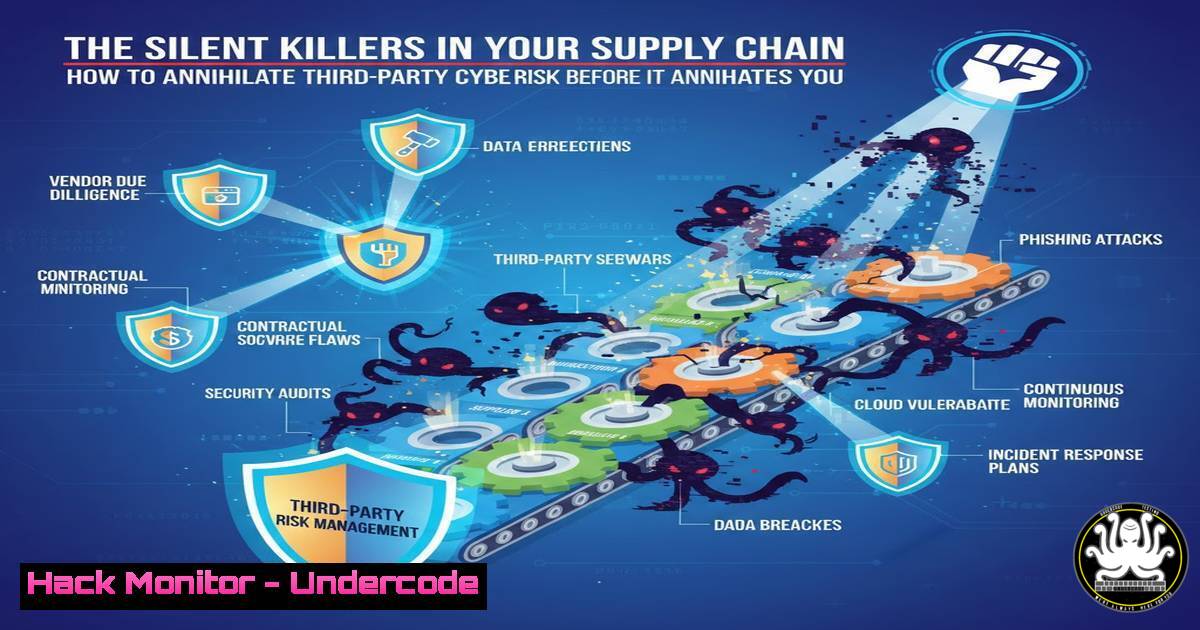
Introduction:
In today’s interconnected digital ecosystem, your organization’s security is only as strong as the weakest link in your supply chain. Third-party vendors, while essential for business operations, represent a colossal and often unmanaged attack vector, exposing you to data breaches, compliance failures, and operational disruption. Proactive third-party risk management (TPRM) is no longer a best practice but a critical survival strategy.
Learning Objectives:
- Understand the core pillars of a robust Third-Party Risk Management (TPRM) framework.
- Learn to implement technical assessments, including security questionnaires and continuous monitoring.
- Master practical steps for vendor onboarding, contract safeguarding, and incident response planning.
You Should Know:
1. The Foundation: Architecting a Proactive TPRM Framework
A reactive approach to third-party risk is a recipe for disaster. A proactive TPRM framework is a structured lifecycle that governs every vendor interaction from selection to offboarding.
Step‑by‑step guide explaining what this does and how to use it.
Step 1: Categorization & Tiering. Not all vendors pose the same risk. Classify vendors based on the sensitivity of the data they access and their criticality to your operations. A cloud provider hosting customer PII is a Tier 1 (High Risk), while a office supplies vendor is Tier 3 (Low Risk).
Step 2: Due Diligence & Risk Assessment. Before onboarding, conduct thorough due diligence. This involves sending a standardized security questionnaire (e.g., based on the SIG Lite or CAIQ) and requesting compliance certifications like SOC 2, ISO 27001, or PCI DSS.
Step 3: Contractual Safeguards. Security requirements must be legally binding. Ensure contracts include clauses for right-to-audit, data breach notification timelines (e.g., within 72 hours of discovery), and specific security controls.
Step 4: Continuous Monitoring. Onboarding is not the finish line. Implement continuous monitoring using tools that scan for vendor data leaks, domain blacklisting, and public-facing vulnerabilities.
- The Technical Deep Dive: Assessing Vendor Security Posture
Security questionnaires can be gamed. A technical assessment provides objective data on a vendor’s real-world security posture.
Step‑by‑step guide explaining what this does and how to use it.
Step 1: External Vulnerability Scanning. Use authorized scanning to assess the vendor’s public-facing infrastructure.
Command (using `nmap`):
 Basic service and OS detection scan
nmap -A -T4 target-vendor.com

Vulnerability script scanning using Nmap Scripting Engine (NSE)
nmap -sV --script vuln target-vendor.com
What it does: This identifies open ports, running services, and potential known vulnerabilities in public systems.
Step 2: API Security Testing. If the vendor provides an API, test its endpoints for common flaws like broken object level authorization (BOLA) and excessive data exposure.
Tool: OWASP ZAP or Burp Suite.
Process: Configure the proxy to intercept traffic between your client and the vendor’s API. Fuzz endpoints with unexpected inputs and analyze responses for information leaks or error messages that reveal system details.
- Cloud Hardening: Verifying Vendor IAM and Storage Configurations
Misconfigured cloud services are a primary source of data leaks. Verify your vendor’s cloud hygiene, especially on AWS S3 buckets and Azure Blob Storage.
Step‑by‑step guide explaining what this does and how to use it.
Step 1: Check for Publicly Readable S3 Buckets. While tools exist, a simple `curl` command can sometimes reveal misconfigurations.
Concept: A misconfigured S3 bucket with `List` permissions allows anyone to see its contents.
Example Check (using curl):
 Attempt to list the bucket contents (if this returns an XML list, the bucket may be misconfigured)
curl http://s3.amazonaws.com/[bucket-name]/
Step 2: Review IAM Policies. Request a redacted or high-level overview of the vendor’s Identity and Access Management policy. Look for the principle of least privilege—users and systems should only have the permissions absolutely necessary to perform their functions.
- The Human Firewall: Integrating Security into the Employee Lifecycle
Your own employees are a key defense against third-party risks. Continuous security awareness training is non-negotiable.
Step‑by‑step guide explaining what this does and how to use it.
Step 1: Phishing Simulation. Use platforms to run simulated phishing campaigns that mimic common vendor-themed attacks (e.g., “Your invoice from Vendor X is ready”).
Step 2: Secure Access Training. Train employees on using secure methods for vendor access, such as VPNs and Multi-Factor Authentication (MFA), and the dangers of using personal accounts for vendor portals.
5. Incident Response: Preparing for the Inevitable Breach
Assume a vendor will be breached. Your response plan must include them.
Step‑by‑step guide explaining what this does and how to use it.
Step 1: Develop a Joint Communication Plan. Define, in your contract, who communicates what, to whom, and when. Clarity prevents a PR disaster.
Step 2: Tabletop Exercises. Conduct regular tabletop exercises with your high-risk vendors. Simulate a breach scenario and walk through the response steps to identify gaps in coordination and communication.
Step 3: Forensic Readiness. Ensure your contracts grant you the right to involve a third-party forensic firm in the investigation of a vendor-related incident at the vendor’s cost.
6. Automating Compliance with Open Source Tools
Leverage open-source tools to automate parts of your continuous monitoring.
Step‑by‑step guide explaining what this does and how to use it.
Tool: OpenVAS (Greenbone Community Edition) for vulnerability management.
Process:
- Installation: Deploy the OpenVAS scanner on a dedicated server within your network.
- Configuration: Create a target list containing the public IPs/Domains of your Tier 1 vendors.
- Scanning: Schedule regular (e.g., quarterly) authenticated and non-authenticated scans against these targets.
- Reporting: Configure the system to automatically generate and email reports on new critical vulnerabilities, enabling a rapid response.
-
The Contract as a Technical Control: Enforcing Security with Code
Translate contractual security clauses into enforceable technical requirements.
Step‑by‑step guide explaining what this does and how to use it.
Step 1: Mandate MFA and SSO. The contract should require Multi-Factor Authentication for all administrative access and support SAML-based Single Sign-On for integration with your identity provider.
Step 2: Define Encryption Standards. Specify encryption protocols (e.g., TLS 1.2+ for data in transit, AES-256 for data at rest) as mandatory requirements.
Step 3: Enforce Logging and Monitoring. Contractually obligate the vendor to maintain comprehensive security logs (access, change, and audit) for a minimum period (e.g., 1 year) and provide them upon request during an incident.
What Undercode Say:
- Trust, but Verify. Blind trust in a vendor’s security claims is a catastrophic error. Objective, technical validation is the cornerstone of modern TPRM.
- Compliance ≠ Security. A SOC 2 report is a snapshot of controls at a point in time. Continuous technical monitoring is required to understand the dynamic threat landscape a vendor operates in.
- The Ripple Effect is Real. A breach at a single, low-tier vendor can be used as a stepping stone to attack their more valuable clients, including you. The attack surface is transitive.
The analysis reveals a fundamental shift in cybersecurity: the perimeter is now virtual, defined by contractual and digital relationships rather than physical network boundaries. Organizations that fail to evolve their TPRM programs from paper-based exercises to technically-grounded, continuous assessment cycles are building their defenses on a foundation of sand. The SolarWinds attack was not an anomaly but a stark preview of the new normal, where software supply chains become cyber weapons.
Prediction:
The future of third-party risk will be dominated by AI-driven threat intelligence and regulatory pressure. We will see the rise of automated TPRM platforms that use AI to correlate vendor security ratings, dark web exposure, and real-time vulnerability data to predict breach likelihood with startling accuracy. Governments will introduce “Software Bill of Materials” (SBOM) mandates, forcing vendors to disclose all components within their software, creating transparency but also immense compliance overhead. The organizations that thrive will be those that treat their vendor ecosystem as an extension of their own SOC, fostering collaboration and shared intelligence to create a defensible, resilient digital supply chain.
🎯Let’s Practice For Free:
IT/Security Reporter URL:
Reported By: Mykrishnarajagopal Third – Hackers Feeds
Extra Hub: Undercode MoN
Basic Verification: Pass ✅


