Listen to this Post
Introduction:
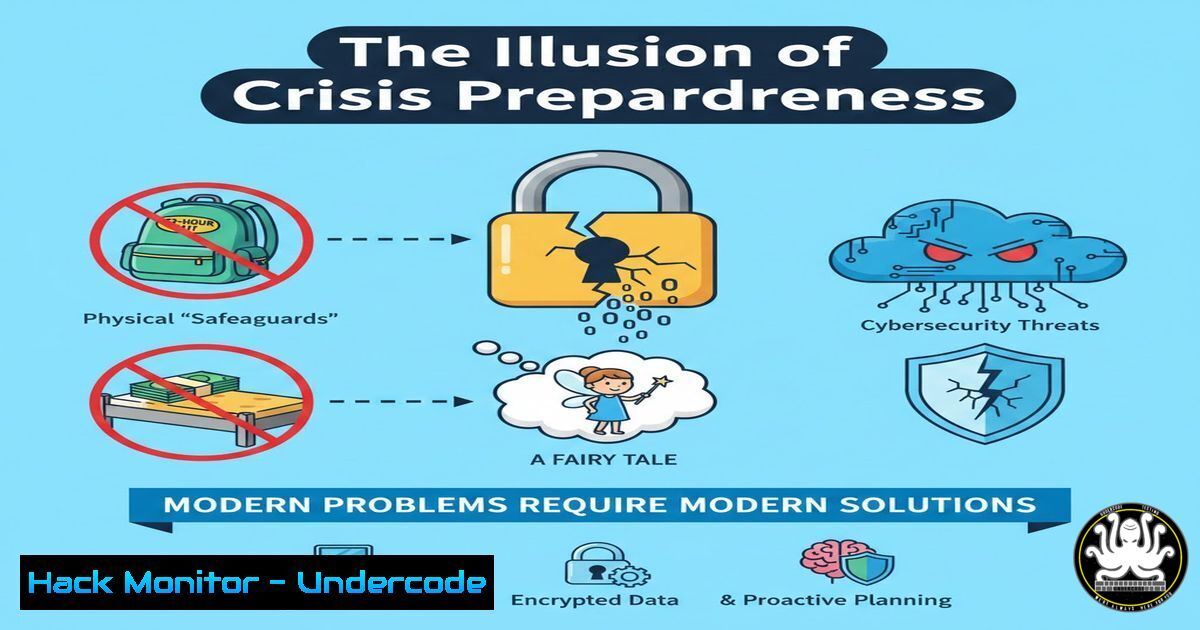
In an era of escalating geopolitical tensions and state-sponsored cyber threats, official crisis preparedness guidelines appear dangerously anachronistic. The recommended 72-hour survival window and cash reserves represent a catastrophic failure in risk assessment, ignoring the reality of sustained cyber-physical attacks that could cripple critical infrastructure for weeks or months. This analysis deconstructs the illusion of security and provides a technical framework for genuine organizational and individual resilience against systemic collapse.
Learning Objectives:
- Evaluate the critical gaps in national crisis preparedness guidelines from a cybersecurity and infrastructure perspective.
- Implement technical measures to ensure operational resilience beyond the 72-hour window.
- Develop a robust Individual Safety Plan (PIMS) incorporating digital security, communications, and sustained autonomy.
You Should Know:
- The 72-Hour Fallacy: Simulating a Prolonged Digital Blackout
The cornerstone of most government advice is preparing for a 72-hour disruption. In a systemic cyber conflict, however, this is merely the beginning. Adversaries like Russia possess advanced capabilities to target energy grids (as seen in Ukraine with Industroyer/CrashOverride malware) and financial networks simultaneously, potentially creating cascading failures lasting weeks.
Step-by-Step Guide: Building a Digital Resilience Plan
- Step 1: Assess Critical Dependencies. Map all systems reliant on external infrastructure (power, internet, cloud services). Use tools like `nmap` to scan your network and identify critical assets:
nmap -sV -O 192.168.1.0/24. - Step 2: Establish Redundant Communications. Assume cellular and internet networks will be unavailable or monitored.
- Solution: Acquire and learn to use licensed amateur (HAM) radios. For shorter-range, license-free options, consider GMRS/FRS radios. Satellite messengers (Garmin inReach, Zoleo) provide global SMS and SOS capabilities.
- Technical Configuration: For HAM, program local emergency frequencies. A basic setup involves a Baofeng UV-5R and learning basic radio procedures.
- Step 3: Data Resilience. Ensure access to critical documents (IDs, medical records, plans) without the cloud.
- Solution: Create encrypted, offline data vaults. Use VeraCrypt to create a encrypted volume on a portable SSD: `veracrypt -c /dev/sdb1` (Linux) or use the GUI in Windows. Store multiple copies in Faraday bags (or a DIY sealed metal container) to protect against EMP and cyber-intrusion.
- Beyond Cash: The Inevitable Collapse of Digital Payment Systems
The European Central Bank’s advice to keep cash is sound but insufficient. A coordinated cyber-attack on interbank payment systems (like SWIFT) or widespread power outages would render ATMs useless and devalue physical currency rapidly. Barter and localized value systems would emerge.
Step-by-Step Guide: Securing Value and Trade
- Step 1: Diversify Assets. Beyond a limited amount of cash, consider holding physical assets with intrinsic value: silver coins, medical supplies, antibiotics, ammunition, fuel, and water purification tablets.
- Step 2: Prepare for Barter. Document your skills (medical, mechanical, security) and inventory tradeable goods. Store this list in your offline data vault.
- Step 3: Cryptocurrency as a Contingency. While volatile and power-dependent, a small amount of cryptocurrency in a hardware wallet (e.g., Ledger, Trezor) could be a recoverable asset if internet access is partially restored. This is a high-risk, high-reward contingency, not a primary solution.
- CBRN Realism: From First-Aid Kits to Full-Spectrum Protection
The post correctly highlights the absurdity of a small first-aid kit against a real CBRN (Chemical, Biological, Radiological, Nuclear) threat. State-level actors possess hypersonic missiles (Kinzhal, Avangard) that drastically reduce warning times, making protective gear a necessity, not a luxury.
Step-by-Step Guide: Practical CBRN Preparedness
- Step 1: Acquire Proper PPE. A full-face respirator (e.g., Avon C50, MIRA Safety CM-6M) with CBRN-rated filters (e.g., NBC-77 SOF) is the minimum. A full-body protective suit (e.g., Tychem SL) offers greater protection.
- Step 2: Create a Sealed Shelter-in-Place Room. Identify an interior room with minimal windows and vents. Use heavyweight plastic sheeting and duct tape to seal all openings (doors, windows, vents). Store your PPE, a battery-powered radio, food, and water here.
- Step 3: Decontamination Protocol. Establish a decontamination procedure, including a designated outdoor decon area with water and soap, and a process for removing and bagging contaminated clothing before entering your clean shelter.
4. Energy Autonomy: Powering Your Operations Indefinitely
Grid-down scenarios are a primary objective in modern hybrid warfare. Relying on a small power bank is a 72-hour solution. Long-term resilience requires sustainable energy generation.
Step-by-Step Guide: Building a Resilient Power System
- Step 1: Tiered Power Solutions.
- Tier 1 (Portable): Large-capacity power stations (e.g., Jackery, EcoFlow) for charging comms and small devices.
- Tier 2 (Sustainable): Solar panels to recharge your power stations. A 200W-400W foldable panel is a good start.
- Tier 3 (Critical): A dual-fuel inverter generator (runs on gasoline or propane) for high-draw appliances like refrigerators or medical equipment.
- Step 2: Fuel Security. Safely store stabilized gasoline and propane tanks. Calculate your needs based on generator runtime. Rotate fuel supplies regularly.
- Step 3: Low-Power Computing. Maintain a low-power device like a Raspberry Pi or an old laptop running a lightweight Linux OS (e.g., Lubuntu) that can be powered by your solar setup for accessing offline data and databases.
5. IT System Hardening for Crisis Continuity
Your digital infrastructure must be resilient to both cyber-attacks and the chaos of a prolonged crisis. This involves hardening systems against intrusion and ensuring they can operate in a degraded state.
Step-by-Step Guide: Hardening Critical Services
- Step 1: Network Segmentation. Isolate critical systems from the main network. Use a separate VLAN or physical network. On a Linux router, this can be configured with `iptables` or
nftables. - Example `iptables` rule to block traffic between networks: `iptables -A FORWARD -s 192.168.1.0/24 -d 192.168.2.0/24 -j DROP`
– Step 2: Implement Strict Access Controls. Enforce the principle of least privilege. Use key-based authentication for SSH and disable password logins. - Edit
/etc/ssh/sshd_config: `PasswordAuthentication no`PubkeyAuthentication yes - Step 3: Secure Local Communications. Set up an internal, encrypted messaging server like Mattermost or Rocket.Chat on a local server. This allows for secure communication within a community or organization if the wider internet is down.
6. Building a Resilient Community Network
In a systemic collapse, isolated individuals are vulnerable. A resilient community is a force multiplier, pooling skills, resources, and security.
Step-by-Step Guide: Establishing a Local Resilience Group
- Step 1: Identify Trusted Individuals. Start with neighbors, friends, and local professionals (doctors, engineers, security personnel) you trust implicitly.
- Step 2: Conduct a Skills and Resource Inventory. Document everyone’s skills (medical, mechanical, agricultural, defensive) and available resources (tools, land, generators).
- Step 3: Establish Protocols.
- Communication: Agree on primary (HAM radio), secondary (FRS/GMRS), and contingency (signal mirrors, dead drops) communication methods.
- Security: Develop a neighborhood watch and security rotation plan.
- Rally Points: Designate primary and secondary rally points in case of evacuation.
7. The Mindset of Continuous Preparedness
Preparation is not a one-time task but a continuous process of assessment, adaptation, and training. Complacency is the greatest vulnerability.
Step-by-Step Guide: Cultivating a Security-First Mindset
- Step 1: Schedule Regular Drills. Quarterly, simulate a grid-down scenario for 48-72 hours. Use only your stored food, water, and power. Test your communication plans.
- Step 2: Continuous Learning. Dedicate time each week to learning a new skill: advanced first aid, radio operation, water purification methods, or ethical hacking via platforms like TryHackMe or Hack The Box to understand adversary tactics.
- Step 3: Threat Intelligence Monitoring. Follow credible cybersecurity and geopolitical analysts. Use RSS feeds or tools to monitor for emerging threats related to critical infrastructure and geopolitical tensions. A simple script using `curl` and `grep` can monitor specific keywords on threat intelligence feeds.
What Undercode Say:
- The State’s 72-Hour Guideline is a Liability, Not a Strategy. It creates a dangerous cognitive bias, leading individuals and organizations to underestimate the duration and severity of a potential crisis, leaving them critically vulnerable after the initial window closes.
- Individual Resilience is the New National Security. In the face of potentially overwhelmed state resources, the preparedness of individuals and local communities becomes the primary layer of societal defense. A prepared populace is a resilient nation.
The official guidelines function as a psychological pacifier, designed to prevent panic but ultimately fostering a culture of vulnerability. The technical and practical gap between “riding out a weekend blackout” and “surviving a month of systemic collapse” is a chasm. By taking responsibility for our own resilience, we are not engaging in fear-mongering but in rational risk mitigation. The tools and protocols outlined here are not for a dystopian fantasy; they are the logical extension of a clear-eyed analysis of modern cyber and geopolitical threats. The time to prepare is now, while the systems we depend on are still functioning.
Prediction:
The increasing frequency and sophistication of state-sponsored cyber-attacks against critical infrastructure will inevitably lead to a “Cyber-Katrina” event—a prolonged, multi-sector collapse in a Western nation that exposes the utter inadequacy of current preparedness models. This event will trigger a paradigm shift, forcing governments to adopt more realistic, long-term resilience planning and compelling private corporations to build “defensive autonomy” into their core operations. The cybersecurity industry will pivot from pure defense to designing systems capable of “graceful degradation” and offline functionality, making resilience a primary feature, not an afterthought.
🎯Let’s Practice For Free:
IT/Security Reporter URL:
Reported By: Oda Alexandre – Hackers Feeds
Extra Hub: Undercode MoN
Basic Verification: Pass ✅


