Listen to this Post
Introduction:
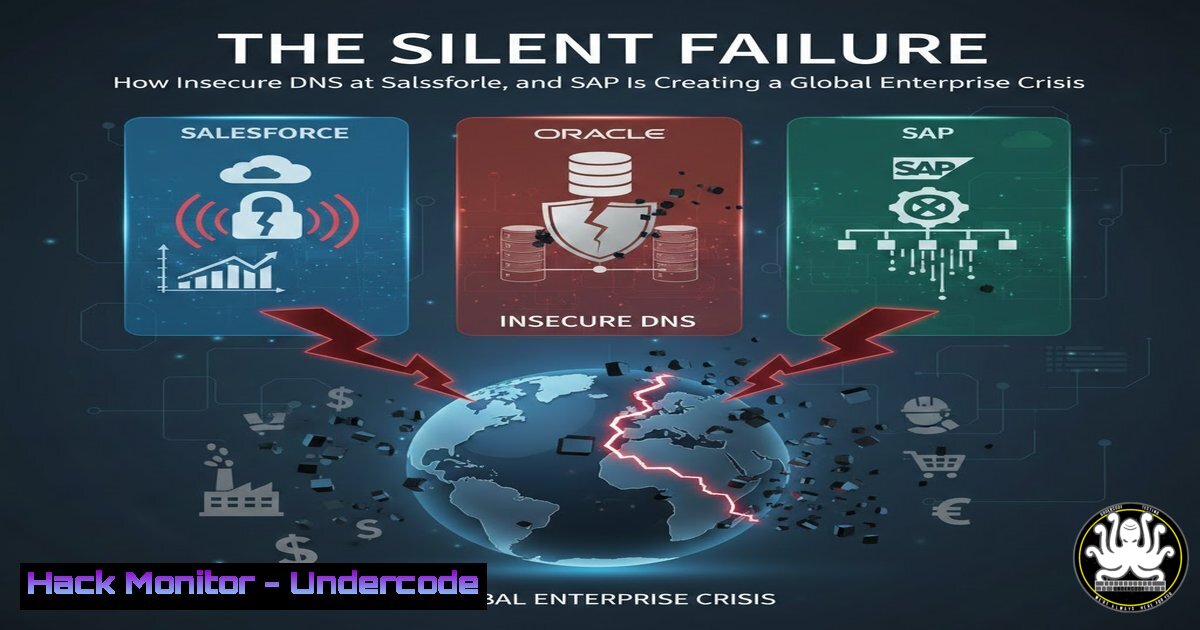
In the high-stakes world of cybersecurity, the Domain Name System (DNS) acts as the fundamental phonebook of the internet, translating human-readable domain names into machine-readable IP addresses. When this core protocol is compromised at the vendor level, it creates a catastrophic supply-chain vulnerability, exposing thousands of global enterprises to sophisticated attacks. This article delves into the verified, insecure DNS practices of tech giants Salesforce, Oracle, and SAP, demonstrating how these misconfigurations serve as the first critical link in a modern cyber kill chain.
Learning Objectives:
- Understand the specific DNS security failures present in major enterprise platforms and their associated risks.
- Learn how to verify DNS security posture using command-line tools and interpret the results to identify vulnerabilities.
- Implement hardened DNS configurations and monitoring strategies to mitigate the risk of DNS-based attacks on your organization.
You Should Know:
1. The Anatomy of an Insecure DNS Record
The core of the issue lies in the configuration of DNS records and the servers that host them. Common failures include a lack of DNSSEC (Domain Name System Security Extensions), which cryptographically signs records to prevent forgery, and misconfigured DMARC, DKIM, and SPF records that leave organizations vulnerable to email spoofing and phishing campaigns.
Step‑by‑step guide explaining what this does and how to use it.
Step 1: Check for DNSSEC Validation. DNSSEC adds a layer of trust by allowing a resolver to verify that the DNS data it receives is authentic.
On Linux, use `dig` to check for the presence of a DNSKEY record:
`dig DNSKEY salesforce.com +multiline`
A secure domain will return a DNSKEY record. To validate the chain of trust, use:
`dig salesforce.com +dnssec`
Look for the `ad` (authentic data) flag in the response header. If it’s present, DNSSEC is validated.
Step 2: Analyze Email Security Records (DMARC, DKIM, SPF). These records help prevent email spoofing.
Check SPF (Sender Policy Framework) to see which servers are authorized to send email for a domain:
`dig TXT oracle.com | grep spf`
Check DMARC (Domain-based Message Authentication, Reporting & Conformance) policy:
`dig TXT _dmarc.sap.com`
A missing or poorly configured DMARC record (e.g., p=none) is a major red flag, indicating the domain is not protected against direct-domain spoofing.
- Interception and Redirection: The DNS Cache Poisoning Threat
Without proper protocol security, attackers can poison the DNS cache of a recursive resolver, redirecting users from a legitimate site like `login.salesforce.com` to a malicious IP address under the attacker’s control. This is often a precursor to credential harvesting.
Step‑by‑step guide explaining what this does and how to use it.
Step 1: Understand the Vulnerability. Cache poisoning exploits the stateless nature of the DNS protocol. An attacker who can predict the transaction ID of a DNS query can inject a fraudulent response.
Step 2: Verify Source Port Randomization. Modern resolvers defend against this by randomizing the source port for queries, making them harder to predict. You can observe this behavior using a packet analyzer like Wireshark, but a simpler check is to query your own resolver multiple times and observe the source ports in the logs. A lack of randomization is a critical weakness.
3. The Supply Chain Attack Vector
When a foundational vendor like SAP has insecure DNS, every one of its customers becomes vulnerable. An attacker who compromises SAP’s DNS can redirect traffic meant for software updates, patches, or client portals, leading to mass malware distribution.
Step‑by‑step guide explaining what this does and how to use it.
Step 1: Map Your Digital Supply Chain. Identify all third-party vendors with access to your network or whose services are critical to your operations. This includes CRM (Salesforce), databases (Oracle), and ERP (SAP) systems.
Step 2: Proactively Monitor Vendor DNS. Regularly audit the DNS health of your critical vendors using the commands in Section 1. Set up scripts to alert you to changes in their A, AAAA, MX, or critical TXT records.
Example script snippet to monitor for IP changes:
`OLD_IP=”xxx.xxx.xxx.xxx”`
`CURRENT_IP=$(dig +short yourvendor.com)`
`if [ “$OLD_IP” != “$CURRENT_IP” ]; then echo “ALERT: IP changed!”; fi`
4. Hardening Your Enterprise DNS Configuration
Enterprises must move beyond relying on vendors and secure their own DNS infrastructure. This involves configuring internal resolvers to use DNSSEC-validating, secure external resolvers and implementing strict firewall rules.
Step‑by‑step guide explaining what this does and how to use it.
Step 1: Configure Secure DNS Resolvers. Point your internal DNS resolvers to use secure, validating forwarders like Cloudflare (1.1.1.1), Google (8.8.8.8), or Quad9 (9.9.9.9).
Step 2: Implement DNS Over HTTPS (DoH) or DNS Over TLS (DoT). These protocols encrypt DNS queries, preventing eavesdropping and manipulation on the network.
On Windows via Command Line, you can use `netsh` to check current DNS, but DoH/DoT configuration is often done via Group Policy or registry edits.
On Linux, you can configure `systemd-resolved` to use DoT by editing /etc/systemd/resolved.conf:
`DNS=9.9.9.9dns.quad9.net`
`DNSOverTLS=yes`
5. Active DNS Monitoring and Threat Intelligence
Security is not a set-and-forget task. Continuous monitoring of your DNS logs can reveal early signs of attack, such as queries to known malicious domains or anomalous traffic patterns.
Step‑by‑step guide explaining what this does and how to use it.
Step 1: Centralize DNS Logs. Ensure all DNS query logs from your firewalls and internal resolvers are sent to a SIEM (Security Information and Event Management) system.
Step 2: Create Detection Rules. Develop alerts for suspicious activity.
Example Sigma rule concept: Trigger an alert if a large volume of DNS queries is sent to a newly registered domain (often used in phishing campaigns).
Use threat intelligence feeds to block and alert on queries to known malicious IPs and domains.
What Undercode Say:
- The Vendor Security Paradox. The world’s most powerful tech vendors, who sell security and reliability, are failing at the most basic level of internet trust and integrity. This represents a fundamental breakdown in their security-first promise to customers.
- Systemic Risk is the Primary Concern. The insecurity of one vendor’s DNS does not just affect them; it creates a domino effect, turning their entire client base into potential victims of sophisticated supply-chain attacks. This elevates the issue from a technical misconfiguration to a systemic business risk.
The analysis reveals a critical disconnect between the marketed security of enterprise vendors and their operational reality. The excuses of complexity or legacy systems do not justify the profound risk introduced by insecure DNS. As the post’s author states, “There is absolutely no upside.” This is a failure of prioritization and governance. The fact that other security-focused firms like Cloudflare and CrowdStrike maintain secure DNS infrastructures proves that the solution is well-understood and achievable. The continued negligence by Salesforce, Oracle, and SAP suggests a troubling complacency towards a threat that has been understood for over a decade. Enterprises must now take a zero-trust approach to their vendors, actively auditing their external dependencies rather than blindly trusting their security postures.
Prediction:
The failure of major SaaS and enterprise software vendors to secure their core internet infrastructure will lead to the first “mega-breach” caused by a cascading DNS compromise. We predict a near-future event where a state-level actor will successfully poison or hijack the DNS of a company like SAP, not to attack SAP directly, but to push a malicious software update to its global customer base. This will result in the simultaneous compromise of thousands of the world’s largest corporations and government agencies, crippling global supply chains and financial systems. This event will serve as a painful but necessary catalyst, finally forcing regulatory bodies to establish and enforce minimum cybersecurity hygiene standards for critical technology providers, with secure DNS at the top of the list.
🎯Let’s Practice For Free:
IT/Security Reporter URL:
Reported By: Andy Jenkinson – Hackers Feeds
Extra Hub: Undercode MoN
Basic Verification: Pass ✅


