Listen to this Post
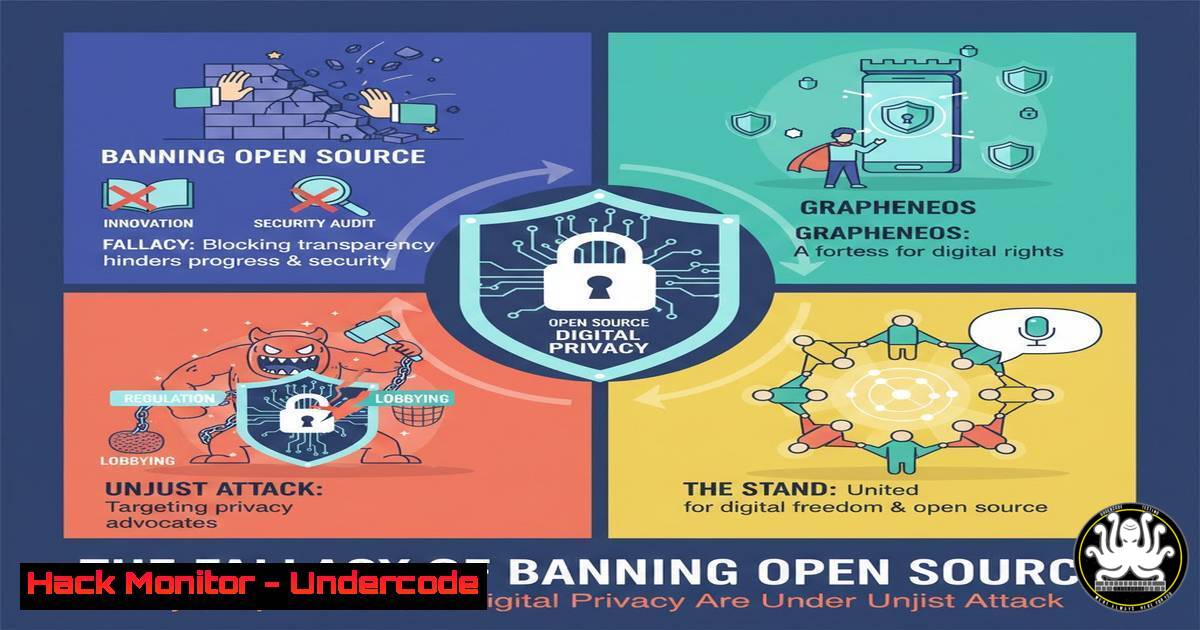
Introduction:
The recent discourse surrounding the potential banning of GrapheneOS in France highlights a critical and recurring tension in the cybersecurity landscape: the misguided attempt to regulate technology based on its potential for criminal misuse, rather than its foundational purpose. This debate strikes at the heart of digital privacy, open-source innovation, and effective law enforcement. Framing powerful privacy tools as inherently malicious because they are used by a minority of bad actors is a logical fallacy that, if adopted as policy, would cripple security for all.
Learning Objectives:
- Understand the core security and privacy principles underpinning operating systems like GrapheneOS.
- Analyze the flawed logic of prohibiting dual-use technologies and its impact on innovation and personal security.
- Learn practical hardening techniques for mobile and desktop systems to maintain privacy without relying on a single solution.
You Should Know:
- What is GrapheneOS and Why It Matters for Security
GrapheneOS is an open-source, privacy and security-focused mobile operating system based on the Android Open Source Project (AOSP). Its primary objective is to harden the Android platform against entire classes of attacks. It is not a tool for criminals; it is a tool for anyone concerned with digital sovereignty, including journalists, activists, corporate executives, and everyday users. Its features include substantial sandboxing enhancements, a hardened memory allocator, stricter app permissions, and the removal of Google Play Services and their inherent tracking by default. Attacking GrapheneOS is akin to attacking the concept of a fortified door because a burglar might use it; the problem is the burglar, not the door.
2. The “Dual-Use” Technology Fallacy and Its Dangers
The argument against GrapheneOS is a classic “dual-use” dilemma. Dual-use technologies are those with both civilian and military/illegal applications. The internet, encryption, cars, and even smartphones themselves are all dual-use. Banning a technology because it can be misused is a slippery slope that leads to technological stagnation and a less secure society. Effective law enforcement and intelligence work should focus on investigating criminal activity itself, not on dismantling the generic tools that also empower and protect law-abiding citizens. The call to ban GrapheneOS represents a failure to address the root causes of crime and a desire for a superficial, ineffective solution.
3. Hardening Your Linux Desktop for Enhanced Privacy
While the debate centers on mobile OS, the principles apply everywhere. Securing your Linux desktop is a fundamental step. Key commands and configurations include:
Update and Audit Packages: Regularly update your system and list installed packages to check for suspicious software.
sudo apt update && sudo apt upgrade
dpkg --list
Configure the Firewall (UFW): Enable and configure the Uncomplicated Firewall to block all incoming traffic by default.
sudo ufw enable
sudo ufw default deny incoming
sudo ufw default allow outgoing
Harden SSH: Disable root login and password authentication in favor of key-based authentication in /etc/ssh/sshd_config.
PermitRootLogin no
PasswordAuthentication no
Enable Mandatory Access Control: Use AppArmor or SELinux to confine applications and limit the damage from a potential breach.
sudo aa-status  Check AppArmor status
sudo sestatus  Check SELinux status
4. Implementing Application Sandboxing on Windows
Windows can also be hardened to limit application privileges, a core concept in GrapheneOS.
Windows Sandbox: Use this lightweight virtual machine to run untrusted applications in an isolated, disposable environment. This is built into Windows 10/11 Pro and Enterprise.
Windows Defender Application Guard (WDAG): For Edge browser, WDAG uses Hyper-V virtualization to isolate browsing sessions, preventing malware from escaping to the host OS. This must be enabled in Windows Features.
PowerShell Execution Policy: Restrict the execution of PowerShell scripts to prevent unauthorized code from running.
Get-ExecutionPolicy -List
Set-ExecutionPolicy -ExecutionPolicy RemoteSigned -Scope LocalMachine
- The Role of Open Source in Verifiable Security
A key advantage of open-source projects like GrapheneOS is their transparency. The code is publicly auditable, meaning security experts worldwide can scrutinize it for backdoors or vulnerabilities. This creates a more robust and trustworthy system compared to proprietary “security through obscurity” models. Banning open-source software undermines this collaborative, transparent security model and forces users to rely on opaque, corporate-controlled alternatives whose security claims cannot be independently verified.
6. API Security: The Hidden Attack Surface
Criminals often exploit poorly secured APIs, not just hardened operating systems. Securing APIs is a far more productive endeavor than banning OSes.
Authentication & Authorization: Always use robust standards like OAuth 2.0 and OpenID Connect. Implement strict scope and claim checks.
Rate Limiting: Implement throttling to prevent brute-force and Denial-of-Service (DoS) attacks. This can be done at the API gateway level (e.g., AWS WAF, NGINX).
Input Validation & Sanitization: Never trust user input. Validate and sanitize all data received by your API endpoints to prevent injection attacks (SQLi, XSS). Use prepared statements for database queries.
7. Cloud Hardening: Securing Your Virtual Perimeter
For organizations, cloud misconfigurations are a primary attack vector, not GrapheneOS.
Identity and Access Management (IAM): Adhere to the principle of least privilege. Use roles instead of long-term access keys. Regularly audit permissions.
 AWS CLI example to list user access keys
aws iam list-access-keys --user-name <username>
Encryption Everywhere: Ensure data is encrypted at rest (e.g., AWS S3, EBS) and in transit (using TLS 1.2+).
Logging and Monitoring: Enable comprehensive logging (AWS CloudTrail, Azure Activity Log) and set up alerts for suspicious activity, such as API calls from unexpected geolocations.
What Undercode Say:
- The attack on GrapheneOS is a proxy for a larger battle over privacy and control, mistaking a symptom for the disease.
- Effective cybersecurity policy must target malicious actor behavior, not the underlying tools that also enable fundamental digital rights.
Analysis: The LinkedIn post correctly identifies the fallacious reasoning behind the potential ban. The comment comparing it to banning cars or bags is a perfect reductio ad absurdum that exposes the flaw in the argument. The real challenge for law enforcement in the digital age is not a lack of tools for surveillance, but a need for more sophisticated, legally sound methods of investigation that respect fundamental rights. Focusing on banning a specific OS is a distraction from the hard work of investigating criminal networks, securing critical infrastructure, and prosecuting actual crimes. This approach, if successful, would set a dangerous precedent, allowing any privacy-enhancing technology to be outlawed under the guise of public safety, ultimately making everyone less safe.
Prediction:
If the narrative that powerful privacy tools are inherently suspect gains traction, we will see a chilling effect on open-source security innovation. Developers may hesitate to create robust hardening technologies for fear of legal reprisal. This will create a digital ecosystem with fewer choices, more centralized control by a handful of tech giants, and ultimately, a lower baseline of security for the general public. The “cat and mouse” game of cybercrime will continue unabated, as criminals will simply shift to other tools or develop their own, while the public loses vital protections against both corporate and state-level surveillance.
🎯Let’s Practice For Free:
IT/Security Reporter URL:
Reported By: Clementdomingo Il – Hackers Feeds
Extra Hub: Undercode MoN
Basic Verification: Pass ✅


