
Listen to this Post
Introduction:
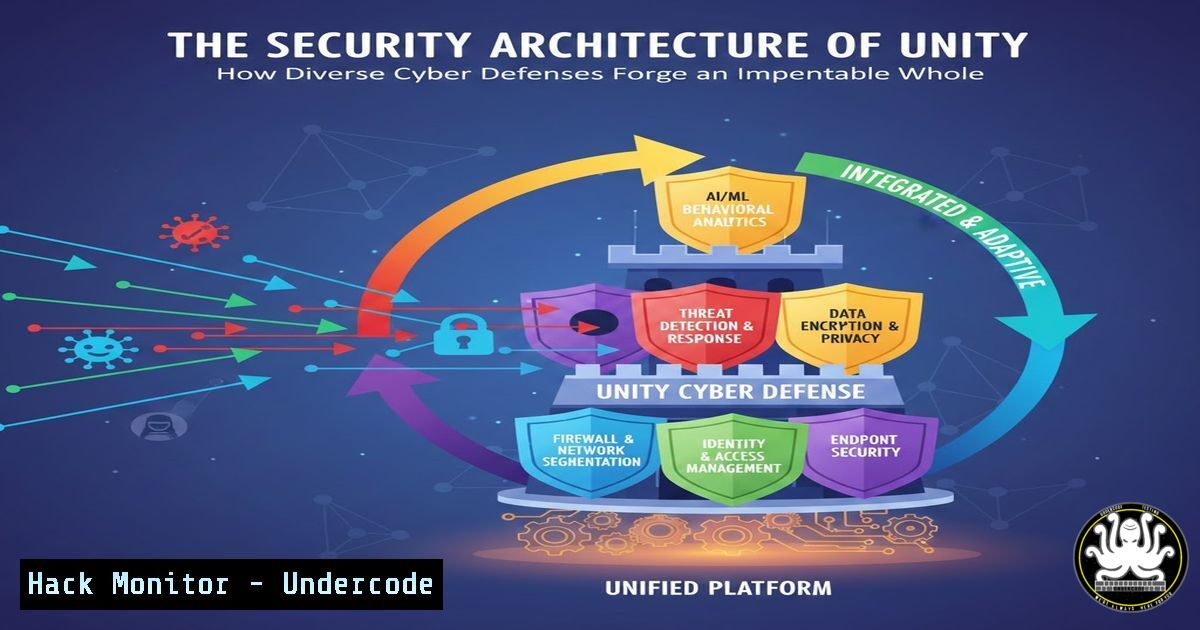
In cybersecurity, a monolithic defense is a brittle one. The post’s reflection on architectural and cultural diversity as a source of strength is a direct parallel to modern security paradigms. True resilience is not achieved through a single, uniform technology but by integrating diverse, layered security controls—each with its unique function and perspective—into a cohesive, adaptive system. This article deconstructs this philosophy into a technical blueprint for building robust security architectures.
Learning Objectives:
- Understand and implement the principle of Defense in Depth with diverse, complementary tools.
- Configure heterogeneous logging and monitoring to create a converged security narrative.
- Apply the concept of “strength through difference” to identity, network, and endpoint security layers.
You Should Know:
- Layered Defense: Architecting Your Security Like Pena Palace
Just as Pena Palace combines Moorish, Gothic, and Renaissance elements into a fortified whole, a robust security posture requires distinct, interoperable layers. A single firewall is a single point of failure; a layered approach ensures if one control is bypassed, others stand ready.
Step-by-step guide:
- Network Layer (The Outer Walls): Deploy a next-generation firewall (NGFW) and segment your network. Use tools like `iptables` or `nftables` on Linux or Windows Defender Firewall with Advanced Security for host-based segmentation.
Linux Example (Basic rule to drop all but SSH from a specific subnet):sudo iptables -A INPUT -p tcp --dport 22 -s 192.168.1.0/24 -j ACCEPT sudo iptables -A INPUT -p tcp --dport 22 -j DROP
- Endpoint Layer (The Guarded Rooms): Employ diverse endpoint detection and response (EDR) solutions. Avoid vendor monoculture. On Windows, harden configurations with PowerShell:
Enable Controlled Folder Access (Ransomware protection)
Set-MpPreference -EnableControlledFolderAccess Enabled
Enable network protection
Set-MpPreference -EnableNetworkProtection Enabled
- Application Layer (The Interior Safeguards): Integrate static (SAST) and dynamic (DAST) application security testing into your CI/CD pipeline. Use tools like OWASP ZAP for automated vulnerability scanning.
-
Converged Visibility: Building Your Single Pane of Glass
The stained glass window unifies individual stories into a single narrative. Similarly, security telemetry from diverse sources—network devices, cloud workloads, endpoints—must be aggregated into a Security Information and Event Management (SIEM) system to reveal the full attack story.
Step-by-step guide:
- Deploy a SIEM: Use an open-source platform like Wazuh or a commercial solution.
- Configure Universal Forwarders: Install agents on critical systems to send logs.
Linux (Syslog to Wazuh Manager):
 On the client, configure syslog to forward to your SIEM IP
echo ". @192.168.1.100:514" | sudo tee -a /etc/rsyslog.conf
sudo systemctl restart rsyslog
3. Normalize Logs: Create parsing rules so logs from Apache, Windows Event Log, and your firewall are translated into a common schema, enabling correlation.
- Identity as the Mosaic: Zero Trust and the Principle of Least Privilege
The “countless souls” entering the Gothic doorway each had a purpose. A Zero Trust model verifies every identity (user, service, device) for every access request. Diversity here means using multi-factor authentication (MFA), biometrics, and certificate-based authentication in concert.
Step-by-step guide:
- Inventory All Identities: Use `aws iam list-users` or `Get-LocalUser` in PowerShell to audit accounts.
- Enforce MFA Everywhere: Especially for privileged accounts. In AWS, enforce it via IAM policies.
- Implement Just-In-Time (JIT) Access: Use a Privileged Access Management (PAM) tool. No one has standing admin access; it is granted temporarily for a specific task and logged.
-
The Initiation Well of Penetration Testing: Walking the Attacker’s Path
The Initiation Well’s spiral descent is a controlled journey into the depths. Regular penetration testing and red team exercises are the controlled descent into your own security weaknesses, revealing how an attacker could chain together disparate vulnerabilities.
Step-by-step guide:
- Scope & Rules of Engagement: Define clear boundaries—what systems, what techniques (e.g., phishing, exploitation) are allowed.
- Reconnaissance Phase (External): Use tools like `nmap` and
theHarvester.nmap -sV -sC -O -p- <target_ip> -oA full_scan
-
Exploitation & Pivoting: Attempt to exploit findings (e.g., with Metasploit) and document how access to one “different” system (e.g., a legacy web server) can be used to pivot to the core network.
-
Harmonizing the Toolchain: API Security as the Glue
The “cultures converging” need a secure communication protocol. In modern cloud-native architectures, APIs are that protocol. Securing them requires a different perspective than network security, focusing on logic, rate-limiting, and token validation.
Step-by-step guide:
- Inventory All APIs: Use tools like `OWASP Amass` or cloud provider-specific discovery tools.
- Implement an API Gateway: Enforce policies for authentication, authorization, and input validation centrally.
- Scan for API-specific flaws: Use a tool like `Kiterunner` to test for endpoint brute-forcing and business logic flaws that traditional scanners miss.
What Undercode Say:
- Monoculture is the Antithesis of Resilience: Relying on a single vendor or a single type of control creates systemic risk. Adversaries develop bypasses for specific technologies; a diverse stack forces them to reinvent their tactics at each layer.
- Unity Requires Translation: Differences only create strength if they can communicate. The critical technical work is in log normalization, standardized APIs (like OpenDDS for sensor data), and correlation rules that find meaning in the noise.
The philosophical reflection on diversity is a profound technical mandate. In nature, genetic diversity ensures species survival. In cybersecurity, control diversity ensures system survival. The future of cyber defense lies not in finding a singular “silver bullet” but in expertly orchestrating a symphony of different instruments—each playing its unique part to create a harmony that is vastly more resilient than any solo performance could ever be. The hack of the future will not be a blunt force breach but a sophisticated campaign designed to exploit homogeneity; our defense must be a living, evolving tapestry of heterogeneous protections.
Prediction:
Future advanced persistent threats (APTs) will increasingly employ AI to identify and exploit architectural monocultures within target organizations. Conversely, defensive AI systems that can dynamically manage and correlate responses from a diverse, multi-vendor security stack will become the cornerstone of cyber resilience. The organizations that proactively architect for “strength through difference” will be the ones that withstand the coordinated, AI-powered attacks of the coming decade.
▶️ Related Video (82% Match):
🎯Let’s Practice For Free:
IT/Security Reporter URL:
Reported By: Yuhelenyu Holidayreflections – Hackers Feeds
Extra Hub: Undercode MoN
Basic Verification: Pass ✅


