
Listen to this Post
Introduction:
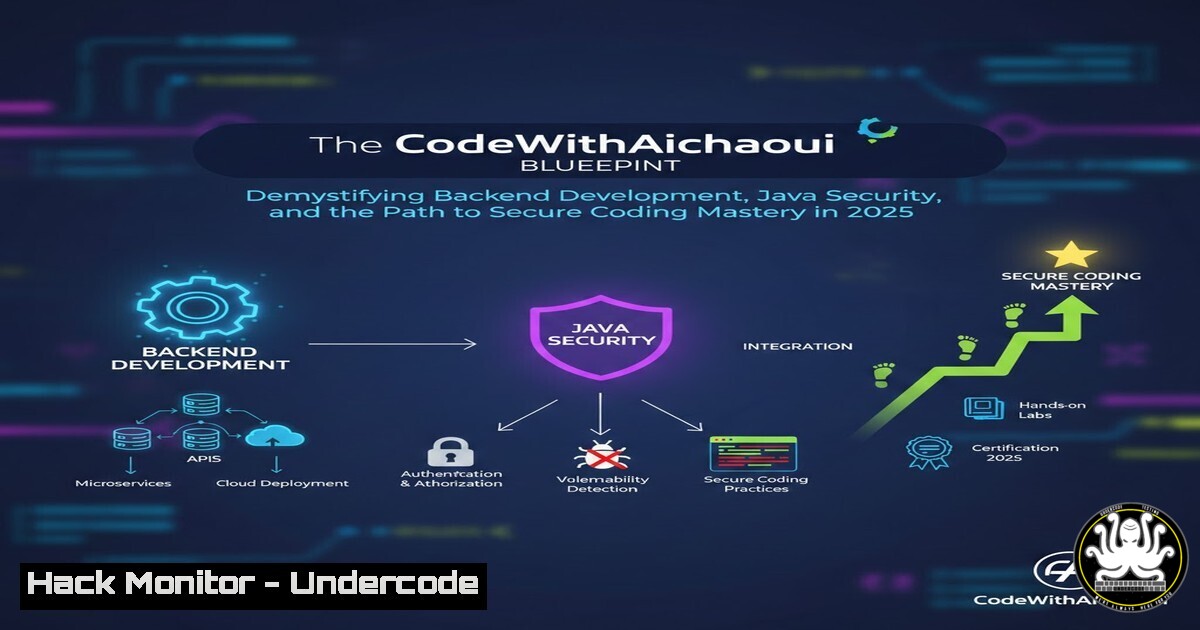
The launch of the CodeWithAichaoui YouTube channel marks a strategic pivot towards structured, accessible technical education in Arabic, focusing on core backend engineering principles. In today’s threat landscape, understanding Java, application security, and clean code isn’t just about functionality—it’s the first line of defense against pervasive vulnerabilities like injection attacks and insecure APIs. This initiative provides a crucial foundation for developers to build securely from the ground up.
Learning Objectives:
- Understand the core pillars of secure backend development as outlined by the CodeWithAichaoui channel’s curriculum.
- Learn practical, command-level techniques for hardening a Java application environment on both Linux and Windows systems.
- Develop a methodology for integrating security practices (“clean code”) into the Software Development Life Cycle (SDLC) from the initial commit.
You Should Know:
1. Foundation First: Securing Your Java Development Environment
A secure application begins with a secure development workstation. Unpatched IDEs, build tools, and containers can introduce vulnerabilities before a single line of code is written.
Step-by-step guide:
- Isolate Your Workspace: Use virtual machines or containerized development environments. For Linux/macOS, leverage Docker to create a clean, reproducible Java environment.
Create a Dockerfile for a secure Java dev environment
FROM eclipse-temurin:21-jdk-jammy
USER root
RUN apt-get update && apt-get upgrade -y && \
apt-get clean && rm -rf /var/lib/apt/lists/
Create a non-root user for security
RUN useradd -m -s /bin/bash developer
USER developer
WORKDIR /app
- Secure Your Dependencies: Configure Maven or Gradle to use checksum verification and scan for known vulnerabilities.
Use Maven with the OWASP Dependency-Check plugin
mvn org.owasp:dependency-check-maven:check
In your pom.xml, ensure the plugin is configured:
<plugin>
<groupId>org.owasp</groupId>
<artifactId>dependency-check-maven</artifactId>
<version>9.0.9</version>
<executions><execution><goals><goal>check</goal></goals></execution></executions>
</plugin>
- Harden Your Git Configuration: Prevent accidental commits of secrets.
Install and configure git-secrets
git secrets --install
git secrets --register-aws
Add a pre-commit hook to scan for hard-coded passwords/API keys
Sample .git/hooks/pre-commit script:
if git grep -E 'password\s=\s["'\'']|[bash][pP][bash]_?[bash][eE][bash]\s=' -- ':!'test' ':!'sample'; then
echo "COMMIT REJECTED: Potential secret found."; exit 1
fi
-
The Pillar of Application Security: Input Validation and SQLi Mitigation
The channel emphasizes backend fundamentals, where input validation is paramount. SQL Injection (SQLi) remains a top vulnerability according to OWASP.
Step-by-step guide:
- Never Trust User Input: Apply strict whitelist validation for all incoming data.
- Use Prepared Statements Religiously: This is the primary defense. Here’s the Java JDBC implementation.
// VULNERABLE - Concatenation
String query = "SELECT  FROM users WHERE username = '" + username + "'";
Statement stmt = connection.createStatement();
ResultSet rs = stmt.executeQuery(query);</li>
</ol>

<p>// SECURE - Parameterized Query
String secureQuery = "SELECT  FROM users WHERE username = ?";
PreparedStatement pstmt = connection.prepareStatement(secureQuery);
pstmt.setString(1, username); // Input is safely handled as data, not code
ResultSet rs = pstmt.executeQuery();
3. Employ an ORM Correctly: Using JPA/Hibernate’s Query Language (JPQL) also parameterizes inputs.
// Using JPA's createQuery (safe)
Query query = em.createQuery("SELECT u FROM User u WHERE u.username = :username");
query.setParameter("username", username);
List<User> results = query.getResultList();
3. API Security: Authentication, Authorization, and Hardening
Backend development is synonymous with API creation. Securing these endpoints is non-negotiable.
Step-by-step guide:
- Implement Robust Authentication: Use tried-and-tested libraries like Spring Security. Avoid rolling your own crypto.
- Enforce Principle of Least Privilege with Role-Based Access Control (RBAC):
// Example Spring Security Method-Level Authorization
@PreAuthorize("hasRole('USER')")
@GetMapping("/api/user/profile")
public Profile getUserProfile() { ... }</li>
</ol>

@PreAuthorize("hasRole('ADMIN')")
@DeleteMapping("/api/admin/users/{id}")
public void deleteUser(@PathVariable Long id) { ... }
3. Configure HTTP Security Headers: Mitigate common attacks like XSS and clickjacking at the container level.
 Example using Nginx as a reverse proxy to add security headers
server {
listen 80;
location / {
add_header X-Frame-Options "DENY" always;
add_header X-Content-Type-Options "nosniff" always;
add_header Content-Security-Policy "default-src 'self';" always;
proxy_pass http://yourapp:8080;
}
}
4. Clean Code as a Security Practice
“Clean code” directly impacts security. Readable, maintainable code is easier to audit for security flaws.
Step-by-step guide:
- Static Analysis Integration: Incorporate SAST tools into your CI/CD pipeline.
Run SpotBugs with security rules on your codebase
mvn com.github.spotbugs:spotbugs-maven-plugin:check
Integrate into CI (e.g., GitHub Actions snippet):

<ul>
<li>name: Run SpotBugs Security Scan
run: mvn com.github.spotbugs:spotbugs-maven-plugin:check
- Static Analysis Integration: Incorporate SAST tools into your CI/CD pipeline.
- Adopt a Secure Coding Standard: Use tools like `checkstyle` to enforce rules that prevent common pitfalls.
<!-- Sample checkstyle rule to forbid dangerous System.exit calls -->
<module name="RegexpSinglelineJava">
<property name="format" value="System\.exit"/>
<property name="message" value="Avoid using System.exit(). Use proper error handling."/>
<property name="ignoreComments" value="true"/>
</module>
- Conduct Regular, Focused Code Reviews: Use a checklist that includes security items: “Are inputs validated?”, “Are queries parameterized?”, “Are secrets handled securely?”
5. Proactive Defense: Logging, Monitoring, and Incident Readiness
Security is not just prevention; it’s detection and response.
Step-by-step guide:
- Implement Structured Security Logging: Log all authentication attempts, authorization failures, and input validation errors.
import org.slf4j.Logger;
import org.slf4j.LoggerFactory;</li>
</ol>

Logger securityLogger = LoggerFactory.getLogger("SECURITY_AUDIT");
// Log a failed login attempt
securityLogger.warn("Failed login attempt for username: {} from IP: {}", username, remoteAddr);
2. Centralize and Monitor Logs: Use the ELK Stack (Elasticsearch, Logstash, Kibana) or a SIEM to aggregate logs.
 Send logs to Logstash via Filebeat (Linux command to install)
curl -L -O https://artifacts.elastic.co/downloads/beats/filebeat/filebeat-8.11.0-amd64.deb
sudo dpkg -i filebeat-8.11.0-amd64.deb
sudo systemctl enable filebeat
sudo systemctl start filebeat
3. Create an Incident Runbook: Document steps for common incidents (e.g., “Suspected SQLi Attempt”). Include commands to immediately isolate a compromised database server or container.
What Undercode Say:
- Education is Proactive Defense: Initiatives like CodeWithAichaoui fill a critical gap by lowering the barrier to secure coding education in native languages, directly combating the skills shortage that fuels insecure software.
- Security is a Continuous Layer: The channel’s focus on Java, backend, and clean code as intertwined concepts correctly frames security not as a bolt-on, but as an integral, continuous layer woven through planning, coding, building, and deployment.
The analysis suggests this educational model, if it maintains a hands-on, practical focus with real-world commands and configurations, can significantly elevate the baseline security posture of its students. By teaching developers to think like defenders from their first “Hello World,” it addresses vulnerabilities at the source—the developer’s keyboard. The inclusion of application security topics indicates an understanding that modern software is a primary attack vector, and securing it requires deep, foundational knowledge.
Prediction:
The grassroots, platform-based technical education movement, exemplified by channels like CodeWithAichaoui, will become a primary vector for cybersecurity skill development globally. As AI-assisted code generation becomes ubiquitous, the threat landscape will shift towards vulnerabilities arising from architectural flaws and misconfigurations, not just simple code errors. Educators who can pivot to teach secure architectural patterns, cloud hardening, and the secure implementation of AI components will define the next generation of cyber-resilient developers. This will lead to a measurable decrease in common vulnerabilities in regions with strong local-language tech education communities, forcing attackers to develop more sophisticated, targeted exploits.
▶️ Related Video (74% Match):
🎯Let’s Practice For Free:
IT/Security Reporter URL:
Reported By: Mohamed Aichaoui – Hackers Feeds
Extra Hub: Undercode MoN
Basic Verification: Pass ✅🔐JOIN OUR CYBER WORLD [ CVE News • HackMonitor • UndercodeNews ]
📢 Follow UndercodeTesting & Stay Tuned:


