
Listen to this Post
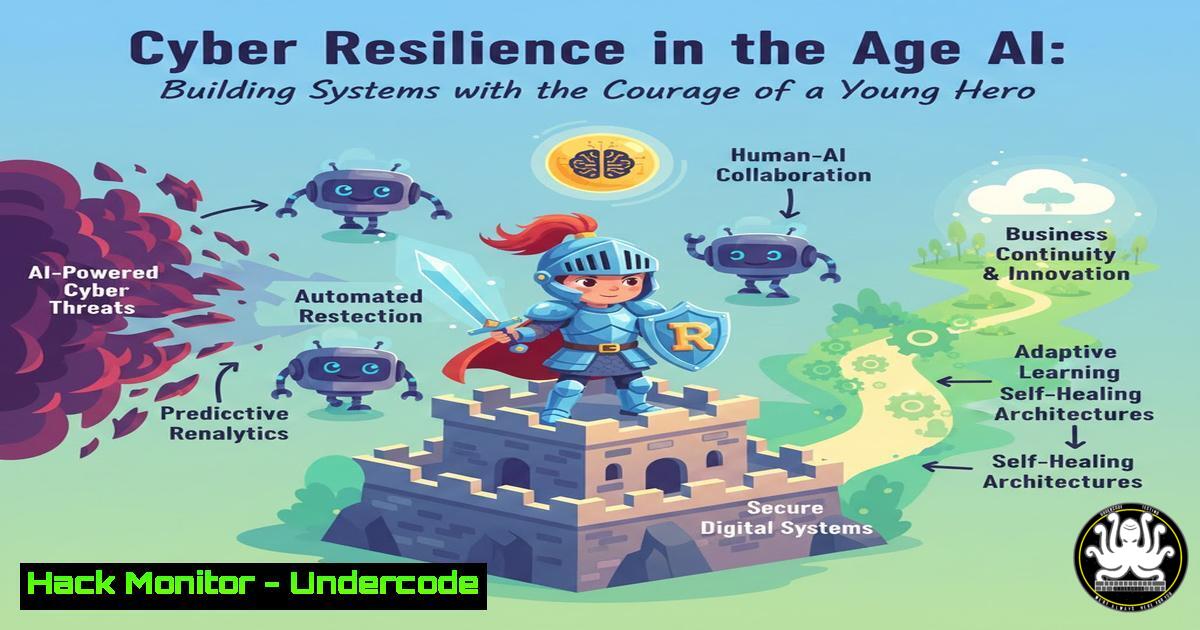
Introduction:
The inspiring story of 10-year-old Ajay Raj confronting a crocodile to save his father transcends human bravery, offering a powerful metaphor for modern cybersecurity. In a digital landscape filled with relentless, automated threats, the principles of presence of mind, decisive action, and resilient architecture are not just virtues but necessities. This article translates that heroic mindset into actionable IT and AI security strategies, providing the technical command and control needed to defend your organization’s critical assets.
Learning Objectives:
- Implement foundational system hardening commands for Linux and Windows to establish a secure baseline.
- Configure AI-powered security tooling for real-time threat detection and automated response.
- Develop and deploy a cloud-native incident response playbook to contain breaches with speed and precision.
You Should Know:
- System Hardening: The First Line of Digital Defense
Just as Ajay assessed the immediate threat, security begins with hardening your environment. This involves closing unnecessary ports, enforcing least-privilege access, and applying security patches rigorously.
Step‑by‑step guide:
Linux (Ubuntu/Debian) Hardening Checklist:
 1. Update and upgrade all packages
sudo apt update && sudo apt upgrade -y
 2. Remove unnecessary services
sudo apt purge telnetd rsh-server -y
 3. Configure firewall (UFW) to deny all, then allow specific services
sudo ufw default deny incoming
sudo ufw default allow outgoing
sudo ufw allow ssh
sudo ufw enable
 4. Disable root SSH login
sudo sed -i 's/^PermitRootLogin yes/PermitRootLogin no/' /etc/ssh/sshd_config
sudo systemctl restart sshd
 5. Install and configure fail2ban for brute-force protection
sudo apt install fail2ban -y
sudo systemctl enable fail2ban && sudo systemctl start fail2ban
Windows Server Hardening via PowerShell:
 1. Enable Windows Firewall with advanced security
Set-NetFirewallProfile -Profile Domain,Public,Private -Enabled True
 2. Disable SMBv1 (vulnerable protocol)
Set-SmbServerConfiguration -EnableSMB1Protocol $false -Force
 3. Force strong encryption for network connections
Set-ItemProperty -Path "HKLM:\SYSTEM\CurrentControlSet\Control\SecurityProviders\SCHANNEL" -Name "ForceStrongEncryption" -Value 1 -Type DWord
 4. Audit successful and failed logon attempts
auditpol /set /subcategory:"Logon" /success:enable /failure:enable
2. AI-Powered Threat Detection: Your 24/7 Sentry
Presence of mind in cybersecurity means constant vigilance. AI and Machine Learning models can analyze logs, network traffic, and user behavior to identify anomalies that signal a breach.
Step‑by‑step guide:
Deploying an Open-Source SIEM with AI Features (Wazuh):
 1. Install Wazuh manager on a dedicated server (Ubuntu)
curl -sO https://packages.wazuh.com/4.8/wazuh-install.sh && sudo bash wazuh-install.sh --install-wazuh-manager
 2. Install the Wazuh indexer for data storage
sudo bash wazuh-install.sh --install-wazuh-indexer
 3. Install the Wazuh dashboard for visualization
sudo bash wazuh-install.sh --install-wazuh-dashboard
 4. Integrate with an external AI/ML platform (e.g., Splunk ES, Elastic ML) by configuring the `ossec.conf` file to forward alerts to their APIs for advanced behavioral analysis.
This creates a central system that correlates events and uses built-in rules (and can integrate with external ML) to detect malware, unauthorized access, and configuration weaknesses.
3. Cloud Infrastructure Hardening on AWS & Azure
Modern systems live in the cloud, which requires a shared responsibility model. Courageous action here means proactively securing your cloud footprint.
Step‑by‑step guide:
AWS S3 Bucket Hardening (Preventing Data Leaks):
 1. Use AWS CLI to audit all S3 buckets for public access
aws s3api list-buckets --query "Buckets[].Name"
aws s3api get-public-access-block --bucket-name YOUR_BUCKET_NAME
 2. Apply a strict public access block policy
aws s3api put-public-access-block \
--bucket YOUR_BUCKET_NAME \
--public-access-block-configuration "BlockPublicAcls=true,IgnorePublicAcls=true,BlockPublicPolicy=true,RestrictPublicBuckets=true"
 3. Enable default encryption
aws s3api put-bucket-encryption \
--bucket YOUR_BUCKET_NAME \
--server-side-encryption-configuration '{"Rules": [{"ApplyServerSideEncryptionByDefault": {"SSEAlgorithm": "AES256"}}]}'
Azure Storage Account Securing:
 1. Enable Secure transfer required (HTTPS only)
Update-AzStorageAccount -ResourceGroupName "MyResourceGroup" -Name "mystorageaccount" -EnableHttpsTrafficOnly $true
 2. Disallow Blob public access
Set-AzStorageAccount -ResourceGroupName "MyResourceGroup" -Name "mystorageaccount" -AllowBlobPublicAccess $false
4. Incident Response Playbook: The Counter-Attack
When a threat is identified, a swift, automated response is key. This is the digital equivalent of confronting the danger head-on.
Step‑by‑step guide (Automated Containment):
Isolate a Compromised Linux Host via Network Segmentation:
 1. Identify suspicious connection (e.g., to a known C2 server IP 192.168.1.100)
netstat -tunap | grep 192.168.1.100
 2. Immediately block the IP at the host firewall level
sudo iptables -A INPUT -s 192.168.1.100 -j DROP
sudo iptables -A OUTPUT -d 192.168.1.100 -j DROP
 3. Kill the associated process (find PID from netstat)
sudo kill -9 <PID>
 4. Create a snapshot/forensic image of the system before remediation
 If using LVM: sudo lvcreate --snapshot --name forensics-snap --size 10G /dev/ubuntu-vg/root
Automate with a Security Orchestration (SOAR) Tool like TheHive/Cortex: Configure a playbook that automatically executes these commands or isolates a VM in your cloud environment when a high-fidelity alert is triggered.
5. API Security: Guarding the Digital Gateways
APIs are critical attack vectors. Protecting them requires authentication, rate-limiting, and strict input validation.
Step‑by‑step guide (Implementing API Key Security):
Simple Python Flask API with Key Auth:
from flask import Flask, request, jsonify
import os
from functools import wraps

app = Flask(<strong>name</strong>)
 Store keys in environment variables, not in code
VALID_API_KEYS = os.getenv('API_KEYS', '').split(',')

def require_api_key(f):
@wraps(f)
def decorated(args, kwargs):
api_key = request.headers.get('X-API-Key')
if api_key not in VALID_API_KEYS:
return jsonify({"error": "Unauthorized"}), 403
return f(args, kwargs)
return decorated

@app.route('/secure-data')
@require_api_key
def secure_endpoint():
return jsonify({"data": "This is protected by courage and an API key."})

if <strong>name</strong> == '<strong>main</strong>':
app.run(ssl_context='adhoc')  Always use HTTPS
6. Vulnerability Management: The Proactive Stance
Resilience means knowing your weaknesses before the adversary does. Regular scanning and patching is non-negotiable.
Step‑by‑step guide (Using OpenVAS for Scanning):
 1. Install OpenVAS (Greenbone Vulnerability Manager)
sudo apt update && sudo apt install gvm
sudo gvm-setup  Follow the interactive setup, save the admin password.
 2. Start the services
sudo gvm-start
 3. Access the web interface at https://127.0.0.1:9392
 4. Create a "Full and Fast" scan task against a target IP range.
 5. Schedule weekly scans, review reports, and prioritize CVSS 9+ vulnerabilities for immediate patching.
What Undercode Say:
- Courage is a Configurable State: True cybersecurity bravery isn’t blind risk-taking; it’s the result of meticulous preparation, automated defenses, and well-rehearsed playbooks that allow for decisive action under pressure.
- The Youngest Line of Defense is Often the Strongest: In technology, this translates to embracing emerging, “young” tools like AI-driven anomaly detection and immutable, infrastructure-as-code security policies, which often outperform legacy, manual systems.
The story of Ajay Raj is a potent allegory for the modern CISO or systems administrator. The “crocodile” is any advanced persistent threat or zero-day exploit. The saving action is not a single, grand gesture, but the cumulative effect of hundreds of correctly configured systems, intelligently tuned alerts, and automated containment scripts. This technical resilience, built line-by-line in config files and command terminals, is what allows organizations to face digital threats with legitimate courage and emerge unscathed.
Prediction:
The convergence of AI-driven offensive tools and increasingly automated IT infrastructure will create a battlefield where cyber confrontations occur at machine speed. The future belongs to organizations that encode their “courage” and “presence of mind” directly into their systems—through autonomous security agents, self-healing networks, and predictive threat hunting. The human role will shift from frontline incident response to strategic oversight, ethical governance of AI security tools, and designing ever-more-resilient architectures. Heroes of the next decade will be those who architect systems that can autonomously defend, adapt, and counter-attack.
▶️ Related Video (76% Match):
🎯Let’s Practice For Free:
IT/Security Reporter URL:
Reported By: Princi Kumari – Hackers Feeds
Extra Hub: Undercode MoN
Basic Verification: Pass ✅


