Listen to this Post
Introduction:
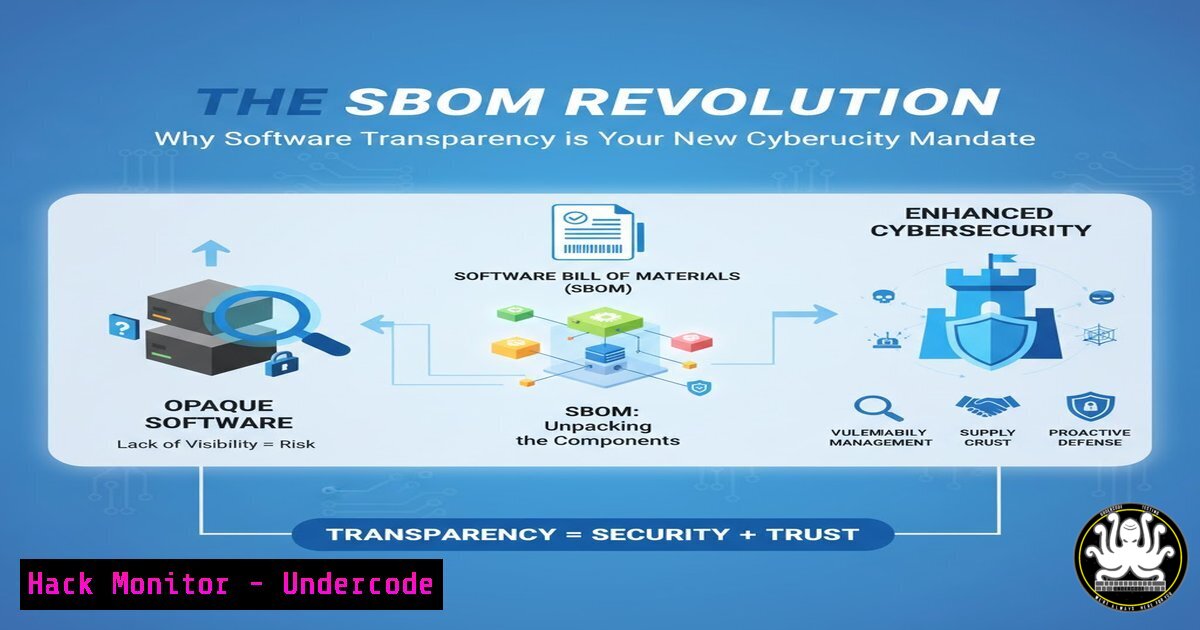
The software supply chain is under siege, with attackers increasingly targeting third-party components and dependencies to breach organizations. The recent appointment of Dr. Allan Friedman, a leading voice in Software Bill of Materials (SBOM) advocacy, to NetRise underscores a critical industry shift from blind trust to verified software transparency. This movement, catalyzed by major incidents like the SolarWinds attack, mandates that organizations now demand deep visibility into the software they build, buy, and use.
Learning Objectives:
- Understand the core concepts of SBOMs and their critical role in software supply chain security.
- Learn practical commands and techniques for generating, analyzing, and leveraging SBOMs.
- Develop a proactive strategy for integrating software transparency into your vulnerability management and compliance programs.
You Should Know:
1. Generating an SBOM with Syft
An SBOM is a nested inventory, a list of ingredients that make up software components. Using a tool like Syft is the first step to creating this transparency.
Command:
 Install Syft
curl -sSfL https://raw.githubusercontent.com/anchore/syft/main/install.sh | sh -s -- -b /usr/local/bin

Generate an SBOM for a Docker image
syft your-application:latest -o cyclonedx-json > sbom.cyclonedx.json

Generate an SBOM for a directory
syft dir:/path/to/your/code -o spdx-json > sbom.spdx.json
Step-by-step guide:
This command uses Syft, a popular open-source SBOM generation tool, to analyze a software artifact. The first command installs Syft. The second generates a CycloneDX format SBOM for a Docker image, outputting it to a JSON file. The third does the same for a local directory, using the SPDX format. CycloneDX and SPDX are the two dominant, standardized SBOM formats. This inventory is foundational for tracking known vulnerabilities in your dependencies.
2. Scanning SBOMs for Vulnerabilities with Grype
Generating an SBOM is only half the battle. The next critical step is to scan those components for known security flaws.
Command:
 Install Grype
curl -sSfL https://raw.githubusercontent.com/anchore/grype/main/install.sh | sh -s -- -b /usr/local/bin

Scan an image directly
grype your-application:latest

Scan using a pre-generated SBOM
grype sbom:./sbom.cyclonedx.json
Step-by-step guide:
Grype is a vulnerability scanner that works natively with SBOMs. The first command installs it. The second command scans a Docker image directly. The third and more powerful method scans the SBOM file you generated with Syft. This separates the inventory process from the scanning process, allowing you to scan the same SBOM against multiple vulnerability databases or as part of a CI/CD pipeline without rebuilding the artifact.
3. Windows: Querying System Components with WMIC
Understanding what software is installed on your Windows endpoints is a basic form of supply chain management.
Command:
 List all installed applications
wmic product get name, version, vendor

List specific DLLs loaded by a running process (e.g., notepad.exe)
wmic process where name="notepad.exe" list modules
Step-by-step guide:
The Windows Management Instrumentation Command-line (WMIC) is a powerful built-in tool. The first command queries the system for all software installed via an MSI package, showing name, version, and vendor—a primitive but useful software inventory. The second command lists all DLL modules loaded by a specific process, helping to identify unexpected or malicious dependencies at runtime.
4. Linux: Auditing Loaded Kernel Modules
Kernel modules are a critical part of the operating system’s supply chain and a common target for rootkits.
Command:
 List all currently loaded kernel modules
lsmod

Get detailed information about a specific module
modinfo <module_name>

Check the dependency tree of a module
modprobe --show-depends <module_name>
Step-by-step guide:
The `lsmod` command provides a simple list of loaded modules. `modinfo` is then used to get detailed metadata about a specific module, including its license, author, and description, which can help verify its legitimacy. `modprobe –show-depends` reveals the module’s dependencies, illustrating the “nested” nature of even low-level software.
- API Security: Scanning for Exposed Secrets with TruffleHog
APIs often rely on secrets and keys. Hard-coded credentials in software repositories are a massive supply chain risk.
Command:
 Install TruffleHog
docker run --rm -it -v "$PWD:/pwd" trufflesecurity/trufflehog:latest github --repo=https://github.com/your-org/your-repo --json

Scan a local directory
docker run --rm -it -v "$PWD:/pwd" trufflesecurity/trufflehog:latest filesystem /pwd --json
Step-by-step guide:
TruffleHog scans git repositories and file systems for high-entropy strings and known secret patterns (like API keys and passwords). The first command scans a remote GitHub repository. The second scans your local directory. The `–json` flag outputs results in a machine-readable format for integration into security pipelines, preventing secrets from being baked into your software supply chain.
6. Cloud Hardening: Enforcing Resource Policies with OPA/Rego
Infrastructure-as-Code (IaC) is part of your supply chain. Open Policy Agent (OPA) with the Rego language can enforce security policies before deployment.
Code Snippet (example.rego):
package main

deny[bash] {
input.kind == "Pod"
not input.spec.containers[bash].securityContext.runAsNonRoot
msg := "Containers must not run as root"
}

deny[bash] {
input.kind == "Service"
input.spec.type == "LoadBalancer"
msg := "Services of type LoadBalancer are not permitted"
}
Step-by-step guide:
This Rego policy for Kubernetes defines two denial rules. The first ensures Pods do not run containers as the root user. The second prohibits the creation of public-facing LoadBalancer services. By applying such policies to your CI/CD pipeline, you harden the “supply chain” of your infrastructure, ensuring all deployed resources meet security baselines.
- Dependency Management: Auditing Python for Vulnerabilities with Safety
Modern applications rely on open-source packages. Automatically checking these dependencies for known vulnerabilities is non-negotiable.
Command:
 Install safety
pip install safety

Scan your current environment
safety check

Scan a requirements.txt file
safety check -r requirements.txt

Output results in JSON for automation
safety check -r requirements.txt --json
Step-by-step guide:
Safety is a vulnerability scanner specifically for Python dependencies. The `safety check` command scans the currently active Python environment. The `-r` flag allows you to scan a `requirements.txt` file before the dependencies are even installed, enabling “shift-left” security. Integrating this into your build process acts as a quality gate for your software’s open-source supply chain.
What Undercode Say:
- Transparency is the New Security Control: The era of trusting software vendors based on reputation alone is over. SBOMs transform software from a “black box” into a verifiable asset, making transparency a foundational security control.
- Automation is Non-Negotiable: The scale and complexity of modern software dependencies make manual inventory and assessment impossible. Tools like Syft, Grype, and OPA must be seamlessly integrated into DevOps pipelines to provide continuous, automated supply chain assurance.
The industry’s pivot towards software transparency, exemplified by high-profile expert movements and regulatory pressure, is not a passing trend but a fundamental correction. The analysis of the provided LinkedIn post reveals a consensus among top-tier cybersecurity leaders: just “blindly trusting the software we buy, build, use and maintain is not a recipe for success.” This signifies a maturation of the market, moving from reactive patching to proactive, evidence-based risk management. The technical commands and tools outlined are the practical implementation of this philosophy, providing the “how” to the “why” articulated by thought leaders like Dr. Friedman. The ultimate goal is to build a defensible software ecosystem where risk is understood and managed, not hidden and ignored.
Prediction:
The demand for SBOMs and software transparency will evolve from a best practice to a regulatory and contractual requirement within the next 2-3 years, driven by continued high-impact supply chain attacks. This will spawn a new generation of automated security tools focused not just on generating SBOMs, but on intelligently analyzing them for anomalous changes, license compliance risks, and zero-day impact propagation, fundamentally changing software procurement and risk management practices. AI will be leveraged to predict vulnerable components across massive dependency graphs, making proactive mitigation a reality.
🎯Let’s Practice For Free:
IT/Security Reporter URL:
Reported By: Pacethomas Netrise – Hackers Feeds
Extra Hub: Undercode MoN
Basic Verification: Pass ✅


