Listen to this Post
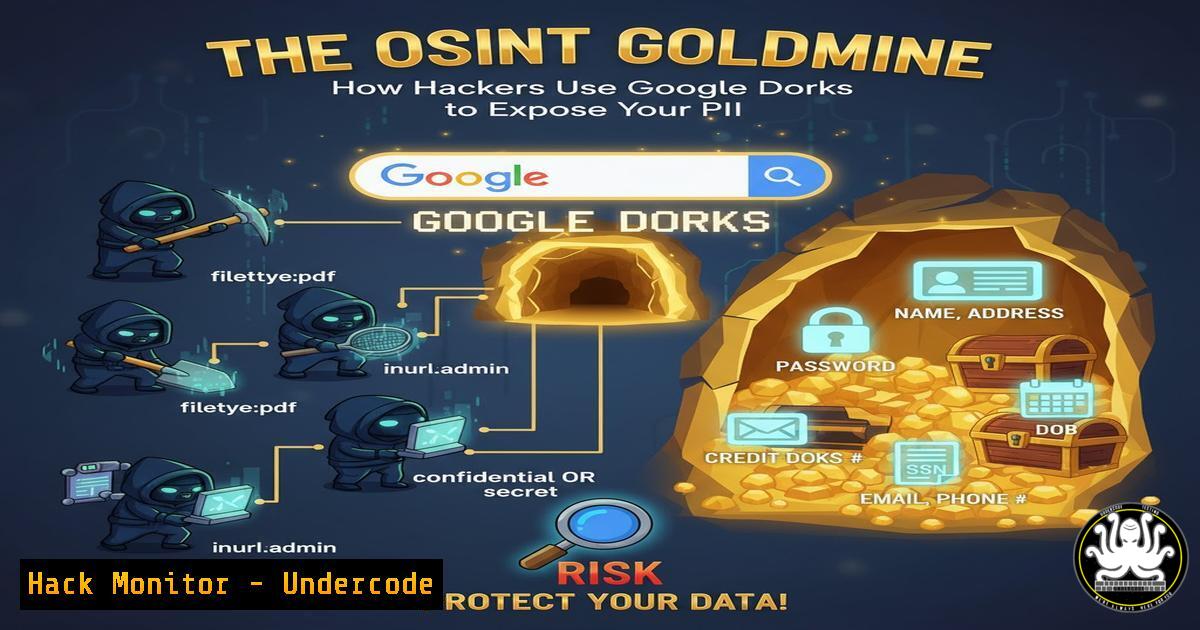
Introduction:
In the hands of a threat actor, Google transforms from a simple search engine into a powerful reconnaissance weapon. Google Dorks, advanced search operators, are used to uncover sensitive information inadvertently exposed online, including vast amounts of Personally Identifiable Information (PII). This technique, known as Google Hacking, allows attackers to bypass security measures and directly access confidential data, posing a severe risk to individuals and organizations alike.
Learning Objectives:
- Understand the fundamental syntax and power of Google Dorking for reconnaissance.
- Learn specific dorks used to find exposed PII, financial data, and vulnerable systems.
- Develop mitigation strategies to protect sensitive information from being indexed by search engines.
You Should Know:
1. Finding Exposed Personal Identity Documents
The most damaging data leaks often involve scanned copies of government-issued identification. Threat actors use specific filetype and intitle searches to locate these documents.
`site:drive.google.com intitle:”index of” “passport.pdf”`
`filetype:pdf “social security number” “confidential”`
`intitle:”index of” “id_scan” OR “drivers_license”`
Step-by-step guide:
This dork combination is exceptionally effective. The `site:` operator restricts the search to a specific domain, in this case, Google Drive. The `intitle:”index of”` phrase looks for open directory listings, which are often misconfigured and expose files. Finally, specifying a filename like `”passport.pdf”` targets the most sensitive documents. An attacker would execute this search, then manually review the results from `drive.google.com` to download any exposed IDs, which can be used for identity theft or fraud.
2. Uncovering Financial and Banking Information
Banking data is a primary target. Hackers use dorks to find financial statements, transaction records, and internal banking portals that may be publicly accessible.
`inurl:/statement/ filetype:xls “account balance”`
`intitle:”bank statement” “credit card” site:pdf`
`intext:”routing number” “account number” filetype:txt`
Step-by-step guide:
The `inurl:/statement/` operator searches for the word “statement” within the webpage’s URL, a common pattern for financial applications. Combining this with `filetype:xls` and the phrase `”account balance”` creates a highly precise search for exposed Microsoft Excel spreadsheets containing financial data. An attacker would use this to find directly downloadable files that should never be public, potentially compromising entire financial accounts.
3. Locating Exposed Database Backups and Logs
Database dumps and application logs are treasure troves containing emails, passwords, and user data. These files are often left in web-accessible directories.
`filetype:sql “INSERT INTO” `users` “password”`
`intitle:”index of” “backup.sql.gz”`
`ext:log “login” “failed” “password” “username”`
Step-by-step guide:
The `filetype:sql “INSERT INTO”` dork is designed to find raw MySQL database dump files. The "INSERT INTO" `users` "password" string is a common pattern in these dumps where user account information is stored. An attacker finding such a file can import it into their own database to analyze the entire user table, including potentially hashed passwords, which can then be cracked offline.
- Discovering Open Security Camera Feeds and IoT Devices
Unsecured Internet of Things (IoT) devices, like security cameras, can be found with simple dorks, allowing for unauthorized visual surveillance.
`inurl:”viewer.html?mode=” “CCTV”`
`intitle:”webcam 7″ “live video”`
`inurl:/axis-cgi/jpg/image.cgi`
Step-by-step guide:
Many IP cameras, particularly older models, use standard web interfaces and paths. The dork `inurl:/axis-cgi/jpg/image.cgi` targets a specific path used by Axis brand cameras to serve a live JPEG snapshot. By entering this URL directly or finding it via Google, an attacker can pull a real-time image from the camera without any authentication, completely bypassing its security.
5. Finding Vulnerable Web Servers and Configuration Files
Configuration files often contain API keys, database passwords, and administrative credentials. Exposing these files can lead to a full system compromise.
`intitle:”index of” “.env” “DB_PASSWORD”`
`filetype:config “connectionString” “Password”`
`ext:xml “smtp” “user” “pass”`
Step-by-step guide:
The `.env` file is a common configuration file in modern web frameworks like Laravel and Node.js that stores environment variables, including database credentials. The dork `intitle:”index of” “.env”` searches for directory listings that include this file. If found, an attacker can download the `.env` file and instantly gain access to the application’s database, email server, and any third-party API keys listed within it.
6. Enumerating API Endpoints Leaking Data
APIs that are not properly secured can be found through Google and probed for data leaks, often returning JSON or XML responses directly in the browser.
`inurl:/api/v1/ users “email”`
`filetype:json “api_key” “https://”`
`”status”: 200 “data” “email” intext:json`
Step-by-step guide:
This technique involves finding active API endpoints that return user data. The dork `inurl:/api/v1/ users “email”` looks for a common API path structure and the keyword “email” on the page. An attacker would use this to find a live endpoint, then use a tool like `curl` to send a direct request: `curl https://[target-domain]/api/v1/users/1`. If the API is improperly secured, it might return a JSON object with the user’s full profile, including their email and other PII.
7. Advanced Operator Combinations for Precision Hunting
Skilled hunters combine multiple operators with OR/AND logic to create highly targeted searches for specific software vulnerabilities or data types.
`(intext:”username” | intext:”password”) (filetype:log | filetype:txt)`
`site:pastebin.com “SSN” OR “social security”`
`-site:github.com intext:”BEGIN RSA PRIVATE KEY”`
Step-by-step guide:
The final dork, -site:github.com intext:"BEGIN RSA PRIVATE KEY", is a masterclass in precision. The `intext:”BEGIN RSA PRIVATE KEY”` part searches for the header of a private SSH key file. The `-site:github.com` operator excludes results from GitHub, where such keys are often shared intentionally in code repositories. This refines the search to only find private keys that have been leaked elsewhere, which is a critical security incident. An attacker finding such a key could gain unauthorized SSH access to servers.
What Undercode Say:
- The barrier to entry for sophisticated OSINT is lower than ever; Google Dorks democratize the ability to find sensitive data, putting it within reach of low-skill attackers.
- Proactive defense is no longer optional; organizations must continuously monitor what Google has indexed about them and ensure robots.txt and proper access controls are implemented.
The analysis reveals a critical disconnect in modern cybersecurity. While organizations invest heavily in perimeter defenses like firewalls, they often neglect the data they inadvertently expose to the public internet. Google’s crawlers, operating with near-omniscience, index this data, creating a permanent and easily searchable record of an organization’s security failures. The threat is not a complex zero-day exploit, but a simple misconfiguration made catastrophic by the scale of search. Mitigation requires a cultural shift towards “data-centric” security, where the primary goal is to control and classify data at rest, ensuring it never reaches a public-facing server without strict authentication.
Prediction:
The future of Google Hacking will be supercharged by AI. We predict the emergence of AI-powered “Autonomous Threat Agents” that will continuously run sophisticated, multi-step dork queries across multiple search engines, automatically correlating found data (e.g., linking an exposed email from one leak to a password in another) to build comprehensive victim profiles without human intervention. This will move the attack timeline from manual reconnaissance to fully automated exploitation, forcing defenders to rely equally on AI-driven monitoring to find and remove their own exposed data before the bots do.
🎯Let’s Practice For Free:
IT/Security Reporter URL:
Reported By: Abhirup Konwar – Hackers Feeds
Extra Hub: Undercode MoN
Basic Verification: Pass ✅


