Listen to this Post
Introduction:
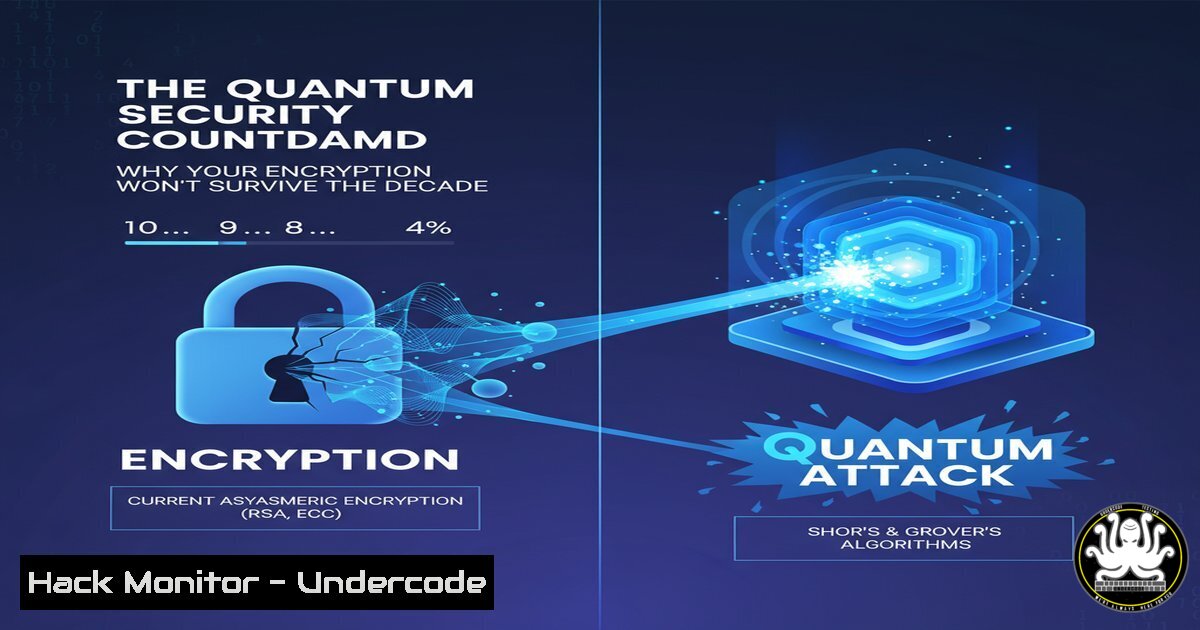
The dawn of practical quantum computing presents an existential threat to the global digital security infrastructure. Current asymmetric encryption standards, like RSA and ECC, which protect everything from online banking to state secrets, are vulnerable to being broken by quantum algorithms such as Shor’s. This article provides a technical deep dive into the impending quantum threat and the actionable steps IT professionals must take to begin building cryptographic resilience.
Learning Objectives:
- Understand the specific vulnerabilities in RSA and ECC encryption that quantum computers exploit.
- Learn to use open-source tools to inventory and assess your organization’s cryptographic posture.
- Implement and test early quantum-resistant algorithms and commands for system hardening.
You Should Know:
1. Inventory Your Cryptographic Vulnerabilities with Nmap
Before defending against a threat, you must quantify it. Using `nmap` to scan for weak ciphers and protocols is the first step in a quantum-ready migration strategy.
`nmap -sV –script ssl-enum-ciphers -p 443 target.com`
`nmap –script ssh2-enum-algos target.com`
`nmap -sV –script ssl-cert target.com`
Step-by-step guide:
This Nmap script (ssl-enum-ciphers) connects to a target service (e.g., a web server on port 443) and negotiates SSL/TLS connections to enumerate all supported cipher suites. It then reports them, highlighting weak, deprecated, or soon-to-be-broken ciphers.
1. Install Nmap: Ensure Nmap is installed on your scanning machine.
2. Run the Scan: Execute the command nmap -sV --script ssl-enum-ciphers -p 443 yourtargetdomain.com.
3. Analyze Output: Review the output for ciphers reliant on RSA or ECDH (Elliptic-Curve Diffie-Hellman). These are your primary quantum vulnerabilities in TLS.
4. Prioritize: Create a list of systems that rely heavily on these vulnerable ciphers for prioritization.
2. Simulate Quantum Attacks with OpenSSL
While large-scale quantum computers are not yet available, we can simulate the threat by testing the strength of your current keys.
`openssl genrsa -aes256 -out traditional_rsa.key 2048`
`openssl genrsa -aes256 -out traditional_rsa.key 4096`
`openssl req -new -key traditional_rsa.key -out request.csr`
Step-by-step guide:
This process demonstrates key generation for traditional RSA, which is vulnerable to Shor’s algorithm. The key size (2048 vs 4096 bits) is a critical factor in classical security but offers negligible protection against a capable quantum computer.
1. Generate a Vulnerable Key: Run `openssl genrsa -out rsa_2048.key 2048` to create a 2048-bit RSA private key. This key strength is currently standard but is considered quantum-vulnerable.
2. Create a Certificate Request: Use `openssl req -new -key rsa_2048.key -out rsa_2048.csr` to generate a certificate signing request. This simulates a real-world deployment.
3. Acknowledge the Risk: Document that any system using this key pair will need to be migrated to a post-quantum cryptography (PQC) standard in the future. The goal here is to create a test subject for your migration plans.
3. Experiment with Post-Quantum Cryptography using OpenSSH
The leading candidate for PQC standardization is the CRYSTALS-Kyber algorithm. Modern OpenSSH versions (starting with 9.0) offer experimental support for hybrid key exchange, combining classical and post-quantum algorithms.
`ssh -Q key-sig`
`ssh -Q key`
`ssh -Q kex`
Step-by-step guide:
These commands query your local OpenSSH client for the cryptographic algorithms it supports, allowing you to verify PQC readiness.
1. Check for Kyber Support: Run ssh -Q kex | grep -i kyber. If your OpenSSH version is 9.0 or newer, it should list Kyber-based key exchange algorithms (e.g., [email protected]).
2. Generate a Hybrid Key Pair: If supported, you can generate a key pair that uses a PQC algorithm alongside a traditional one. The specific command flags are still evolving, but the capability is being actively integrated.
3. Configure sshd_config: On the server side, you can update `/etc/ssh/sshd_config` to include the Kyber KEX algorithms in the `KexAlgorithms` configuration line, enabling quantum-resistant connections.
4. Harden Your Systems with Quantum-Resistant Configurations
Proactive system hardening involves disabling weak protocols and prioritizing algorithms that are considered more quantum-resilient, such as those based on symmetric key cryptography.
`sudo sysctl -w net.ipv4.tcp_syncookies=1`
`echo “KexAlgorithms curve25519-sha256” >> /etc/ssh/sshd_config`
`sudo ufw allow ssh`
Step-by-step guide:
While we await full PQC standards, we can mitigate risk by strengthening classical systems and preparing for the transition.
1. Prioritize Strong Classical Algorithms: For SSH, explicitly set `KexAlgorithms` to `curve25519-sha256` in your sshd_config. While not quantum-proof, X25519 is a strong elliptic curve that is a better interim choice than the NIST curves potentially weakened by quantum attacks.
2. Restart the Service: After making changes to sshd_config, run `sudo systemctl restart sshd` to apply the new configuration.
3. Verify the Configuration: Use `ssh -Q kex` on a client and compare it with the server’s offered algorithms to ensure the hardened configuration is active.
5. Implement Scripted Crypto-Agility Tests
Crypto-agility is the ability to swiftly switch cryptographic algorithms and standards without overhauling entire systems. This can be tested with automation scripts.
`!/bin/bash`
`for server in $(cat server_list.txt); do echo “Checking $server”; nmap -sV –script ssl-enum-ciphers -p 443 $server | grep -E “(RSA|ECC)”; done`
`openssl s_client -connect $host:$port < /dev/null`
Step-by-step guide:
A Bash script can automate the inventory process, providing a continuous view of your cryptographic posture.
1. Create a Server List: Create a text file (server_list.txt) containing the hostnames or IPs of your critical external-facing servers.
2. Write the Script: Create a Bash script that loops through this list, running the Nmap cipher enumeration script against each target.
3. Parse for Vulnerabilities: Use `grep` to filter the output for lines containing “RSA” or “ECC”, quickly identifying the most vulnerable systems.
4. Schedule Regular Scans: Use a cron job to run this script weekly, tracking your progress as you migrate away from quantum-vulnerable cryptography.
What Undercode Say:
- The quantum threat is not a future hypothetical; it is a present-day migration challenge. Data encrypted today with vulnerable algorithms and harvested by adversaries can be decrypted tomorrow when quantum computers become available.
- Transitioning to quantum-resistant systems is less about a single technology swap and more about building foundational crypto-agility, allowing for rapid algorithm updates as standards evolve.
The launch of initiatives like the STEAMI NETWORK, focused on demystifying complex fields like quantum cryptography, is critical for bridging the knowledge gap between academic research and enterprise IT. The technical commands and steps outlined here are not just theoretical; they are the initial, practical maneuvers in a long-term strategic defense. The timeline for a cryptographically relevant quantum computer is uncertain, but the window to build a resilient defense is closing. Organizations that delay inventorying their systems and testing PQC migrations are effectively building their digital infrastructure on a known fault line.
Prediction:
The period between 2025 and 2030 will see a “Quantum Security Divide” emerge. Organizations that proactively achieve crypto-agility will gain a significant market trust and compliance advantage. Conversely, those who delay will face a frantic, costly, and high-risk migration under pressure, potentially leading to catastrophic data breaches and irreparable reputational damage once large-scale quantum computers arrive. Regulatory bodies will soon mandate PQC compliance, making early adoption a competitive necessity.
🎯Let’s Practice For Free:
IT/Security Reporter URL:
Reported By: Kiran Kaur – Hackers Feeds
Extra Hub: Undercode MoN
Basic Verification: Pass ✅


