Listen to this Post
Introduction:
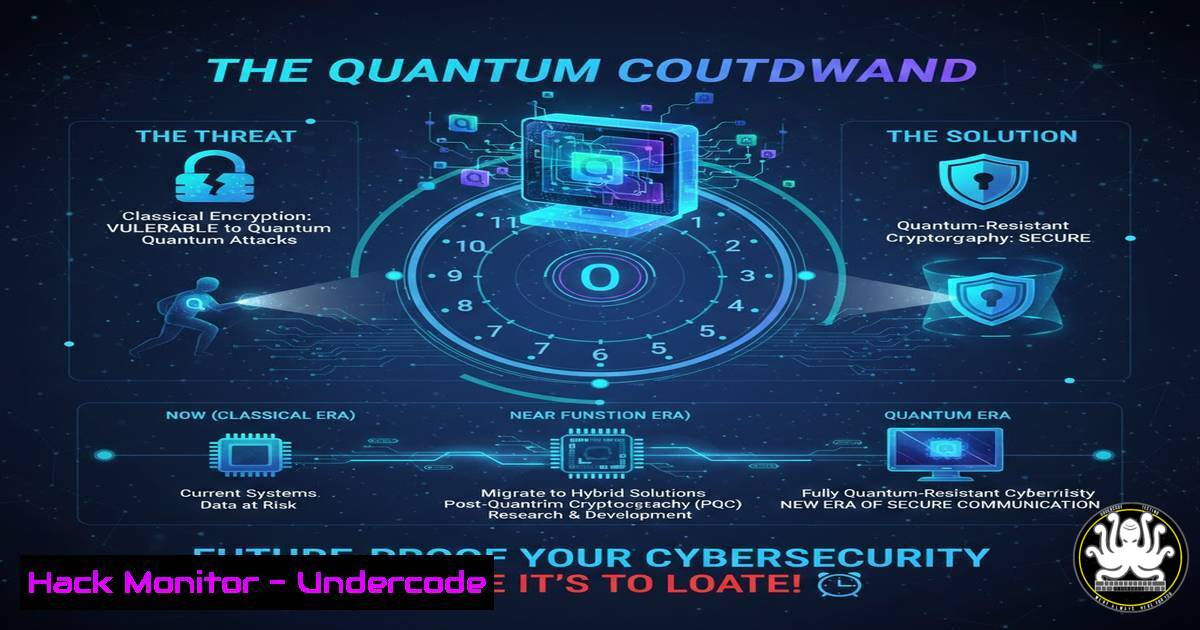
The convergence of quantum computing and artificial intelligence is not a distant future scenario—it’s an accelerating present reality that dismantles traditional cybersecurity paradigms. A “quantum-proof” infrastructure is no longer an academic concept but a pressing operational mandate for any organization aiming for long-term resilience. This article translates the high-level imperative of quantum-AI governance into actionable, technical steps for IT and security professionals to begin hardening systems today.
Learning Objectives:
- Understand the imminent threat quantum computing poses to current cryptographic standards (RSA, ECC, SSL/TLS).
- Learn how to inventory cryptographic assets and dependencies within your infrastructure.
- Implement initial steps toward post-quantum cryptography (PQC) migration and quantum-resistant key management.
You Should Know:
1. Inventory Your Cryptographic Exposure
The first step in defending against quantum attacks is knowing what you need to protect. Quantum computers, using Shor’s algorithm, will efficiently break the public-key cryptography that secures nearly all digital communications today.
Step‑by‑step guide:
- Scan for SSL/TLS Certificates and Ciphers: Use command-line tools to map your surface.
On Linux, use `nmap` and `openssl`:
 Scan for open ports and service versions
nmap -sV --script ssl-enum-ciphers -p 443,22,465,993,995 <your-server-ip>

Check certificate details and signature algorithm
openssl s_client -connect example.com:443 | openssl x509 -noout -text | grep "Signature Algorithm"
On Windows, PowerShell can be used:
 Test SSL/TLS connection (requires PowerShell 7+)
Test-NetConnection -ComputerName example.com -Port 443

Use external tools like Nmap for Windows or invoke REST APIs to check certificates.
2. Audit Code and Data Repositories: Search for hard-coded keys and algorithms.
 Find potential RSA or EC private key files
find /path/to/codebase -type f -name ".pem" -o -name ".key" -o -name ".ppk"

Grep for cryptographic function calls (example for Java/Python)
grep -r "RSA|ECDSA|SHA1|DES|AES-128" /path/to/codebase --include=".java" --include=".py"
3. Use Specialized Inventory Tools: Leverage frameworks like Microsoft’s `Crypto Assessment Tool` or `CipherScan` to automate discovery.
2. Begin Post-Quantum Cryptography (PQC) Migration Planning
Transitioning to quantum-resistant algorithms is a multi-year project. Start by integrating PQC into your long-term strategy and pilot projects.
Step‑by‑step guide:
- Familiarize with NIST Standards: The U.S. National Institute of Standards and Technology (NIST) has selected CRYSTALS-Kyber (for key encapsulation) and CRYSTALS-Dilithium (for digital signatures) as primary PQC algorithms. Monitor their finalization.
- Experiment with Hybrid Modes: Many libraries now offer “hybrid” solutions that combine classical and PQC algorithms, ensuring backward compatibility.
Using OpenSSL (if compiled with PQC support): Explore using providers that support PQC.
Code Example (using liboqs – Open Quantum Safe library):include <oqs/kem.h> // Initialize a Kyber key pair OQS_KEM kem = OQS_KEM_new(OQS_KEM_alg_kyber_512); uint8_t public_key[bash]; uint8_t secret_key[bash]; OQS_KEM_keypair(kem, public_key, secret_key); // ... proceed with key encapsulation
- Engage with Vendors: Contact your cloud provider (AWS, Azure, GCP), hardware security module (HSM) vendor, and software suppliers to understand their PQC roadmaps.
3. Harden Your Public Key Infrastructure (PKI)
Your PKI is the primary target. Strengthen it with longer keys and agile certificate policies.
Step‑by‑step guide:
- Immediate Mitigation: Increase Key Sizes. While not quantum-proof, larger RSA keys (4096-bit) provide a temporary buffer.
Generate a stronger RSA key:
openssl genrsa -out robust_key.pem 4096
2. Enforce Strict Certificate Lifetimes: Shorter certificate validity periods (e.g., 90 days) limit the window of exposure if a key is compromised. Automate certificate management with tools like certbot.
3. Plan for Crypto-Agility: Design systems where cryptographic algorithms can be swapped without overhauling entire protocols. Use abstraction layers in your code.
4. Implement Quantum-Resistant Key Exchange for Critical Data
For highly sensitive data with long-term confidentiality needs, implement quantum-safe key exchange now.
Step‑by‑step guide:
- For Offline/Archival Data: Use symmetric encryption with large keys (AES-256), which is considered quantum-resistant with sufficient key length.
Encrypt a file with AES-256-GCM:
openssl enc -aes-256-gcm -salt -in plaintext.doc -out encrypted.enc -k <passphrase>
2. For Secure Online Communications: Research and test quantum key distribution (QKD) solutions or PQC-based VPNs for niche, high-value connections. Open-source projects like `OpenVPN` are beginning to explore PQC integration.
5. Fortify AI/ML Systems Against Adversarial Quantum Attacks
The AI systems themselves will be attacked by quantum-accelerated methods. Defending them is part of a quantum-proof strategy.
Step‑by‑step guide:
- Secure Your ML Pipeline: Encrypt training data at rest (using AES-256) and in transit (using PQC-enabled protocols).
- Explore Homomorphic Encryption (HE): HE allows computation on encrypted data, preserving privacy even against quantum adversaries. Experiment with libraries like `Microsoft SEAL` or
IBM HELayers.Example pseudo-code for Microsoft SEAL initialization import seal parms = seal.EncryptionParameters(seal.scheme_type.bfv) parms.set_poly_modulus_degree(4096) parms.set_coeff_modulus(seal.CoeffModulus.BFVDefault(4096)) parms.set_plain_modulus(256) context = seal.SEALContext.Create(parms)
- Implement Robust Model Validation: Use techniques like differential privacy and adversarial training to make models more resilient to inference attacks that quantum computers might enhance.
6. Automate Continuous Cryptographic Monitoring
The threat landscape is evolving. Continuous monitoring is non-negotiable.
Step‑by‑step guide:
- Integrate Crypto Scanning into CI/CD: Use tools like
git-secrets,TruffleHog, or `Checkov` to scan for cryptographic vulnerabilities in every commit.Example GitLab CI job snippet crypto_scan: stage: test image: alpine script:</li> </ol> - apk add git - git clone https://github.com/awslabs/git-secrets.git - cd git-secrets && make install - git secrets --scan -r .
2. Set Up Alerting for Weak Protocols: Use infrastructure monitoring tools (Datadog, Splunk) to alert on the use of deprecated ciphers like TLS 1.0/1.1 or SHA-1 signatures.
What Undercode Say:
Act Now or Become Obsolete: The core message of the original post is absolute: incrementalism is failure. Waiting for a “finished” PQC standard or a working, large-scale quantum computer to act is a grave strategic error. The architectural work must begin today.
This is a Governance and Architecture Challenge, Not Just Crypto: Quantum-proofing is not a simple algorithm swap. It requires a fundamental rethink of trust models, data lifecycle management, and system agility, aligning deep tech architecture with resilient operational governance.The analysis underscores that the “Quantum Trifecta” of risk, technology, and diplomacy translates directly to the IT domain. The planetary-scale risk is a cryptographic collapse. The deep tech architecture is PQC and crypto-agile systems. The multi-dexterous diplomacy is the cross-departmental collaboration (security, dev, ops, compliance) required to execute this migration. Those who build tomorrow’s systems on today’s obsolete cryptographic foundations are constructing a palace on sand.
Prediction:
Within the next 5-7 years, we will witness the “Y2Q” (Years to Quantum) event horizon. Organizations that have not initiated their PQC migration will face catastrophic compliance mandates, impossible last-minute overhaul costs, and irreversible data breaches as attackers harvest encrypted data today for future decryption. The market will bifurcate into quantum-resilient entities that maintain trust and those that become permanently compromised, reshaping the digital economy’s power structure. The time for architectural preparation is now.
▶️ Related Video (84% Match):
🎯Let’s Practice For Free:
IT/Security Reporter URL:
Reported By: Ingrid Vasiliu – Hackers Feeds
Extra Hub: Undercode MoN
Basic Verification: Pass ✅🔐JOIN OUR CYBER WORLD [ CVE News • HackMonitor • UndercodeNews ]
📢 Follow UndercodeTesting & Stay Tuned:


