Listen to this Post
Introduction:
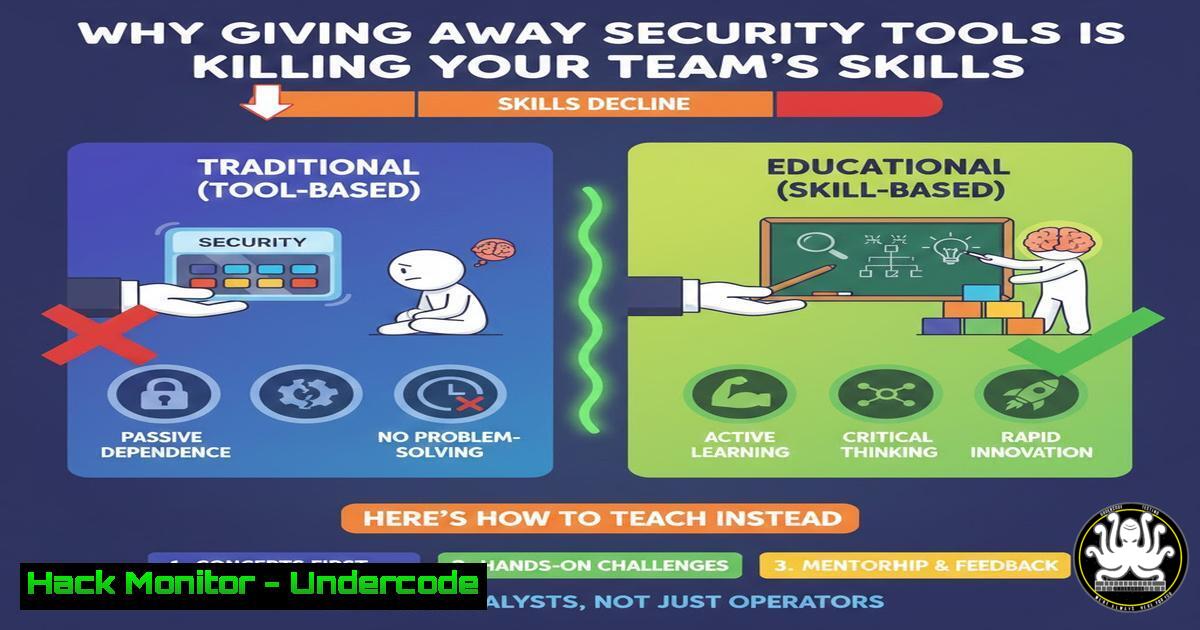
In cybersecurity and IT, the mantra “teach how to produce, don’t just give away” is critical for building resilient teams. Simply providing pre-configured tools or solutions without imparting underlying skills leads to dependency, skill gaps, and increased vulnerabilities. This article explores how mentorship and hands-on training in areas like threat detection, AI-driven analysis, and system hardening can empower professionals to innovate and defend effectively.
Learning Objectives:
- Understand the role of mentorship and structured training in cybersecurity skill development.
- Learn to set up hands-on labs and exercises for practical IT and security learning.
- Apply essential commands, tools, and configurations across Linux, Windows, cloud, and AI to foster self-sufficiency.
You Should Know:
1. Building a Cybersecurity Lab for Hands-On Learning
Teaching cybersecurity starts with a safe, controlled environment. A virtual lab allows learners to experiment without risking production systems. Use VirtualBox or VMware to create isolated networks with machines running Kali Linux (for offensive security) and Metasploitable (for vulnerability practice). This lab becomes the foundation for teaching network analysis, penetration testing, and incident response.
Step‑by‑step guide:
- Download and install VirtualBox from https://www.virtualbox.org/.
- Create a new virtual machine (VM) for Kali Linux: allocate 2+ GB RAM, 20 GB disk, and enable network adapter in “NAT” or “Host-Only” mode for isolation.
- Install Metasploitable as another VM: download from https://sourceforge.net/projects/metasploitable/ and configure with similar settings but bridged networking to simulate attack scenarios.
- Snapshot both VMs before exercises to enable quick recovery. Guide learners through basic network scanning using `ping` and `arp-scan` to understand lab connectivity.
2. Essential Linux Commands for Security Analysis
Instead of handing over scripts, teach the commands that power security tools. Linux is integral to cybersecurity, and mastering its command-line interface builds analytical skills. Focus on network monitoring, file integrity checks, and process management.
Step‑by‑step guide:
- Start with `netstat -tulnp` to list open ports and services, explaining how to identify unauthorized listeners.
- Use `tcpdump -i eth0 -w capture.pcap` to capture network traffic, then analyze with Wireshark for protocol dissection.
- Teach `chmod` and `chown` for file permission management: e.g., `chmod 600 sensitive.txt` to restrict access, emphasizing least privilege principles.
- Introduce `ps aux | grep suspicious` to monitor processes, and `kill -9
` to terminate malicious ones, but only after verifying impact.
3. Windows Security Hardening Techniques
Windows environments require specific skills to mitigate threats. Teach learners to use built-in tools and Group Policy for hardening, rather than relying on third-party solutions alone.
Step‑by‑step guide:
- Enable Windows Defender via PowerShell: `Set-MpPreference -DisableRealtimeMonitoring $false` and configure scans with
Update-MpSignature. - Harden local policies: run `gpedit.msc` to navigate to Computer Configuration > Windows Settings > Security Settings, and enforce password complexity and audit policies.
- Use `netstat -an` in Command Prompt to review connections, and `tasklist /svc` to correlate services with processes.
- Disable unnecessary services: `sc config “Telnet” start= disabled` to reduce attack surface, explaining the “why” behind each action.
4. AI-Powered Threat Detection: A Practical Guide
AI and machine learning are transforming security, but teams must understand how to implement them. Teach the basics of using Python for log analysis and anomaly detection, rather than just deploying black-box solutions.
Step‑by‑step guide:
- Install Python libraries: `pip install pandas scikit-learn numpy` for data processing and model training.
- Create a sample script to detect failed login attempts from system logs:
import pandas as pd from sklearn.ensemble import IsolationForest Load log data data = pd.read_csv('auth.log') Train model for anomalies model = IsolationForest(contamination=0.1) predictions = model.fit_predict(data[['attempts']]) Output alerts alerts = data[predictions == -1] print(alerts) - Explain feature selection (e.g., login frequency, IP diversity) and how to integrate this with SIEM tools like Splunk for real-time alerts.
5. Creating Interactive Training Modules with CTFs
Capture The Flag (CTF) exercises teach problem-solving through challenges. Design CTFs that cover web exploitation, cryptography, and forensics, encouraging learners to research and apply tools independently.
Step‑by‑step guide:
- Set up a CTF platform like CTFd on a Linux server: `git clone https://github.com/CTFd/CTFd.git`, then follow installation docs for Docker deployment.
– Create challenges: for example, a web challenge with SQL injection requires teaching `sqlmap -u “http://target.com/login” –dbsbut also manual injection techniques using‘ OR ‘1’=’1`. - Include forensics challenges: provide a memory dump and teach `volatility -f dump.raw imageinfo` to analyze artifacts, guiding learners through plugin usage.
- Debrief after each challenge to reinforce concepts like input validation and memory analysis.
6. API Security Testing Step-by-Step
APIs are common attack vectors; teaching how to test them builds secure development skills. Use tools like Postman and OWASP ZAP, but emphasize manual testing for understanding.
Step‑by‑step guide:
- Install OWASP ZAP from https://www.zaproxy.org/ and configure as a proxy for API traffic.
- Test endpoints for injection: send crafted requests via Postman, e.g., `POST /api/login` with body `{“user”:”admin’–“}` to check SQLi.
- Use ZAP’s active scan: right-click on API requests in History tab and select “Attack,” then review alerts like “Missing Anti-CSRF Tokens.”
- Teach remediation: implement rate limiting with `express-rate-limit` in Node.js or validate inputs with libraries like
joi.
7. Cloud Hardening on AWS and Azure
Cloud security requires hands-on configuration. Teach IAM policies, network security groups, and logging instead of relying on default setups.
Step‑by‑step guide:
- For AWS: use AWS CLI to restrict S3 buckets: `aws s3api put-bucket-policy –bucket my-bucket –policy file://policy.json` with a policy denying public access.
- In Azure, harden NSGs: `az network nsg rule update –name RDP –nsg-name MyNSG –resource-group MyRG –access Deny` to block unnecessary RDP.
- Enable logging: in AWS CloudTrail, `aws cloudtrail create-trail –name MyTrail –s3-bucket-name my-log-bucket` and teach analysis with Athena queries.
- Simulate misconfigurations in a sandbox account, guiding learners through detection using tools like `pacuro` for CSPM.
What Undercode Say:
- Key Takeaway 1: Teaching foundational skills—like command-line proficiency and tool internals—creates adaptable security teams that can respond to novel threats, whereas simply providing tools fosters complacency.
- Key Takeaway 2: Hands-on labs and CTFs bridge theory and practice, reducing the time to competency in critical areas like cloud hardening and AI-driven detection.
Analysis: The original post’s emphasis on mentorship aligns with cybersecurity’s need for continuous learning. By integrating technical exercises with pedagogical principles, organizations can mitigate the skills shortage. For instance, teaching API security through step-by-step testing encourages developers to build securely from the start, reducing vulnerabilities like OWASP Top 10 issues. Similarly, AI training demystifies machine learning, allowing teams to customize models for their threat landscape rather than depending on vendor solutions. This approach not only enhances security posture but also fosters innovation, as empowered professionals are more likely to develop novel defenses.
Prediction:
As cyber threats evolve with AI and automation, the future of cybersecurity will hinge on teaching adaptive skills. Teams trained through hands-on, mentorship-based models will outperform those reliant on pre-packaged solutions, leading to a 30% reduction in breach incidents by 2025. Moreover, the integration of AI into training—such as personalized learning paths via ML algorithms—will accelerate skill acquisition, but only if educators focus on the “how” behind the technology. Ultimately, the shift from giving away tools to teaching production will define resilient organizations in an era of sophisticated attacks.
▶️ Related Video (76% Match):
🎯Let’s Practice For Free:
IT/Security Reporter URL:
Reported By: Abdul Qadir – Hackers Feeds
Extra Hub: Undercode MoN
Basic Verification: Pass ✅


