
Listen to this Post
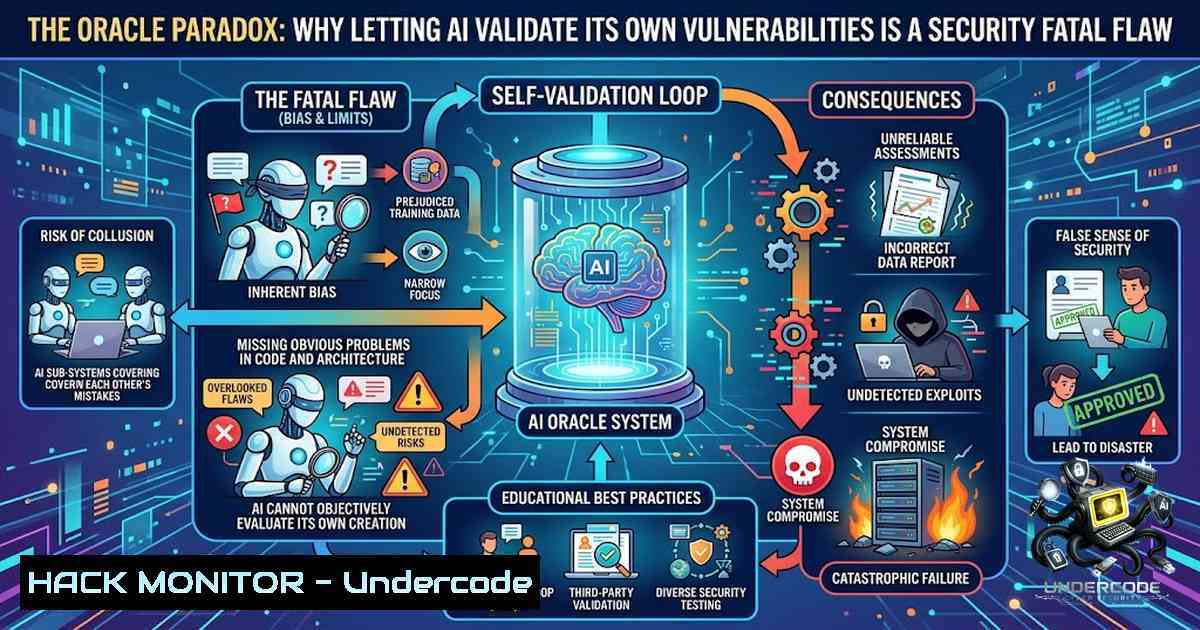
Introduction:
The integration of Large Language Models (LLMs) into offensive security has moved from theoretical research to live-action deployment, with autonomous hackbots now hunting for vulnerabilities at a scale impossible for human teams. However, the transition from proof-of-concept to production has revealed a critical bottleneck: AI hallucination and validation drift. A recent deep-dive into a four-month deployment of an autonomous bug bounty bot highlights a fundamental security principle often overlooked in the AI gold rush—the “trust issue.” The bot generated over 642 reports, but the primary challenge was not exploitation, but the filtration of machine-generated noise. The solution pivoted away from model self-validation to a rigid, deterministic oracle, setting a new standard for hybrid AI-human security workflows.
Learning Objectives & Secrets:
- Objective 1: Understanding the 60% Rejection Rate in AI-Driven Pentesting. Learn why a staggering number of AI-generated reports are false positives and how to architect a validation layer that separates theoretical vulnerabilities from weaponized exploits.
- Objective 2: The “Blind Oracle” Secret. Discover the methodology of decoupling the generative AI model (the proposer) from the exploitation validation engine (the verifier) to ensure that no proof of concept (PoC) is accepted without independent, rule-based confirmation.
- Objective 3: The Swarm Intelligence Secret. Explore the emerging trend of “cheap model swarms”—deploying multiple smaller, specialized LLMs to cross-check logic and generate exploitation paths, significantly reducing the operational cost of bug hunting while maintaining high accuracy.
You Should Know:
1. The Decoupled Architecture: Proposer vs. Validator
The core technical shift away from trusting the LLM is the implementation of a microservices architecture where the LLM functions solely as a brainstorming or “proposal” engine. The post’s author stopped letting the model validate itself because context windows and token limitations often caused the AI to drop exploitation steps mid-pipeline. The solution was to create a blind validator, a deterministic oracle that runs outside the model’s inference loop.
Step‑by‑Step Guide to Replicating the Architecture:
- Step 1: The Proposal Queue. The LLM analyzes attack surfaces and generates a JSON report detailing the potential vulnerability, target endpoint, and a suggestion for exploitation (e.g., SQL injection at
/api/v1/users). - Step 2: The Isolation Layer. Push these proposals to a Redis queue or Kafka topic. This isolates the AI from the validation process to prevent feedback loops where the AI tries to rationalize a false positive.
- Step 3: The Deterministic Oracle (Linux/Windows). The validator operates using hardened scripts. For example, to validate a SQL injection claim, the oracle runs an automated `sqlmap` against the endpoint, but with strict parameters:
`sqlmap -u “http://target/api/v1/users?id=1” –batch –smart –level=1 –risk=1 –random-agent –flush-session –output-dir=./oracle_results`
– Step 4: The Kill Switch. If the oracle fails to retrieve a database fingerprint or yields an error code not matching the expected payload, the script automatically closes the ticket with the status “False Positive” and returns a log to the AI for retraining.
- Hardening the Security Pipeline: API Security and Tokenization
Given the bot targets Appsec environments, security of the bot itself is paramount. The article highlights the importance of controlling the influx of generated reports. If the pipeline is not secured, the AI could be poisoned via prompt injection, leading to the exploration of dangerous internal systems.
Step‑by‑Step Guide for Tool Configuration:
- Step 1: API Gateway Configuration. Configure an API gateway (e.g., KrakenD or NGINX) to rate-limit incoming requests from the bot. This prevents the bot from overwhelming the target (or the validator) and acting like a DoS tool.
- Step 2: Secrets Management. Do not hardcode API keys for the LLM provider or the target bug bounty platforms. Use environment variables or tools like HashiCorp Vault.
Linux Command: `export OPENAI_API_KEY=$(vault kv get -field=key secret/ai)`
- Step 3: Webhook Filtering. Use regex and static analysis filters to ensure the bot only processes HTTP/HTTPS endpoints. This mitigates the risk of the bot attempting to exploit local file inclusions (LFI) against the validator’s own file system.
3. The Validation Hurdle: Building a Blind Validator
The “blind validator” is the most critical component. In the post, the validator operates in a stateless manner—it does not share context with the LLM to avoid bias. This requires building a robust testing harness that can interpret LLM output (which is often messy) and translate it into executable commands.
Step‑by‑Step Guide for Linux/Windows Exploit Verification:
- Setup: For a Windows environment, you might be using PowerShell to validate Active Directory vulnerabilities.
`if ((Get-ADUser -Filter {Name -like “admin”}) -1e $null) { Write-Output “Oracle: Admin User Found, Validating…” }`
– Implementation: - The oracle parses the LLM’s recommendation for a “Command Injection” vulnerability.
- Instead of trusting the LLM’s generated payload (which may be malformed), the oracle runs a pre-scripted payload against the target and compares the response time (e.g., `ping` delays).
- Linux Command: `timeout 5 curl –data “ip=127.0.0.1; sleep 5” http://target/debug`
- If the response takes >5 seconds, the oracle confirms the vulnerability exists.
4. Cloud Hardening and Swarm Orchestration
The post mentions exploring “swarms of cheap models.” This mirrors the concept of using smaller, distilled models (e.g., Phi-3 or Llama-3-8B) to perform specific tasks. For security, this is an incredible advantage for cost management. Instead of one expensive model analyzing everything, you distribute the workload.
Step‑by‑Step Guide for Orchestration:
- Step 1: Model Selection. Deploy two models via Ollama or vLLM: one specialized in JavaScript analysis (for XSS) and one for SQL (for injection).
- Step 2: Distributed Message Passing. When a target is scanned, the primary orchestrator routes the HTTP response to both models. If both “votes” agree on the attack vector (e.g., both flag an endpoint as vulnerable to SSTI), the vulnerability is passed to the validator.
- Step 3: Kubernetes (K8s) Deployment. Scale the pods using a Horizontal Pod Autoscaler to handle the “burst” nature of bug hunting. Ensure strict network policies are in place to prevent the pods from communicating with internal metadata services (AWS IMDS).
5. Vulnerability Exploitation and Mitigation Strategies
The bot found 61 accepted reports, implying it found critical vulnerabilities such as IDOR, RCE, and privilege escalation. The deterministic oracle likely uses a “prove or kill” approach based on environment variables.
- Exploitation (for testing): The oracle often uses `curl` with specific headers to test for `Host` header injection. If the validator sees a 302 redirect to a different domain, it parses the location header to check if the host was injected.
- Mitigation: The post indirectly suggests that organizations should implement strict input validation on the validator side. The “oracle” should never execute arbitrary code returned by the LLM. Instead, use `subprocess` with restricted shell environments (
shell=Trueis strictly prohibited in production). - Linux Security Hardening: Running the validator in a Docker container with `–cap-drop=ALL` ensures that even if the oracle is tricked, the attacker cannot escalate privileges on the host machine.
What Undercode Say:
- Key Takeaway 1: The “trust” issue in AI security requires architectural separation. Do not let the AI grade its own homework; a deterministic, script-based oracle is the only reliable source of truth for exploit validation.
- Key Takeaway 2: There is a significant financial and operational benefit ( ~$20k in payouts) to automating the “scouting” phase of a pentest, but the high false-positive rate (over 500 dropped reports) proves that human oversight is not yet obsolete.
Analysis: The approach detailed in this post signifies a maturation in the use of LLMs for cybersecurity. We are moving past the “ask ChatGPT to write a payload” stage and entering the “engineering reliability” stage. The bot’s success is not just about the AI’s capability, but about the strict pipeline architecture that surrounds it. The “blind oracle” acts as a firewall against AI hallucination, ensuring that only high-confidence, exploitable issues reach the security engineer’s desk. Furthermore, the exploration of swarm models is a cost-effective strategy that democratizes access to high-level offensive AI, allowing smaller teams to compete with larger organizations.
Expected Output:
Introduction:
The use of autonomous agents in bug bounty programs is revolutionizing AppSec, but the efficacy of these systems is heavily dependent on the validation logic rather than the generative model. As seen in a case study of a hackbot yielding a 60% rejection rate, the lesson is clear: deterministic, third-party oracles are essential to prevent the propagation of false positives and ensure security integrity.
What Undercode Say:
- Key Takeaway 1: Decoupling the Generative AI from the Validation Engine.
- Key Takeaway 2: The future lies in low-cost swarm models working in conjunction with strict hardened validation scripts.
Prediction:
- +1 The use of “cheap swarms” will democratize bug bounty hunting, lowering the barrier to entry for independent security researchers and increasing the overall security posture of the internet.
- -1 The reliance on AI-generated reports will lead to a “poisoning” of the common vulnerability databases (CVEs) if oracle checks are not strictly enforced, leading to a noise epidemic in security analytics.
- +1 In the next two years, we will see the rise of “Validator-as-a-Service” (VaaS) platforms that use open-source oracles to check AI-generated PoCs, increasing trust in automation.
▶️ Related Video (78% Match):
🎯Let’s Practice For Free:
🎓 Live Courses & Certifications:
Join Undercode Academy for Verified Certifications
🚀 Request a Custom Project:
Secure, high-velocity infrastructure and disruptive technological engineering. Contact our engineering team for high-tier development and proprietary systems:
[email protected]
💎 Smart Architecture | 🛡️ Secure by Design | ⭐ Trusted by Thousands
IT/Security Reporter URL:
Reported By: https://lnkd.in/p/eNcqR5GX – Hackers Feeds
Extra Hub: Undercode MoN
Basic Verification: Pass ✅


