Listen to this Post
Introduction:
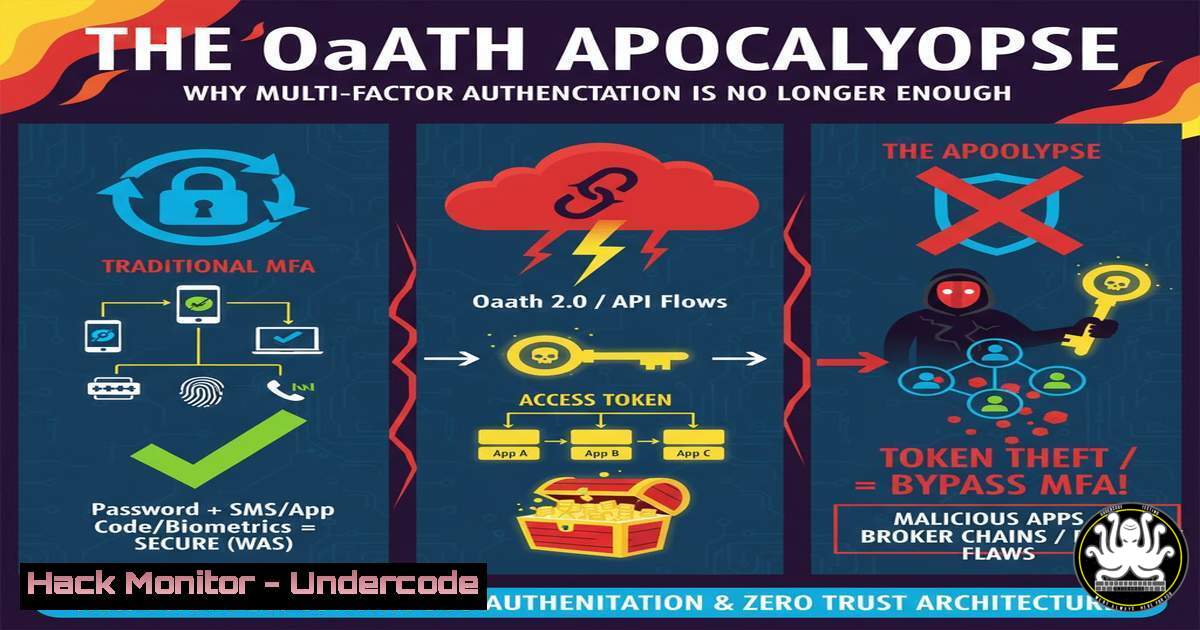
A new wave of sophisticated attacks is bypassing traditional multi-factor authentication (MFA) protections by exploiting OAuth application consent grants. Cybercriminals are leveraging these authorized third-party applications to maintain persistent access to cloud environments, even after password resets and MFA changes. This evolution in attack methodology demands a fundamental shift in how organizations approach identity and access governance.
Learning Objectives:
- Understand OAuth-based attack vectors and persistence mechanisms
- Implement comprehensive OAuth application auditing and revocation procedures
- Develop organizational policies for OAuth governance and user awareness
You Should Know:
1. Auditing Azure AD OAuth Applications
 PowerShell: Get all enterprise applications with their permissions
Get-AzureADApplication -All $true | ForEach-Object {
$app = $_
$owners = Get-AzureADApplicationOwner -ObjectId $app.ObjectId
$perms = Get-AzureADApplicationOAuth2PermissionGrant -ObjectId $app.ObjectId

[bash]@{
DisplayName = $app.DisplayName
Publisher = $app.PublisherDomain
Owners = ($owners.DisplayName -join ", ")
PermissionGrants = $perms.Count
AppId = $app.AppId
}
}
This PowerShell script enumerates all enterprise applications in Azure AD, retrieving critical information including application owners, publisher domains, and permission grants. Regular execution helps identify suspicious applications with excessive permissions or unauthorized publisher domains. The output should be reviewed for applications with unknown owners, unexpected permission levels, or suspicious publisher domains that could indicate malicious OAuth consent grants.
2. Microsoft Graph API for OAuth Audit
 Bash: Query Microsoft Graph API for OAuth applications
curl -H "Authorization: Bearer $token" \
"https://graph.microsoft.com/v1.0/oauth2PermissionGrants" \
| jq '.value[] | select(.clientId == "application-guid") |
{resourceId: .resourceId, scope: .scope, startTime: .startTime}'
This command uses Microsoft Graph API to query OAuth2 permission grants, allowing security teams to identify which applications have access to specific resources and what scopes they’ve been granted. The jq filter helps pinpoint specific applications by their client ID, revealing the exact permissions and resource access. This is crucial for detecting over-privileged applications that could be exploited by attackers.
3. Office 365 OAuth Application Investigation
 Office 365 PowerShell: Investigate application consent
Get-MsolServicePrincipal -AppPrincipalId $appId |
Get-MsolServicePrincipalPassword |
fl DisplayName, KeyId, StartDate, EndDate

Check for suspicious application adds
Search-UnifiedAuditLog -StartDate (Get-Date).AddDays(-7) -EndDate (Get-Date)
-Operations New-InboxRule, Set-Mailbox, New-ApplicationAccessPolicy
-ResultSize 5000
These Office 365 PowerShell commands help investigate service principal configurations and audit logs for suspicious application-related activities. The first command retrieves password credentials for service principals, while the second searches for recent administrative actions that might indicate OAuth abuse. Monitoring these logs helps detect when attackers add malicious applications or modify access policies to maintain persistence.
4. AWS OAuth Identity Center Audit
 AWS CLI: Audit AWS SSO and OAuth applications
aws sso-admin list-instances
aws sso-admin list-permission-sets --instance-arn $instance_arn
aws sso-admin list-accounts-for-provisioned-permission-set
--instance-arn $instance_arn --permission-set-arn $permission_set_arn

Check for anomalous permission grants
aws cloudtrail lookup-events
--lookup-attributes AttributeKey=EventName,AttributeValue=AssignUserCertificate
--start-time 2024-01-01T00:00:00Z
These AWS CLI commands audit AWS Single Sign-On instances, permission sets, and CloudTrail logs for suspicious OAuth-related activities. The commands help identify over-provisioned permission sets and monitor for anomalous certificate assignments that could indicate OAuth token abuse. Regular auditing ensures that OAuth applications in AWS environments maintain least-privilege access principles.
5. Google Workspace OAuth Application Security
 GAM Tool: Audit Google OAuth apps
gam all users show oauthtokens
gam user [email protected] show oauthtokens
gam delete oauthtokens [email protected] clientid <malicious_client_id>

Bulk revocation of suspicious OAuth tokens
gam all users delete oauthtokens clientid <suspicious_client_id>
These Google Workspace Administration (GAM) commands allow administrators to audit and manage OAuth tokens across their organization. The first command lists all OAuth tokens for all users, while subsequent commands enable targeted investigation and revocation of tokens from potentially malicious applications. Bulk revocation capabilities are essential for responding quickly to widespread OAuth compromise incidents.
6. OAuth Scope Validation and Monitoring
 Python: Validate OAuth token scopes
from flask import request, jsonify
import jwt

def validate_oauth_scopes(required_scopes):
token = request.headers.get('Authorization').split()[bash]
decoded = jwt.decode(token, verify=False)  Verify in production!
token_scopes = decoded.get('scope', '').split()

missing_scopes = set(required_scopes) - set(token_scopes)
if missing_scopes:
return jsonify({'error': f'Missing scopes: {missing_scopes}'}), 403

return None

Monitor for scope escalation attempts
@app.route('/api/sensitive-data')
def sensitive_data():
scope_check = validate_oauth_scopes(['data:read', 'user:profile'])
if scope_check:
return scope_check
 Log access attempt for monitoring
app.logger.warning(f"Sensitive data accessed with scopes: {decoded.get('scope')}")
return jsonify({'data': 'sensitive_information'})
This Python Flask application demonstrates proper OAuth scope validation and monitoring for potential scope escalation attacks. The code validates that incoming tokens possess the required scopes before granting access to sensitive endpoints and logs access attempts for security monitoring. Implementing strict scope validation prevents OAuth applications from accessing resources beyond their authorized permissions.
7. OAuth Token Security Hardening
 Kubernetes: Configure OAuth sidecar proxy
apiVersion: apps/v1
kind: Deployment
metadata:
name: app-with-oauth-proxy
spec:
template:
spec:
containers:
- name: oauth-proxy
image: openshift/oauth-proxy
args:
- --provider=azure
- --client-id=$(OAUTH_CLIENT_ID)
- --client-secret=$(OAUTH_CLIENT_SECRET)
- --cookie-secret=$(OAUTH_COOKIE_SECRET)
- --email-domain=
- --upstream=http://localhost:8080
ports:
- containerPort: 4180
env:
- name: OAUTH_CLIENT_ID
valueFrom:
secretKeyRef:
name: oauth-secrets
key: client-id
This Kubernetes deployment configuration implements an OAuth proxy sidecar container that handles authentication separately from the main application. This pattern centralizes OAuth security controls, ensures proper token validation, and prevents direct exposure of the application to OAuth tokens. The proxy manages token refresh, validation, and can be configured to log all authentication events for security monitoring.
What Undercode Say:
- OAuth governance must become a core component of organizational security programs, not an afterthought
- User education about OAuth consent screens is as critical as phishing awareness training
- Regular automated auditing of OAuth applications can prevent long-term persistence attacks
The shift from credential theft to OAuth application abuse represents a fundamental evolution in attack methodology that requires equally fundamental changes in defense strategies. Organizations that continue to rely solely on MFA without implementing comprehensive OAuth governance are effectively leaving their back doors unlocked while reinforcing the front. The commentary on the original post highlights the tension between security awareness and practical implementation—while some argue that discussing MFA limitations undermines adoption efforts, the reality is that sophisticated attackers have already moved beyond these protections. The solution isn’t to abandon MFA but to layer it with OAuth monitoring, least-privilege principles, and continuous access reviews. Security teams must balance communicating risks without creating implementation fatigue among users and stakeholders.
Prediction:
Within two years, OAuth-based attacks will surpass traditional credential theft as the primary method for cloud environment compromise, driving regulatory changes that mandate continuous OAuth monitoring and explicit consent verification. Organizations that fail to implement OAuth governance frameworks will experience a 300% increase in cloud security incidents, with average dwell times extending beyond 200 days due to the persistent nature of OAuth access tokens. The cybersecurity insurance industry will begin requiring detailed OAuth audit capabilities as a prerequisite for coverage, forcing widespread adoption of OAuth security controls across enterprises of all sizes.
🎯Let’s Practice For Free:
IT/Security Reporter URL:
Reported By: Activity 7386802770131206145 – Hackers Feeds
Extra Hub: Undercode MoN
Basic Verification: Pass ✅


