
Listen to this Post
Introduction:
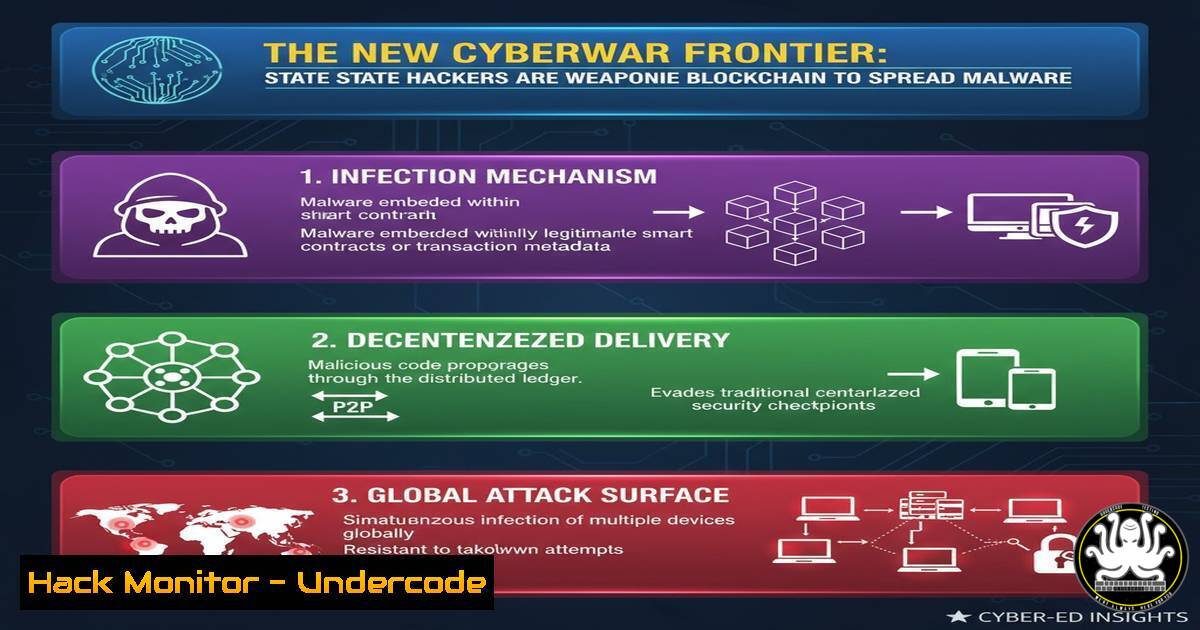
A groundbreaking discovery by the Google Threat Intelligence Group (GTIG) has revealed a paradigm shift in cyber-attack logistics. State-sponsored threat actors, specifically North Korean hackers, are now leveraging the immutable and decentralized nature of blockchain to host and distribute malicious payloads. This technique, which involves embedding malware within smart contracts on networks like Ethereum and Binance Smart Chain, renders traditional takedown methods nearly obsolete and marks a significant escalation in the threat landscape.
Learning Objectives:
- Understand the mechanics of how malware can be stored and executed from a blockchain smart contract.
- Learn defensive strategies and commands to detect and analyze suspicious blockchain transactions.
- Develop skills to monitor and harden systems against this new class of decentralized threats.
You Should Know:
1. Interacting with a Suspect Smart Contract
Verified Command / Code Snippet:
`cast call 0x742d35Cc6634C0532925a3b8Dc9F43a3b9Af96C4 “bytecode” –rpc-url https://mainnet.infura.io/v3/your-project-id`
Step-by-step guide explaining what this does and how to use it.
This command uses the `cast` tool from the Foundry Ethereum development toolkit to retrieve the bytecode of a deployed smart contract. Attackers hide malicious shellcode within this bytecode. To use it, first install Foundry. Then, replace the contract address with the suspect one. The RPC URL provides a connection to the Ethereum network; you can get a free one from services like Infura or Alchemy. Analyzing the returned bytecode can reveal encoded payloads, though it often requires further disassembly and analysis in a tool like Ghidra.
2. Scanning for Suspicious Blockchain RPC Requests
Verified Command / Code Snippet:
`sudo tcpdump -i any -A ‘tcp port 8545 and host not 127.0.0.1’`
Step-by-step guide explaining what this does and how to use it.
Many malware families that use this technique will communicate with a blockchain node via its RPC port (typically 8545 for local Ethereum clients). This `tcpdump` command monitors all network interfaces for traffic on this port that is not originating from the local machine. Run this command on a server suspected of running a compromised blockchain node. The `-A` flag prints the packet contents in ASCII, which might reveal commands being sent to the node to interact with the malicious smart contract, helping you identify the source of the infection.
- Extracting and Analyzing Smart Contract Bytecode with Python
Verified Command / Code Snippet:
from web3 import Web3
w3 = Web3(Web3.HTTPProvider('https://mainnet.infura.io/v3/YOUR_PROJECT_ID'))
contract_address = Web3.to_checksum_address('0xContractAddressHere')
bytecode = w3.eth.get_code(contract_address).hex()
print(bytecode[:500])  Print first 500 chars
with open("contract_bytecode.bin", "w") as file:
file.write(bytecode)
Step-by-step guide explaining what this does and how to use it.
This Python script uses the Web3.py library to connect to the Ethereum blockchain and download the full bytecode of a smart contract. First, install the library with pip install web3. Replace `YOUR_PROJECT_ID` with your Infura key and the contract address with the target. The script fetches the bytecode and saves it to a file. This file can then be analyzed using reverse engineering tools or scanned with antivirus signatures to detect known shellcode patterns embedded within the contract data.
4. Hardening Your Ethereum Node Configuration
Verified Command / Code Snippet:
`geth –http –http.addr 127.0.0.1 –http.api web3,eth,net –http.corsdomain=”” –rpc.enabledeprecatedpersonal=false`
Step-by-step guide explaining what this does and how to use it.
A common attack vector is exploiting poorly configured blockchain nodes. This command starts a Go-Ethereum (Geth) node with a hardened RPC configuration. `–http.addr 127.0.0.1` binds the HTTP-RPC server to localhost only, preventing external access. `–http.api` restricts the accessible APIs to a minimal set. `–http.corsdomain=””` disables Cross-Origin Resource Sharing, and `–rpc.enabledeprecatedpersonal=false` disables the vulnerable personal API. Always run blockchain nodes on isolated networks or with strict firewall rules.
5. Detecting Blockchain-Based C2 with YARA
Verified Command / Code Snippet:
rule Blockchain_C2_Indicator {
meta:
description = "Detects potential blockchain C2 communication"
author = "YourName"
strings:
$eth_rpc = "eth_call" nocase
$blockchain_domain = /.infura.io|.alchemyapi.com/ nocase
$contract_interaction = "data" wide ascii
condition:
any of them and filesize < 100KB
}
Step-by-step guide explaining what this does and how to use it.
YARA is a pattern-matching tool used by malware researchers. This rule scans files or memory for indicators of blockchain-based command and control (C2). It looks for strings like “eth_call” (a common JSON-RPC method), domains of popular RPC providers, and the “data” field used to call smart contract functions. To use it, save the rule to a `.yar` file and run `yara -r rule.yar /path/to/scan` on a suspicious directory. A hit suggests a process may be communicating with a blockchain for C2 purposes.
- Windows Firewall Rule to Block External RPC Access
Verified Command / Code Snippet:
`New-NetFirewallRule -DisplayName “Block External Blockchain RPC” -Direction Inbound -Protocol TCP -LocalPort 8545,8546,8547 -Action Block -RemoteAddress Any`
Step-by-step guide explaining what this does and how to use it.
This PowerShell command creates a new Windows Firewall rule to block all inbound TCP connections on ports commonly used for Ethereum RPC (8545-8547). This is crucial for preventing unauthorized external access to a locally running blockchain node, which could be exploited to trigger the malicious smart contract. Run this command in an elevated (Administrator) PowerShell window. This is a defensive measure for systems where a node must run but should not be exposed to the network.
7. Querying Transaction Data from a Contract
Verified Command / Code Snippet:
`cast logs 0xMaliciousContractAddress –from-block 15000000 –to-block latest –rpc-url YOUR_RPC_URL | jq ‘.’`
Step-by-step guide explaining what this does and how to use it.
Malicious actors can use smart contract events to send commands or updates. This `cast` command retrieves all event logs emitted by a specific contract address within a block range. The `jq` tool is used to format the JSON output for readability. By analyzing these logs, investigators can uncover patterns, such as frequent updates to a specific storage variable within the contract, which might indicate the malware is checking in for new payloads or instructions from its operators.
What Undercode Say:
- Persistence is Redefined. The decentralized and immutable nature of blockchain grants malware a level of persistence previously unattainable. You cannot “sinkhole” a domain or seize a server that exists on thousands of nodes globally.
- The Defense Must Evolve. Traditional network security models that focus on blocking IPs and domains are now insufficient. Defenders must now incorporate blockchain analytics and host-based detection for RPC communications into their security posture.
This technique represents a fundamental shift in the attacker’s playbook. By moving infrastructure to the blockchain, state actors are investing in long-term, resilient attack platforms. The barrier to entry is non-trivial, requiring smart contract development knowledge, but the payoff for a nation-state is immense. This isn’t just a new way to host a payload; it’s the creation of an unstoppable, global, and persistent command-and-control network. Defenders must immediately begin treating outbound traffic to public blockchain RPC endpoints with the same suspicion as traffic to known malicious IP spaces.
Prediction:
The weaponization of blockchain for malware distribution will rapidly proliferate beyond state actors to sophisticated cybercrime groups within the next 18-24 months. We will see the emergence of “Blockchain-as-a-Service” (BaaS) for malware, where threat actors can rent time on pre-deployed malicious contracts. This will lower the technical barrier, leading to a surge in attacks. Consequently, the cybersecurity industry will be forced to develop a new class of security tools focused on decentralized threat intelligence and on-chain analysis, creating a new frontier in the endless battle between attackers and defenders.
🎯Let’s Practice For Free:
IT/Security Reporter URL:
Reported By: Christophe Emonet – Hackers Feeds
Extra Hub: Undercode MoN
Basic Verification: Pass ✅


