Listen to this Post
Introduction:
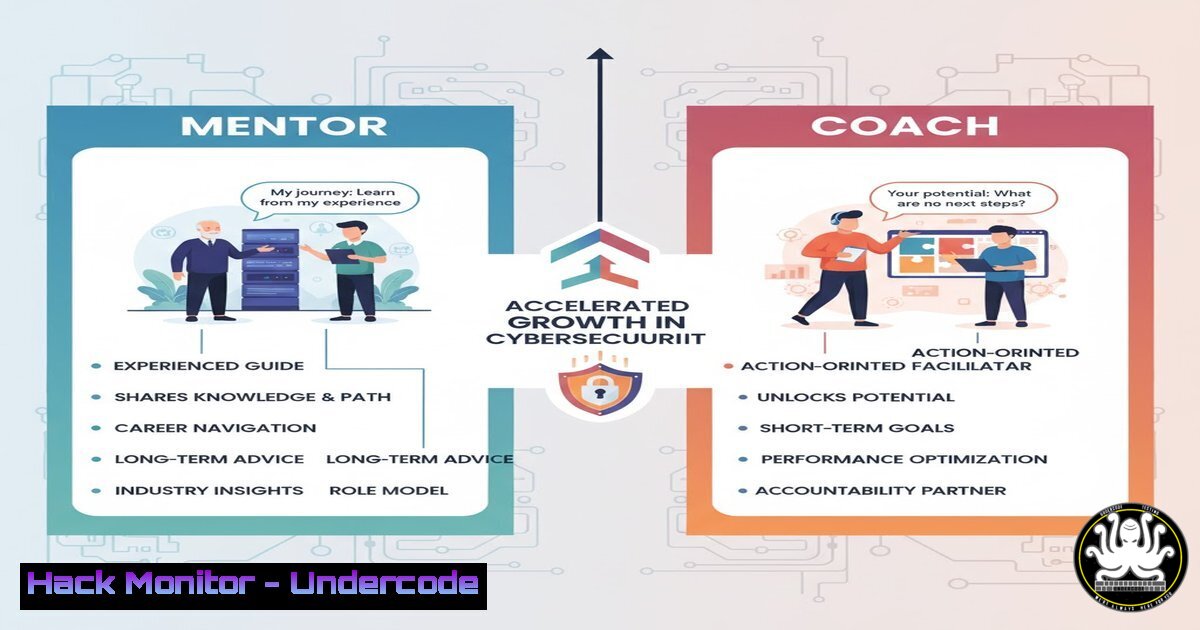
In the fast-paced world of cybersecurity, continuous development isn’t just an advantage—it’s a necessity for survival. The distinction between a mentor and a coach, often overlooked in technical fields, provides a critical framework for structuring your professional growth. Understanding and leveraging both relationships can mean the difference between merely keeping up with threats and leading the charge in defining new security paradigms.
Learning Objectives:
- Differentiate the distinct roles of mentors and coaches within a cybersecurity career context.
- Develop a strategic plan for seeking both mentorship and coaching to address different skill gaps.
- Apply a curated set of technical commands and methodologies to accelerate hands-on learning.
You Should Know:
1. Mentor-Led Infrastructure Hardening
A mentor with decades of system administration experience can provide battle-tested commands for securing core infrastructure. These are the “compass” commands that have proven reliable across countless environments.
 Audit SSH server configuration for common security missteps
sudo grep -E "(PermitRootLogin|PasswordAuthentication|Protocol)" /etc/ssh/sshd_config

Harden system by removing unnecessary network services
sudo ss -tulpn | grep -E ":(25|110|143)"  Check for mail services
sudo systemctl disable --now dovecot postfix  Disable mail services if unneeded

Implement advanced firewall rules based on threat intelligence
sudo iptables -A INPUT -p tcp --dport 22 -m state --state NEW -m recent --set --name SSH
sudo iptables -A INPUT -p tcp --dport 22 -m state --state NEW -m recent --update --seconds 60 --hitcount 4 --name SSH -j DROP
This sequence first audits a critical service (SSH), then identifies and disables unnecessary network daemons that expand the attack surface, and finally implements a rate-limiting rule against SSH brute-force attacks. A mentor would explain where these rules failed or succeeded in past incidents, providing crucial context beyond the syntax.
2. Coach-Facilitated Incident Response Mindset
While a mentor gives you their IR playbook, a coach helps you develop your own analytical framework during high-pressure situations. The following commands become tools for your own discovery process during a security incident.
 Network forensic analysis - discovering anomalous connections
netstat -tulpn | grep ESTABLISHED
ss -tulp4 state established
lsof -i -P | grep ESTABLISHED

Process analysis for malware identification
ps aux --sort=-%mem | head -20
sudo ls -la /proc/[0-9]/exe 2>/dev/null | grep deleted
A coach wouldn’t tell you which process is malicious but would ask: “What patterns indicate compromise?” “How does your analysis change if the attacker is using rootkits?” This develops your critical thinking beyond script execution.
3. Cloud Security Configuration Assessment
Mentors provide the roadmap for cloud security based on past breaches, while coaches help you develop your own methodology for new cloud services.
 AWS CLI security assessment commands
aws iam get-account-authorization-details --query 'UserDetailList[?AttachedPolicies==null]'
aws ec2 describe-security-groups --query 'SecurityGroups[?IpPermissions[?ToPort==<code>22</code> && IpRanges[?CidrIp==<code>0.0.0.0/0</code>]]]'
aws s3api list-buckets --query 'Buckets[].Name' --output text | xargs -I {} aws s3api get-bucket-acl --bucket {}
These commands identify IAM users without attached policies, security groups with SSH open to the world, and S3 bucket ACLs—common misconfigurations a mentor would highlight from past cloud breaches.
4. Vulnerability Scanning & Analysis
A mentor’s experience reveals which vulnerabilities pose actual risk in production, while a coach helps you develop prioritization frameworks.
 Nmap vulnerability discovery scanning
nmap -sV --script vuln 192.168.1.0/24
nmap -p 443 --script ssl-enum-ciphers example.com

Automated vulnerability assessment with OpenVAS
openvas-cli --target=192.168.1.100 --profile="Full and fast" --format=html > scan_report.html
The mentor provides the “what worked for me” context about which vulnerabilities actually led to breaches, while the coach asks: “How does this vulnerability align with our specific threat model?” and “What business impact would exploitation have?”
5. Windows Security Audit & Hardening
Enterprise environments require deep Windows knowledge that mentors provide through experience, while coaches help you adapt these techniques to your unique environment.
 Audit Windows security configuration
Get-LocalUser | Where-Object {$<em>.Enabled -eq "True"}
Get-Service | Where-Object {$</em>.StartType -eq "Automatic" -and $_.Status -eq "Stopped"}
Get-NetFirewallProfile | Format-Table Name, Enabled

Advanced Windows security auditing
auditpol /get /category:
Get-WinEvent -FilterHashtable @{LogName='Security'; ID=4624,4625} -MaxEvents 50
These PowerShell commands audit local users, services, firewall status, audit policies, and authentication events—areas where mentor experience is invaluable for interpreting results in context.
6. API Security Testing Methodology
Modern applications require API security knowledge where both mentor guidance and coaching mindset combine effectively.
 API security testing with curl and jq
curl -H "Authorization: Bearer $TOKEN" https://api.example.com/v1/users | jq '.'
curl -X POST https://api.example.com/v1/users -d '{"username":"admin","password":"password"}' -H "Content-Type: application/json"

Automated API security scanning
docker run -t apisec/api-security-checker:latest https://api.example.com/openapi.json
A mentor shares specific API vulnerabilities they’ve encountered, while a coach helps you develop comprehensive testing methodologies for new API technologies.
7. Container Security Hardening
Containerization requires both specific technical commands and adaptive thinking for securing dynamic environments.
 Docker security scanning and hardening
docker image ls | grep -v "REPOSITORY" | awk '{print $1 ":" $2}' | xargs -I {} docker scan {}
docker run --security-opt=no-new-privileges --read-only -it alpine:latest

Kubernetes security context hardening
kubectl get pods -o jsonpath='{range .items[]}{.metadata.name}{"\t"}{.spec.securityContext}{"\n"}{end}'
kubectl auth can-i create pods --all-namespaces
These commands scan container images for vulnerabilities, implement security controls at runtime, and audit Kubernetes permissions—areas where both mentor experience and coaching adaptability are crucial.
What Undercode Say:
- Technical mentorship provides the battle-tested commands and configurations that have proven effective across multiple security incidents, saving years of trial and error.
- Security coaching develops the analytical mindset and adaptive thinking required for novel attack vectors and evolving threat landscapes where no established playbooks exist.
The most successful cybersecurity professionals strategically leverage both relationships: they seek mentors for specific technical domains (cloud security, digital forensics, vulnerability management) where established patterns exist, while engaging coaches for developing strategic thinking, leadership capabilities, and innovative problem-solving approaches. This dual approach creates both depth of technical expertise and breadth of strategic perspective—the combination needed to advance from senior technical roles to security leadership positions. Organizations that institutionalize both mentorship and coaching programs develop more resilient security teams capable of addressing both known threats and emerging challenges.
Prediction:
The increasing complexity of cybersecurity threats will make the mentor-coach distinction increasingly critical for professional development. As AI automates routine security tasks, human professionals will need both the deep technical wisdom that mentors provide and the adaptive, strategic thinking that coaches cultivate. Organizations that formalize both mentorship programs (for knowledge transfer of known attack patterns and defenses) and coaching initiatives (for developing novel security strategies) will demonstrate significantly stronger security postures and faster incident response capabilities. The future of cybersecurity leadership belongs to those who can both leverage established wisdom and create new frameworks for unprecedented challenges.
🎯Let’s Practice For Free:
IT/Security Reporter URL:
Reported By: Dereklabansat Most – Hackers Feeds
Extra Hub: Undercode MoN
Basic Verification: Pass ✅


