Listen to this Post
Introduction:
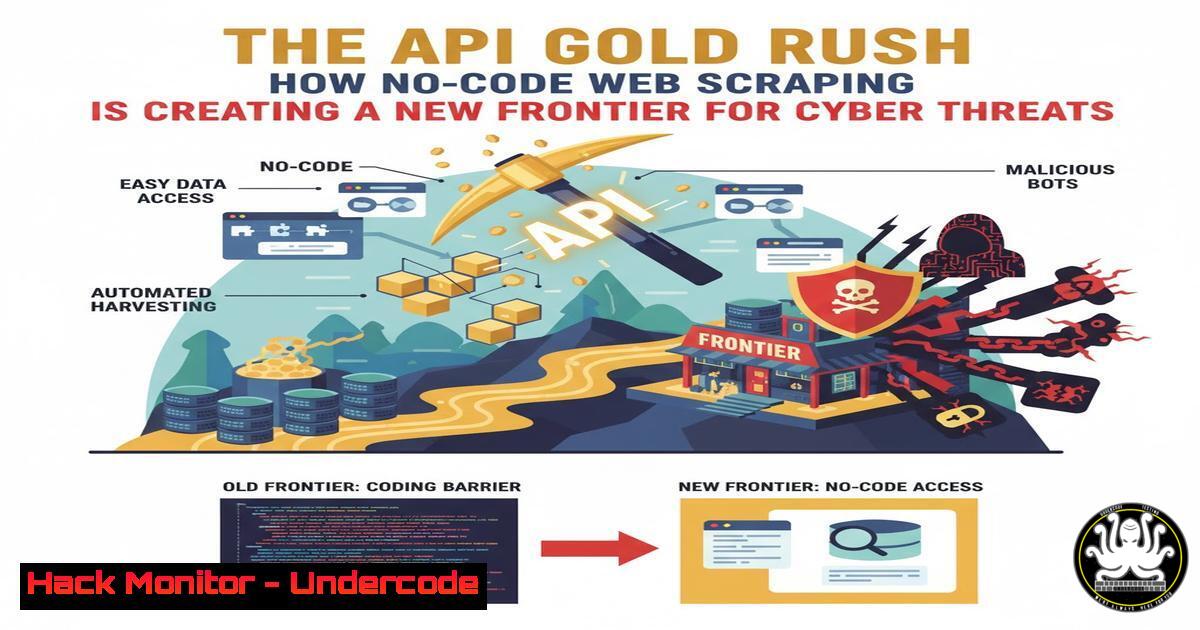
The democratization of powerful web scraping and data enrichment tools through no-code interfaces represents both a business revolution and a cybersecurity paradigm shift. As platforms like Olostep make automated web data extraction accessible to non-technical users, they simultaneously lower the barrier for entry for malicious actors seeking to weaponize public data collection for reconnaissance and social engineering attacks.
Learning Objectives:
- Understand the technical architecture behind modern web scraping APIs and their security implications
- Identify how automated data enrichment can be exploited for targeted social engineering and reconnaissance
- Implement defensive measures to protect organizational data from being harvested by these tools
You Should Know:
1. API Endpoint Reconnaissance and Rate Limiting
 Curl command to identify API endpoints and response headers
curl -I -X GET "https://api.olostep.com/v1/answers" \
-H "Authorization: Bearer $API_KEY" \
-H "Content-Type: application/json"

Python script to test rate limiting thresholds
import requests
import time

headers = {'Authorization': f'Bearer {API_KEY}'}
for i in range(100):
response = requests.get('https://api.olostep.com/v1/search', headers=headers)
print(f"Request {i}: Status {response.status_code}, Headers {response.headers}")
if response.status_code == 429:
print("Rate limit hit - analyze Retry-After header")
break
time.sleep(0.1)
This sequence helps security teams understand how attackers might probe scraping APIs to determine rate limits, endpoint structures, and authentication requirements. The first command reveals API capabilities through header inspection, while the Python script systematically tests throttling mechanisms that could be bypassed through distributed attacks.
2. Detecting Data Scraping Through Network Traffic Analysis
 Suricata rules for detecting aggressive scraping patterns
alert http any any -> any any (\
msg:"Potential Scraping Activity - High Request Rate"; \
flow:established,to_server; \
content:"/v1/search"; \
threshold:type threshold, track by_src, count 50, seconds 60; \
sid:1000001; rev:1;)

Zeek script for monitoring API consumption patterns
module ScrapingMonitor;

export {
redef enum Log::ID += { LOG };
global log_scraping: event(rec: {host: addr; requests: count; user_agent: string;});
}

event http_header(c: connection, is_orig: bool, name: string, value: string) {
if (name == "HOST" && /olostep|clay|exa/ in value) {
SumStats::observe("scraping_traffic", [$host=c$id$orig_h], [$str=value]);
}
}
These detection mechanisms allow security teams to identify automated scraping activities targeting their organizations. The Suricata rule triggers on high-frequency requests to common scraping endpoints, while the Zeek script provides granular visibility into which internal hosts are utilizing these services.
3. Protecting Sensitive Data from Web Crawlers
 robots.txt directives to block scraping bots
User-agent: Olostep-Bot
Disallow: /
User-agent: Claude-Web-Scraper
Disallow: /
User-agent:
Disallow: /private/
Disallow: /confidential/
Disallow: /employee-directory/

Apache .htaccess rules to block scraping services
RewriteEngine On
RewriteCond %{HTTP_USER_AGENT} Olostep|Clay|Exa [bash]
RewriteRule ^ - [F,L]

Cloudflare Worker to challenge suspicious scrapers
addEventListener('fetch', event => {
event.respondWith(handleRequest(event.request))
})

async function handleRequest(request) {
const UA = request.headers.get('User-Agent') || '';
if (UA.includes('Olostep') || UA.includes('automated')) {
return new Response('Access denied', {status: 403});
}
return fetch(request);
}
This multilayered approach prevents scraping tools from accessing sensitive organizational data. The robots.txt provides formal directives, while server-level blocks and edge computing challenges create technical barriers against determined scrapers.
4. Monitoring Data Enrichment Through External Threat Intelligence
 Python script to monitor data broker APIs for company information
import requests
import json

COMPANY_DOMAINS = ["yourcompany.com", "yourbrand.com"]
scraping_services = [
"https://api.olostep.com/v1/search",
"https://api.clay.com/v1/people",
"https://api.exa.ai/search"
]

def monitor_data_exposure():
for service in scraping_services:
for domain in COMPANY_DOMAINS:
payload = {"query": f"@{domain}", "limit": 10}
response = requests.post(service, json=payload)
if response.status_code == 200:
data = response.json()
if len(data.get('results', [])) > 0:
alert_security_team(service, domain, len(data['results']))
Proactive monitoring helps organizations understand what data scraping services have collected about them. This script systematically queries multiple enrichment APIs to detect exposed employee information, technical details, or confidential business intelligence.
5. Implementing Advanced Bot Detection with Machine Learning
 ML-based bot detection using request patterns
from sklearn.ensemble import IsolationForest
import numpy as np

Features: requests_per_minute, endpoint_variety, time_between_requests
training_data = np.array([
[2, 8, 15.2],  Human
[45, 2, 0.3],  Bot
[3, 7, 12.1],  Human
[60, 1, 0.1]  Bot
])

clf = IsolationForest(contamination=0.1)
clf.fit(training_data)

def detect_scraping_bot(request_pattern):
prediction = clf.predict([bash])
return prediction[bash] == -1  -1 indicates outlier/bot

Integration with WAF
def waf_decision_engine(request):
pattern = [request.rate, request.endpoint_count, request.interval]
if detect_scraping_bot(pattern):
return {"action": "block", "reason": "ML-detected scraping behavior"}
return {"action": "allow"}
Machine learning enhances traditional bot detection by analyzing behavioral patterns rather than static rules. This approach adapts to evolving scraping methodologies that might bypass signature-based detection.
6. Securing Internal Data Against External Enrichment
 DNS filtering to block data enrichment APIs
 /etc/hosts or DNS firewall entries
0.0.0.0 api.olostep.com
0.0.0.0 api.clay.com
0.0.0.0 api.exa.ai
0.0.0.0 .web-scraping-service.com

Windows Group Policy to block scraping tool executables
 GPO Computer Configuration -> Windows Settings -> Security Settings -> Application Control Policies
Get-CimInstance -Namespace root/Microsoft/Windows/CI -ClassName MSFT_HVCISettings |
Set-CimInstance -Property @{HVCIEnabled=1; HVCIStrictMode=1}

PowerShell script to detect data exfiltration attempts
Get-NetTCPConnection | Where-Object {
$<em>.RemoteAddress -like "" -and $</em>.State -eq "Established"
} | ForEach-Object {
$proc = Get-Process -PID $_.OwningProcess
if ($proc.ProcessName -like "python" -or $proc.ProcessName -like "curl") {
Write-Warning "Potential scraping activity: $($proc.ProcessName)"
}
}
These controls prevent internal workstations from becoming data sources for external enrichment services. DNS filtering blocks access at the network layer, while application control and process monitoring detect attempted circumventions.
7. Legal and Technical Countermeasures Against Malicious Scraping
 Honey token deployment to detect data theft
honey_tokens = {
"email": "[email protected]",
"api_key": "sk_live_fake_token_alert_security",
"employee_id": "99999-MONITOR"
}

Web application firewall custom rules
 AWS WAF or similar service
{
"Name": "BlockScrapingPatterns",
"Priority": 1,
"Action": "BLOCK",
"VisibilityConfig": {
"SampledRequestsEnabled": true,
"CloudWatchMetricsEnabled": true
},
"Statement": {
"ByteMatchStatement": {
"FieldToMatch": {"User-AgentHeader": {}},
"SearchString": "Olostep|scraper|bot",
"TextTransformations": [{"Type": "LOWERCASE", "Priority": 1}]
}
}
}

DMCA takedown request automation template
import smtplib
from email.mime.text import MIMEText

def send_dmca_notice(infringing_url, original_content):
notice = f"""
To: {infringing_url}'s hosting provider
Subject: DMCA Takedown Notice

We have identified unauthorized scraping of our copyrighted content...
"""
 Automated sending logic here
This comprehensive approach combines technical detection (honey tokens), prevention (WAF rules), and legal enforcement (automated DMCA notices) to create a layered defense against malicious scraping activities.
What Undercode Say:
- The accessibility of enterprise-grade scraping technology to non-technical users represents an existential threat to organizational opsec and data protection strategies
- Traditional security boundaries are obsolete when any employee can inadvertently expose sensitive data through “legitimate” business automation tools
- The economic incentive for data enrichment will drive exponential improvement in evasion techniques, requiring adaptive AI-powered defenses
The fundamental shift isn’t in the scraping technology itself, but in its democratization. When recruiting, sales, and finance teams can effortlessly enrich data about individuals and organizations, they create rich targets for social engineering and corporate espionage. The security implications extend far beyond data leakage to include reputational damage, regulatory penalties, and competitive disadvantage. Organizations must now assume their public-facing data is being systematically aggregated and analyzed, requiring a complete rethink of what constitutes “public” information and how it should be protected.
Prediction:
Within 24 months, we will see the first major security breach directly attributable to weaponized no-code scraping platforms, where attackers use enriched data to craft hyper-targeted social engineering campaigns. The incident will trigger regulatory scrutiny similar to GDPR for data scraping practices, forcing platforms to implement stricter usage monitoring and verification processes. Meanwhile, the arms race between scraping evasion and detection will drive adoption of behavioral biometrics and continuous authentication as standard security controls, fundamentally changing how organizations protect their digital footprint in an increasingly automated threat landscape.
🎯Let’s Practice For Free:
IT/Security Reporter URL:
Reported By: Hamza Ali – Hackers Feeds
Extra Hub: Undercode MoN
Basic Verification: Pass ✅


