Listen to this Post
Introduction:
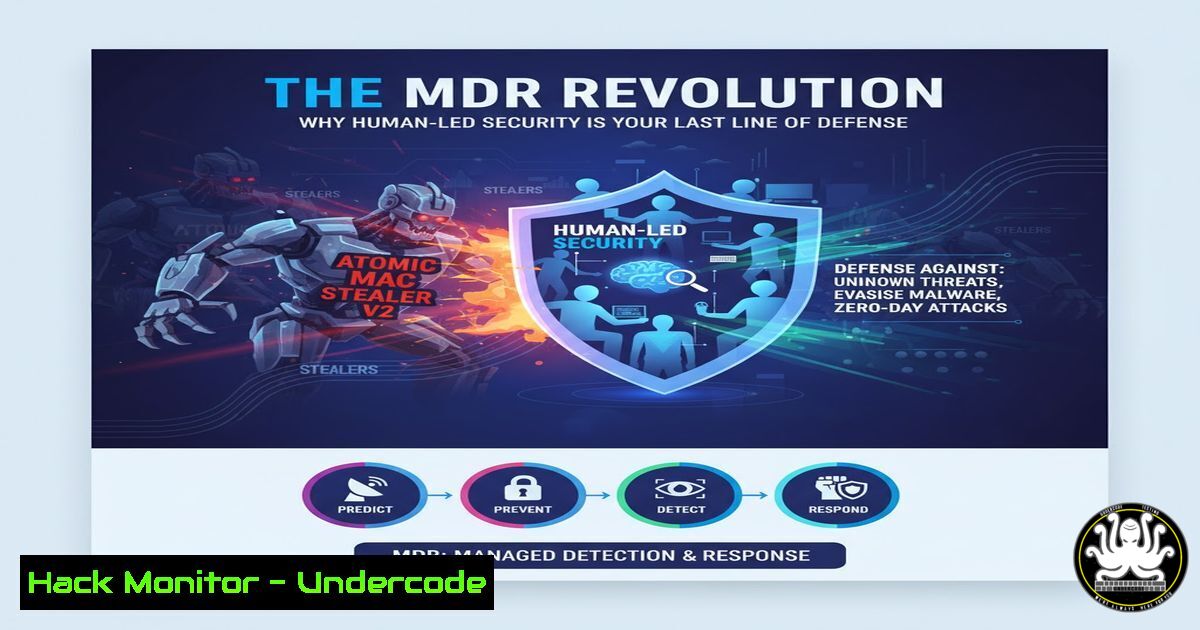
The cybersecurity landscape is shifting from purely technological solutions to a blended approach combining human expertise with advanced tools. Managed Detection and Response (MDR) services are gaining rapid adoption as organizations face sophisticated threats like ATOMIC MAC STEALER V2, which can bypass traditional defenses. This article explores the critical intersection of technology and human-led security operations necessary for modern cyber resilience.
Learning Objectives:
- Understand the technical mechanisms of credential stealers and how they bypass endpoint protection.
- Learn verified commands and techniques for threat hunting, system hardening, and incident response.
- Develop a strategy for integrating MDR principles into your security posture to mitigate credential theft.
You Should Know:
- How Credential Stealers Like ATOMIC MAC STEALER V2 Operate
Credential stealers are malware specifically designed to harvest browser-stored passwords, cookies, autofill data, and cryptocurrency wallets. ATOMIC MAC STEALER V2 targets macOS systems, evading detection through code obfuscation and living-off-the-land techniques. It exfiltrates data to a command-and-control (C2) server, leading to account takeover (ATO) and significant data breaches.
Verified Command – macOS Threat Hunting:
 Scan for suspicious processes (macOS/Linux)
ps aux | grep -i -E "(stealer|keylog|atomic)" | grep -v grep

Check for unauthorized network connections
lsof -i -P | grep LISTEN | grep -v -E "(ESTABLISHED|ssh|vpn)"

List recently modified executable files in user directories
find ~/ -name ".dmg" -o -name ".app" -o -name ".sh" -o -name ".py" -mtime -7
Step-by-step guide:
The `ps aux` command lists all running processes, and we grep for keywords associated with the stealer. `lsof -i -P` shows all network connections, helping identify unauthorized C2 channels. The `find` command searches for recently modified executable files in the user’s home directory, a common location for user-downloaded malware. Regularly running these commands can help identify a compromise early.
2. Proactive Exposure Management with MDR Principles
MDR providers don’t just wait for alerts; they proactively hunt for threats and manage system exposures. This involves hardening systems against initial access methods commonly exploited by stealers, such as phishing and malicious downloads.
Verified Command – Windows System Hardening:
 Check PowerShell execution policy (should be Restricted or RemoteSigned)
Get-ExecutionPolicy -List

Enable Windows Defender Antivirus real-time protection
Set-MpPreference -DisableRealtimeMonitoring $false

Audit user accounts for weak passwords (requires admin)
Get-LocalUser | Where-Object {$_.PasswordRequired -eq $false} | Format-Table Name, Enabled, PasswordRequired

Harden the Windows firewall to block unnecessary outbound traffic
netsh advfirewall set allprofiles state on
Step-by-step guide:
These commands form a basic hardening checklist. Checking the PowerShell execution policy helps prevent malicious script execution. Ensuring Windows Defender is active provides a baseline defense. Auditing for users without password requirements closes a common security gap. Finally, enabling and configuring the Windows firewall restricts data exfiltration attempts.
3. Digital Forensics: Investigating a Potential Stealer Infection
When a stealer is suspected, a rapid and methodical forensic investigation is crucial. This involves analyzing browser data, system logs, and persistence mechanisms to determine the scope of the compromise.
Verified Command – Browser Artifact Analysis (Linux/macOS):
 Locate and list browser profile directories (Chrome/Edge/Brave)
find ~/Library/Application\ Support/ ~/.config -type d -name "Profile" 2>/dev/null

Check for suspicious browser extensions
ls -la ~/"Library/Application Support/Google/Chrome/Default/Extensions/"

Dump the macOS Unified Log for security-related events (last 24 hours)
log show --predicate 'subsystem contains "com.apple.security"' --last 24h --info
Step-by-step guide:
The `find` command locates all browser profile directories where credentials and cookies are stored. Listing browser extensions can reveal malicious add-ons. The powerful `log show` command on macOS queries the unified logging system for security-related events, which can reveal malware execution signatures and other indicators of compromise (IoCs).
4. Containing the Breach: Isolation and Credential Rotation
Upon confirmation of a stealer infection, the immediate goal is to contain the breach and prevent further data loss or ATO. This involves network isolation and a systematic rotation of all compromised credentials.
Verified Command – Network Containment (Linux):
 Immediately block all outbound traffic as a containment measure (Linux)
iptables -P OUTPUT DROP

Alternatively, block traffic to a specific malicious IP identified during investigation
iptables -A OUTPUT -d <MALICIOUS_IP> -j DROP

List all established network connections before isolation
netstat -tunap | grep ESTABLISHED
Step-by-step guide:
The first `iptables` command is a drastic but effective measure to immediately halt all data exfiltration. The second command is more surgical, blocking only communication with a known malicious C2 server. Always run `netstat` first to document active connections for later forensic analysis. Remember, these commands require root privileges.
5. Leveraging MDR Capabilities for 24/7 Monitoring
MDR services use advanced detection technologies like Endpoint Detection and Response (EDR) tools. Understanding the queries these tools use can help internal teams collaborate effectively with their MDR provider.
Verified EQL Query Example (Hypothetical):
// EQL query to detect process execution chain indicative of a stealer
process where subtype.create and
(process_name : "curl" or process_name : "wget") and
parent_process_name : "Google Chrome"
Step-by-step guide:
This Event Query Language (EQL) example, which might be used in an EDR platform like Elastic Endpoint or SentinelOne, hunts for a specific behavior: a web browser (Chrome) spawning a command-line tool (curl/wget). This is a common IoC for malware that uses the browser to download a second-stage payload. MDR analysts write and monitor such queries 24/7 to detect anomalous activity that signature-based AV would miss.
6. Cloud Hardening: Protecting IAM Credentials
Stealers often target cloud access tokens and IAM credentials stored on developer machines. Protecting these is critical, as they can lead to full cloud environment compromise.
Verified Command – AWS CLI Security Hardening:
 Check for existing AWS CLI profiles
aws configure list-profiles

Review IAM user permissions attached to the current CLI profile
aws iam list-attached-user-policies --user-name $(aws iam get-user --query User.UserName --output text)

Rotate AWS access keys (if compromised)
aws iam create-access-key --user-name YOUR_USER_NAME
aws iam delete-access-key --access-key-id OLD_KEY_ID --user-name YOUR_USER_NAME

Enable MFA deletion for critical S3 buckets
aws s3api put-bucket-versioning --bucket YOUR_BUCKET --versioning-configuration Status=Enabled,MFADelete=Enabled --mfa "arn-of-mfa-device mfa-code"
Step-by-step guide:
These AWS CLI commands help manage the security of cloud credentials. Listing profiles and IAM policies reveals the current access scope. The ability to quickly rotate access keys is vital after a stealer infection. Finally, enforcing MFA for destructive actions like deleting S3 bucket versioning adds a critical layer of protection, even if credentials are stolen.
7. API Security: Preventing Token Theft and Abuse
Stealers exfiltrate API keys and session tokens. Securing APIs with robust authentication and monitoring is non-negotiable.
Verified Code Snippet – Python Flask API with Rate Limiting:
from flask import Flask, request, jsonify
from flask_limiter import Limiter
from flask_limiter.util import get_remote_address

app = Flask(<strong>name</strong>)
limiter = Limiter(
get_remote_address,
app=app,
default_limits=["200 per day", "50 per hour"],
storage_uri="memory://",
)

@app.route('/api/sensitive-data', methods=['GET'])
@limiter.limit("10 per minute")  Strict rate limit on sensitive endpoints
def get_sensitive_data():
auth_token = request.headers.get('Authorization')
 Validate token against a database or auth service here
if not validate_token(auth_token):
return jsonify({"error": "Unauthorized"}), 401
 Logic to fetch data...
return jsonify({"data": "sensitive_information"})

def validate_token(token):
 Implement your token validation logic
return True  Placeholder
Step-by-step guide:
This Python code demonstrates basic API hardening. The `Flask-Limiter` library implements rate limiting, which can mitigate automated attacks using stolen API keys. By limiting requests to “10 per minute” on a sensitive endpoint, you reduce the blast radius of a leaked token, buying time for detection and revocation.
What Undercode Say:
- Technology is a Force Multiplier, Not a Panacea: The core argument of the original post is validated. Relying solely on technology, like next-gen AV, creates a brittle defense. MDR’s value is its fusion of technology (“advanced detection”) with “elite analysts,” creating a resilient, adaptive security posture that can handle novel threats like ATOMIC MAC STEALER V2.
- The “Dog Food” Principle is Foundational: The admonishment to “eat your own dog food” underscores that security must be practiced, not just preached. This means internal teams must use the same stringent controls and monitoring they advocate for, closing the gap between policy and practice that attackers exploit.
The analysis suggests that the accelerating adoption of MDR is a direct market response to the failure of siloed security solutions. Alert fatigue is not just an inconvenience; it’s a critical vulnerability that causes real threats to be missed. The MDR model directly addresses this by outsourcing 24/7 monitoring and response, allowing internal teams to focus on strategic business-level security rather than operational firefighting. This human-in-the-loop model is becoming the baseline for enterprise defense.
Prediction:
The success of stealers like ATOMIC MAC STEALER V2 will push MDR providers to develop even more specialized hunting packages focused on identity and credential protection. We will see a tighter integration between MDR services and Identity and Access Management (IAM) platforms, with AI being used to baseline normal user behavior and MDR human analysts investigating the high-fidelity anomalies. The future battleground will not be the endpoint alone, but the entire identity lifecycle, from initial login to token usage across cloud services. Organizations that fail to adopt this human-led, identity-centric MDR approach will face exponentially higher rates of business-disrupting account takeovers.
🎯Let’s Practice For Free:
IT/Security Reporter URL:
Reported By: Activity 7392164411223810048 – Hackers Feeds
Extra Hub: Undercode MoN
Basic Verification: Pass ✅


