
Listen to this Post
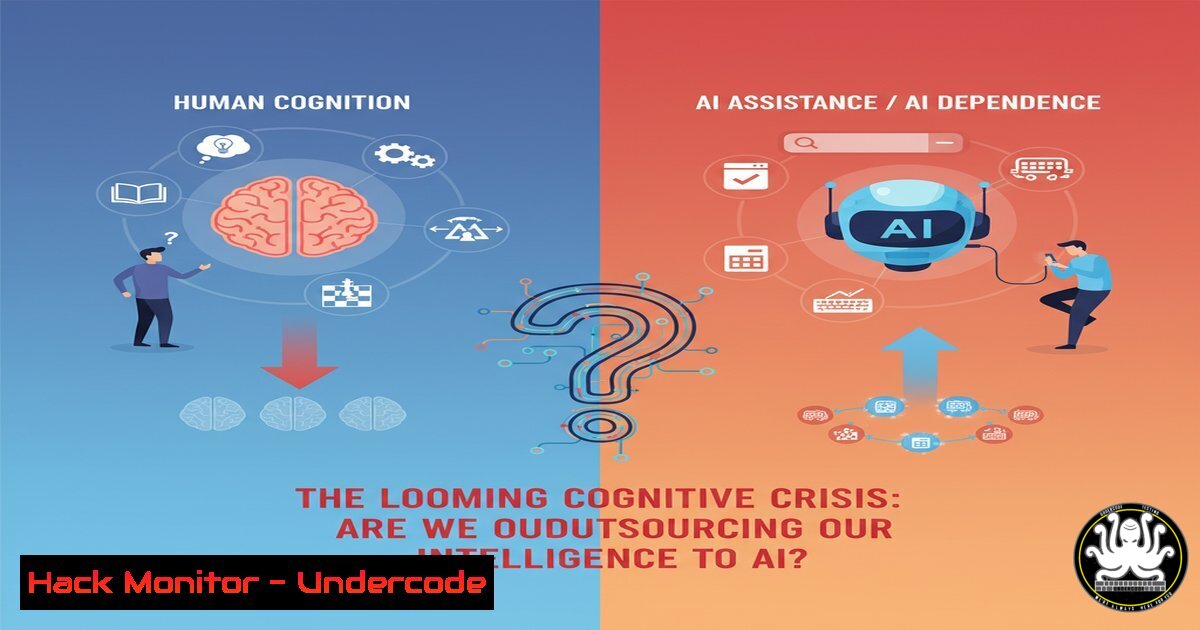
Introduction:
The rapid integration of Artificial Intelligence into our daily workflows presents a paradoxical threat: the erosion of foundational human cognitive skills. As we delegate complex tasks to machines, from code generation to strategic analysis, we risk creating a generation of professionals who can command technology but lack the deep, intuitive understanding that comes from struggle and hands-on practice. This article deconstructs the core technical skills that cybersecurity and IT professionals must preserve and master to ensure AI remains a tool, not a crutch.
Learning Objectives:
- Understand and manually execute critical security commands to maintain analytical proficiency beyond AI-assisted tools.
- Develop the ability to critically assess and validate AI-generated code and security recommendations.
- Harden systems and applications against AI-augmented attack vectors through fundamental configuration and scripting.
You Should Know:
1. Network Analysis Fundamentals
Before relying on an AI to interpret `nmap` scans, a professional must understand the raw output. Manually probing a network builds intuition.
nmap -sS -sV -O -A -p- 192.168.1.0/24
Step-by-step guide:
-sS: Initiates a SYN stealth scan, a common method to discover live hosts without completing the TCP handshake.-sV: Probes open ports to determine service/version information.-O: Enables OS detection based on TCP/IP stack fingerprinting.-A: Aggressive scan mode, enabling OS detection, version detection, script scanning, and traceroute.-p-: Scans all 65,535 ports on the target.
This command provides a comprehensive view of the network attack surface. The human analyst’s role is to interpret the context of open services, identify anomalies in banner information, and correlate findings with known vulnerabilities—a nuanced task that AI can assist with but not yet fully own.
2. Linux Process and Privilege Investigation
AI can suggest commands to find anomalies, but recognizing the subtle signs of compromise requires human experience.
ps auxf | grep -v "[" ; ss -tulnpe ; find / -uid 0 -perm -4000 2>/dev/null
Step-by-step guide:
ps auxf: Lists all running processes (a), with detailed info and usernames (u), without terminal constraints (x), and in a forest view (f). Piping to `grep -v “\[“` filters out kernel threads to focus on userland processes.ss -tulnpe: The modern replacement fornetstat. It shows all TCP (-t) and UDP (-u) listening (-l) sockets, in numeric form (-n), and displays the associated process and user (-e).find / -uid 0 -perm -4000 2>/dev/null: Searches the entire filesystem for files owned by root (-uid 0) with the SUID (Set User ID) bit set (-perm -4000), which can be a common privilege escalation vector. Errors are suppressed to/dev/null.
Manually running this triad builds a mental map of normal system behavior, making deviations more apparent than an AI’s generic alert.
3. Windows Security Log and PowerShell Auditing
Automated tools parse Windows logs, but a professional must know how to extract data directly for incident response.
Get-WinEvent -FilterHashtable @{LogName='Security'; ID=4624,4625,4648} | Select-Object -First 20 | Format-List
Get-Process | Where-Object { $_.CPU -gt 90 } | Stop-Process -Force
Step-by-step guide:
- The first PowerShell command uses `Get-WinEvent` to query the Security log for specific Event IDs: 4624 (successful logon), 4625 (failed logon), and 4648 (logon with explicit credentials). This is crucial for identifying brute-force attacks and lateral movement.
- The second command pipeline identifies processes with CPU usage over 90% (
Where-Object { $_.CPU -gt 90 }) and forcefully terminates them (Stop-Process -Force). This is a direct response action for mitigating resource-hogging malware or runaway scripts identified through manual observation.
4. Cloud Infrastructure Hardening with IaC
While AI can generate Infrastructure as Code (IaC), understanding the security principles behind it is non-negotiable.
resource "aws_s3_bucket" "secure_bucket" {
bucket = "my-audit-logs-bucket"

server_side_encryption_configuration {
rule {
apply_server_side_encryption_by_default {
sse_algorithm = "AES256"
}
}
}

versioning {
enabled = true
}

logging {
target_bucket = aws_s3_bucket.log_bucket.id
target_prefix = "log/"
}
}
Step-by-step guide:
- This Terraform code defines a secure AWS S3 bucket. The `server_side_encryption_configuration` block mandates encryption at rest using AES-256.
– `versioning` is enabled to protect against accidental deletion or overwriting of objects, crucial for audit trails. - The `logging` block enables access logging, redirecting all access logs to another bucket for monitoring and forensic analysis. Manually writing and reviewing this code ensures the security controls are intentional and understood, rather than blindly deployed from an AI snippet.
5. API Security Testing with `curl`
APIs are a primary target, and testing their security posture requires more than an automated scanner.
curl -H "Authorization: Bearer $TOKEN" https://api.example.com/v1/users \
-X POST -d '{"role":"admin"}' \
-H "Content-Type: application/json"
Step-by-step guide:
- This `curl` command tests for an Insecure Direct Object Reference (IDOR) or Broken Object Level Authorization (BOLA) vulnerability.
-H "Authorization: Bearer $TOKEN": Sets the authentication header. The test involves changing the `$TOKEN` to that of a low-privilege user.-X POST -d '{"role":"admin"}': Attempts a POST request to change a user’s role to “admin”.- A successful request from a low-privileged token indicates a critical authorization flaw. Manually crafting and iterating on these requests teaches the nuances of API attack vectors that AI might overlook in a complex authentication workflow.
6. SQL Injection Exploitation and Mitigation
Understanding how to manually exploit a flaw is the first step to building a robust defense.
' OR '1'='1' --
'; DROP TABLE users; --
' UNION SELECT username, password FROM users --
Step-by-step guide:
' OR '1'='1' --: A classic tautology that bypasses authentication by making the WHERE clause always true. The `–` comment syntax nullifies the rest of the query.'; DROP TABLE users; --: A union-based attack to extract data from a different table than the original query intended. This demonstrates the risk of exposing sensitive data.
Mitigation involves using parameterized queries or prepared statements in code (e.g., using `sqlite3` in Python:cursor.execute("SELECT FROM users WHERE id=?", (user_id,))). Manually testing these payloads ingrains the critical importance of input sanitization.
7. Container Security and Docker Hardening
Containers are ubiquitous, and their security is often an afterthought in AI-generated deployment scripts.
FROM alpine:latest
RUN addgroup -S appgroup && adduser -S appuser -G appgroup
USER appuser
COPY --chown=appuser:appgroup . /app
WORKDIR /app
CMD ["./start.sh"]
Step-by-step guide:
- This multi-stage Dockerfile exemplifies the principle of least privilege.
addgroup -S appgroup && adduser -S appuser -G appgroup: Creates a dedicated non-root user and group for running the application.USER appuser: Switches to the non-root user for the remainder of the container’s runtime, drastically reducing the impact of a container breakout vulnerability.COPY --chown=appuser:appgroup: Ensures the application files are owned by the non-root user. Manually implementing these steps ensures container deployments are secure by design, not by accident.
What Undercode Say:
- Human Context is the Ultimate Firewall: AI operates on data patterns, but it cannot replicate the human analyst’s ability to incorporate intangible factors—office politics, unusual user behavior, a vague service ticket—into a security decision. This contextual intelligence is our most durable advantage.
- The Master-Dependency Inversion: The professional who blindly depends on AI for core tasks inadvertently becomes the tool of the tool. The true master uses AI to augment a pre-existing, deeply internalized skill set, using the machine to handle scale while the human handles strategy, nuance, and exception.
The danger is not AI itself, but the atrophy of the problem-solving muscles it causes. The cybersecurity landscape is adversarial and creative; defenses built solely on AI-generated code without a commander’s deep understanding are fragile. The most secure systems will always be those architected and continuously monitored by experts who can think like an attacker, a skill forged in the fire of manual practice, not just prompted into existence.
Prediction:
The initial wave of AI-augmented attacks will be sophisticated but largely derivative, exploiting known vulnerabilities at scale. The subsequent, more dangerous wave will involve AI systems that can autonomously discover and chain together novel, complex attack paths across hybrid cloud environments. The professionals who will prevail in this new era are not those who can write the best prompts, but those who possess the foundational knowledge to understand, anticipate, and manually counter these AI-generated attack strategies, turning the AI’s scale and speed against itself. The cognitive arms race has begun.
🎯Let’s Practice For Free:
IT/Security Reporter URL:
Reported By: Putri Hasquita – Hackers Feeds
Extra Hub: Undercode MoN
Basic Verification: Pass ✅


