
Listen to this Post
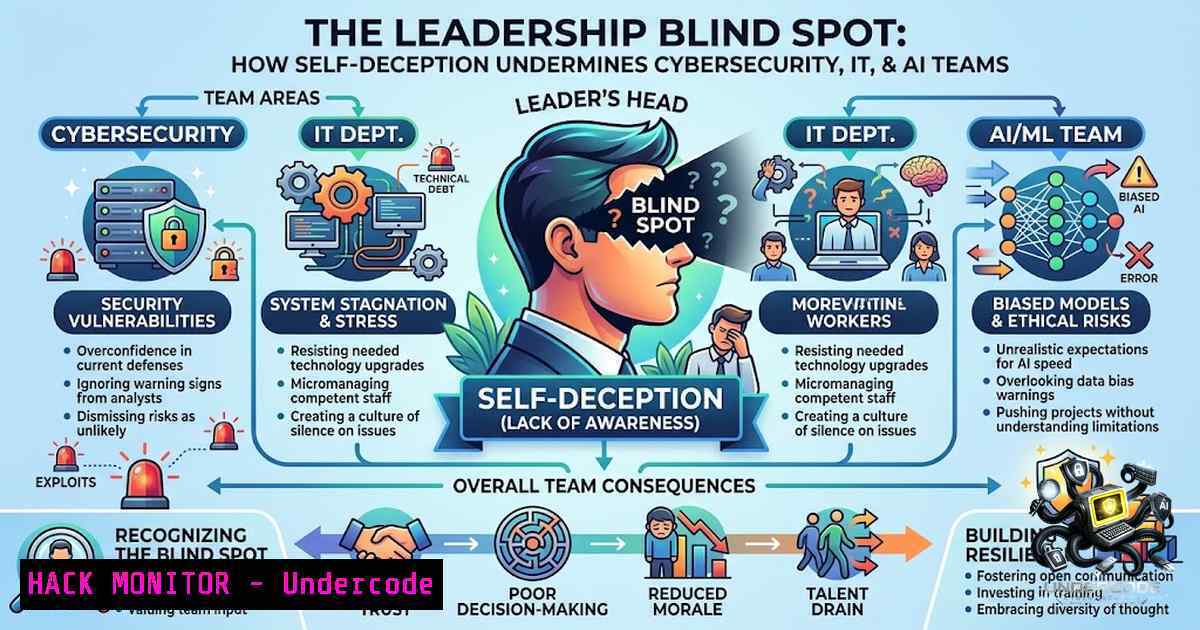
Introduction:
In the high-stakes world of cybersecurity, IT infrastructure, and artificial intelligence, technical expertise often takes center stage. Yet, the most sophisticated firewall, the most resilient cloud architecture, or the most advanced AI model can be rendered ineffective by a single, often overlooked vulnerability: the human element, specifically within leadership. The concept of self-deception—the unconscious act of viewing others not as people but as obstacles, vehicles, or irrelevancies—creates a “box” that blinds leaders to their own contributions to team dysfunction and security failures. This cognitive blind spot, as explored in Leadership and Self-Deception by The Arbinger Institute, is the silent saboteur of team performance, directly impacting incident response times, security protocol adherence, and the overall efficacy of technical teams.
Learning Objectives & Secrets:
- Objective 1: Identify the “Box” in Technical Leadership. Learn to recognize the mental state where team members are seen as tools (to achieve security goals), obstacles (delaying a deployment), or irrelevant (to a critical decision), rather than as individuals with valid needs and perspectives. The secret is to audit your internal narrative during a crisis—are you blaming a team member for a breach, or are you asking what you failed to communicate or secure?
-
Objective 2 Secret Tip: Master the “Self-Betrayal” Detection. The tipping point into self-deception is the moment you ignore an internal sense of what you should do for another person. In a security context, this might be the feeling that you should clarify a compliance requirement to a junior engineer but choosing not to, followed by justifying your inaction. The secret is to treat this feeling as a critical alert—like a SIEM warning—and immediately act on it before the justifications begin.
-
Objective 3 Secret Tip: Break the “Collusion” Cycle. When two people are “in the box,” they trigger each other’s worst behaviors, creating a downward spiral of blame and defensiveness. In DevOps or SecOps, this manifests as the “us vs. them” mentality between security and development teams. The secret is to recognize that your counterpart is likely also “in the box” and to take the first step out by changing your own view of them, thereby breaking the cycle.
You Should Know:
- The “Box” as a Security Vulnerability: Auditing Your Leadership Blind Spots
Self-deception is not a moral failing but a structural problem in how we perceive reality. When a leader is “in the box,” they are unable to see their own contribution to a problem and instead collect “evidence” to justify their negative views of others. In a technical environment, this can lead to critical failures. For example, a CISO who views the SOC team as “lazy” for missing alerts may fail to see that they haven’t provided adequate training or tools. This blind spot is a direct threat to the organization’s security posture.
Step‑by‑step guide to auditing your leadership “box”:
- Trigger Identification: Identify situations where you feel frustrated, impatient, or resentful towards a team member. This is your “in-the-box” trigger.
- Narrative Examination: Write down the narrative you are telling yourself. (e.g., “Alex never follows the incident response playbook.”)
- Self-Contribution Analysis: Ask yourself: “What is my contribution to this problem?” (e.g., “Have I provided clear, updated playbooks? Have I asked Alex about their challenges?”)
- Perspective Shift: Consciously reframe your view of the person. See them as a human being with pressures and needs similar to your own.
- Action: Take one small action based on this new perspective, such as having a candid, non-blaming conversation.
2. The Linux Administrator’s Dilemma: Commands for Self-Reflection
Just as a system administrator uses commands to audit system logs for errors, a leader must use introspective “commands” to audit their own mindset. The following are conceptual “commands” for self-reflection, paralleling common Linux utilities.
Step‑by‑step guide to using introspective “commands”:
1. `grep` for Blame: Use `grep` to search your internal dialogue for instances of blame. Just as you would use grep -i error /var/log/syslog, actively search your thoughts for words like “always,” “never,” or “why don’t they.” This helps you identify the target of your blame.
2. `tail -f` on Interactions: Use `tail -f` to monitor your real-time interactions. As you would watch a log file in real-time, pay close attention to your tone and body language during meetings. Are you being defensive or open?
3. `chmod` Your Perspective: Use `chmod` to change the permissions of your viewpoint. Just as you would use `chmod +x script.sh` to make a script executable, consciously give yourself permission to see the situation from another’s perspective.
4. `systemctl status` on Your Ego: Use `systemctl status` to check the health of your ego. Are you operating from a place of security or insecurity? A healthy ego allows for self-correction; an unhealthy one is the root of self-deception.
- Windows Security and Team Dynamics: The “Event Viewer” of Collaboration
In Windows environments, the Event Viewer is the go-to tool for diagnosing system issues. Similarly, leaders can use a structured approach to diagnose team collaboration issues. The “box” creates a cognitive bias that distorts the “event logs” of team interactions.
Step‑by‑step guide to analyzing team dynamics:
- Log Collection: Just as Event Viewer collects system logs, actively gather feedback from your team. Use anonymous surveys or one-on-one meetings to collect “logs” of team sentiment.
- Filter for Errors: Filter your feedback for “errors”—instances of miscommunication, missed deadlines, or conflict. Look for patterns, just as you would filter Event Viewer for specific event IDs.
- Identify the Root Cause: In Event Viewer, you look for the root cause of a system error. In team dynamics, ask “What systemic issue is causing this?” Instead of blaming a person, look for process gaps, unclear expectations, or lack of resources.
- Apply a “Fix”: Implement a change to address the root cause. This is your “patch.” It could be a new communication protocol, a revised project timeline, or additional training.
- Monitor and Verify: Continuously monitor the team’s performance and sentiment to verify that your “fix” has resolved the issue, just as you would monitor system performance after a patch.
4. Cloud Hardening: Securing the Human Infrastructure
Cloud security relies on the principle of least privilege and continuous monitoring. The same principles apply to leadership. A leader “in the box” operates with excessive cognitive privilege, assuming their perspective is the only correct one, and fails to monitor the “health” of their team’s morale and engagement.
Step‑by‑step guide to hardening your “human infrastructure”:
- Principle of Least Ego (PoLE): Apply the principle of least privilege to your own ego. Assume that your initial judgment of a situation may be incomplete or flawed. Seek input from others before making decisions.
- Continuous Monitoring (CM): Implement a system of continuous feedback. This is your “cloud watch” for team morale. Regular check-ins, not just annual reviews, are essential.
- Identity and Access Management (IAM): Manage your “access” to your team’s trust. Be consistent, transparent, and fair. A leader who is unpredictable or plays favorites erodes trust, just as poor IAM practices create security vulnerabilities.
- Incident Response (IR): Develop a protocol for “human incidents”—conflicts, misunderstandings, or morale drops. Have a plan for how you will respond to these incidents with empathy and a focus on resolution, rather than blame.
-
API Security and Communication: The “Interface” of Leadership
APIs are the interfaces that allow different software systems to communicate. In leadership, communication is the interface between you and your team. A poorly designed API leads to errors and failures; poorly designed communication leads to misunderstandings and conflict. Self-deception is like a faulty API that corrupts the data being transmitted.
Step‑by‑step guide to designing a better leadership “API”:
- Define Clear Endpoints: Clearly define the purpose and scope of your communications. Be explicit about what you are asking for and why. Avoid vague or ambiguous requests.
- Use Standardized Protocols: Develop consistent communication protocols. For example, establish a standard format for status reports, meeting agendas, and feedback sessions. This reduces ambiguity and ensures everyone is on the same page.
- Implement Versioning: Acknowledge that your understanding of a situation may evolve. Be willing to update your perspective (your “API version”) based on new information.
- Provide Comprehensive Documentation: Just as good APIs come with clear documentation, provide your team with clear expectations, goals, and context. This empowers them to make better decisions independently.
- Authenticate and Authorize: Verify that you have correctly understood the other person’s message (authentication) and that you are responding appropriately (authorization). This prevents miscommunication and ensures that your response is proportional to the situation.
-
Vulnerability Exploitation and Mitigation: The “Zero-Day” of Trust
Self-deception exploits a “zero-day” vulnerability in human relationships: the trust deficit it creates. When a leader is “in the box,” their actions are perceived as inauthentic, which erodes trust. Mitigating this vulnerability requires a conscious effort to build and maintain trust.
Step‑by‑step guide to mitigating the “trust vulnerability”:
- Vulnerability Assessment: Assess the current state of trust within your team. Use anonymous surveys or facilitated discussions to identify areas of concern.
- Patch Deployment: Actively work to build trust through consistent, transparent, and empathetic behavior. This is your “patch.”
- Continuous Scanning: Continuously monitor the “health” of trust within your team. Are there signs of erosion? Address them proactively.
- Incident Response: When trust is broken (e.g., a missed commitment), respond with honesty and a commitment to repair the relationship. Avoid defensiveness or blame-shifting.
What Undercode Say:
- Key Takeaway 1: Self-deception is the invisible root cause of most team dysfunction in technical fields. It is not about being a “bad” leader; it’s about being a “blind” leader, and the first step to solving any problem is to see it clearly.
- Key Takeaway 2: The most effective “security control” you can implement is not a piece of software but a practice of radical self-awareness. By regularly asking yourself, “What is my contribution to this problem?” you can break the cycle of blame and unlock your team’s true potential.
Analysis: The core of the Arbinger Institute’s philosophy—that we must see others as people, not objects—is a powerful lens for leadership. In the fast-paced, high-pressure world of cybersecurity and IT, it is easy to fall into the trap of viewing team members as cogs in a machine. However, this perspective is self-defeating. When leaders treat people as problems to be fixed or obstacles to be overcome, they create resistance and resentment. True influence comes not from trying to change others but from changing how we see them. This shift in perception is the most potent, yet most underutilized, tool in a leader’s arsenal. It transforms interactions from transactional battles into collaborative partnerships, directly enhancing team performance, security posture, and innovation.
Prediction:
- +1 Organizations that prioritize leadership development focused on self-awareness and emotional intelligence will significantly outperform their peers in attracting and retaining top technical talent, creating a formidable competitive advantage.
- +1 The integration of psychological safety and “out-of-the-box” leadership principles into DevSecOps cultures will become a recognized best practice, leading to faster incident resolution times and more innovative security solutions.
- -1 Companies that continue to rely solely on technical fixes while ignoring the human dynamics of their teams will face increasing internal friction, higher turnover rates, and a greater susceptibility to costly security breaches stemming from human error and poor communication.
- -1 The “us vs. them” mentality between security, development, and operations teams will persist in organizations that fail to address leadership self-deception, creating silos that weaken overall security posture and slow down digital transformation.
- +1 The rise of AI and automation will amplify the need for human-centric leadership, as the most valuable skills will shift from purely technical expertise to the ability to collaborate, communicate, and inspire teams in an increasingly complex and automated world.
▶️ Related Video (84% Match):
🎯Let’s Practice For Free:
🎓 Live Courses & Certifications:
Join Undercode Academy for Verified Certifications
🚀 Request a Custom Project:
Secure, high-velocity infrastructure and disruptive technological engineering. Contact our engineering team for high-tier development and proprietary systems:
[email protected]
💎 Smart Architecture | 🛡️ Secure by Design | ⭐ Trusted by Thousands
IT/Security Reporter URL:
Reported By: https://lnkd.in/p/e72k9MXW – Hackers Feeds
Extra Hub: Undercode MoN
Basic Verification: Pass ✅


