
Listen to this Post
Introduction:
In the modern job market, your resume’s first reviewer is rarely a human. Applicant Tracking Systems (ATS) act as the digital gatekeepers, and for technical roles in cybersecurity, IT, and AI, understanding their logic is a critical career skill. A well-optimized resume that passes ATS parsing can mean the difference between landing an interview and being ignored, making mastery of ATS rules as important as the technical skills you list.
Learning Objectives:
- Understand how ATS software parses and scores resumes for technical roles.
- Learn to structure and format a cybersecurity/IT resume for maximum ATS compatibility.
- Identify and incorporate the key technical keywords and skills that boost ATS ranking.
You Should Know:
- ATS Demystified: How the Software Parses Your Technical Resume
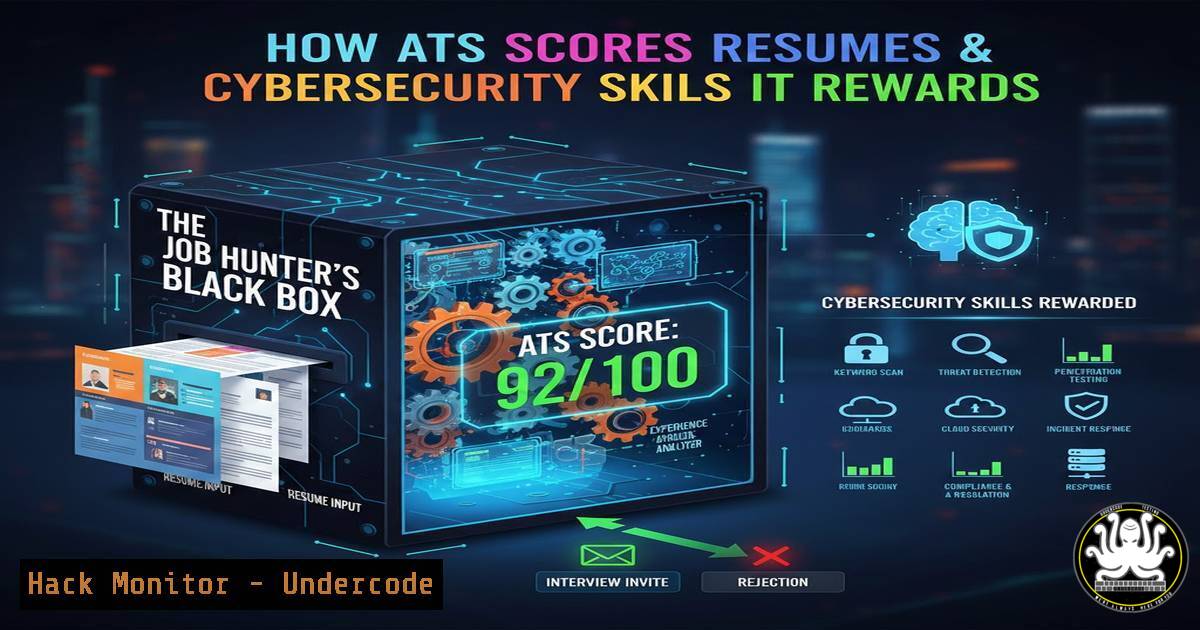
An ATS is more than a simple filter; it’s a complex database management system designed to automate initial screening. When you submit a resume, the ATS parses the document, converting its content into a structured digital profile. It extracts text and attempts to categorize information—like contact details, work experience, skills, and education—into predefined fields. Complex formatting, graphics, and non-standard layouts often break this parsing engine, causing critical data like your Python scripting experience or CISSP certification to be lost or misclassified, resulting in a low score. The core principle is machine readability over human design aesthetics.
2. Formatting for Machines: The Non-Negotiable Rules
To ensure flawless parsing, your resume’s format must be ATS-friendly. This means using a clean, single-column layout with standard section headings like “Work Experience,” “Skills,” and “Education.” Avoid tables, text boxes, headers/footers for critical info, and elaborate graphics. Use common, web-safe fonts such as Arial, Calibri, or Times New Roman. Save your file as a `.docx` (preferred by many parsers) or a plain-text PDF, but first test a PDF’s parsability. A simple way to check your formatting is to copy your resume’s text into a plain Notepad (Windows) or TextEdit (macOS) file. If the logical order of information is lost or jumbled, the ATS will likely be confused too.
3. The Keyword Engine: Speaking the ATS’s Language
Keywords are the primary signal an ATS uses to rank your relevance. For technical fields, these are specific tools, technologies, methodologies, and certifications. The system scans for matches between the keywords in your resume and those in the job description. To optimize, perform a thorough analysis of the job posting. Identify hard skills (e.g., “SIEM,” “Splunk,” “Python,” “Kubernetes,” “NIST Framework”), soft skills (“incident response,” “risk assessment”), and certifications (“Security+,” “CEH,” “AWS Certified Security”). Integrate these keywords naturally throughout your resume, especially in the “Skills” section and within bullet points describing your accomplishments. Do not engage in “keyword stuffing”—repeating terms unnaturally—as sophisticated systems can penalize this.
- Tailoring Your Attack: Customizing for Every Cybersecurity Role
Submitting the same generic resume for a Cloud Security Engineer role and a Penetration Tester role is a recipe for failure. ATS scoring is highly specific. You must strategically tailor your resume for each application. Create a “master resume” containing all your experiences and skills. For each job application, create a new, targeted version by prioritizing the experiences and keywords most relevant to that specific role. If a job emphasizes “threat hunting” and “MITRE ATT&CK,” ensure those phrases and related accomplishments are prominent. This tailored approach dramatically increases your ATS score and demonstrates genuine alignment with the role.
5. Showcasing Technical Projects & Quantifiable Impact
For technical roles, the ATS and human recruiters look for proof of skill application. Beyond listing “Python,” demonstrate how you used it. Create a dedicated “Projects” or “Technical Experience” section. Describe projects using action verbs and quantifiable results that incorporate keywords.
Weak: “Used tools for network security.”
Strong: “Led a vulnerability assessment using Nessus and Wireshark, identifying 15+ critical flaws in the test environment; automated the report generation with a Python script, reducing analysis time by 30%.”
This method embeds keywords naturally within context and provides the measurable impact that both systems and hiring managers seek.
- Verifying Your Resume’s ATS Health: Practical Commands and Tools
Before submitting, test your resume’s parsability. You can use basic command-line tools to simulate text extraction. On Linux or macOS Terminal, use commands like `pdftotext` (from the `poppler-utils` package) to convert a PDF resume to plain text and inspect the output:Install poppler-utils if needed (Linux: sudo apt-get install poppler-utils) pdftotext your_resume.pdf output.txt cat output.txt
On Windows, you can use PowerShell:
 Using a third-party module (e.g., PdfPig is a .NET library), or simpler: rely on dedicated software.
 Alternatively, just open the .docx file in Notepad++ to see embedded formatting codes that might confuse parsers.
Several free online tools (like Jobscan or Resume Worded) also offer ATS simulation by comparing your resume against a job description and providing a compatibility score and feedback.
What Undercode Say:
- The ATS is a neutral system governed by clear, learnable rules. Beating it isn’t about trickery but about precise, strategic communication tailored for machine parsing first and human reading second.
- In cybersecurity and IT, your resume is a security audit of your own career. It must be structured, free of “vulnerabilities” (bad formatting), and provide clear “evidence” (keywords, projects) to pass the automated scan and reach the human reviewer.
Prediction:
The integration of AI into ATS and recruiting will intensify. Future systems will move beyond simple keyword matching to semantic analysis, assessing the context and proficiency level implied in your project descriptions. They may automatically score hands-on lab work from platforms like TryHackMe or HackTheBox listed on your resume. For job seekers, this means the value of verifiable, project-based learning and clearly articulated problem-solving narratives will surpass generic skill listings. Professionals who document their technical journey with precision and clarity will gain a significant advantage in the AI-augmented hiring landscape.
▶️ Related Video (78% Match):
🎯Let’s Practice For Free:
IT/Security Reporter URL:
Reported By: Sangam Patle – Hackers Feeds
Extra Hub: Undercode MoN
Basic Verification: Pass ✅


