
Listen to this Post
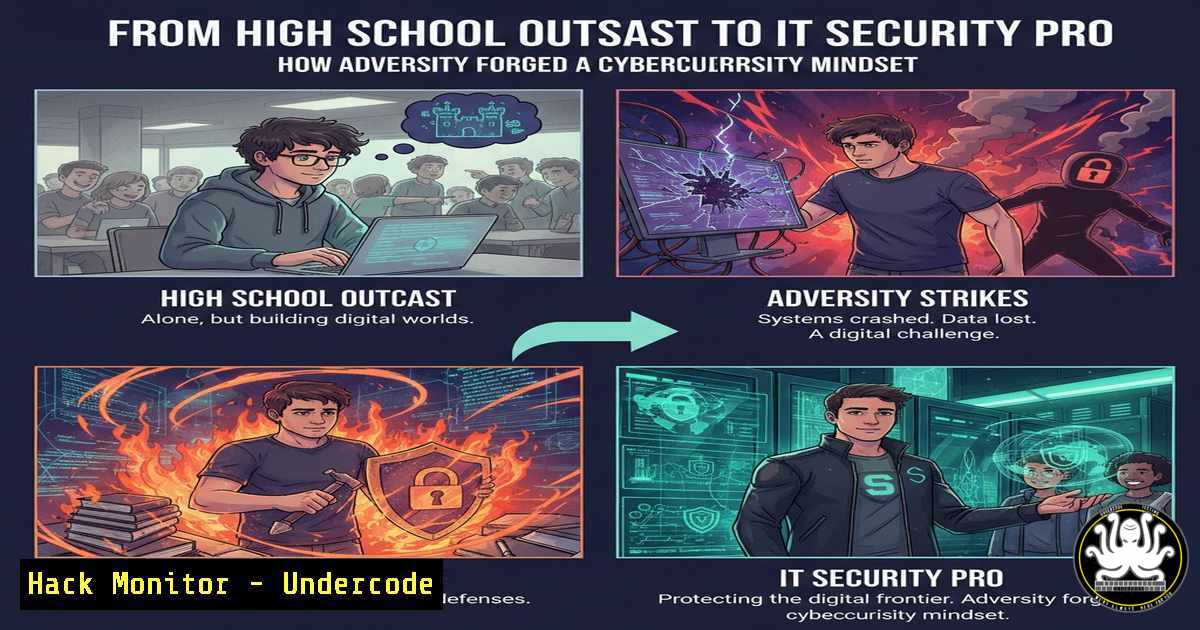
Introduction: In the cybersecurity world, the most resilient defenders often share a common, non-technical background: a history of navigating complex social adversity. A LinkedIn post by IT professional Kevin Apolinario, reflecting on the bullying and isolation experienced in high school, inadvertently maps a potent blueprint for the analytical, persistent, and boundary-aware mindset required in modern security roles. His personal journey from outsider to educator underscores that the core skills of observation, strategic thinking, and self-reliance, forged in challenging environments, are directly transferable to protecting digital infrastructures.
Learning Objectives:
- Understand how the psychological and strategic patterns of overcoming social adversity parallel core cybersecurity defense and analysis techniques.
- Learn practical, actionable security skills across Windows, Linux, and cloud environments that benefit from a meticulous and vigilant approach.
- Develop a roadmap for transforming personal experiences with challenge into a professional asset within the IT and cybersecurity fields.
- The Hacker Mindset: Observing Systems from the Outside
Step‑by‑step guide explaining what this does and how to use it.
Being an outsider forces you to become a keen observer of unspoken rules and systemic weaknesses—a skill identical to threat modeling and reconnaissance in cybersecurity. - Map the Digital Terrain (Passive Reconnaissance): Before any action, understand your environment. On a Linux system, use `nmap` with stealth options to discover live hosts and open ports without completing a full TCP connection, mimicking an outsider gathering data.
sudo nmap -sS -T2 192.168.1.0/24
`-sS`: Performs a SYN stealth scan.
-T2: Slows the scan to be less intrusive and avoid detection.
This maps the network’s “social landscape” of available services.
2. Enumerate Permissions (Understanding Boundaries): Just as an outsider learns who has influence, you must understand system privileges. On Windows, open PowerShell as a regular user and run:
whoami /priv
Get-LocalGroupMember Administrators
This lists your current privileges and enumerates members of the local Administrators group, identifying the “power users” in the system.
3. Analyze Logs for Anomalies (Pattern Recognition): Bullies and attackers both leave traces. On a Linux server, use `grep` and `awk` to filter authentication logs for failed SSH attempts, a sign of probing.
sudo grep "Failed password" /var/log/auth.log | awk '{print $11}' | sort | uniq -c | sort -nr
This command shows the IP addresses with the most failed login attempts, highlighting potential threats.
2. Strategic Defense: Thinking Several Moves Ahead
Step‑by‑step guide explaining what this does and how to use it.
Like a chess player anticipating an opponent’s moves, security is about proactive defense. This involves hardening systems before an attack occurs.
1. Harden SSH Access (Your King): The SSH service is a critical target. Move it from the default port and disable root login to thwart automated bots. Edit the SSH daemon configuration:
sudo nano /etc/ssh/sshd_config
Change the lines:
Port 22222  Change from 22 to a high-numbered port
PermitRootLogin no
PasswordAuthentication no  Enforce key-based auth only
Restart the service: sudo systemctl restart sshd. Test access from a new terminal before closing your current session.
2. Configure Windows Firewall with Advanced Security (Building Walls): Don’t rely on default settings. Create a specific inbound rule to block a range of suspicious IPs. In an Admin PowerShell:
New-NetFirewallRule -DisplayName "Block Malicious Range" -Direction Inbound -RemoteAddress 203.0.113.0/24 -Action Block
This proactively blocks all traffic from a specified subnet.
3. Implement Fail2ban (An Automated Guard): This tool automatically bans IPs that show malicious signs, like too many password failures. Install and configure it on Linux:
sudo apt-get install fail2ban  Debian/Ubuntu
sudo yum install fail2ban  RHEL/CentOS
Create a local jail configuration to protect SSH (on your new port 22222):
sudo cp /etc/fail2ban/jail.conf /etc/failry2ban/jail.local
sudo nano /etc/fail2ban/jail.local
Find the `
` section and ensure it's enabled: `enabled = true` and <code>port = 22222</code>.

<ol>
<li>Resilience & Integrity: Ensuring Systems Recover and Stay True
Step‑by‑step guide explaining what this does and how to use it.
Adversity teaches resilience. In IT, this means ensuring systems can recover from compromise and that their integrity can be verified.</li>
<li>Implement File Integrity Monitoring (FIM): Use Tripwire or AIDE to create a cryptographic baseline of critical system files. Any unauthorized change will be detected.
[bash]
sudo apt-get install aide  Install AIDE
sudo aideinit  Create initial database
sudo mv /var/lib/aide/aide.db.new /var/lib/aide/aide.db
To run a check: sudo aide.wrapper --check. Review the report for any alterations to /bin, /sbin, /usr/bin, etc.
Enable Protection for C: drive
Enable-ComputerRestore -Drive "C:\"
Create a manual restore point
Checkpoint-Computer -Description "Pre-Software Installation" -RestorePointType "MODIFY_SETTINGS"
rsync -avz --delete -e ssh /path/to/data/ user@backup-server:/backup/path/
Add this line to your crontab (crontab -e) to run it daily at 2 AM:
0 2 /usr/bin/rsync -avz --delete -e ssh /path/to/data/ user@backup-server:/backup/path/
Identity and Access Management: The Core Lesson of Boundaries
Step‑by‑step guide explaining what this does and how to use it.
Understanding social boundaries translates directly to enforcing the principle of least privilege in IT: giving users and processes only the access they absolutely need.
sudo: Instead of sharing the root password, grant specific command privileges. Edit the sudoers file safely with visudo:
sudo visudo
Add a line like: john ALL=(ALL) /usr/bin/apt-get update, /usr/bin/systemctl restart nginx. This allows user ‘john’ to only run those two specific commands with elevated privileges.
New-ADGroup -Name "Finance-File-Read-Only" -GroupScope Global
Add-ADGroupMember -Identity "Finance-File-Read-Only" -Members "JaneDoe"
API Key and Secret Management: Never hardcode credentials in source code. Use environment variables or secret management tools. For a Python script, use the `python-dotenv` library to load secrets from a `.env` file (which is listed in .gitignore).
In your .env file (keep secret!)
API_KEY="your_super_secret_key_here"

In your Python script
from dotenv import load_dotenv
import os
load_dotenv()
api_key = os.getenv('API_KEY')
5. Continuous Vigilance and Threat Hunting
Step‑by‑step guide explaining what this does and how to use it.
The hyper-vigilance developed by those who have faced adversity is an asset in threat hunting—the proactive search for hidden threats within a network.
1. Analyze Network Connections: Regularly check for unusual outgoing connections from your servers, which could indicate a beacon or data exfiltration.
On Linux: Use `netstat` or ss: `sudo ss -tunap | grep ESTAB`
On Windows: Use netstat: `netstat -ano | findstr ESTABLISHED`
Look for connections to unfamiliar IP addresses or on odd ports.
2. Hunt for Persistence Mechanisms: Attackers install backdoors to maintain access. Check common persistence locations.
Linux Cron Check: `sudo cat /etc/crontab && ls -la /etc/cron./`
Windows Scheduled Tasks: In PowerShell, run Get-ScheduledTask | Where-Object {$_.State -ne "Disabled"} | Select-Object TaskName, TaskPath.
3. Leverage Sigma Rules for Log Detection: Use the open-source Sigma project to translate generic detection rules into queries for your SIEM (like Splunk or Elasticsearch). For example, a rule to detect disabling of Windows Defender can be converted and run to find malicious activity in your logs.
What Undercode Say:
- Trauma Can Forge Unbreakable Defenders: Personal history with adversity is not a resume gap; it’s a training ground for the patience, skepticism, and deep pattern recognition required to outthink persistent adversaries. The cybersecurity industry desperately needs professionals who don’t think like everyone else.
- The Human is the Hardest System to Harden: Kevin’s post highlights that while technical controls are vital, the psychological and social engineering aspects of security—empathy, communication, and understanding human motivation—are often the decisive factors. The most sophisticated phishing attack exploits human nature, not a software bug.
The analysis centers on a crucial paradigm shift: the industry’s best asset against human-centric cyber threats may be professionals who have intimately navigated and analyzed complex human social systems from a defensive position. The post’s narrative—from observing social dynamics (“bullying and not a lot of friends”) to strategic adaptation (“playing pool and chess”) and finally to teaching others—mirrors the exact career path of a skilled ethical hacker or security analyst: Reconnaissance, Strategy, and Knowledge Sharing. This lived experience in assessing risk, intent, and trust in opaque environments provides an intuitive framework for attack surface mapping and behavioral analytics that purely technical training often fails to instill.
Prediction:
The future of cybersecurity hiring and training will increasingly value diverse psychosocial backgrounds and “non-linear” life experiences. As AI automates routine technical tasks, the human differentiator will be contextual reasoning, ethical judgment, and the ability to anticipate adversarial behavior—skills often sharpened through personal challenge. We will see a rise in neurodiversity hiring initiatives, resilience-based interviewing, and training programs that formally recognize strategic thinking from fields like psychology, philosophy, and even competitive gaming, translating them into defensive security frameworks. The professionals who have learned to secure their own boundaries will become paramount in securing our digital ones.
▶️ Related Video (80% Match):
🎯Let’s Practice For Free:
IT/Security Reporter URL:
Reported By: Itprofessionalkevinapolinario Itsupportspecialist – Hackers Feeds
Extra Hub: Undercode MoN
Basic Verification: Pass ✅


