
Listen to this Post
Introduction:
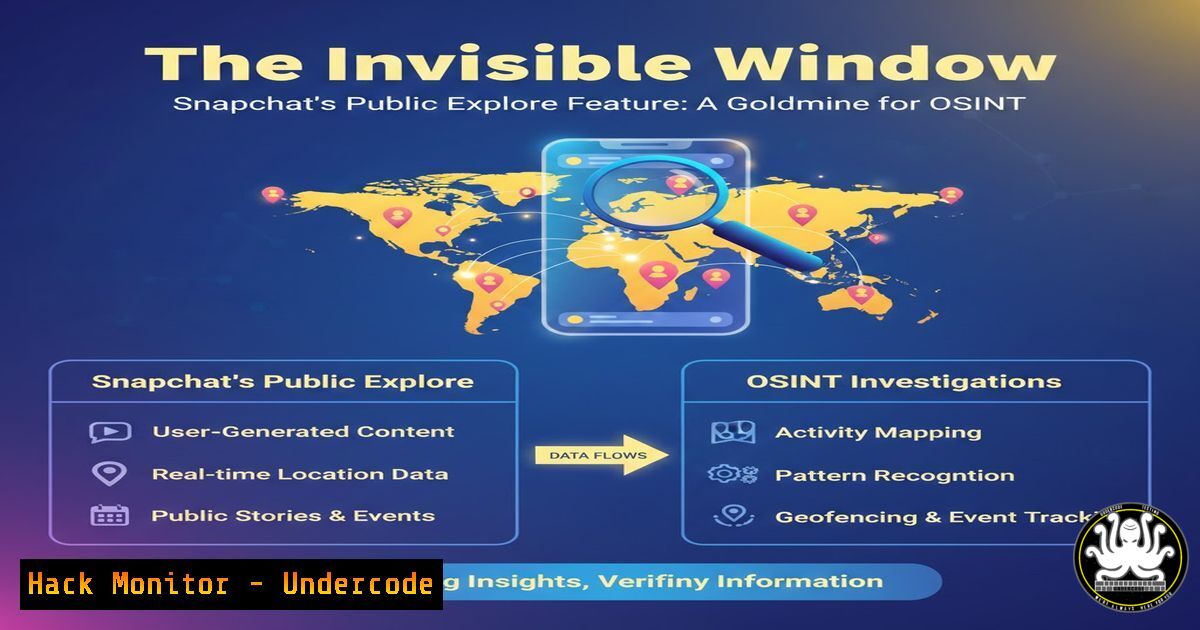
While Snapchat is widely perceived as a private, ephemeral messaging platform, its Explore section operates on a fundamentally different principle, serving as a publicly accessible repository of user-generated content. For cybersecurity professionals, threat intelligence analysts, and digital investigators, this feature represents a significant, often overlooked, open-source intelligence (OSINT) and social media intelligence (SOCMINT) vector. This article deconstructs the methodology for leveraging Snapchat Explore in ethical security assessments, intelligence gathering, and vulnerability reconnaissance.
Learning Objectives:
- Understand the architecture and data exposure of Snapchat’s public Explore ecosystem.
- Master passive reconnaissance techniques to gather intelligence without authentication.
- Apply gathered data to threat modeling, brand monitoring, and geopolitical or event analysis.
You Should Know:
- Navigating the Public Explore API & Web Interface
The Snapchat Explore page (`https://www.snapchat.com/explore`) and its underlying API endpoints serve public content categorized by topic, location, and event. Unlike private snaps, Stories and Spotlight content submitted to “Our Story” or by public creators are indexed here. A step-by-step approach begins with passive web reconnaissance.
Step-by-step guide:
- Direct Browser Access: Navigate to `https://www.snapchat.com/explore` in any standard web browser. No login is required. This is your primary observation point.
- Keyword Searching: Use the search bar on the Explore page. Enter keywords related to events, locations (e.g., “Times Square”), product names, or hashtags. The platform will return publicly shared Stories and creator profiles related to that term.
- Network Analysis: Open your browser’s Developer Tools (F12) and go to the `Network` tab. Refresh the Explore page or perform a search. Filter for `XHR` or `Fetch` requests. You will see calls to Snapchat’s GraphQL or REST API (e.g., endpoints containing `/gateway/` or
/bq/). These requests reveal the structured data calls used to populate content.
Example Analysis: Inspect a request payload and response. You may find parameters for geolocation (latitude,longitude), topic IDs, and pagination tokens, which can be manipulated for broader data collection. - Data Parsing: Responses are typically in JSON. Use command-line tools to parse and filter data.
Linux/macOS Command Example (using `curl` and
jq):Simulate a request captured from Network tab (replace URL and headers) curl 'https://www.snapchat.com/explore_api/...' \ -H 'User-Agent: Mozilla/5.0...' \ --compressed | jq '.data.storyFeed.stories[].post'
This can extract fields like usernames, captions, approximate timestamps, and media URLs.
2. Geolocation-Based Reconnaissance and Event Monitoring
Snapchat’s “Map” feature within the app is highly sensitive to location, but Explore surfaces location-tagged public Stories. This is invaluable for monitoring real-time events, protests, conferences, or natural disasters from a ground-level perspective.
Step-by-step guide:
- Location Search: On the web Explore page, search for a city name, landmark, or venue. The results will include public Stories tagged at that location.
- Leveraging Public Archives: While Snapchat content is ephemeral in the app, public Stories on the web may have a longer cache life. Inspect page source (Ctrl+U) to find direct media URLs (.mp4 videos, .jpg images).
- Automated Monitoring Script: For sustained intelligence, a simple Python script can scrape the Explore page for new content related to a keyword or location. Always respect `robots.txt` and rate limits.
Python Script Snippet (using requests and BeautifulSoup):
import requests
from bs4 import BeautifulSoup
import time

KEYWORD = "DefCon"
EXPLORE_URL = "https://www.snapchat.com/explore"

def scrape_explore(keyword):
params = {'q': keyword}
headers = {'User-Agent': 'Mozilla/5.0'}
try:
resp = requests.get(EXPLORE_URL, params=params, headers=headers)
soup = BeautifulSoup(resp.content, 'html.parser')
 Logic to find story links, metadata - requires analysis of page structure
 Look for

<

div> with data-story-id or similar attributes
print(soup.prettify()[:2000])  Initial structure inspection
except Exception as e:
print(f"Error: {e}")

if <strong>name</strong> == "<strong>main</strong>":
scrape_explore(KEYWORD)
3. Profile and Brand Intelligence Gathering
Public creator profiles and brand accounts are fully viewable on the web. This can be used to assess an organization’s digital footprint, identify unofficially affiliated accounts, or scan for impersonation attempts.
Step-by-step guide:
- Profile Access: Construct a profile URL: `https://www.snapchat.com/add/[bash]`. If the profile is public or belongs to a verified creator/brand, their public Stories and basic info will be visible.
- Content Analysis: Review the public content for insights into corporate culture, unreleased products (visible in backgrounds), or employee geolocation data that could be used in social engineering or physical security attacks.
- Username Enumeration: Combine common username formats (e.g., companyname, officialcompany) with this URL pattern to discover related accounts.
4. Integrating Data into Threat Intelligence Cycles
Raw data is useless without context. Correlate Snapchat-derived information with other OSINT sources.
Step-by-step guide:
- Cross-Platform Verification: Use faces, logos, or landmarks found in Snapchat content to perform reverse image searches (Google Images, Yandex) to find profiles on other platforms.
- Timeline Construction: Use approximate timestamps from Stories to build a timeline of an individual’s or group’s activities during a specific period.
- Reporting: Document findings with clear citations (URLs, screenshot hashes). Tools like Maltego or simple spreadsheets can help structure data on indicators (usernames, locations, media hashes).
5. Mitigations and Defensive Posture for Organizations
Understanding this vector is crucial for defense. Organizations must train employees on social media sharing policies.
Step-by-step guide for defense:
- Policy Enforcement: Mandate that employees disable sharing to “Our Story” or “Map” when posting work-related content. Use corporate policies.
- Active Monitoring: Security teams should periodically run their own company, product, and executive names through Snapchat Explore to find potential data leaks or impersonations.
- Digital Footprint Audits: Include Snapchat Explore searches in regular external attack surface assessment routines.
What Undercode Say:
- The Illusion of Ephemerality is Dangerous: Platforms marketed on privacy can have vast public-facing components. Security assumptions must be based on feature-level analysis, not brand perception.
- Passive Reconnaissance is Legally Sound but Ethically Bound: Accessing publicly available data without circumventing access controls is typically legal, but it must be used strictly for authorized security research, threat intelligence, or defensive purposes. Never engage in harassment or doxxing.
The Snapchat Explore case study is a paradigm example of SOCMINT’s power. It demonstrates that immense volumes of potentially sensitive data—geolocation, event participation, personal associations, and corporate information—are freely available if one knows where to look. For defenders, this underscores the critical need to extend social media security training beyond just LinkedIn and Twitter. For threat actors, it’s a low-effort, high-reward reconnaissance channel. The technical barrier is low; the intelligence value can be extraordinarily high, making it an essential tool in the modern investigator’s kit and a mandatory checkpoint in any organization’s external attack surface monitoring.
Prediction:
As mainstream platforms increase privacy controls and detection of automated scraping, threat actors and researchers alike will pivot to “secondary” data sources like Snapchat Explore, TikTok’s For You Page, and public gaming streams. We will see a rise in tools that automate the aggregation of intelligence from these visual and ephemeral platforms, feeding into AI models that can perform real-time cross-platform persona tracking and event prediction. This will force a regulatory and ethical reckoning on the collection of publicly posted user content, blurring the lines between open-source research and privacy infringement.
▶️ Related Video (80% Match):
🎯Let’s Practice For Free:
IT/Security Reporter URL:
Reported By: Mariosantella Osint – Hackers Feeds
Extra Hub: Undercode MoN
Basic Verification: Pass ✅


